 Stonestown Winter Farmers Market Picker for Student Cooks
Weekend Plans
The Pottery Studio: Mission District Ceramic Studio Near Me for Modern Wheel
The Pottery Studio on Folsom Street in the Mission offers monthly four-class wheel courses, studio memberships, Shimpo Whisper wheels, and Geil reduction gas kilns.
The Pottery Studio brings sleek, modern ceramic craftsmanship to San Francisco's Mission District, housing a light-filled production facility along the neighborhood's active creative corridor. Located at 2394 Folsom St, San Francisco, CA 94110, near the corner of 20th Street, this contemporary workspace sits two blocks east of Mission Street and within easy reach of local artist lofts and culinary destinations. For urban makers and beginners searching for a well-equipped, highly professional ceramic studio near me in the Mission, The Pottery Studio combines monthly introductory classes with round-the-clock membership options, modern Shimpo VL Whisper wheels, thirty house glazes, and industrial Geil gas kilns.
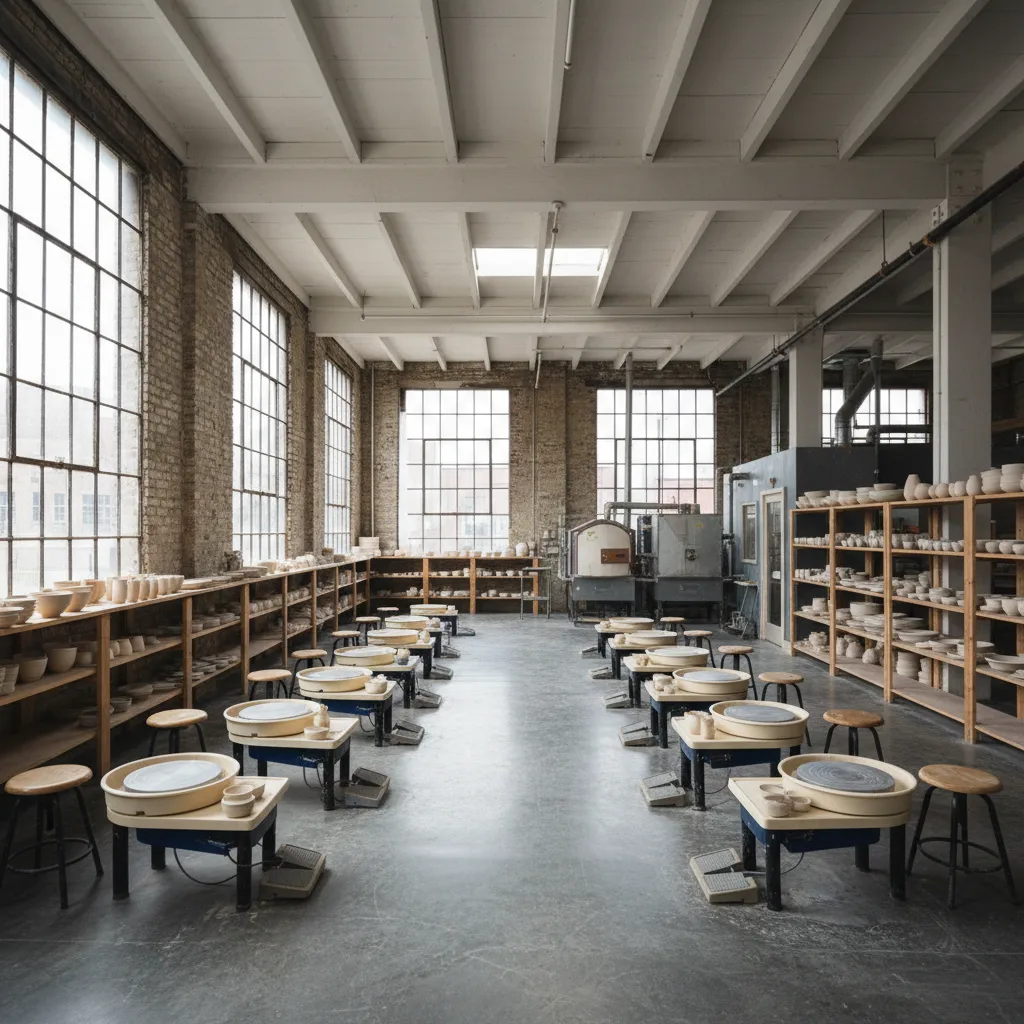
Modern Industrial Craft Along the Folsom Street Creative Corridor
Inside 2394 Folsom Street, the interior aesthetic pairs historic Mission District industrial brickwork with minimalist, contemporary studio design. Founded by ceramicist Marshall Blair and officially opening its San Francisco branch in November 2022, the studio expanded an innovative craft collective dedicated to high-quality community pottery. Soaring timber trusses and expansive roll-up bay doors allow fresh afternoon breezes and crisp daylight to flood the ceramic floor. The workspace features rows of whisper-quiet Shimpo VL wheels, a thirty-inch industrial slab roller for architectural tile and platter construction, multiple clay extruders, and generous stainless steel glazing counters. Wedging tables are topped with heavy, unbleached canvas to ensure smooth clay preparation without sticking. The studio also provides a dedicated documentation area with neutral backdrop paper where students photograph finished ceramic work for digital portfolios. The layout is optimized for efficient workflow: clay storage and wedging tables flow seamlessly into throwing stations, which transition naturally toward damp storage shelves and kiln staging zones.
Four-Week Introductory Tracks on Shimpo Whisper Wheels
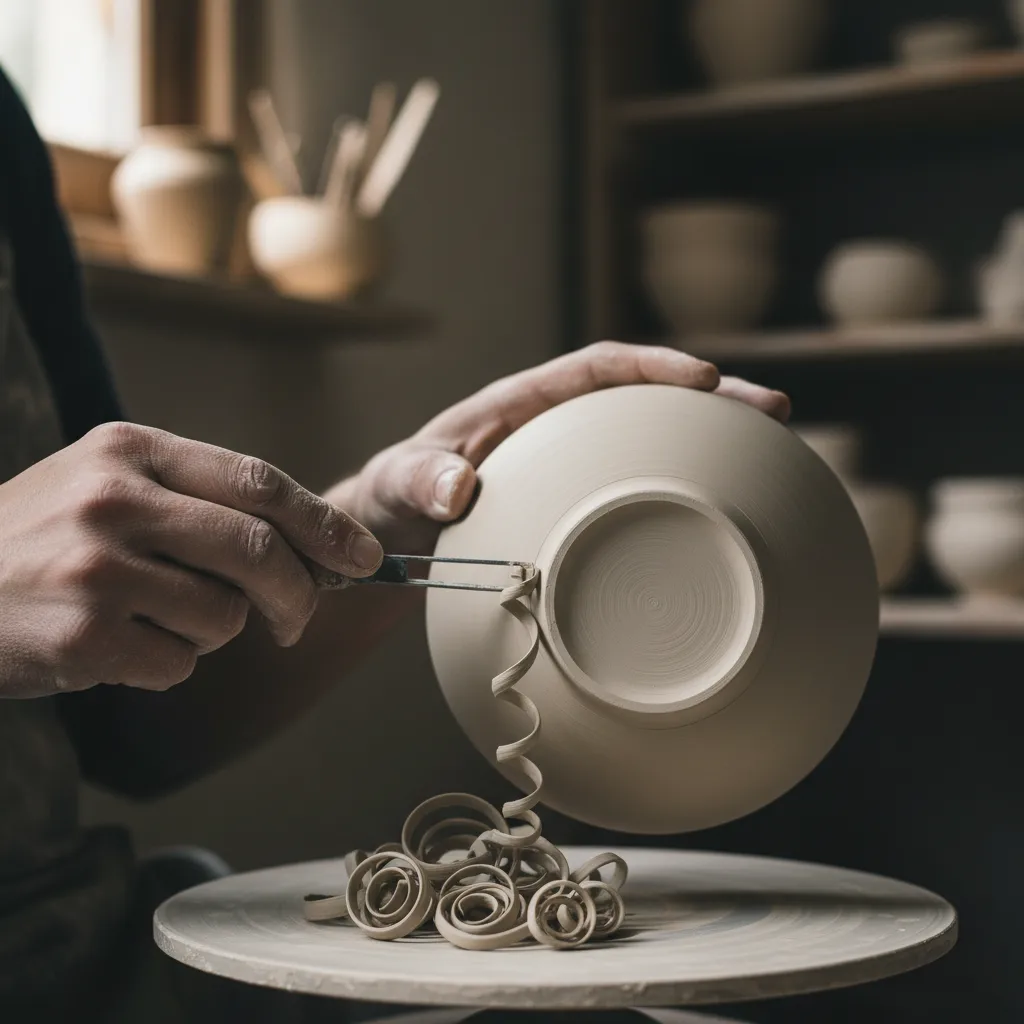
For newcomers exploring clay for the first time, The Pottery Studio organizes monthly instructional courses structured as four weekly sessions, priced at $235 per person. Each two-and-a-half-hour class is led by seasoned resident potters who guide small student groups through the core physical mechanics of wheel throwing: establishing a balanced stance, wedging stoneware to remove air pockets, anchoring elbows to center clay on the wheel head, and pulling balanced vertical walls. The monthly class fee covers all hands-on instruction, studio clay allocations, house glaze dips, and firing services for pieces made in class, while granting access to student practice hours outside instruction times. Students learn to refine rims with damp chamois strips, compress vessel floors with wooden ribs, and use wire cutters to release pots smoothly from bats. Instructors demonstrate the spiral wedging technique to align clay particles into concentric rings, making the clay significantly easier to center on the wheel.
Geil Gas Kilns, Cone 10 Reduction, and Thirty In-House Glazes
Achieving professional, gallery-worthy finishes requires superior kiln hardware and meticulous glaze formulation. The Pottery Studio fires student and member stoneware in industrial Geil gas reduction kilns capable of maintaining stable thermal curves up to cone 10, or approximately 2,350 degrees Fahrenheit. Following an initial electric bisque firing, potters can choose from more than thirty in-house glaze formulations displayed on fired test tiles. The glaze library includes matte satin whites, reactive copper blues, warm celadons, textured rutile washes, and deep iron tenmokus. The reduction firing draws oxygen out of the kiln chamber, highlighting subtle iron flecks in the clay body and generating rich chromatic depth. Fired ware is durable, non-porous, and food-safe. Every glaze bucket is tested weekly with hydrometers to maintain exact specific gravity, ensuring uniform glaze thickness whether applied by quick dipping or precision pouring.
Studio Maintenance Rituals, Clay Recycling, and Trap Hygiene
A clean studio is a safe studio, and The Pottery Studio maintains strict hygiene standards across all workstations. Dry sweeping is categorically barred to prevent respirable silica dust from circulating in the indoor air. Students and members are trained to clean using damp cellulose sponges, wiping down wheel splash pans, machine bodies, foot pedals, and nearby floor mats immediately after throwing. Clay trimmings and wet splash slop are deposited into clearly labeled recycling barrels where pug mills blend scraps back into fresh working stoneware. Heavy-duty under-sink settlement traps catch clay particulates before rinse water drains into municipal sewers, protecting city plumbing from blockages. Workstations are inspected at the end of each session to ensure that tools are rinsed, wedging canvas is scraped clean with metal ribs, and water buckets are wiped down.
First-Time Wheel Slip-Ups: How to Avoid Collapsing Vessels
Beginner potters often struggle with clay collapse by working too fast or pushing outward prematurely. Skip trying to pull clay upward before verifying that your centered clay ball is completely stable and wobble-free. Pulling from an off-center foundation inevitably produces an uneven rim that tears away during vertical pulls. Skip using hard fingertips to pull; maintain steady, gentle support using the fleshy pads of your fingers or a moist natural sponge. Lock your elbows against your thighs or hips to create stable mechanical leverage when centering heavy clay without straining arm muscles. Do not rush to remove wet pots from bats; use a thin wire cutter pulled taut across the wheel head, then allow the pot to air-dry until leather-hard before handling.
Mission District Wanderings: Murals, Taquerias, and 24th Street Coffee
The studio's location on Folsom Street in the heart of the Mission places potters steps away from vibrant street art and acclaimed culinary spots. Walk two blocks west to Mission Street or south toward 24th Street to grab carne asada street tacos at Taqueria La Cumbre or savor slow-roasted pork carnitas at Taqueria El Farolito. Stroll over to Balmy Alley or Clarion Alley to admire world-famous community murals celebrating local history and activism. For artisanal coffee and fresh sourdough, walk three blocks to Tartine Manufactory on Alabama Street, or grab an espresso at local neighborhood cafes. Dolores Park is just a twelve-minute walk west, providing sunny grassy hills to relax on while your pottery dries back at the studio.
Course Enrollment Cycles, Open Studio Hours, and Creative Alternatives
Because class cohorts are kept deliberately small to maximize individual wheel time, monthly courses at The Pottery Studio regularly fill several weeks before the first of each month. In addition to classes, the studio offers monthly memberships ranging from $140 for no-shelf plans up to $170 for top-shelf access, with discounts for direct debit. Book classes or review membership openings through the studio's website at thepotterystudio.com/san-francisco/ or email clayandsupply@thepotterystudio.com. The studio is conveniently located near the 16th Street and 24th Street Mission BART stations, with Muni bus lines 14, 27, and 49 nearby. If Mission class sessions are full, check course availability at Clayroom in Potrero Hill or SF Clayworks in the Bayview.
Ask Karpo for more information.
Keep reading
- Stonestown Winter Farmers Market Picker for Student Cooks
 Clement St Winter Farmers Market Picker for Lunar New Year
 Fort Mason Winter Farmers Market Picker for Citrus Bakers