 Bernal Heights Pottery Glaze Supply Browsing Route: Walk
Hidden Gems & Odd Finds
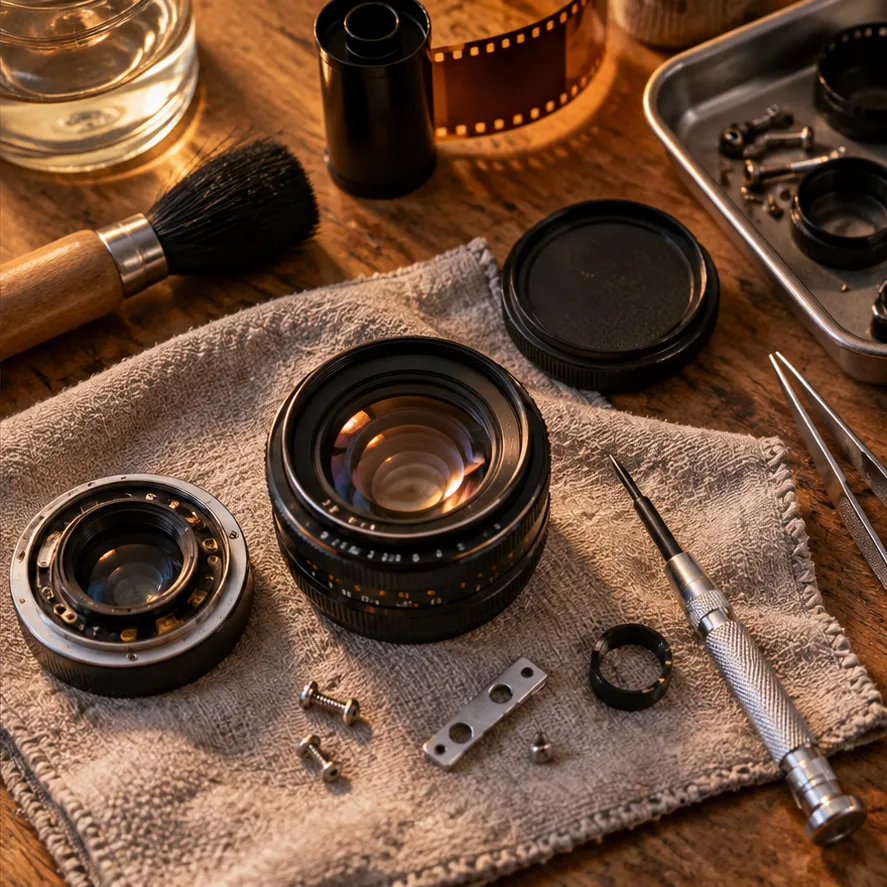
Glass Key Camera Repair Shop: Film Care Guide
Glass Key Photo at 1230 Sutter St in Lower Nob Hill helps film photographers organize a repair question, protect a camera, and plan a careful follow-up.
Glass Key Photo gives a film-focused camera search a concrete address: 1230 Sutter St in Lower Nob Hill. Begin by deciding whether your issue belongs to the body, lens, meter, advance mechanism, or the film itself. Write the symptom before you travel, then bring the camera in its normal working configuration. The official Glass Key Photo website is the source to keep in your notes. This article is a planning companion: it helps you arrive with a useful description, a safe way to handle the camera, and a clear idea of what you need to learn at the counter.
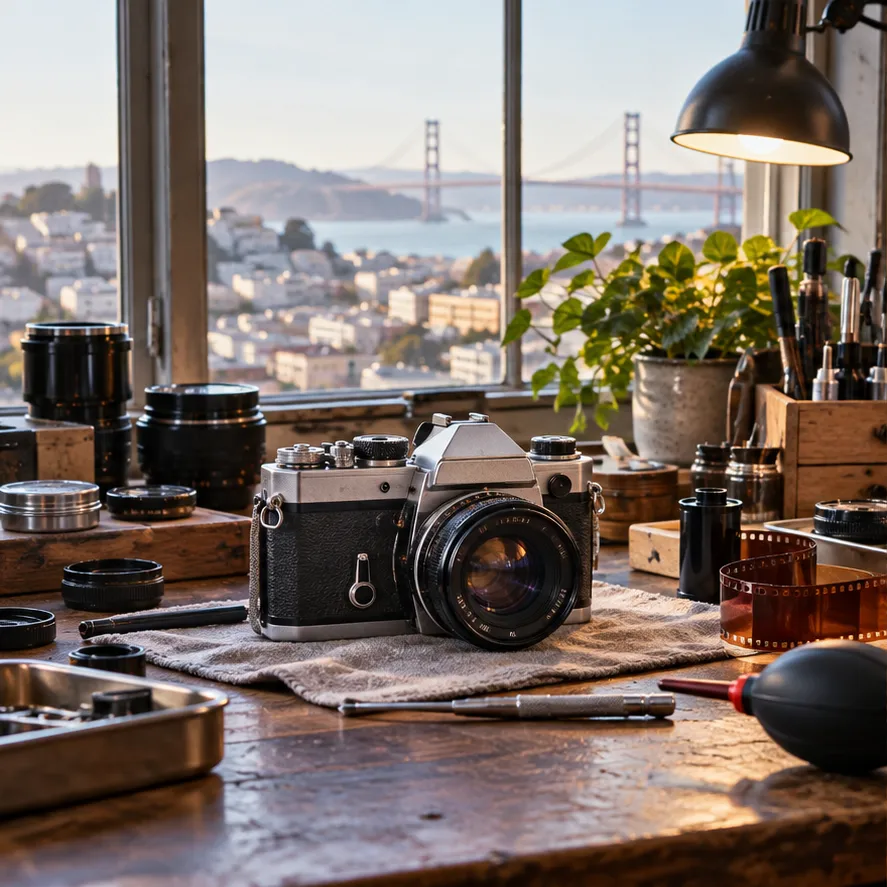
Turn a Film Problem Into a Note
Open with the film body and one clear symptom. If the advance lever catches, if the meter behaves strangely, or if a frame shows a bright edge, describe that event in order. Glass Key Photo can then respond to the actual sequence rather than a broad request for a vintage-camera overhaul. Keep the rest of the bag closed until the counter asks for it.
Protect the Roll Before You Travel
Film cameras reward careful preparation because the evidence is often delayed. If a roll is involved, mark whether it is exposed, partly exposed, or blank before putting it in your bag. Bring a sample frame or scan when the problem appears in the image, but do not open a loaded camera just to demonstrate a mechanism. A short note such as “advance stops after frame 12” is more useful than “it feels broken.” Keep the camera, lens, and removable accessories in separate soft pouches so the staff can inspect them without a pile of loose parts.
Name the Outcome You Need
At Glass Key Photo, ask the first question in terms of the outcome you want: reliable exposure, smooth film transport, accurate focus, or safe storage. Different outcomes lead to different checks. A sticky shutter and a light leak can produce similar frustration but require different evidence. Let the staff handle the body only after you have described the symptom and the conditions in which it appears. Record the model and serial number exactly, including letters and punctuation. That record is the simplest protection against a mistaken handoff when several classic cameras are waiting nearby.
Give the Counter Room to Work
Lower Nob Hill is busy enough that timing changes the quality of a technical conversation. If the counter is handling a film drop-off, wait until the transaction is complete before presenting a complicated camera question. Use that pause to arrange your notes and remove only the accessory you need to show. A clean counter keeps a strap, lens cap, and film canister from rolling into someone else’s order. The courtesy also helps the staff give you an answer that is more specific than a rushed “bring it back later.”
A Referral Can Be the Right Result
Do not assume that a repair conversation has to end with a repair. Sometimes the most valuable answer is that a camera needs a cleaning, a battery, a light-seal inspection, or a different shooting habit. Ask what a successful test would look like and whether you can reproduce it at home with an unloaded body. If a specialist referral is suggested, write the name down and ask which part of the problem prompted it. A documented next step is better than leaving with a vague impression that the camera is “probably fine.”
Keep the Nob Hill Walk Short
The neighborhood offers a compact route after the visit. From Sutter Street, you can walk toward Nob Hill’s steep blocks, pause at a café, and continue toward Chinatown if the camera is safely packed. Avoid carrying an open camera while crossing crowded sidewalks. A padded bag with the lens pointed downward keeps the mount protected and makes the walk less stressful. If rain starts, shorten the route and return the equipment indoors; classic shutters and damp film cases do not benefit from an extended sightseeing detour.
Film Etiquette Is Technical Etiquette
Film etiquette is a technical skill. Ask before advancing a shutter repeatedly, keep fingers off the mirror or pressure plate, and never place a loaded roll beside a drink. If the staff offers a test, listen for whether it is an unloaded mechanical check or a live-film test. Those are different things. Take one note about what was tested, one note about what was not, and one note about what you should observe next. That three-line record keeps your expectations realistic and makes follow-up easier.
Read the Intake Record Aloud
Before leaving the 1230 Sutter St address, review the intake details aloud. The camera model, lens, serial number, described symptom, and any accessories left with the shop should all match your note. Save a photo of the ticket or email. If you are leaving film, label each roll with exposure status and your name. If you are only asking a question, keep the camera with you and write the answer immediately. These small habits prevent the most common form of repair stress: forgetting what was agreed at the counter.
Match Service to Your Shooting Life
A good film-camera decision also accounts for how often the body will be used. A collector may value originality and a careful clean, while a working photographer may need predictable transport more than untouched parts. Write down the next assignment and the minimum function it requires. That sentence gives the shop a useful context without asking for a promise. It also helps you decide whether to invest in service, borrow a backup body, or change the shooting plan for the next roll.
Make the Follow-Up Comparable
If you return to Glass Key Photo, bring the same evidence that first revealed the problem. A scan, a frame number, or a note about shutter speed can be more informative than a new description made from memory. Tell the staff if the symptom changed after the camera warmed up, after a battery replacement, or after a different lens was fitted. Accurate conditions make a technical conversation shorter. Keep the official website and the Sutter Street address in the calendar entry so your follow-up points to the same business.
Finish With a Clear Frame
A camera repair shop near me search should finish with confidence about the next frame, not just a list of shops. Glass Key Photo gives Lower Nob Hill photographers a place to organize a film problem, protect a loaded camera, and ask a precise question. Bring evidence, respect the counter, record the handoff, and leave room for the possibility that a clean, a test, or a referral is the right result. That approach keeps the repair decision tied to the photographs you want to make. For a film body, keep the final note with the roll numbers and the loading condition. That small archive lets you compare later frames without rebuilding the story, and it keeps a Sutter Street follow-up tied to the same camera.
Ask Karpo for more information.
Keep reading
- Bernal Heights Pottery Glaze Supply Browsing Route: Walk
 Potrero Hill Pottery Glaze Supply Browsing Route: Walk
 Mission Pottery Glaze Supply Browsing Route: Studio Walk