 Stonestown Winter Farmers Market Picker for Student Cooks
Weekend Plans
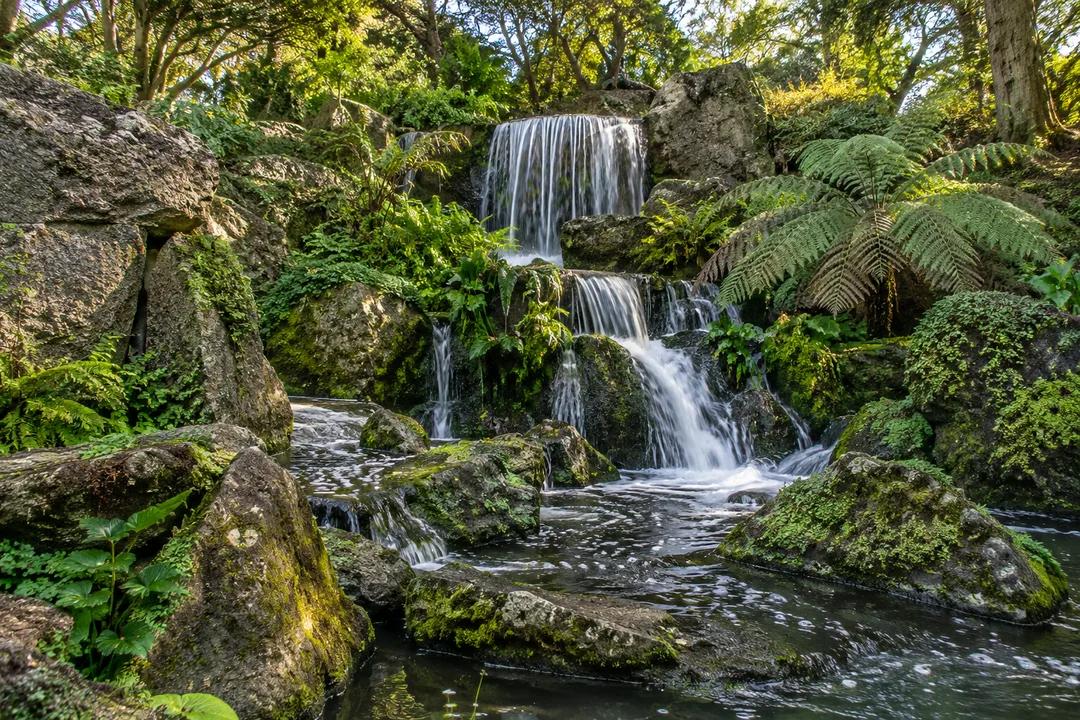
Strawberry Hill Botanical Rock Garden Waterfall Walk Map
Discover the terraced botanical rock garden path around Strawberry Hill in San Francisco featuring rustic stone steps, fern grottoes, and waterfalls.
Rising dramatically from the center of Stow Lake in Golden Gate Park, Strawberry Hill forms an emerald island crowned with natural outcroppings and historic stone architecture. As the highest geographical point inside the park, reaching an elevation of over four hundred feet, the island features a magnificent botanical rock garden landscape built around Huntington Falls. Completed in 1893 under park superintendent John McLaren and generously funded by railroad magnate Collis P. Huntington, this 110-foot cascading waterfall flows over rugged stone terraces into the surrounding lake basin. Hand-hewn sandstone blocks and native Franciscan chert boulders were meticulously stacked and mortared along the steep hillside, creating artificial cliffs, rocky promontories, and rushing water channels that evoke the wild Sierra Nevada mountain streams in the heart of urban San Francisco. The rushing water generates a cool ambient spray that enlivens surrounding trees, moisture-loving rockery plantings, and mossy banks throughout the day. Visitors walking toward the island over rustic stone bridges immediately feel the temperature drop as falling water and shaded stone formations create an inviting mountain microclimate.
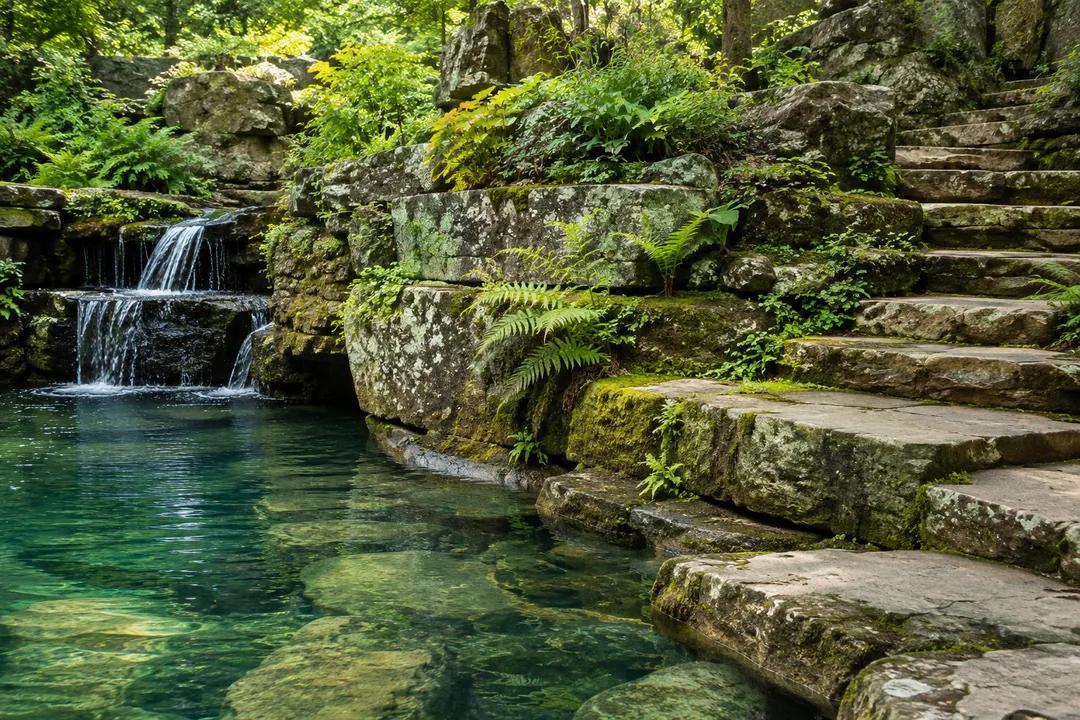
Huntington Falls and Artificial Rockwork Architecture
The engineering behind the Strawberry Hill rock terraces stands as a monumental achievement of nineteenth-century naturalistic park design. Water is pumped from Stow Lake directly to a summit reservoir and released down a series of staggered stone ledges, forming foaming rapids, deep plunge pools, and sheer drops over mossy stone lips. Park stonemasons shaped the stone faces to direct water into multiple cascading streams that catch morning sunlight through the tree branches.
Large rough-quarried sandstone boulders were arranged to appear as natural geological outcrops weathered by centuries of rushing water. Broad flagstone steps and rustic stone footbridges span the surging brook at multiple elevations, giving pedestrians dramatic vantage points directly above the tumbling cascades. Careful balance between solid rock masonry and natural earth banks allows water to flow without eroding the steep island slopes.
Over more than a century of constant water flow, mineral deposits and dense colonies of green algae have coated the rocks, lending an authentic, ancient patina to the entire masonry structure and blending stone seamlessly with surrounding earth and woodland vegetation. Visitors climbing the lower stone terrace can touch the cool, spray-dampened sandstone faces, observing how rock and running water create an intimate microclimate separated from the bustling city outside. The massive stone foundations anchor the hillside against winter rains while providing stable root niches for mountain rockery flora.
Fern Grottoes and Moisture-Loving Cliff Flora
The persistent spray and fine mist generated by Huntington Falls create a sheltered microclimate that nurtures a dense tapestry of moisture-loving rock garden plants. Vertical rock faces and shaded crevices along the watercourse are draped with thick curtains of Western sword ferns, delicate maidenhair ferns, and cascading baby's tears. Deep within cool rock grottoes beneath the falls, liverworts and velvet mosses thrive on dripping stone walls where direct sunlight never penetrates.
Along the edges of the rocky stream banks, broad-leaved hostas, golden water irises, and California wild columbines display vibrant blossoms that attract hummingbirds and dragonflies throughout spring and summer. Native coastal shrubs, including red-flowering currant and Pacific wax myrtle, root firmly into soil pockets wedged between heavy boulders, anchoring the steep terraced slopes against erosion.
This deliberate botanical layering softens the massive masonry ledges, transforming an engineered waterfall into a thriving, self-sustaining cliffside wetland ecosystem where frogs, songbirds, and aquatic insects find shelter among the wet boulders. Garden caretakers regularly inspect these rock shelves to ensure that decaying plant matter enriches the thin pockets of soil without clogging the subterranean drainage joints that stabilize the hillside. Dense carpets of moss and lichens continue to expand along the shaded sandstone slabs, binding loose mineral granules and creating a velvety green backdrop for flowering rockery perennials.
Summit Footpaths, Stone Benches, and Water Views
Beyond the waterfall cascades, a network of rustic stone stairs and gravel footpaths winds through native rockeries toward the summit of Strawberry Hill. Walkers ascend past weathered Franciscan chert ridges where native coastal scrub, wild blackberry brambles, and drought-hardy succulents cling to exposed rocky soil. At intermediate switchbacks, rustic stone benches built into rock niches offer sheltered resting spots shaded by Monterey pines and fragrant blue gum eucalyptus trees.
Reaching the summit reveals the historic circular foundation of the Sweeny Observatory, which stood on the hilltop until the 1906 earthquake. Today, the open stone plaza offers breathtaking 360-degree panoramas extending across Golden Gate Park to the downtown skyscraper skyline, Mount Sutro, and the shimmering blue waters of the Pacific Ocean. On clear days, the Marin headlands and Mount Tamalpais rise majestically above the northern tree line.
Cool westerly sea breezes sweep across the rocky hillcrest, carrying the scent of pine needles, damp stone, and salty ocean air in an invigorating sensory experience that rewards every footstep up the winding stone trail. The juxtaposition of rugged stone foundations, native hilltop flora, and sweeping urban vistas makes the summit trail one of San Francisco's most memorable geological walks. Pausing on the circular stone retaining wall gives walkers an expansive view of watercraft gliding across the serene surface of Stow Lake far below.
Island Trail Etiquette and Stow Lake Boat Basin Links
A hike around the Strawberry Hill rock terraces connects easily with leisure activities surrounding Stow Lake. Two historic arched stone bridges—the rustic sandstone Roman Bridge built in 1893 and the elegant stone arch on the island's southern side—provide pedestrian access between the mainland perimeter path and island trails. Near the northwest shore, the historic Stow Lake Boathouse offers rowboat and pedal boat rentals, allowing visitors to view the cascading waterfall rockery from water level.
Walkers should wear sturdy walking shoes with reliable rubber soles, as the stone stairs and footbridges near Huntington Falls can become slick from spray and mist. For visitors seeking scenic and less-crowded walking times, the Karpo APP offers convenient route guidance and real-time park navigation to help plan a peaceful loop around the island. The application helps walkers navigate the tranquil western shoreline trails before family groups arrive in the afternoon.
Exploring Strawberry Hill's rustic stone terraces provides an unforgettable blend of Victorian landscape engineering, lush rock garden botany, and tranquil island scenery that showcases San Francisco park heritage at its most enchanting. Paired with a quiet lakeside stroll along the shaded willow-lined banks, the island offers an enduring testament to naturalistic garden craftsmanship. Visitors departing across the rustic stone bridges carry memories of rushing mountain cascades echoing through the eucalyptus groves.
Ask Karpo for more information.
Keep reading
- Stonestown Winter Farmers Market Picker for Student Cooks
 Clement St Winter Farmers Market Picker for Lunar New Year
 Fort Mason Winter Farmers Market Picker for Citrus Bakers