 Stonestown Winter Farmers Market Picker for Student Cooks
Weekend Plans
Presidio Botanical Rock Garden Coastal Serpentine Trail
Hike the Presidio coastal bluffs to discover native botanical rock garden terrain with blue serpentine outcrops, rare wild clarkia, and Pacific vistas.
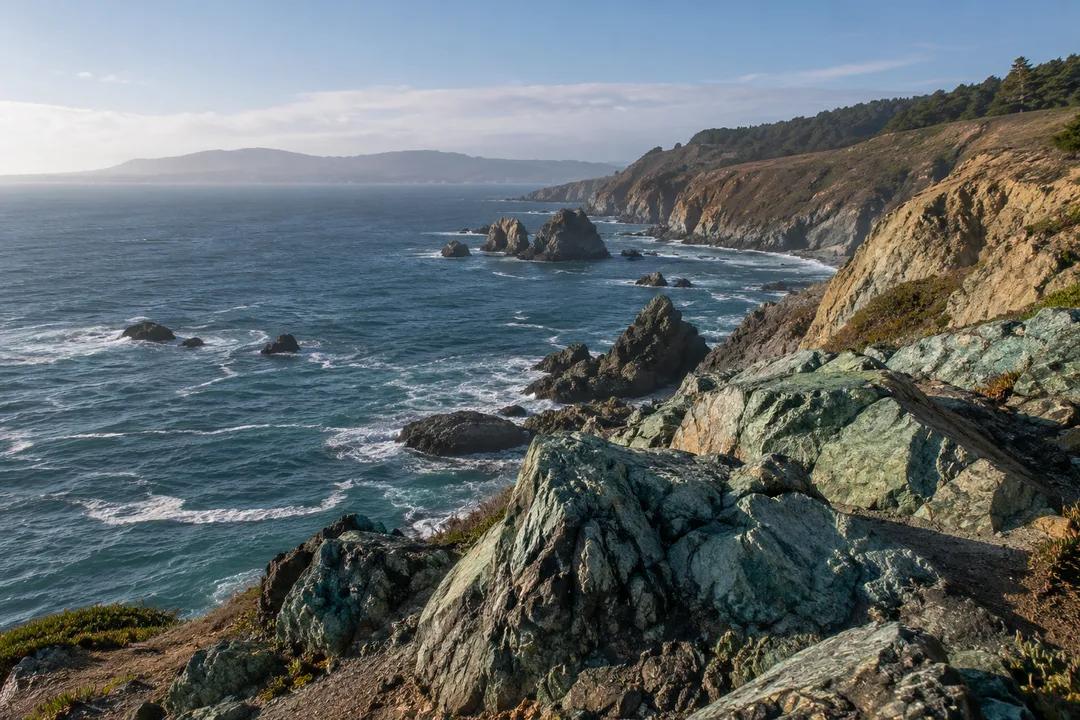
Stretching along the dramatic western cliffs of the Presidio of San Francisco, the Batteries to Bluffs trail winds through one of the most ecologically significant natural rock landscapes in California. Here, towering coastal bluffs expose extensive formations of serpentinite, California's official state rock, which originated millions of years ago in the Earth's oceanic mantle. Tectonic subduction and fault movements pushed these dense, metamorphic rock bodies upward, exposing rugged outcroppings of mottled jade-green, waxy turquoise, and deep slate-blue mineral faces directly to the Pacific Ocean surf. This wild coastal terrain functions as a living natural botanical rock garden, where extreme mineral chemistry and relentless oceanic winds have shaped a rare habitat found almost nowhere else on Earth. The shimmering bluish rock outcroppings stand as ancient sentinels above crashing Pacific breakers. Walking along these windswept precipices reveals a raw geological environment where bedrock chemistry directly dictates plant distribution.
The Geology of California Blue Serpentine Formations
The geology of the Presidio serpentine rockeries creates an intensely challenging environment for terrestrial plant life. Serpentine stone contains extraordinarily high levels of heavy metals such as magnesium, nickel, chromium, and iron, while lacking essential plant nutrients including calcium, nitrogen, and phosphorus. Weathering breaks down the mineral matrix into poor, thin soils that dry out rapidly under summer sun and ocean winds.
Most common invasive weeds and aggressive non-native grasses cannot survive in the harsh, chemically unbalanced soil that forms from eroding serpentine crags. As a result, these rocky outcroppings serve as evolutionary refuges, preserving ancient assemblages of rare California native plants that have adapted over millennia to thrive in toxic mineral crevices. Special biochemical mechanisms allow native perennials to isolate toxic heavy metals within cellular vacuoles.
The crumbly, fractured nature of the blue-green rock allows winter rainwater to penetrate deep into fissures, giving deep-rooted cliff perennials access to subterranean moisture throughout long, dry coastal summers. This geological interplay between mineral toxicity and seasonal water storage sustains one of the richest botanical biodiversity hot spots on the Pacific rim, protected and stewarded through dedicated coastal restoration efforts. Mineral veins of white chrysotile and waxy green lizardite crisscross the rock faces, creating striking visual textures that captivate hikers and geology enthusiasts alike.
Rare Endemic Flora Clinging to Mineral Crags
Walking along the serpentine bluff trails reveals an astonishing array of specialized botanical rock garden treasures tucked into rocky ledges and gravelly scree. Foremost among these is the endangered Presidio clarkia (Clarkia franciscana), a delicate annual wildflower found natively on only two serpentine sites in the entire world, producing lavender-pink petals with distinctive darker bases. Botanists from around the world visit these steep bluffs each May and June to observe the rare wildflower colonies in bloom.
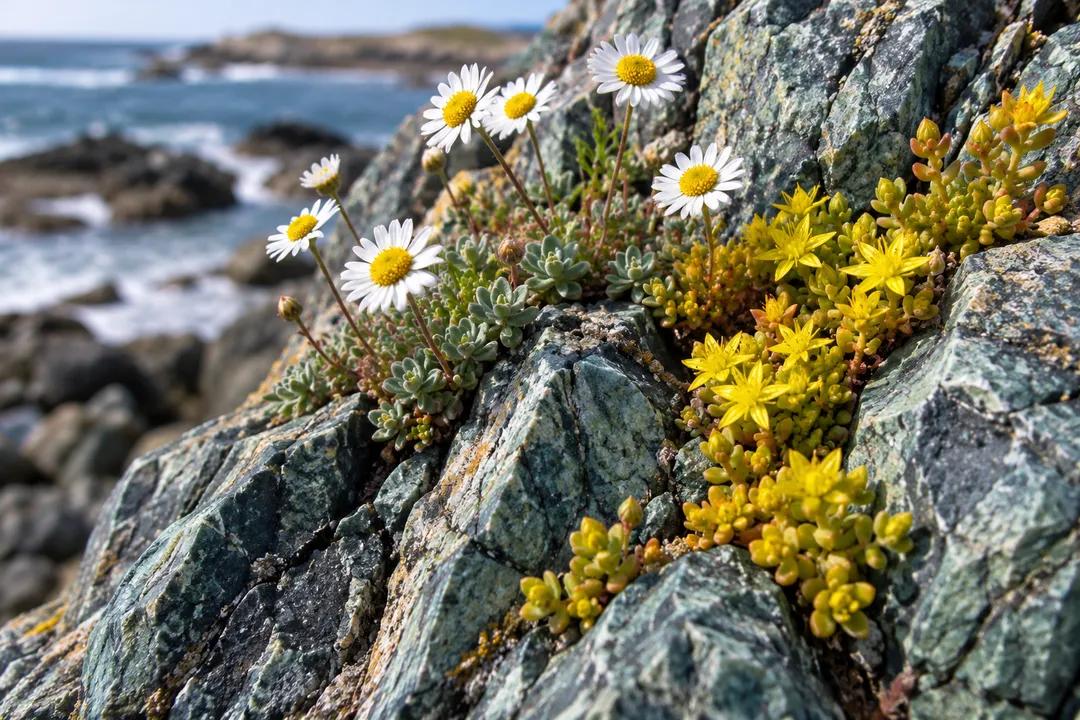
Clinging to vertical cliff fractures, powdery chalk-dudleya (Dudleya farinosa) forms dense geometric rosettes of pale fleshy leaves that store moisture and resist salty ocean spray. Vibrant purple seaside daisies (Erigeron glaucus) spread fibrous mats across exposed rock shelves, their bright yellow centers attracting native bumblebees and coastal butterflies. Prostrate coyote brush and coastal sagebrush hug the ground, adopting dwarfed, wind-swept forms to minimize water loss.
In early spring, bright yellow San Francisco wallflowers and fragrant coast rock cress bloom alongside silver-leaved bush lupine, creating vivid splashes of color across the austere greenish-blue stone bluffs facing the Pacific. These hardy native species survive on minimal organic matter, extracting minerals directly from the decomposing rock crystals. Deep root systems anchor the plants into hairline fractures, preventing them from being dislodged by fierce winter gales blowing off the ocean.
Windswept Coastal Bluffs and Pacific Ocean Views
The physical trail traversing this serpentine rockery is an exhilarating hike that hugs the contours of the rugged Marin headlands panorama. Wooden staircases and gravel footpaths descend from the cliffside artillery installations of Battery Crosby, winding past steep ravines and sheer rock precipices down toward the secluded shores of Marshall's Beach.
From every rocky overlook along the route, hikers enjoy unobstructed vistas of the Golden Gate Bridge's red towers rising majestically against the Marin Headlands, with container ships and sailboats gliding through the ocean narrows far below. The constant roar of crashing Pacific breakers provides a powerful natural soundtrack as ocean breezes carry salty sea spray across the sun-warmed rocks. Seabirds, including brown pelicans and western gulls, soar effortlessly along the cliff updrafts.
In late afternoon, golden sunlight strikes the serpentine outcroppings, accentuating the metallic sheen and rich green marbling embedded within the ancient stone faces, transforming the coastal cliffs into a natural gallery of geological sculpture. The dynamic interplay between moving fog banks and illuminated rock spires offers photographers an ever-changing coastal composition. As the fog swirls around the rugged crags, the dark blue and emerald tones of the wet stone deepen dramatically.
Trail Connections, Transit Tips, and Bluff Safety
A visit to the Presidio's serpentine rock outcrops easily integrates into a full-day coastal excursion across the park. The Batteries to Bluffs trail connects directly with the Coastal Trail, leading northward to the Golden Gate Overlook and southward toward Baker Beach's broad sands and sandstone bluffs. Hikers can reach the trailhead via Lincoln Boulevard or the complimentary Presidio GO shuttle, which provides convenient access from transit hubs across San Francisco.
Because serpentine bluff soils are fragile and home to endangered endemic species, visitors must remain strictly on designated trails, boardwalks, and timber stairways to prevent slope erosion and trampling of rare flora. The Karpo APP provides helpful trail maps and local tips, making it easy to identify sheltered resting spots along the bluffs when coastal winds pick up. Walkers should dress in layers to stay warm against sudden ocean fog and wear sturdy hiking shoes with deep tread.
Experiencing the Presidio's serpentine cliffs offers an unforgettable encounter with San Francisco's deep geological heritage and extraordinary native botanical biodiversity, leaving hikers with a renewed appreciation for nature's tenacity on the edge of the continent. The pristine coastal air and expansive ocean horizon ensure a deeply restorative outdoor experience. Taking time to study the tiny succulent rosettes anchored into blue stone ledges reveals the remarkable resilience of coastal life.
Ask Karpo for more information.
Keep reading
- Stonestown Winter Farmers Market Picker for Student Cooks
 Clement St Winter Farmers Market Picker for Lunar New Year
 Fort Mason Winter Farmers Market Picker for Citrus Bakers