 Stonestown Winter Farmers Market Picker for Student Cooks
Weekend Plans
Boat Tour Near Me: San Francisco Whale Tours Beyond the Gate
A San Francisco whale watching guide for San Francisco Whale Tours, with Pier 39 boarding details, seasonal species notes, sea conditions, and fall planning advice.
San Francisco Whale Tours is the choice for a boat tour near me search that is really asking whether the ocean can fit into one day. The trip starts at Pier 39, but the emotional destination is beyond the Golden Gate, where the bay gives way to colder water and a less predictable horizon. It is not a skyline cruise dressed up with animal language; it is a whale watch that happens to begin in the city's busiest tourist zone.
The first practical detail is time. Whale watching takes longer than a quick harbor loop, and the departure should not be squeezed between brunch and an early dinner reservation. Arrive with enough margin to find the correct dock, use the restroom, and settle the group before boarding. Pier 39 is crowded enough that a ten-minute delay can come from something boring, like walking past the right entrance twice.
Seasonality is the heart of the decision. San Francisco waters can see gray whales in migration windows, humpbacks in productive feeding periods, and occasional blue whales offshore when conditions line up. For fall 2026, the live schedule and recent sighting notes are more useful than any evergreen promise. Book because you want an ocean attempt with naturalists and bay geography, not because a guaranteed postcard whale is owed to the ticket.
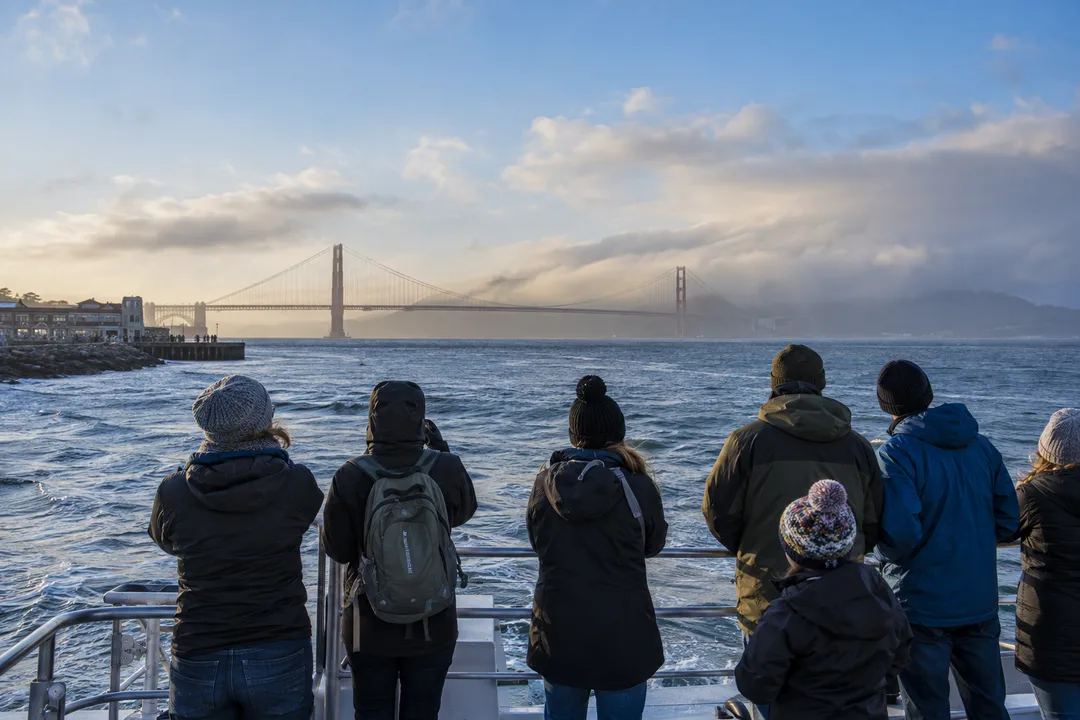
The boat's route creates a different kind of San Francisco sightseeing. Passing under or near the Golden Gate on the way to open water makes the bridge feel like a threshold rather than a landmark. The skyline recedes, the wind changes, and the trip becomes quieter. That transition is the reason this operator belongs in weekend planning: even without a dramatic breach, the city starts to look like a harbor on the edge of a larger coast.
Clothing needs to be more serious than a regular pier visit. The difference between the Embarcadero and the Pacific side of the bridge can be sharp, especially in October. Bring a warm layer, a wind shell, closed shoes, and patience for spray. Sunglasses help even on gray days because glare off the water can be tiring. The person who dresses for the ocean enjoys the trip more than the person dressed for a shopping pier.
The best riders are curious rather than impatient. Whale watching involves scanning, listening, and waiting for crew cues. A good trip may include dolphins, seabirds, sea lions, or a distant spout before a closer look develops. Children who enjoy nature guides can thrive here; children who need constant action may do better on a shorter bay ride. Match expectations to the actual rhythm of wildlife, and the day becomes easier.
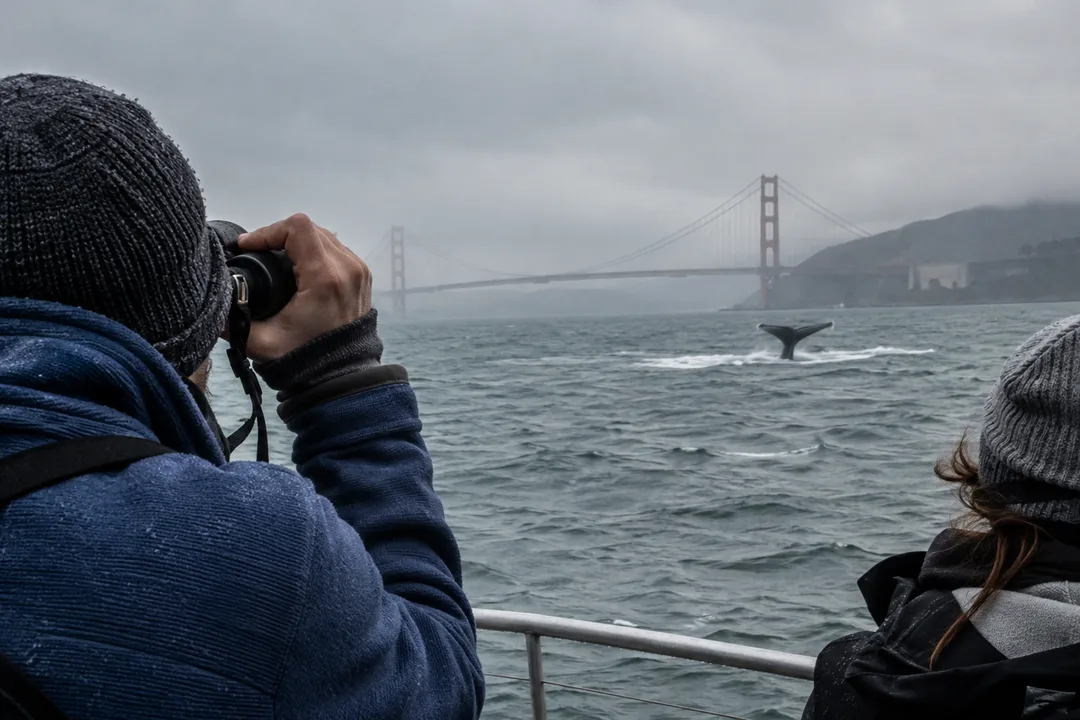
Photography works best when it follows the naturalist's attention. Keep a few wide shots of the bridge and the wake, then resist staring through a lens for the entire ocean section. If a whale appears, the first view may be short and unrepeatable. A phone can capture proof, but the trip's real value is often the collective moment when everyone on deck quietly turns toward the same patch of water.
Pricing should be checked on the operator's live calendar because date, age category, and special trips can change the final fare. The smarter comparison is not only price per ticket but time on the water, species focus, and sea conditions. A cheaper short sightseeing cruise is not a substitute for this trip. A private charter is not the same product either. San Francisco Whale Tours sits in the middle: structured wildlife search, public departure, serious water.
Food and motion planning are part of the outing. Eat enough before boarding that the group is not distracted, but avoid turning the deck into a picnic. Bring water, consider motion-sickness precautions if needed, and keep hands free for railings. The ocean outside the gate can be bumpy even when the bay looks polite from shore. The crew's safety instructions should shape how the group moves around the deck.
A good backup plan stays near the waterfront. If weather cancels or visibility looks poor, shift to the Exploratorium, the Ferry Building, or a walk toward Aquatic Park instead of trying to force the day. If the trip runs, leave recovery time afterward. Whale watching can feel physically bigger than it looks on a booking page; a slow meal in North Beach or a quiet waterfront walk will fit better than another timed attraction.
This is also a strong choice for repeat San Francisco visitors. Someone who has already done Alcatraz, the cable car, and the basic bay cruise can still find surprise in a trip that treats the city as a marine edge. The story changes from architecture to migration, from photos to observation. That shift makes the search phrase boat tour near me feel less like convenience and more like an invitation to look outward.
The main warning is certainty. Do not book San Francisco Whale Tours if the group needs guaranteed wildlife, warm seats, and a rigid timeline. Nature sets the pace, and the operator can only manage safety, route, education, and observation. That is not a weakness; it is the reason the trip can feel alive. The honest version of the recommendation is simple: come prepared, accept the ocean's mood, and let the crew make the best attempt.
For fall 2026, confirm the exact departure time, ticket price, route notes, and cancellation policy before committing the day. Then make the plan generous. Arrive early at Pier 39, dress for colder water than the city suggests, give the trip enough hours to breathe, and keep dinner flexible. If the whales appear, the day explains itself. If they do not, the bridge, the open water, and the practiced searching still make the boat feel worth choosing. Bring a small backup layer even if the forecast looks friendly, and avoid scheduling anything important immediately afterward. People often return hungry, windblown, and quieter than expected, which is a good sign that the trip actually reached beyond the tourist pier. One more planning detail is binocular etiquette: bring a compact pair if you have one, but do not let equipment turn the deck into a private lookout tower. Share the rail, listen when the crew points out birds or bait activity, and remember that the earliest clue may be a change in everyone else's posture before you see the animal yourself.
Ask Karpo for more information.
Keep reading
- Stonestown Winter Farmers Market Picker for Student Cooks
 Clement St Winter Farmers Market Picker for Lunar New Year
 Fort Mason Winter Farmers Market Picker for Citrus Bakers