 Bernal Heights Pottery Glaze Supply Browsing Route: Walk
Hidden Gems & Odd Finds
Hayes Valley Bespoke Tailor Atelier: 3 Fabric Steps
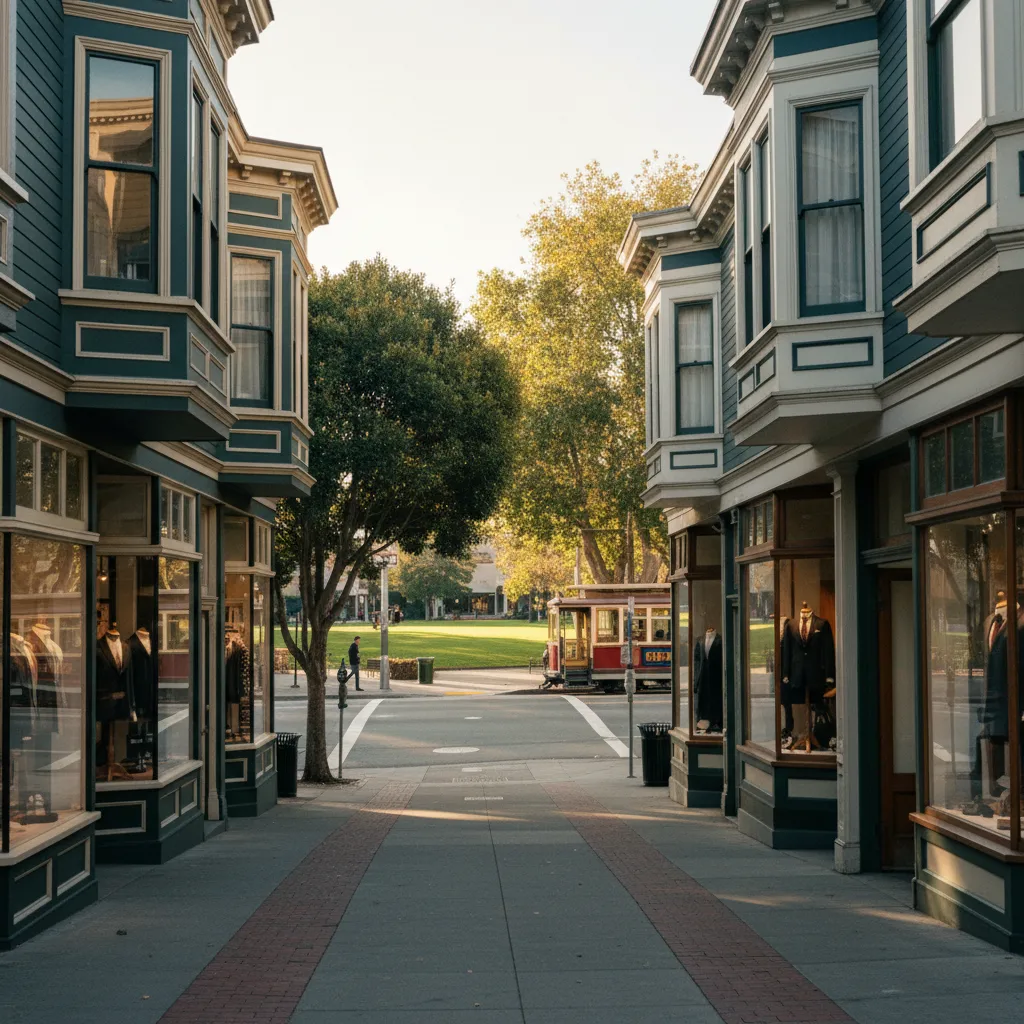
Plan a Hayes Valley bespoke tailor atelier walk along Octavia Boulevard and Patricia's Green. Compare coastal wool swatches and canvas jacket cuts on foot.
When the demolition of the elevated Central Freeway after the 1989 Loma Prieta earthquake gave way to the ground-level tree-lined boulevard and Patricia's Green in 2005, Hayes Valley evolved into San Francisco's most walkable design and independent garment quarter. Using a Hayes Valley bespoke tailor atelier route along Hayes Street, Octavia Boulevard, and Linden Street lets you approach custom suiting as an unhurried neighborhood walk rather than an intimidating downtown errand. Because the blocks between Franklin Street and Laguna Street sit on a flat valley floor framed by preserved Queen Anne and Italianate Victorians from the 1880s and 1890s, you can move easily between cloth consultations, architectural design showrooms, and open park benches while evaluating how different suiting fabrics respond to coastal daylight.
Starting at Patricia's Green and the Octavia Boulevard Design Spine
Begin your tailoring walk at the center of Patricia's Green on Octavia Boulevard between Hayes Street and Fell Street, where public lawn seating and rotating outdoor sculptures anchor the neighborhood's pedestrian flow. Before stepping into any fitting room or studio consultation along Hayes, Gough, or Laguna Streets, spend ten minutes observing how natural bay light interacts with weave texture and color depth. In San Francisco, a midnight navy or slate gray worsted fabric that appears muted under warm indoor tungsten lamps often reveals rich cobalt or heather undertones once carried out into the crisp afternoon glare near Civic Center and Market Street.
Walking west along Hayes Street from Gough Street toward Octavia Boulevard and Laguna Street reveals why garment makers and textile designers gravitate toward these low-rise blocks. Instead of cavernous department store floors, the streetscape consists of narrow Victorian ground-floor parlors, timber-framed carriage houses along Linden Street, and sunlit second-story workrooms with tall sash windows. This architectural scale encourages focused one-on-one dialogue over cloth books, lapel proportions, and shoulder expression without the rush of a high-volume retail counter.
If you are mapping out multiple stops across Hayes Street, Linden Street, and nearby Grove Street, open the Karpo APP to organize a personal shortlist of neighborhood ateliers, menswear and womenswear design studios, and quiet espresso patios along your route. Having your preferred stops grouped by block keeps your afternoon structured so you can compare fabric weights and construction notes while impressions remain fresh.
Three Steps for Evaluating Coastal-Weight Cloth and Canvas Structure
San Francisco's microclimates demand a very different cloth strategy from the seasonal extremes of New York or London, where lightweight tropical linens alternate with heavy winter overcoating. In Hayes Valley, where cool Pacific breezes funnel through the Van Ness and Fell Street corridors even in July and August, the most versatile bespoke commissions rely on four-season high-twist wools, mid-weight English flannels, and open-weave hopsacks that breathe during a brisk uphill walk while blocking afternoon wind.
During your studio visit, work through three practical fabric and construction checks before settling on a cloth bunch. First, hold the swatch book up to a street-facing window to test opacity and recovery by bunching a corner of the wool in your palm for five seconds and watching how quickly the crease springs back. Second, ask to feel the internal chest piece sample—comparing a hand-padded horsehair full canvas against a lighter half-canvas or unlined travel construction—so the jacket drape matches how you actually move between office desks, symphony evenings, and neighborhood dining.
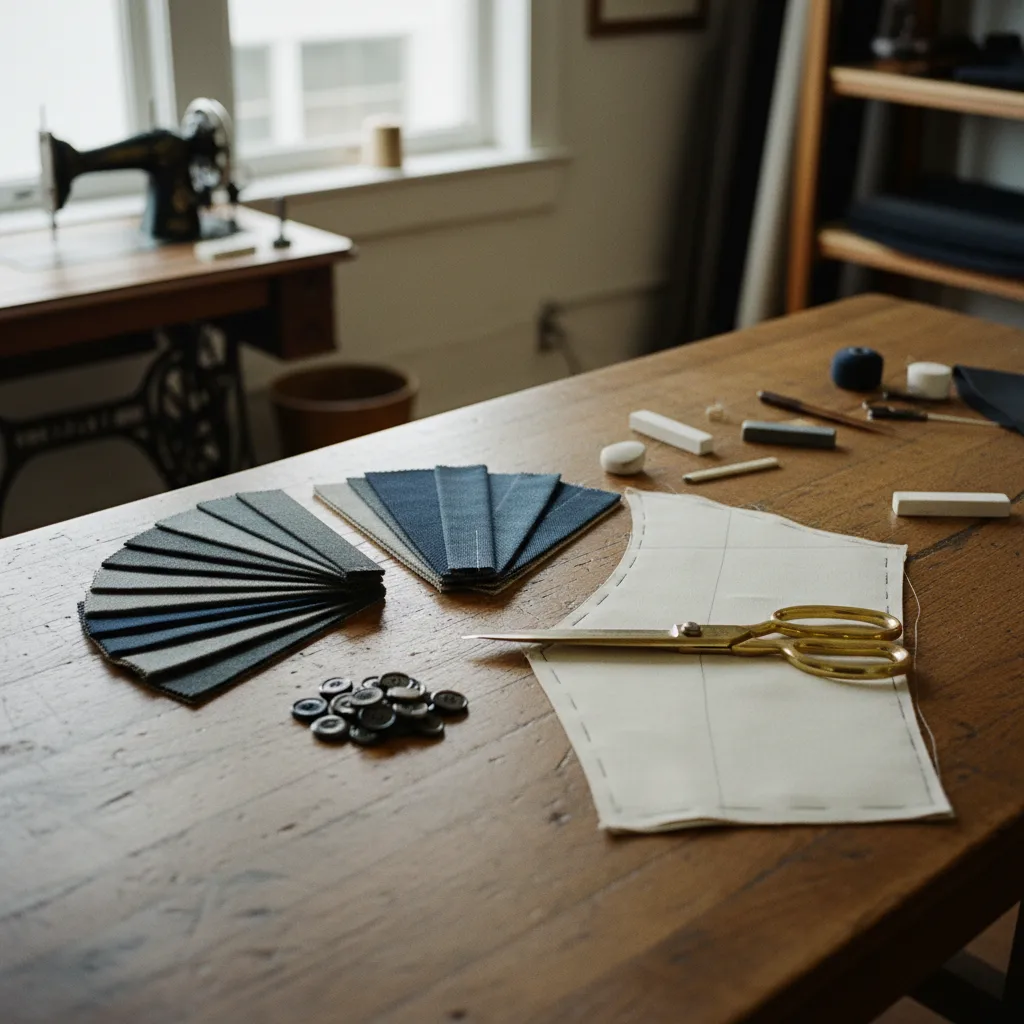
Third, discuss trouser rise, pocket slant, and sleeve pitch in the context of your daily footwear and posture. A true atelier consultation looks beyond chest and waist tape numbers to account for forward shoulder rotation, collar gap around the neck, and how the jacket quarters hang when unbuttoned. Taking notes on each studio's house cut—whether structured British chest shaping or soft Neapolitan shirt-shoulder tailoring—helps you decide which workroom aligns with your personal silhouette.
Pairing Linden Street Alleys with Civic Center Cultural Landmarks
Between fabric consultations or after a first basted fitting, step one block south of Hayes Street into Linden Street, a narrow intimate lane where converted brick and timber garages sit beside neighborhood coffee bars and architectural bookshops. The quiet pace of Linden Street between Octavia and Buchanan Streets makes it an ideal place to review fabric card codes, compare horn or corozo nut button options, and sketch wardrobe priorities before committing to a multi-week commissioning timeline.
Use that pause along Linden Street to think through interior details that determine how comfortably a custom jacket wears across mild foggy mornings and sunny Bay Area afternoons. Breathable Bemberg cupro linings in slate, burgundy, or deep forest green slide smoothly over cotton poplin shirt sleeves without trapping heat, while a quarter-lined or buggy-lined back panel lets air circulate through open-weave wool hopsack when walking uphill toward Alamo Square. Discussing interior pocket placement—such as a reinforced eyeglasses pocket at chest height or a buttoned travel pass pocket set into the facing—ensures the garment functions seamlessly without pulling the front canvas out of alignment.
Two blocks east across Franklin Street and Van Ness Avenue lies the monumental Beaux-Arts civic and performing arts district, anchored by the 1915 dome of San Francisco City Hall, the War Memorial Opera House completed in 1932, and Davies Symphony Hall opened in 1980. Because so many San Francisco formalwear, dinner jacket, and ceremonial suit commissions are worn right here at Civic Center performances or City Hall weddings, walking the five-minute stretch between Octavia Boulevard and Van Ness Avenue gives you immediate real-world context for how your garments will look and feel in action.
Transit Access, Fitting Etiquette, and Afternoon Planning Tips
Reaching the Hayes Valley corridor is straightforward via the Van Ness Muni Metro station at Market and Van Ness Avenue or the Civic Center BART and Muni station a few blocks east, both leaving you an easy level walk along Hayes or Grove Streets. If you plan to try on basted test garments or evaluate shirt collar heights, wear a well-fitting collared dress shirt and the exact dress shoes or boots you intend to pair with your finished trousers so hem break and cuff length can be pinned accurately.
Weekday mornings and early afternoons between Tuesday and Thursday generally offer the calmest studio atmosphere along Hayes Street and Octavia Boulevard, before weekend strollers fill the sidewalks around Patricia's Green. When you finish comparing cloth bunches and want to wind down with a pastry, wine bar glass, or dinner table near Laguna or Gough Streets, ask the Karpo APP for nearby Hayes Valley spots that fit your evening plans.
Ask Karpo for more information.
Keep reading
- Bernal Heights Pottery Glaze Supply Browsing Route: Walk
 Potrero Hill Pottery Glaze Supply Browsing Route: Walk
 Mission Pottery Glaze Supply Browsing Route: Studio Walk