 Bernal Heights Pottery Glaze Supply Browsing Route: Walk
Hidden Gems & Odd Finds
Dogpatch Bespoke Tailor Atelier: 3 Loft Cloth Tests
Plan a Dogpatch bespoke tailor atelier route along Third Street and the American Can lofts. Compare skylit studio wool twills and structured chore cuts.
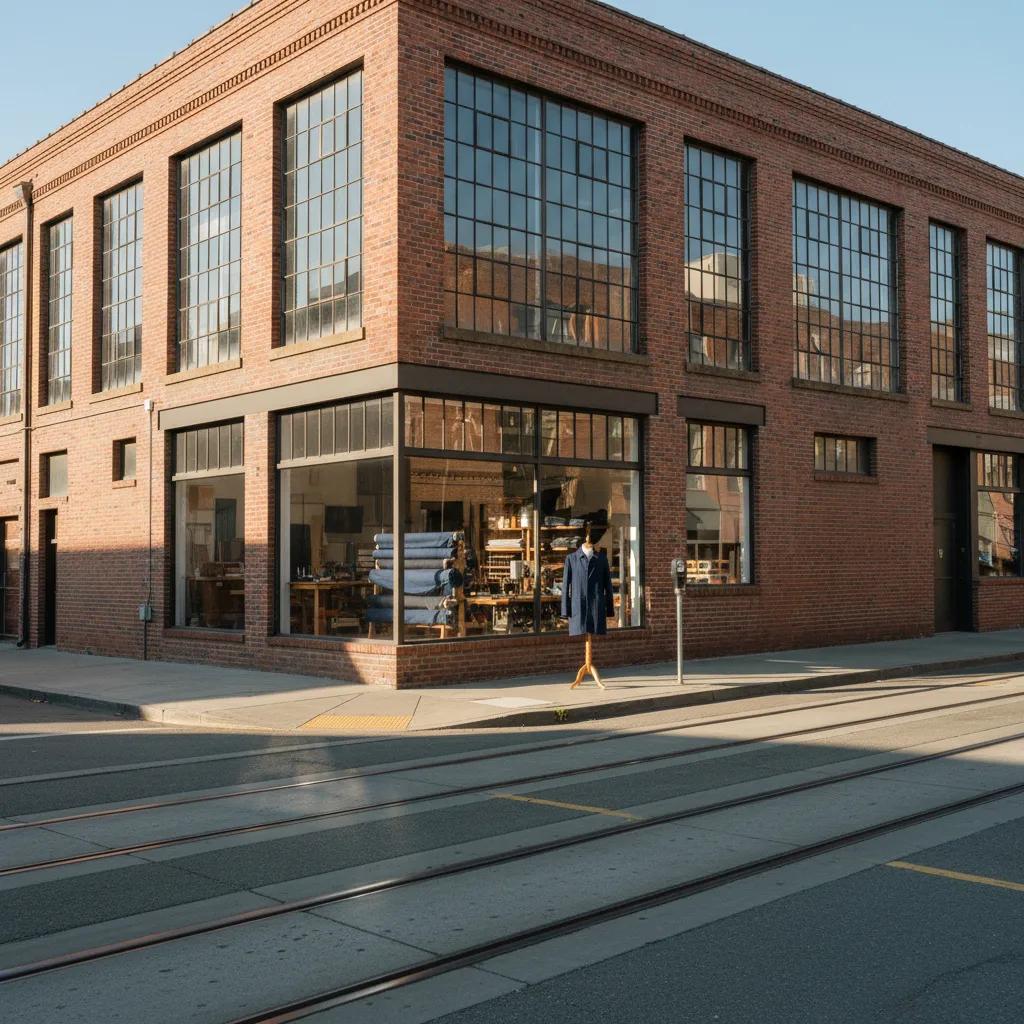
Along the central waterfront south of Mariposa Street, Dogpatch trades velvet ropes and chandeliered parlors for high-ceilinged brick machine shops, reinforced-concrete cannery lofts, and skylit textile studios. Following a Dogpatch bespoke tailor atelier route along Third Street, Twenty-Second Street, and Illinois Street introduces you to a distinctly contemporary side of San Francisco garment making—where architectural workwear, unstructured chore jackets, and heavyweight cavalry twill suits are drafted on long cutting benches under industrial sawtooth skylights. Because the neighborhood stretches across flat bayshore ground sheltered by Potrero Hill to the west, you can walk effortlessly between converted factory lofts, material craft galleries, and historic shipyard plazas.
Industrial Cannery Lofts and Skylit Workrooms on Third Street
Anchor your walk at the intersection of Third Street and Twenty-Second Street, where the multi-building industrial complex of the former American Can Company rises across a full city block between Twenty-Second and Twenty-Third Streets. Constructed beginning in 1917 as a tin container manufacturing plant and later adapted into working studios for independent makers, textile weavers, industrial designers, and the Museum of Craft and Design—founded in 2004 and housed here since 2013—this corridor embodies San Francisco's hands-on fabrication culture.
Inside the loft buildings lining Third, Tennessee, and Minnesota Streets, towering steel-sash factory windows flood workrooms with direct north and east bay daylight. For anyone commissioning a custom suit, field jacket, or architectural trouser cut, that unobstructed natural illumination is a major advantage over windowless downtown fitting rooms. You can lay three or four cloth bunches side by side across a six-foot cutting table and immediately see subtle weave variations between Donegal tweed, heavy whipcord, and dry-hand Japanese wool gabardine.
Before stepping off the T-Third light rail platform at Twenty-Third Street or Mariposa Street, open the Karpo APP to map out your preferred sequence of Dogpatch studio buildings, design storefronts, and coffee roasters. Organizing your stops along Third and Twenty-Second Streets lets you move methodically from cloth inspection to pattern discussion without losing track of the afternoon light.
Three Loft Cloth Tests for Architectural Workwear and Textured Suiting
Dogpatch's industrial setting pairs naturally with tactile, hard-wearing tailoring cloths that bridge the gap between traditional bespoke suiting and refined studio outerwear. During your loft consultation, run three hands-on fabric and pattern evaluations. First, test dense diagonal weaves—such as steep-twill cavalry wool, covert cloth, and heavy cotton moleskin—by rubbing two layers together to feel how smoothly the surface resists abrasion when worn on daily transit commutes or studio days.
Second, explore hybrid jacket silhouettes that borrow functional details from twentieth-century European and American workshop garments while retaining bespoke pattern balance. A five-button Teba jacket, an unlined three-pocket studio blazer with pleated bellows pockets, or a soft-shouldered double-breasted coat cut in slate flannel gives you the tailored collar hug and sleeve pitch of a custom suit without formal boardroom stiffness.
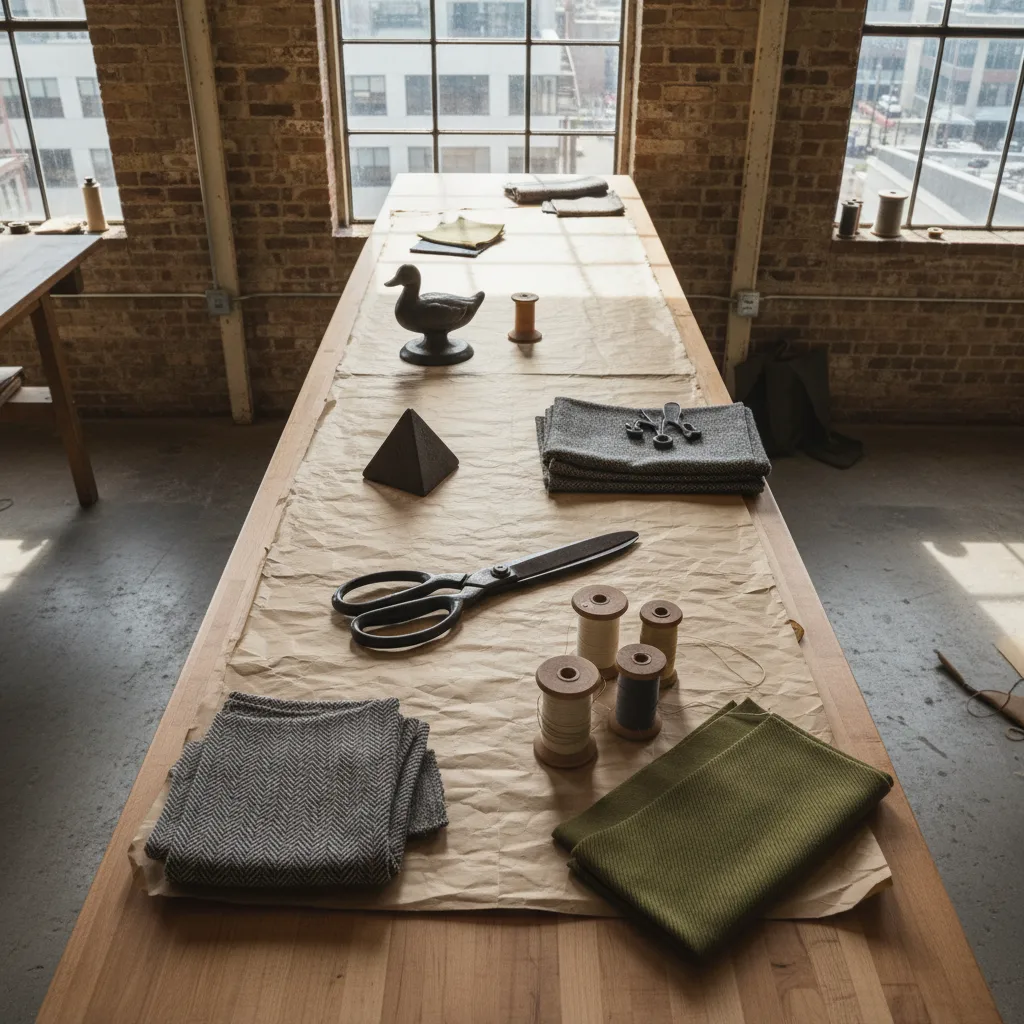
Third, inspect seam construction and pocket reinforcement on sample garments hanging in the workroom. In a studio-oriented bespoke piece, bar-tacked patch pocket corners, piped interior seams finished in cotton bias binding, and horn or matte corozo buttons sewn with a tall hand-wrapped thread shank ensure that heavy wool or linen-canvas pockets never sag when carrying a sketchbook, eyeglasses case, or leather wallet.
Ask your pattern cutter to show how your individual paper pattern is drafted and archived on brown kraft card stock. Once your torso balance, shoulder slope, and trouser rise are perfected during the initial basted fitting, having that permanent paper block on file means future commissions—whether a winter tweed Raglan coat or a pair of wide-leg summer linen trousers—can be cut with minimal follow-up adjustments.
When pairing those studio jackets with bespoke trousers in Dogpatch, ask to compare a full-cut straight leg against a gentle taper below the knee. Heavyweight cavalry twill, brushed cotton moleskin, and twelve-ounce wool flannel drape best when given enough room through the thigh and knee to fall cleanly without clinging to your calves. Adding deep buttoned rear pockets, a reinforced fork lining at the seat seam, and wide tunnel belt loops or brass-buckled side cinch tabs gives your trousers the durability of classic workshop clothing with the clean waistline of custom tailoring.
Shipbuilder Cottages, Esprit Park, and the Pier 70 Waterfront
After reviewing cloth books along Third Street, walk one block west to Minnesota and Tennessee Streets to explore the Dogpatch Historic District, officially designated in 2002. Because the steep eastern bluff of Potrero Hill blocked the April 1906 fire, nineteenth-century wood-frame cottages built between the 1860s and 1890s for shipwrights and cordage workers still stand intact beside brick warehouses, offering a rare glimpse of working-class Victorian carpentry.
Just south along Minnesota Street between Twenty-Fourth and Twenty-Fifth Streets, the repurposed industrial warehouses of Minnesota Street Project—opened in March 2016 with free public gallery admission—showcase contemporary sculpture, fiber art, and material installations beneath exposed timber roof trusses. Seeing how contemporary artists work with raw linen canvas, felted wool, and architectural steel across these warehouse bays deepens your appreciation for the structural craft inside a bespoke garment.
Stroll north past the redwood grove of Esprit Park between Twentieth and Nineteenth Streets—created as an open green in 1982 and transferred to the San Francisco Recreation and Park Department in 2001—and head east to Illinois Street at Eighteenth Street to reach Crane Cove Park and historic Pier 70. Here, where Union Iron Works began steel shipbuilding in 1883, the seven-acre waterfront park opened in September 2020 preserves historic Slipway Number Four, nineteenth-century red-brick machine shops, and two monumental steel shipyard cranes overlooking the bay.
Light Rail Connections, Caltrain Access, and Studio Walk Timing
Reaching Dogpatch is simple via the Muni T-Third light rail line running down the center of Third Street from downtown and Soma, with stops at Mariposa Street, Twentieth Street, and Twenty-Third Street, or via the Twenty-Second Street Caltrain station tucked at Twenty-Second and Iowa Streets beneath Potrero Hill. Wear comfortable walking shoes and a light knit layer so you can slip sample jackets on and off easily during studio consultations.
Plan your Dogpatch tailoring walk for early to mid-afternoon between Tuesday and Friday, when the western sun clears Potrero Hill and warms the brick courtyards along Third and Twenty-Second Streets. When you finish your fitting and want to compare nearby sourdough bakeries, craft breweries, or waterfront dinner tables near Twentieth or Twenty-Second Street, open the Karpo APP to find a neighborhood spot right along your path.
Ask Karpo for more information.
Keep reading
- Bernal Heights Pottery Glaze Supply Browsing Route: Walk
 Potrero Hill Pottery Glaze Supply Browsing Route: Walk
 Mission Pottery Glaze Supply Browsing Route: Studio Walk