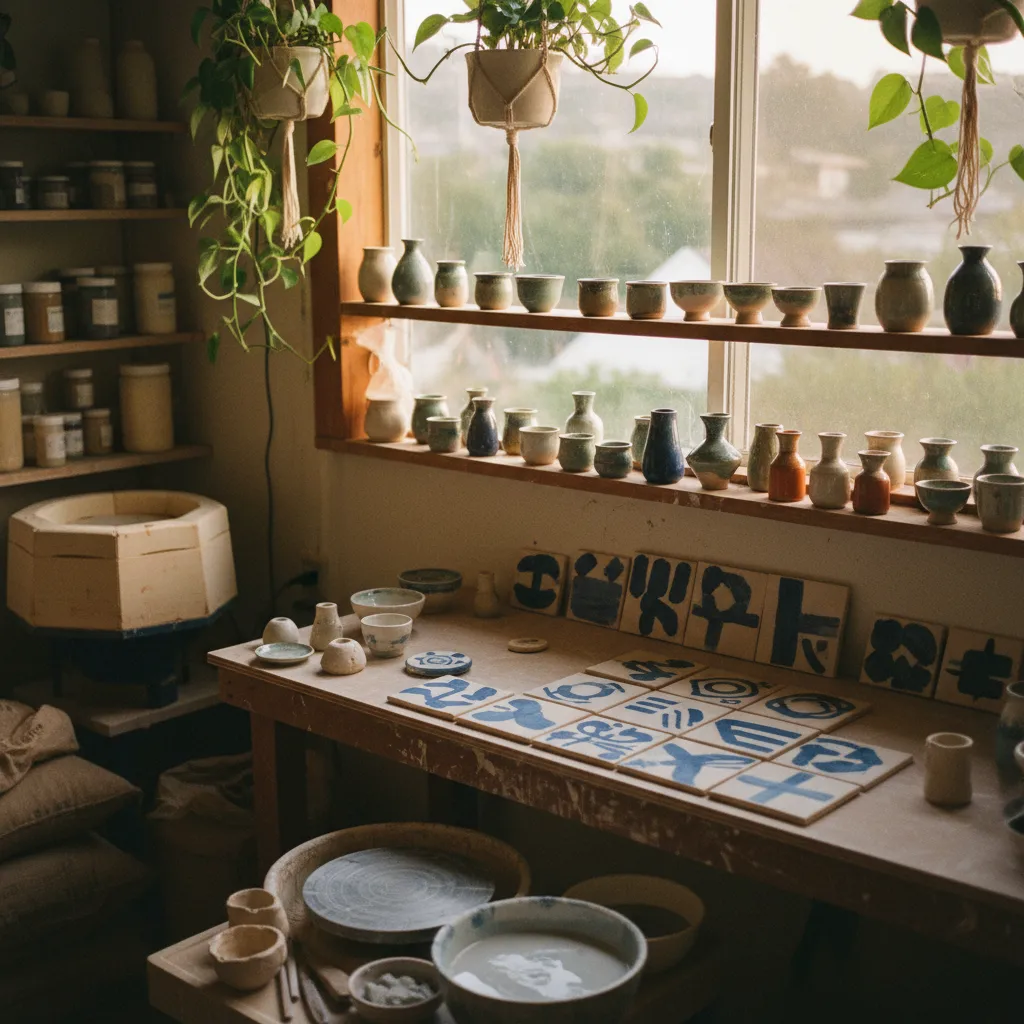
 Bernal Heights Pottery Glaze Supply Browsing Route: Walk
Hidden Gems & Odd Finds
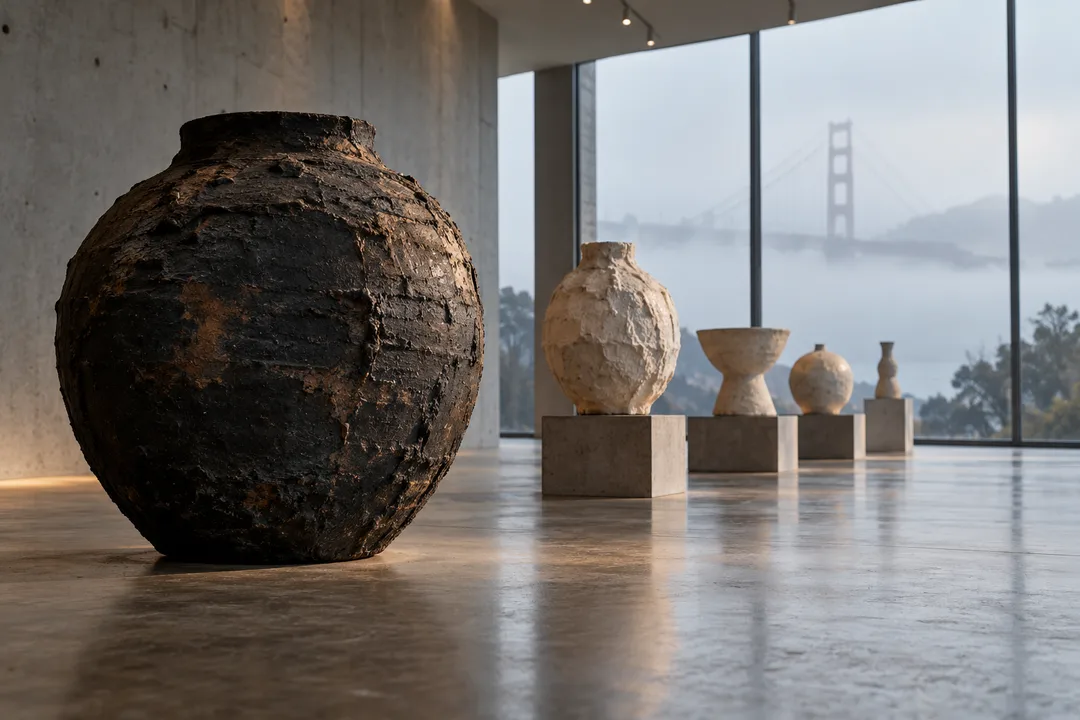
SF Artisan Pottery Gallery: 3 Exercises for Looking Closely
Plan an SF artisan pottery gallery visit around three looking exercises: follow a silhouette, compare surfaces, and notice how grouped objects change scale.
Three looking exercises can give an SF artisan pottery gallery visit a clear purpose: trace a silhouette, compare surfaces, and study a group. You can do them silently, without handling work or knowing specialist terms. Pick one exercise for the first object that catches your attention, then let the work suggest where to go next. The goal is not to finish an assignment. It is to slow down enough to notice a choice you might otherwise pass on the way to another room.
Choose an Outing That Leaves Room to Look
Begin with the amount of attention you want to give. A focused exhibition visit suits a different mood from shopping for a mug or taking a lesson. Tell the Karpo APP that you want to look at ceramic art in San Francisco, with one destination and enough unhurried time to observe. Add your starting area and any travel constraint. You are asking for an outing that supports concentration, rather than the largest possible list of places associated with the word pottery.
Exercise One: Follow the Outer Edge
Stand at a comfortable distance and follow the outline of a piece from its base to its highest point. Notice where the form narrows, expands, or changes direction. Try describing the shape with everyday words before reaching for a category. A vessel may lean, press outward, or seem to balance on a small foot. Your description does not have to explain how it was made. It only needs to be precise enough that you could recognize the silhouette again among several different works.
Move Your Viewpoint, Keep Your Distance
If the room allows it, look from another position without crossing a barrier or stepping into a restricted area. A form that seems symmetrical from the front may offer an unexpected profile at the side. Notice which parts remain visible and which disappear. Stay attentive to other visitors, especially in a narrow passage. You do not need access to every side to complete the exercise. The relationship between two permitted viewpoints can already reveal more than a quick frontal glance.
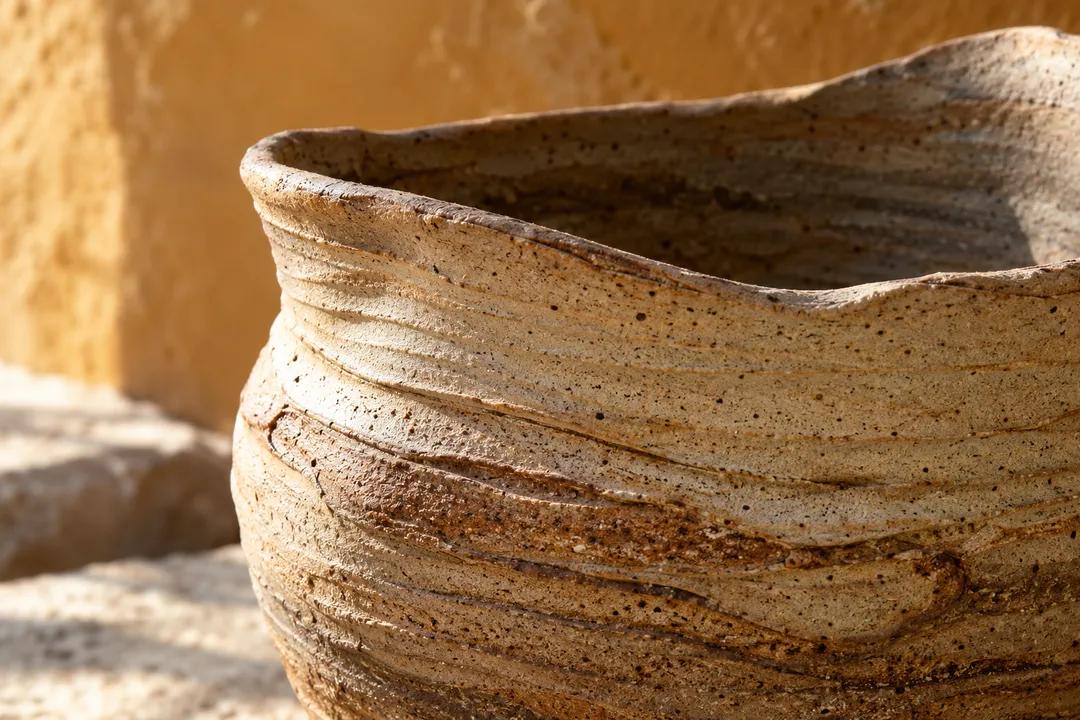
Exercise Two: Describe a Surface in Plain Language
Choose an area where light catches the surface and identify what you actually see. Is the reflection broad or sharp? Does a mark repeat or change? Can you distinguish an edge between two colors? A visual description can remain useful without naming the glaze or firing method. Avoid turning a guess into a fact. Words such as smooth-looking, ridged, or speckled describe your observation, while a technical explanation belongs to the artist's text or a knowledgeable person discussing that specific object.
Let Light Change the Question
From another permitted position, the same surface may appear quieter or more reflective. Notice whether the change follows your movement or seems consistent across the object. Keep the comparison small: one patch, one edge, or one transition is enough. There is no need to touch the work to explore that difference. If you want to know whether a texture comes from construction or a later treatment, turn that uncertainty into a concise question for the gallery rather than supplying your own confident answer.
Exercise Three: Read a Group as a Relationship
When several works are presented together, look at the spaces between them as well as the objects. Compare heights, widths, and the rhythm of repeated shapes. One piece might anchor the group while another draws attention through contrast. That is your reading of the arrangement, not proof of the artist's intention. Look for supporting information if you want to understand the stated relationship. An exhibition can offer both a personal response and a documented explanation without requiring them to be identical.
Try Removing an Object in Your Imagination
Imagine the group with one element absent. Does the arrangement feel lighter, less balanced, or more repetitive? Keep the experiment entirely mental. It can help identify which feature was organizing your attention. Then look at the complete group again and notice whether your first impression changes. This is a way to examine relationships, not an instruction to improve the installation. The actual arrangement remains the artist's or curator's choice, and the objects should stay exactly where they have been placed.
A Note Can Be Shorter Than a Photograph
Write three observations after looking: one about outline, one about surface, and one about scale. A few concrete words can preserve what caught your eye more effectively than many hurried images. If you prefer sketching or photography, use the venue's stated permissions and respect other visitors. A quick drawing need not resemble a finished artwork. Its purpose is to record a curve or proportion you noticed. No device or image-making activity should prevent another person from seeing the same work.
Use Wall Text After Your First Look
Try observing one object before reading its description, then return to it after reading. Notice what the text changes about your attention. A title may direct you toward a subject you had not considered, while a material note may answer a process question. Keep the two stages distinct in your own notes. You are not testing whether your first response was correct. You are learning how additional information affects the way you see, including the details that remain interesting after an explanation is supplied.
Build a Focused Request Instead of a Route Marathon
For a sample brief, ask for an SF ceramic art visit where you can concentrate on form and surface, with a manageable journey from your chosen area. Say whether you prefer sculpture or functional vessels and how much time you have. Karpo's public introduction describes finding things worth seeing and working around a user's schedule. That supports using the app as a starting conversation for the outing. It does not establish the display, permissions, or current exhibition content of an unnamed gallery.
Practical Notes: Stop While You Still Notice
Choose a modest stopping point, such as one group and two individual objects, then leave room to follow an unexpected interest. Skip the pressure to photograph every piece or read every label. If you leave with one memorable curve and one useful question, the visit has already produced something specific. Use those observations in your next Karpo APP request: perhaps you want more sculptural clay, a different scale, or a discussion of surface. This page supplies looking exercises rather than a claim about any venue's present exhibition.
Ask Karpo for more information.
Keep reading
- Bernal Heights Pottery Glaze Supply Browsing Route: Walk
 Potrero Hill Pottery Glaze Supply Browsing Route: Walk
 Mission Pottery Glaze Supply Browsing Route: Studio Walk