 Bernal Heights Pottery Glaze Supply Browsing Route: Walk
Hidden Gems & Odd Finds
SF Artisan Pottery Gallery: 5 Questions for Daily Tableware
Choose daily tableware at an SF artisan pottery gallery with five questions about use, size, care, replacement, and transport before committing to a set.
Five questions can narrow an SF artisan pottery gallery shopping trip for daily tableware: what you eat, where a piece fits, how it is cared for, whether you need replacements, and how it gets home. A bowl that looks compelling on a display shelf still needs to work with your meals and storage. Begin with one routine you want to improve, then use the visit to compare pieces against that routine rather than choosing a complete set on appearance alone.
Start With the Meal You Actually Make
Think through a familiar meal from serving to washing up. A shallow bowl for pasta asks different things of its rim and interior from a deep bowl for soup. A plate used for toast needs less serving space than one carrying several separate foods. Write down the meal and the difficulty you want to solve, such as a crowded rim or an awkward fit in a cupboard. These are personal requirements, not claims about which shape every household ought to own.
Ask for Shopping Rather Than a Making Class
Describe your intention clearly in the Karpo APP: you are seeking handmade ceramic tableware to buy in San Francisco, rather than a pottery lesson or an exhibition with nothing for sale. Add the area you can reach and whether you want to browse or compare a specific type of vessel. Karpo publicly presents going-out suggestions around mood and schedule. That makes the app a starting point for the search, while a seller remains the authority on the function, condition, availability, and care of a particular piece.
Question One: What Will Touch This Surface?
Tell the seller the intended use instead of assuming that a vessel-shaped artwork is meant for food. Ask about the specific piece you are considering and the activities you expect it to support. A display object and a functional serving bowl can share a silhouette without sharing a purpose. Keep the answer with the object identification if you buy it. Do not infer suitability from shine, color, the presence of a handle, or a claim made about another product elsewhere in the room.
Question Two: Does It Fit the Space Around It?
Measure the shelf, cupboard opening, or drawer where you intend to keep the new item before the outing. Include the usable opening, not just the internal width, and note any height lost to a shelf lip. Compare the piece against those measurements without moving display work yourself. If you need dimensions, ask a staff member how they are recorded. A set that fits as individual pieces may still need a different storage arrangement when stacked, particularly if handles or irregular rims project beyond the body.
Use Familiar Objects as a Practical Reference
Bring the dimensions of a plate or bowl that already works for you. Knowing what you like about it makes comparison more concrete: perhaps its depth holds sauce, but its width leaves no room beside a glass on your small table. A paper outline can help you think about footprint at home, though it cannot reproduce weight or handling. Avoid treating a photograph with no scale as a measurement. The aim is to identify the tradeoff you will notice every day, not to judge a piece only under gallery lighting.
Question Three: Can Your Routine Meet Its Care Needs?
Ask for the maker's or seller's instructions for the exact item, including cleaning and any restrictions on its use. Then compare those instructions with your habits. If you rely on a dishwasher, a piece requiring a different routine needs a deliberate decision rather than an optimistic promise to change later. The same principle applies to heating or storing food. This page does not assign generic care rules to handmade ceramics, because a broad description of the category cannot establish what one maker has specified for one object.
Question Four: Is Matching Later Part of the Plan?
Decide whether variation appeals to you or whether you need several closely matching pieces over time. Ask how the seller describes the collection and what information would identify it again. A purchase today does not establish future production or stock. If matching replacements are essential, treat the absence of a clear answer as a limit on your own plan. Alternatively, choose a deliberately mixed table in which a later addition can differ. Neither approach is more authentic; they simply place different demands on the shopping decision.
Compare One Place Setting Before Multiplying It
Imagine a single arrangement with the cutlery, glass, and serving dishes you already use. Consider how much of the table remains clear and whether the visual weight suits your room. You do not need to reproduce a gallery display at home. Starting with one item or one place setting can be a useful personal limit when you are unsure, without assuming that a seller offers trials or accepts returns. Ask for the actual transaction terms and make the choice with those terms in mind.
Question Five: What Happens Between Counter and Cupboard?
Work out the journey home before choosing a fragile purchase. Say whether you will walk, use public transport, or travel by car, and ask what packing the seller provides. A large serving piece creates a different carrying problem from a small cup, even if both fit your budget. Keep your hands and attention available for the package instead of combining the pickup with an overfilled outing. If shipping is offered, use the seller's stated terms rather than assuming that delivery, insurance, or replacement is included.
Make a Shortlist Around the Hardest Requirement
Return to the factor that would make a purchase fail for you. Perhaps it is storage height, care, or a need to carry everything without a car. Put that constraint ahead of a preferred glaze color in your next search request. You can describe the task in one sentence: find a manageable San Francisco ceramics-shopping outing focused on a small serving bowl that fits my measured shelf and my cleaning routine. This is a request to guide the conversation, not a promise that an app has tested an item's suitability or located matching stock.
Practical Notes: Leave With the Decision, Not a Full Set
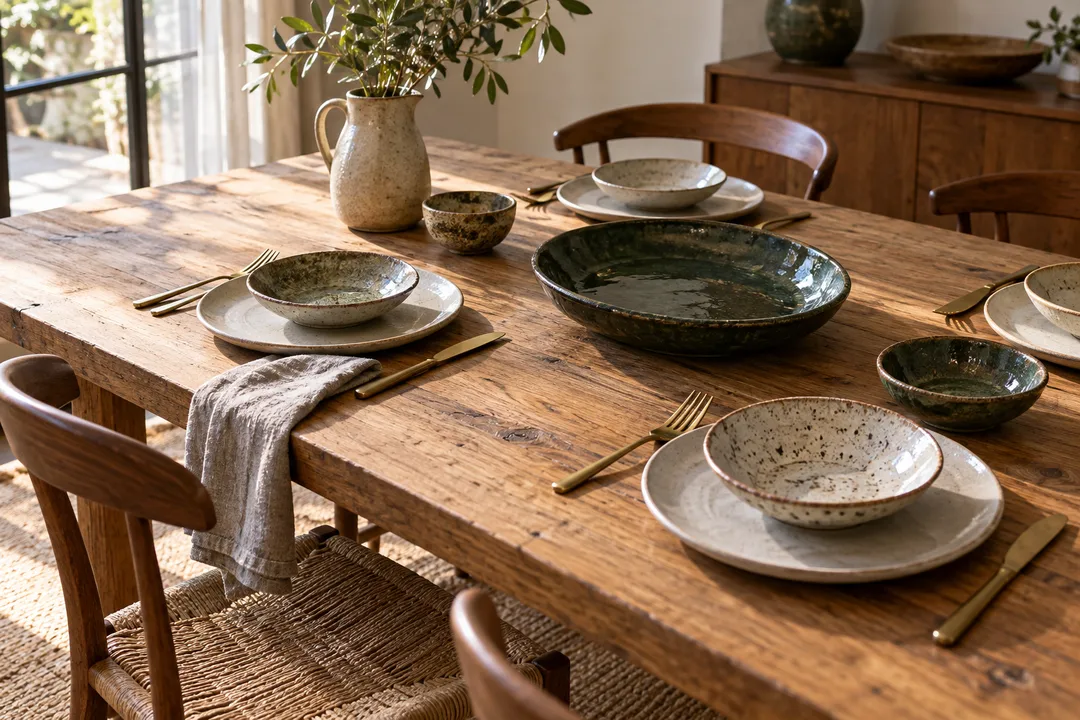
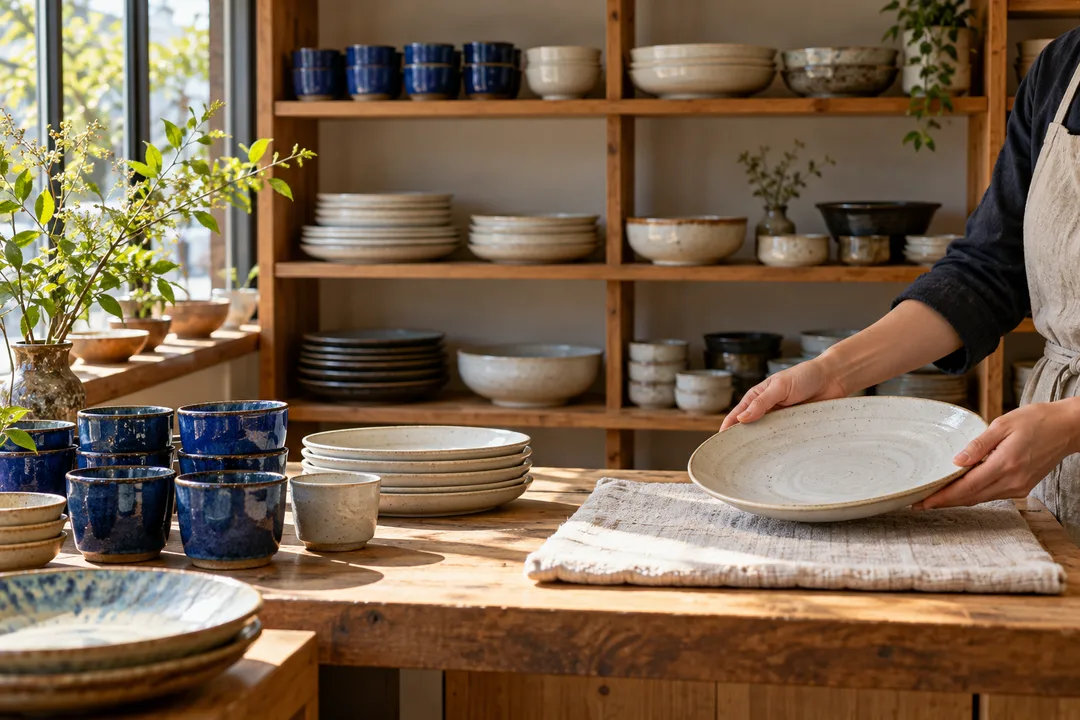
Before paying, be able to explain how the piece will be used, stored, maintained, and taken home. Keep any supplied care information and the purchase record together. Skip a coordinated set if only one object meets the needs you brought to the visit. A successful tableware outing can end with one useful piece or a clearer idea of what you need. The anonymous photographs here illustrate comparing forms and scale; they do not show a particular retailer, available collection, price, or product safety assessment.
Ask Karpo for more information.
Keep reading
- Bernal Heights Pottery Glaze Supply Browsing Route: Walk
 Potrero Hill Pottery Glaze Supply Browsing Route: Walk
 Mission Pottery Glaze Supply Browsing Route: Studio Walk