 Bernal Heights Pottery Glaze Supply Browsing Route: Walk
Hidden Gems & Odd Finds
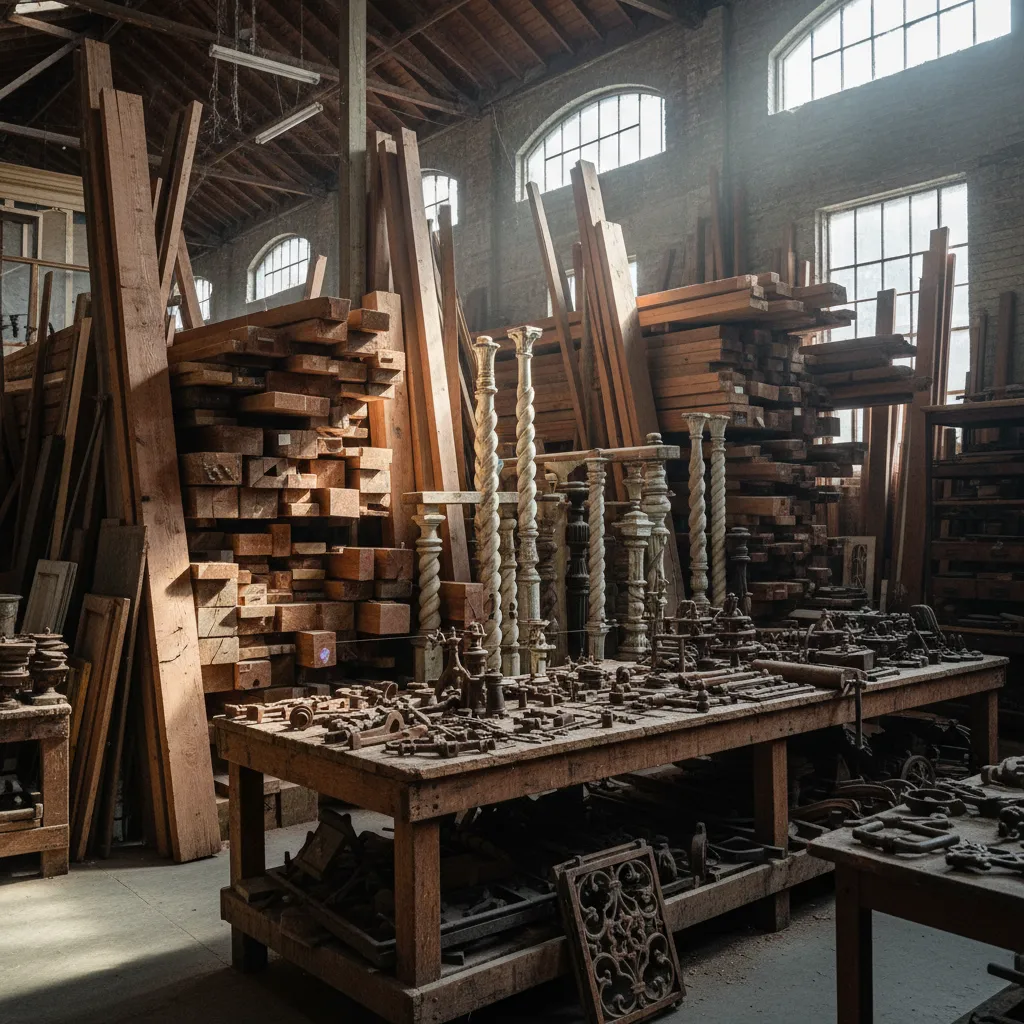
SF Architectural Salvage Yard: Mission Potrero Finds
Source Victorian redwood and industrial metalwork across an architectural salvage yard route connecting the Mission and Potrero Hill districts.
San Francisco's Mission and Potrero Hill districts showcase a fascinating convergence of nineteenth-century Victorian domestic housing and twentieth-century industrial warehouse production, creating an exceptional territory for any architectural salvage yard search. Following the nineteen-oh-six earthquake and fire, the Mission served as a vital reconstruction hub, while Potrero Hill housed ironworks, shipbuilding fabricators, and commercial canning plants along the bay shoreline. Decades of architectural preservation and sensitive loft adaptations have yielded an incredible reservoir of reclaimed building elements, carefully salvaged and organized within local architectural salvage yard facilities. From virgin old-growth California redwood timbers to heavy steel-framed factory casement windows, exploring this urban corridor offers homeowners and designers access to materials that embody San Francisco's resilient craftsmanship.

The defining treasure of any Northern California architectural salvage yard is old-growth coast redwood (Sequoia sempervirens). Harvested from primary coastal forests in Humboldt and Mendocino counties over a century ago, this virgin timber possesses remarkable density, high natural tannin content that resists insect damage and fungal rot, and a tight grain count often exceeding thirty growth rings per inch. When Victorian cottages along Valencia and Guerrero Streets undergo structural foundation replacements, salvage teams reclaim massive mudsills, four-by-six framing studs, and wide clear-heart redwood exterior siding boards. Once denailed and surfaced at an architectural salvage yard, these timbers reveal a deep burgundy hue and silky chatoyancy that modern plantation-grown softwoods cannot duplicate, making them prized for dining tables, exposed interior rafters, and custom casework.
Old-Growth California Redwood and Structural Framing
Victorian exterior ornamentation represents another major specialty throughout the Mission and Potrero architectural salvage yard circuit. San Francisco's ornate Italianate and Queen Anne row houses featured exuberant wooden millwork designed to catch the dramatic coastal sunlight. Architectural salvage yard collections regularly display hand-carved eave brackets, turned porch spindles, sunburst gable pediments, and heavy bay window support corbels salvaged during exterior restorations. Because original Victorian woodworkers shaped these elements from clear redwood, many pieces remain remarkably sound beneath layers of historic paint. Restorers strip these historic moldings to highlight the crisp chisel details, repurposing them as decorative wall brackets, shelf supports, or garden focal points.
In addition to residential millwork, the industrial sector of Potrero Hill contributes heavy factory artifacts to the architectural salvage yard landscape. Reclaimed from demolished maritime machine shops and corrugated iron warehouses, multi-pane steel factory windows with pebble-textured wire glass provide dramatic industrial accents for modern interiors. Salvage yards also preserve heavy counterbalanced iron sash weights, industrial brass sliding door latches, and enameled green warehouse lights. These durable metal components provide a rugged visual counterweight to warm wood surfaces, celebrating the working-class waterfront history that fueled San Francisco's growth during the maritime and manufacturing boom.
Victorian Exterior Millwork and Decorative Corbels
Navigating an architectural salvage yard in the Mission and Potrero corridor requires practical tools and disciplined inspection. Always carry a heavy-duty pocket flashlight, a twenty-five-foot steel tape measure, and a wood awl or moisture meter when evaluating timber. When inspecting reclaimed redwood siding or interior paneling, check the back faces for circular saw kerf marks versus straight pit-saw lines, which help establish the precise harvesting era and historical authenticity of the lot. Test boards for hidden cut nails or broken screw shanks that could damage modern planer knives, and verify that wood stored outdoors has been kept off damp concrete pads on well-ventilated timber dunnage.
For brass and iron architectural hardware, inspect moving parts such as pivot hinges and mortise cylinders for mechanical wear. Victorian San Francisco homes predominantly utilized heavy cast-bronze sash pulleys and ornate Eastlake patterned rim latches. Examine strike plates to ensure they have not been warped by structural building settling over decades of seismic shifts. Knowledgeable architectural salvage yard personnel can frequently provide vintage replacement springs or advise on safe electrolytic derusting baths that lift decades of grime without softening crisp cast surface details.
Inspecting Reclaimed Timber for Historical Authenticity
Stepping into the surrounding neighborhoods of the Mission and Potrero Hill reveals the living architectural context of your salvage items. Walking up 20th Street from the Mission floor toward Potrero Hill offers panoramic views across Victorian rooflines and historic brick industrial chimneys. Observe how bay windows project outward along street-facing facades, designed specifically to capture morning light across narrow residential lots. Notice the cast-iron foundation vents and decorative fretwork screens guarding basement crawlspaces, demonstrating how early San Francisco builders integrated functional ventilation with artistic community expression.
Along 18th and Mariposa Streets, repurposed industrial brick laundries and machine shops now host bustling community coffee houses, bakeries, and ceramic studios that integrate architectural salvage yard elements into their public decor. Seeing reclaimed redwood beams serving as communal counters or factory fire doors dividing roasting facilities provides practical design inspiration for incorporating historic materials into contemporary living spaces.
Neighborhood Walking Context Across Mission and Potrero
Logistics and seismic installation standards are critical considerations when purchasing architectural salvage yard elements in San Francisco. Heavy timbers, cast-iron balustrades, and structural brackets must be installed in compliance with modern earthquake safety codes. When integrating salvaged wooden beams as decorative ceiling treatments, verify that existing ceiling joists can carry the additional dead load, and use modern engineered structural fasteners concealed beneath historic wooden plugs. Most architectural salvage yard facilities can arrange curbside flatbed delivery or recommend licensed local couriers experienced with steep city street grades.
For smaller architectural salvage yard treasures like stained glass panels, antique brass escutcheons, and decorative tiles, transport them in padded plastic storage bins cushioned with cotton moving blankets. Protect delicate leaded glass by transporting panels upright on edge rather than lying flat where flexing could pop historic soldered joints. Keeping original mounting hardware organized in labeled zip-top bags saves valuable time during final carpentry installation.
Handling and Seismic Considerations for Salvaged Elements
Karpo APP serves as your essential digital companion during your Mission and Potrero architectural salvage yard expedition. Use Karpo APP to catalog fixture dimensions, store salvage warehouse item references, and map efficient pedestrian routes between supply yards. The app makes it simple to discover nearby artisanal bakeries, neighborhood coffee roasters, and scenic park overlooks for midday breaks. By keeping all your project notes and spatial specifications organized in one streamlined mobile interface, Karpo APP simplifies your salvage sourcing experience.
Integrating authentic Mission and Potrero architectural salvage into your home preserves the structural soul of San Francisco. Every dense redwood plank, hand-carved bracket, and forged iron latch reflects the craftsmanship of artisans who rebuilt the city with pride. These storied materials bring warmth, historical depth, and enduring durability to modern residential spaces.
Ask Karpo for more information.
Keep reading
- Bernal Heights Pottery Glaze Supply Browsing Route: Walk
 Potrero Hill Pottery Glaze Supply Browsing Route: Walk
 Mission Pottery Glaze Supply Browsing Route: Studio Walk