 Stonestown Winter Farmers Market Picker for Student Cooks
Weekend Plans
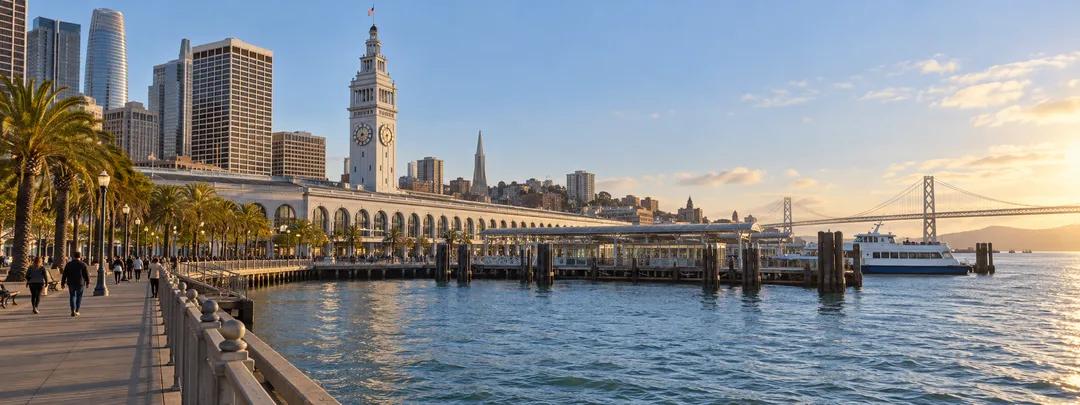
SF After Work Route Planner: 45 Minutes Before Your Ferry
An SF waterfront pause can fit before your ferry when boarding stays the anchor. Use forty-five minutes for a short walk, a seat, and an easy return.
A ferry commute gives the end of the workday a clear boundary: you need to be at the right departure point in time to board. Before that boundary, even a short waterfront pause can feel like a separate part of the evening. Use an after work route planner to shape those forty-five minutes around your actual sailing. The San Francisco Embarcadero is the setting, while the ferry you intend to catch is the anchor. Start in Karpo APP with a planning request that protects the return to boarding.
Bring the sailing, not a guessed timetable
Write down your operator, destination, departure terminal or gate, and the sailing you intend to take. These details come from the operator for your particular journey. This page does not supply a timetable, ticket price, or boarding cutoff. San Francisco Bay Ferry and Golden Gate Ferry publish their own service information, and a familiar waterfront landmark is not enough to identify the correct departure point. Begin with the trip you actually booked or selected, then plan the pause around that trip.
Separate departure time from your target arrival at the boarding area. A forty-five-minute gap before departure is not forty-five minutes of wandering. Subtract the approach to the terminal, the boarding margin appropriate to your service, and any time needed to deal with your ticket. You control the remaining leisure budget. This distinction is especially helpful when leaving an office later than expected, because it shows exactly how much of the pause has disappeared without pretending the sailing moves with you.
Ask for a modest waterfront interlude
A useful opening request is: “I will be near the Embarcadero after work and have forty-five minutes before my selected ferry. I want a short waterfront walk and somewhere to sit. Keep me close to my boarding point, with an explicit return margin. I will supply the operator and gate.” You are describing the shape of a break. The answer can help you compare possibilities, while the operator's information remains the basis for the transport commitment.
Describe what you will be carrying. A rolling case, a bicycle, or a heavy office bag changes the kind of detour that feels easy. If you need step-free access or a seated rest, make that central to the request. State whether you want food at all. A person who already ate lunch late may prefer ten uninterrupted minutes by the water. Someone who has a longer journey home might value a simple snack more than walking to another viewpoint.
Draw a small return boundary
Choose a pause that is easy to reverse. The farther you wander from boarding, the more of the available time belongs to getting back. Ask for an out-and-back option or a compact loop with a clearly understood return. An out-and-back route has a useful property: once you reach your personal turnaround time, you can retrace the familiar approach. A loop can offer variety, but only if you understand how its second half reaches the departure point.
Do not use a particular pier, bench, or entrance as an assumed guaranteed space. This article does not identify a reserved seat or claim that a stretch of promenade is empty. Instead, decide on a simple selection rule: a place with a straightforward path back and enough room to pause without blocking circulation. If that space is occupied, shorten the stop or keep walking within the small area you chose. The plan should survive ordinary changes without requiring a waterfront search mission.
Test the forty-five-minute arithmetic
Imagine allocating ten minutes to the approach, ten to a short walk, ten to sitting, and fifteen to the return and boarding margin. Those numbers are an example budget, not an operator's requirement or a measured route. Your service may need a different allowance. Replace the example with the details of your own departure. If the approach consumes twenty minutes, reduce the leisure portion before reducing the time needed to reach boarding comfortably.
Use a personal turnaround alarm if it helps, setting it yourself for the point when the break ends. The purpose is to let you stop checking the clock every few moments. Keep the alarm tied to returning toward boarding, rather than to the ferry's departure itself. A reminder at departure would arrive after the useful decision. Nothing in this plan assumes that Karpo is tracking your position, watching a gate, or issuing a service alert while you sit by the water.
Let the bay be enough
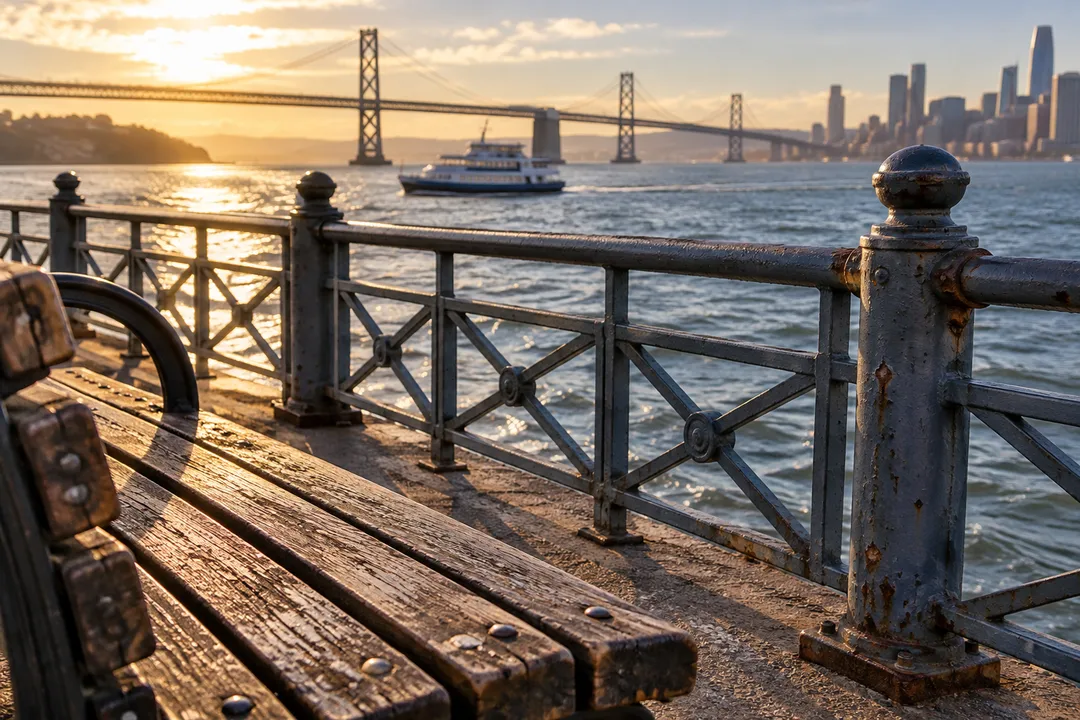
The waterfront pause does not need an attraction, purchase, or photographic target to count. Look across the water, loosen your shoulders, and give your attention something beyond a screen. If you want a view of the Ferry Building, make that a preference within the available radius, rather than a reason to leave the boarding area behind. The useful question is how to spend a few minutes pleasantly, not how many landmarks can be collected between the office and the boat.
A sunset wish needs the date and the actual daylight conditions for your trip. An evening ferry does not automatically coincide with sunset, and this page does not promise a particular sky or view. You can still enjoy the waterfront in ordinary light. Tell Karpo whether light matters enough to change the walk, or whether the real goal is fresh air before the crossing. Keeping those preferences separate prevents a beautiful-sounding suggestion from distracting you from the departure you need.
Treat a snack as an optional branch
If food is part of the brief, ask for something simple enough to fit the remaining allowance and your own dietary needs. Avoid building the pause around a place with an uncertain ordering sequence when the sailing is fixed. This page makes no claim about which vendors are trading at a particular hour. Once you choose a candidate, use the specific information available for it. A recommendation is a choice to consider, not evidence that an order is ready or a queue is short.
Decide what you will do if buying food uses more of the break than you intended. The simplest answer is usually to drop the walk or the purchase, rather than combine eating, navigating, and hurrying back. If you already have a snack, the seat becomes the only stop. Keep bags and packaging easy to carry on the return. A waterfront break works better when your hands and attention are free enough to move comfortably toward boarding when it is time.
Prepare a version for a crowded approach
If the space around your intended pause feels busy, do not spend the whole break hunting for a quieter one farther away. Ask for a shorter alternative near the chosen boarding point. “Less crowded” can be a preference for selecting a route, but it is not a live measurement this page can provide. Use what you see on arrival. A few minutes standing aside with a clear return path may suit the evening better than a longer walk through a circulation bottleneck.
If the operator announces a service change, rebuild the plan around that information. First decide what the change means for your journey home. Then decide whether there is still room for a waterfront pause. A later sailing does not have to become permission for a much bigger detour, especially if you are tired. Keep the new departure and boarding location explicit in your notes. The transport decision deserves your attention before the optional stop receives another round of recommendations.
Practical Notes for boarding with a clear head
Keep your ticket method and the operator's journey information accessible, with enough phone charge for the way you plan to use them. Carry a layer suited to your comfort by the water and leave room in your bag for it. Avoid putting a drink, unpacked food, and a work bag into a combination that slows your return. If you are meeting another commuter, agree which boarding point you mean. The phrase “by the Ferry Building” leaves too much room for different interpretations.
Finish with this request in Karpo APP: “Show me the short walking idea, my pause allowance, and the time I should head back toward boarding based on the margin I gave you.” That produces a plan you can understand without turning the waterfront into another timetable problem. The ideal break ends with you already moving toward the correct departure point, carrying a little more calm into the crossing and leaving the last meeting on the city side of the bay.
Ask Karpo for more information.
Keep reading
- Stonestown Winter Farmers Market Picker for Student Cooks
 Clement St Winter Farmers Market Picker for Lunar New Year
 Fort Mason Winter Farmers Market Picker for Citrus Bakers