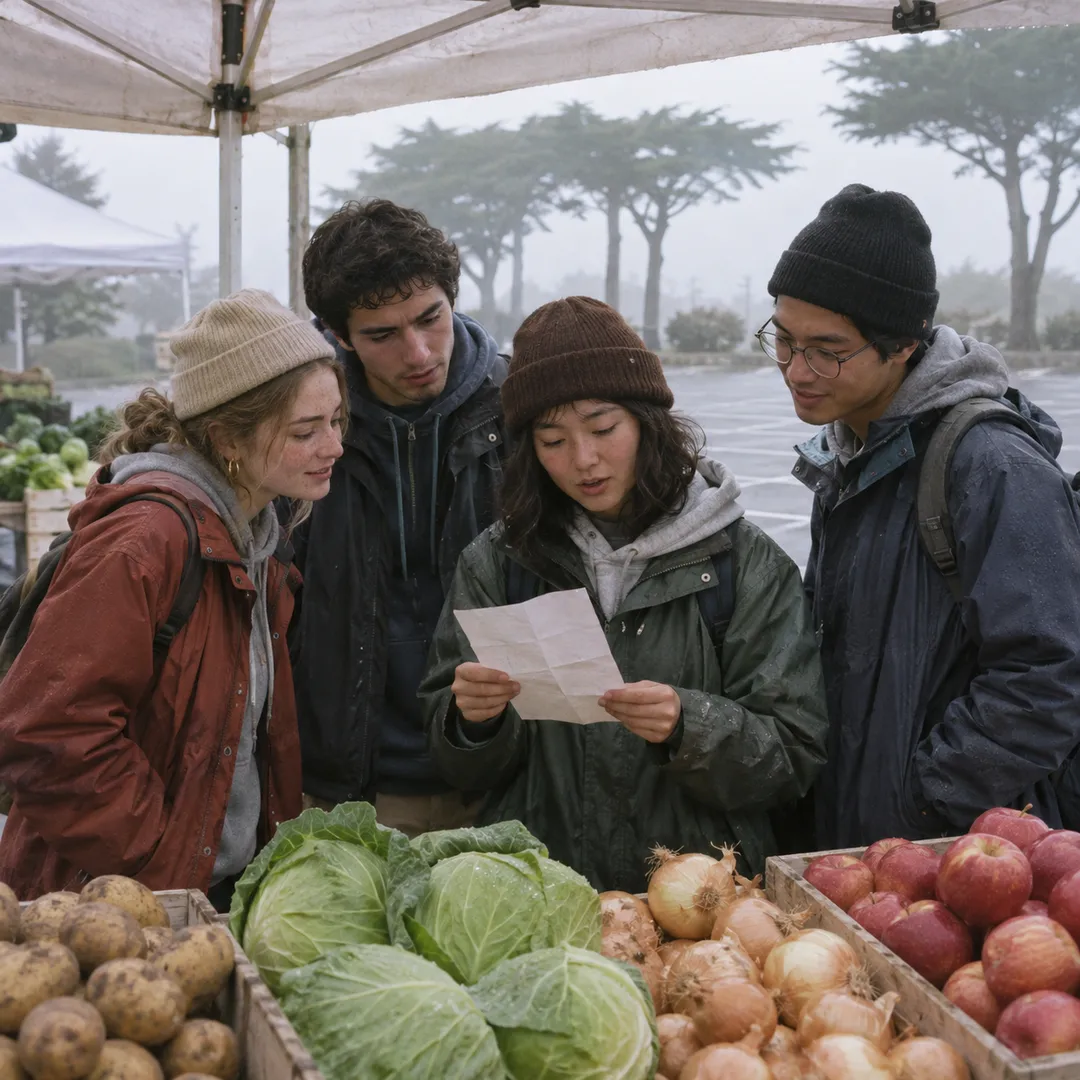
 Stonestown Winter Farmers Market Picker for Student Cooks
Weekend Plans

SF After Work Route Planner: 2 Mission Stops, Less Zigzag
A Mission errand route gets easier when you choose one essential stop and one dessert. Plan between the BART stations without crossing the neighborhood twice.
You need to finish one errand, would like something sweet, and want to keep the evening moving toward home. Between the Mission's two BART stations, a small plan can stop those simple wishes from turning into repeated crossings and extra bags. Use an after work route planner to put the essential stop first and fit dessert around the station you actually need. In Karpo APP, describe what must be accomplished, what can be skipped, and whether you are arriving near 16th Street or leaving near 24th Street.
Name the errand precisely enough to route it
“Run an errand” leaves too much unresolved. Picking up a parcel, buying a household item, and collecting something already paid for each involve different decisions. Tell Karpo the kind of task and the location you already know, if you have one. Include the amount you expect to carry afterward. The route for a small envelope can tolerate a pleasant detour. A bulky package may make dessert closer to the exit station much more appealing than another stroll across the neighborhood.
Decide whether the errand has a deadline or merely a preferred order. If you have a collection notice, use the instructions on that notice for the business details. This page does not assume that any named shop has stock, that a parcel is ready, or that a counter is operating at a particular hour. An itinerary request can organize known stops. It cannot turn an uncollected item into a completed errand just because the proposed route reaches the right street.
Choose the station that serves your journey
BART's official station information identifies 16th St Mission and 24th St Mission as separate stations. Use the one that fits your actual approach and onward journey. Starting at one and finishing at the other can be a useful planning frame, but it is not automatically the right answer. Your errand may sit closer to the station you arrived at, or your destination may make returning to the same station more convenient. Keep the transport choice tied to the whole trip home.
Use a prompt such as: “I am arriving near 16th Street Mission BART and want to finish near 24th Street Mission BART after one errand and a quick dessert. Put the errand first. Suggest a compact order with minimal backtracking and a simpler version if I collect a heavy bag.” You are giving a corridor and a task, rather than requesting every interesting place in the Mission. A small set of choices makes it easier to see whether the second stop truly belongs.
Count the transfers between tasks
The cost of a stop is larger than the minutes inside it. You also approach the entrance, find what you need, handle the transaction, organize the item, and rejoin the route. Two brief stops can become a substantial outing when they lie on opposite sides of the corridor. Ask for the order in plain language, with each transition explained. A useful route should make the direction of travel obvious enough that you can spot an unnecessary return before walking it.
For a hypothetical fifty-minute window, you might reserve fifteen minutes for the errand, ten for dessert, fifteen for movement, and ten for station access and spare time. These are personal planning allowances, not measured durations between the two stations or service promises from shops. Replace them with what you know about your task. If the errand is likely to need the whole window, let dessert remain optional. Finishing the important job can be a perfectly good use of the evening.
Give dessert a role that fits the bag
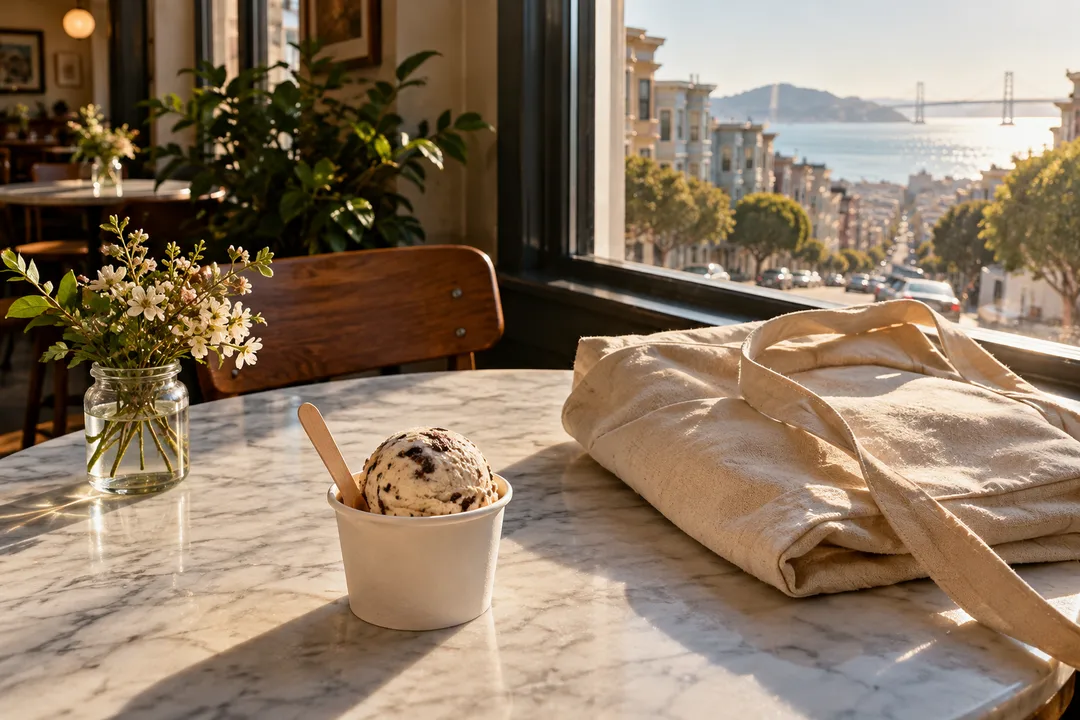
Choose what “quick dessert” means for tonight: a small item to eat immediately, something to carry home, or a short seated pause. Those versions create different route needs. If you are carrying something delicate or heavy, a dessert that requires juggling a cup and spoon may be less convenient than it sounded at your desk. Tell Karpo what your hands will be doing after the errand. The useful recommendation should fit the person carrying the purchase, not merely the map corridor.
Mention dietary restrictions before asking for candidates. A request for a sweet stop can include dairy-free preferences, allergies, or a desire for a smaller portion. This article does not attach those claims to a particular business. Once you select a place, use its actual product information for your decision. Keep the recommendation stage distinct from ordering. Seeing a suggested dessert stop in a plan is not evidence of a reserved item, a paid transaction, or a promise about what is available when you arrive.
Minimize zigzag without demanding a perfect line
The shortest-looking line is not always the easiest sequence. You may prefer a more straightforward crossing, a place to sit, or an entrance you can reach comfortably. Say which matters. Ask for “less backtracking” rather than an unsupported claim that a route is mathematically optimal. A planning conversation can compare the order of your known stops and discuss tradeoffs. You should still be able to understand the route yourself and change it when an approach is uncomfortable or inconvenient.
Consider whether the errand belongs at the beginning or close to the finish. An item you do not want to carry far suggests collecting it later. A deadline that matters suggests doing it first. When both apply, simplify the dessert choice or choose one near the collection point. The answer can be a compromise. Write the reason next to the chosen order so you remember why you made it. That small explanation is more useful than a confident sequence with no visible relationship to your needs.
Give a delay one consequence
Choose a rule before entering the errand stop: if the task takes longer than its allowance, dessert becomes takeaway or disappears. A predetermined response avoids spending more time debating what to do with the time you just lost. You can still enjoy a short pause on the way to the station, but keep it inside the remaining budget. There is no need to rebuild the entire outing around a treat that was optional from the start.
If the errand cannot be completed, decide whether returning another day is better than adding a third destination. Tell Karpo what happened and ask for a revised two-stop maximum. “The item was not available; keep dessert simple and finish near my station” is a clear update. It does not imply the app knew the result in advance. Keep the new request grounded in what you learned at the counter, especially when the original task depends on stock or another person's response.
Make a shared route easy to join
A friend can meet you for dessert without joining the errand. Give them a fixed meeting place once you choose it and a realistic window based on the task. If you cannot predict how long collection will take, agree that you will send a message when it is finished. That is easier than asking someone to wait at a counter or track your progress. Keep their evening separate from the uncertainty in your errand until there is something enjoyable to share.
If you are traveling together throughout, agree who carries the item and what happens if the errand takes longer than planned. One person might prefer to head toward the station while the other buys dessert to take home. Another pair might value sitting together more than finishing at the original station. The route should reflect that choice. Avoid presenting the station-to-station corridor as a required walking challenge when your actual purpose is a useful task and a small moment of pleasure.
Practical Notes for leaving with less to manage
Bring the collection code, payment method, reusable bag, or identification your particular errand requires. Keep those details accessible before you reach the counter. For BART travel, use the operator's station and accessibility information for the entrance and access needs relevant to you. Include the station approach in your time budget, rather than ending the itinerary at a neighborhood label. A light dessert and a completed errand feel better when the last part of the journey is easy to understand.
Ask Karpo APP for the final sequence in this form: “Essential errand, optional dessert, chosen station, and the first step to drop if the errand runs late.” That is enough structure to carry into a weekday evening. The Mission becomes a corridor you can enjoy at your pace, with the task and the treat in a sensible order. You finish with what you came for, avoid crossing the same ground unnecessarily, and keep enough attention for the journey home.
Ask Karpo for more information.
Keep reading
- Stonestown Winter Farmers Market Picker for Student Cooks
 Clement St Winter Farmers Market Picker for Lunar New Year
 Fort Mason Winter Farmers Market Picker for Citrus Bakers