Most raw bars in New York operate on a two-speed system. The dining room runs on reservations and plated towers. The counter runs on walk-ins and pieces shucked to order. The counter is almost always better, and it is almost never full at the same time as the dining room, because the people who book tables three weeks out rarely want to sit on a stool for ninety minutes. This creates opportunity if you know what to look for before you commit.
Open the Karpo app right now to find which raw bars in your current neighborhood have counter seats available in the next two hours, plus live wait estimates for the rooms that don't take reservations.
You can evaluate a raw bar from the doorway in about forty seconds. Shellfish quality is a function of turnover, and turnover leaves visible evidence. The state of the ice, the location of the shucking, the depth of the day's list versus what is already crossed off, and the ratio of people at the counter to people at tables will tell you whether you are walking into a room that moved three cases today or thirty. The difference matters more than the name on the door.
Look at the ice first
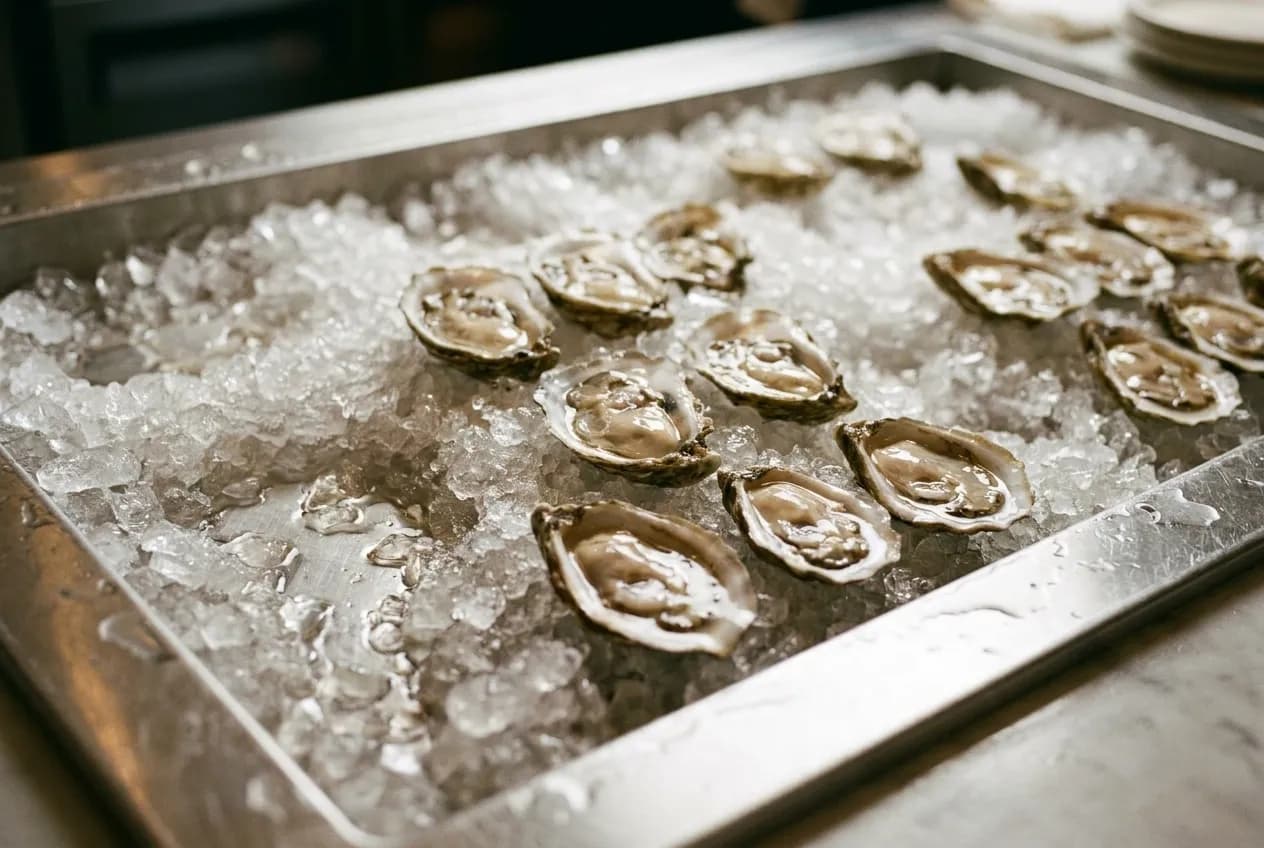
The ice bed should look wet and sloppy, not sculptural. If the crushed ice is still mounded in clean white peaks at seven-thirty on a Friday, the oysters sitting on it have been sitting on it since five o'clock setup, and possibly since lunch. Ice that looks worked over—grey at the edges, pooling melt, shells sitting in slight divots—means the shucker has been pulling and replacing product all night. The best raw bars refresh the entire bed at least once during a dinner shift, which creates a visible reset around eight or nine where everything looks clean and wet again but the volume of shells in the bus tub behind the bar tells you how much has already moved.
If the oysters are pre-shucked and sitting on plates in a refrigerated case rather than live in the shell on ice, you are not in a raw bar. You are in a restaurant with a shellfish section. The kitchen shucked those oysters an hour ago, maybe four hours ago, and the liquid in the shell is diluted melt and oxidized meat juice. Pre-shucking is a labor efficiency move that kills the entire reason to eat a raw oyster. Walk out.
Watch where the shucking happens
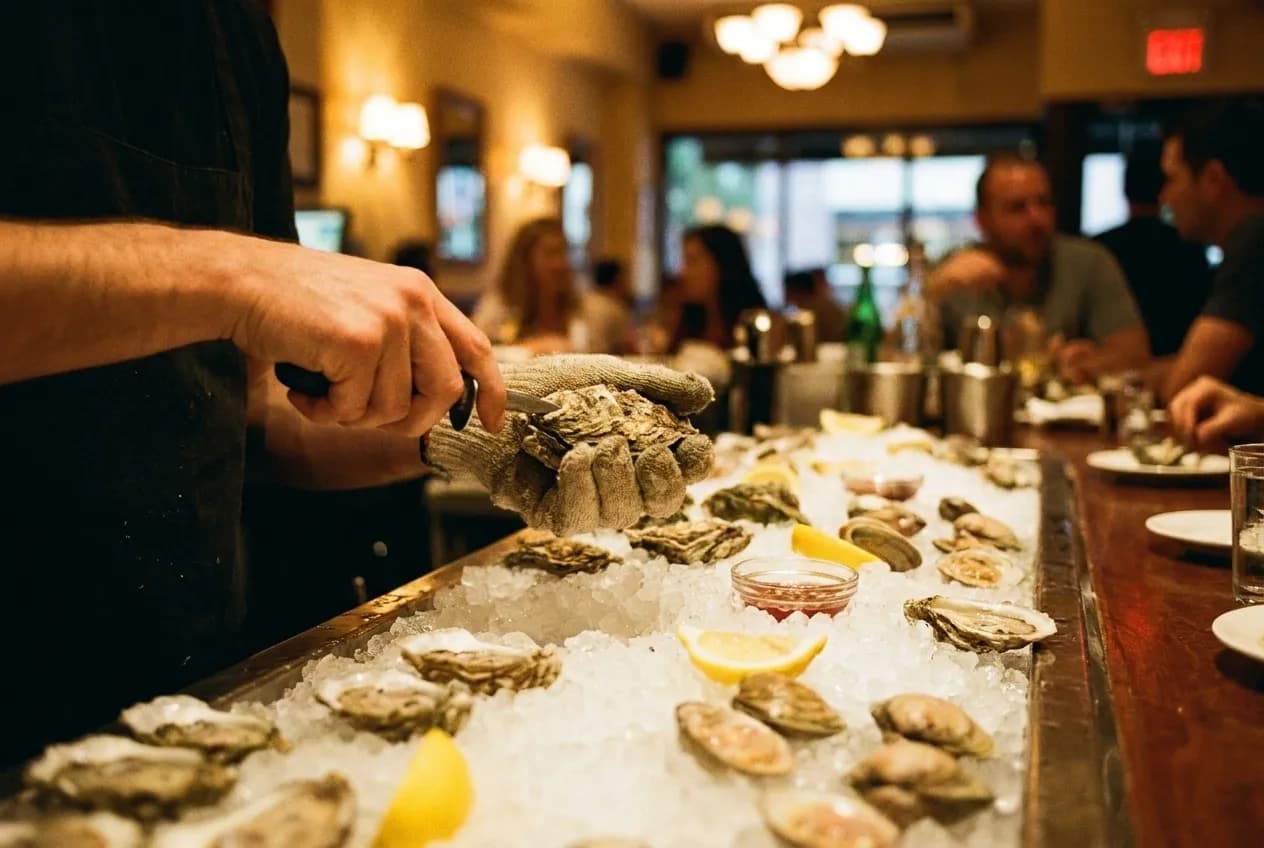
Shucking should happen in front of you at the counter, not in a prep area behind a wall. This is not theater. It is a quality checkpoint. When the shucker is working in full view, you can see the shells coming out of the ice, watch the knife work, and observe whether the meat gets rinsed or sent out with grit and broken shell. You can also see how many other orders are ahead of yours, which tells you how long your oysters will sit on the pass before they reach you.
If your oysters come out from the kitchen on a composed plate with the restaurant's branded mignonette and cocktail sauce in little dishes, someone in the back shucked them on a prep list at an unknown time. They might have been opened twenty minutes ago. They might have been opened ninety minutes ago during the six o'clock rush and held until your ticket fired. The liquor in the shell will tell you—if it is still clear and briny and the meat is sitting plump, you are fine. If the liquid is cloudy or the edges of the meat look dry, you are eating something that has been open too long.
The counter also lets you correct mistakes in real time. If you order a dozen and the first two taste off, you can stop the shucker before the full order comes out. You cannot do this when the plate arrives from the kitchen fully composed.
Read the list for what is crossed off
A raw bar list should have twelve to twenty options on it at the start of service. By eight-thirty or nine, a third of those options should be sold out and marked off. If the full list is still available at nine-thirty, the room is not moving enough volume to justify the depth of the selection, which means some of those oysters have been sitting in the lowboy for two days. If the list is down to four options by seven-fifteen, they under-ordered, and you are eating the backup supply that was supposed to carry them through the weekend.
The best scenario is a list that starts deep and narrows steadily through the night, with the sell-outs clustered around the middle price range. That pattern indicates the room is moving the everyday oysters hard and the expensive showpieces are there for the two tables per night that order them. It means the shucker knows what will move and the buyer is ordering to match real demand, not aspirational demand.
Pay attention to whether the sold-out items are marked with tape or chalk that looks fresh versus printed names that are scratched out. Fresh marks mean the list is turning over tonight. Scratched-out printed names mean the list was over-ambitious when it was designed and those items never came in or sold through days ago.
Count the people at the counter versus the dining room
If the dining room is full and the counter has three empty seats, sit at the counter. The kitchen is prioritizing the big tables and the composed towers, and the counter orders are getting filled in the gaps. Your oysters will come out faster and the shucker has more room to work carefully because they are not racing against a string of table tickets.
If the counter is full and the dining room has space, you have a decision. A packed counter means the regular customers know something, and it usually means the quality and the value are both dialed in. But it also means your order is going into a queue, and shellfish that sits on the bar for five minutes while the shucker works through the tickets ahead of you is losing quality every minute. If you are willing to wait fifteen minutes for a counter seat, do it. If you want to sit now, take the dining room table and order the oysters as a first course, not an app to share, so they come out immediately.
The inverse situation—empty counter, full dining room—is a red flag. It means the restaurant has a reservation book and a marketing budget but the people who eat oysters for a living are not choosing to sit there. The counter is the referendum. If it is empty on a night when the dining room is full, the oysters are probably fine but not great, and you are paying for the room and the service model, not the product.
The trade-off worth accepting is a counter seat with a twenty-minute wait when the alternative is a table right now. The counter is where the quality lives. Waiting for it is always worth it if the room is moving volume and the ice looks worked. Sitting at a table because it is available immediately gets you slower oysters and less visibility into what you are actually eating. Take the wait.
Tags: #SeafoodNearMe #NYCSeafood #RawBar #OystersNYC #NewYorkEats #SeafoodCounter #ShellfishNYC #OysterBar #NYCRestaurants #RawOysters #NewYorkSeafood #FreshSeafood #CounterSeating #NYCDining #SeafoodLovers
Please drink responsibly. Must be of legal drinking age.
All trademarks are the property of their respective owners.
Ask Karpo first
Open the Karpo app to see which raw bars in your neighborhood have counter seats available right now, plus live wait times for the walk-in spots that do not take reservations. Karpo will route you to the closest option with availability in the next ninety minutes and tell you what time to arrive.