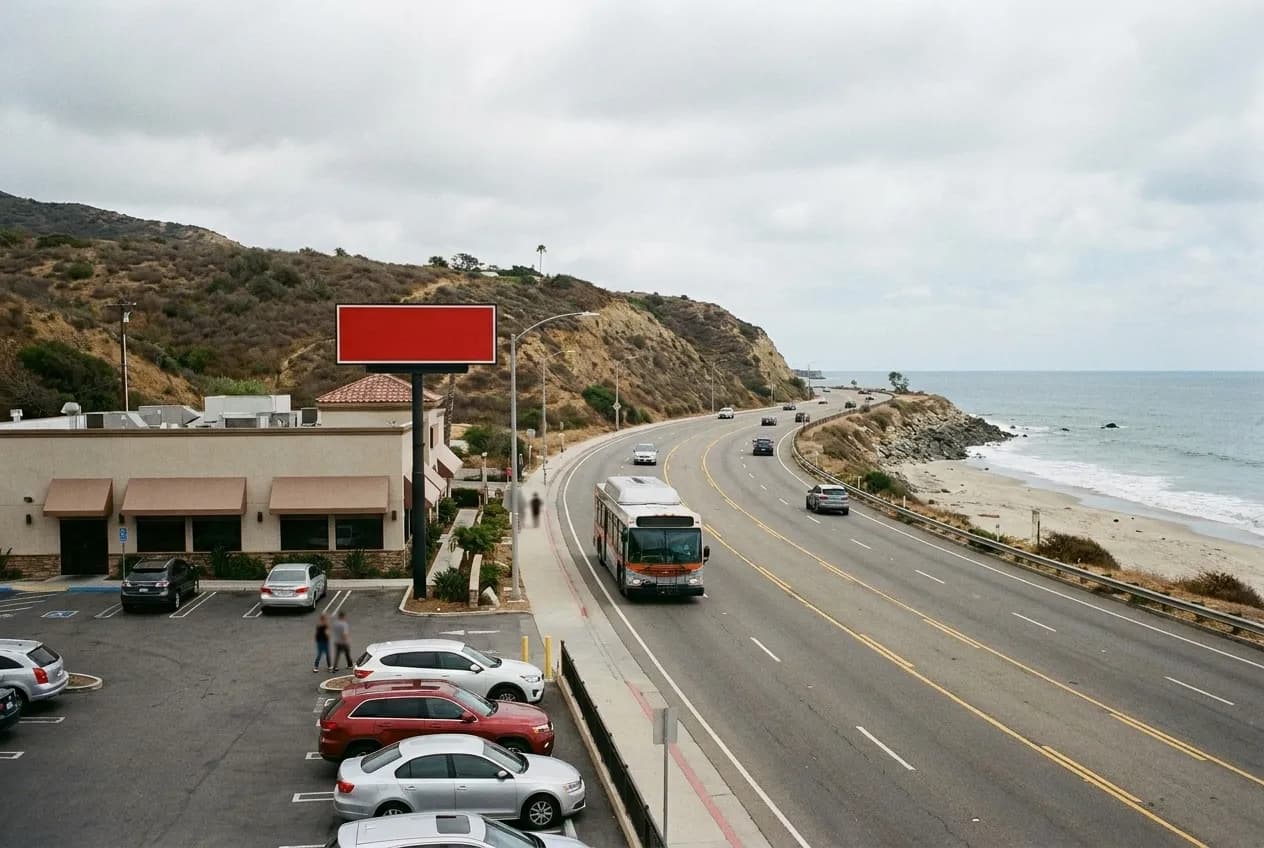
The Los Angeles coastline runs roughly seventy miles from the Ventura County line at the top of Malibu down through Santa Monica and the South Bay to the port at San Pedro, and it carries three or four completely different seafood cultures along its length. Driving the whole thing in a day is possible and a bad idea. Driving half of it, in one direction, with three stops, is one of the best weekends available in Southern California.
The coast road is a one-direction plan and the timing of each stop decides whether it works. Ask Karpo to sequence the drive and tell you what is open when you arrive.
Pick a direction and commit
The single most important decision is not where to eat but which half of the coast you are doing. North — Santa Monica up through Malibu to the county line — is the scenic, roadside, casual half: shacks, counters, picnic tables, fried fish and shellfish eaten outdoors with your hands. South — the South Bay through Redondo and down to San Pedro — is the working half: fish markets, piers, port history and a much more diverse set of communities cooking seafood in their own idioms.
Doing both in one day means driving the entire length of the county's coast twice and eating badly at three of the four stops. Take one half per day if you are doing a weekend, and take the north half on the day with better weather because it is the one where the view is part of the meal.
The northern half: roadside and outdoors
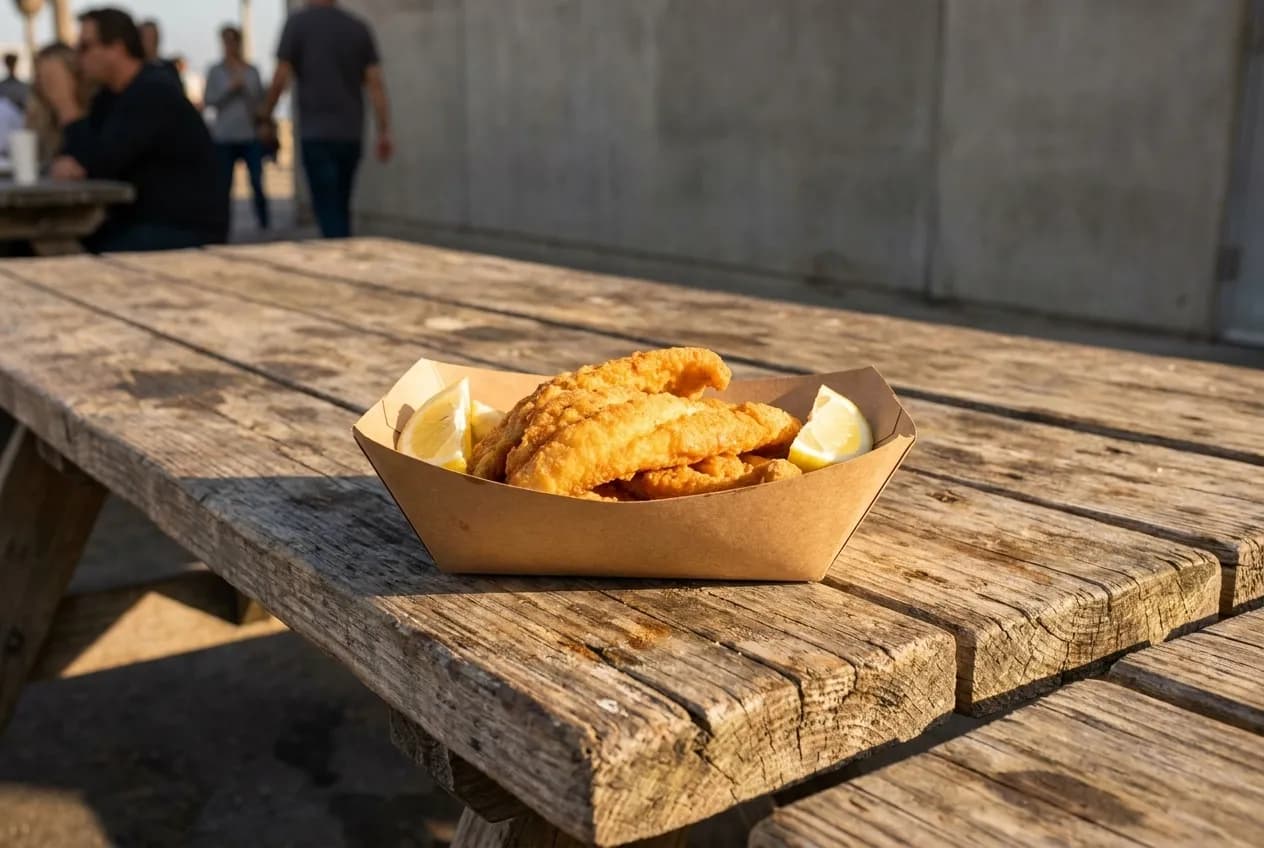
Malibu's seafood culture is the roadside shack: order at a window, take a paper tray to a picnic table, eat facing the water. Malibu Seafood on Pacific Coast Highway is the archetype — a fish market and patio combination that has been feeding people off the highway for decades, with a queue that peaks hard in the middle of the day at weekends. Neptune's Net, further north near the county line, is the other fixed point and has a long association with the motorcycle traffic on that stretch of the highway.
The timing rule for the north coast is to eat early or late. Between about twelve and two on a Saturday, every one of these places has a queue and the parking becomes the limiting factor. Eleven-thirty is a different day entirely, and three in the afternoon is better still if you can wait.
The southern half: markets and the port
The South Bay runs a fish-market model rather than a restaurant one. Around King Harbor in Redondo Beach there are counters where you choose from the case and they cook it for you, and the pier itself carries a long-standing cluster of seafood businesses with a distinctly different, less polished character than anything in Malibu.
San Pedro at the southern end is the port town, and it is the most interesting seafood geography in Los Angeles County for anyone who cares about where the fish comes from. It has a working commercial harbour, a long fishing history, and communities — Italian, Croatian, Mexican, Japanese — who have been cooking here for over a century. The waterfront has been under substantial redevelopment in recent years, so check what is currently open before you build a day around a specific address.
Making the drive actually work
Three rules. Go early, because Pacific Coast Highway north of Santa Monica is a two-lane road for much of its length and it backs up badly from mid-morning on a weekend, and the traffic getting back is worse than the traffic going out. Bring a cooler, because every one of these stops is also a fish market and the best thing you buy all day may be something raw to cook at home. And plan the last stop for the golden hour rather than for lunch — the light on that coast in the ninety minutes before sunset is the actual reason to do this drive, and a plan that has you back on the freeway by four has missed the point of the whole exercise.
What is actually landing
One thing worth understanding before the drive: a great deal of the seafood served along this coast is not from it. Southern California's commercial fishery lands specific things — spot prawns, rock crab, sea urchin, sablefish, sand dabs, California halibut, market squid, spiny lobster in season — and almost everything else has been flown in. That is not a scandal, but it changes what to order. At a market counter, ask what came off a local boat and order that rather than the thing you were planning to order. The answer varies by month, the person behind the counter will know, and the difference between a locally landed fish and a flown-in one is the entire reason to make the drive.
Practical notes
The LA coast runs roughly 70 miles from the Ventura County line through Malibu, Santa Monica and the South Bay to San Pedro. Do one half per day rather than the whole thing: the north half is scenic roadside shacks and picnic tables, the south half is fish markets, piers and port history. Malibu Seafood on Pacific Coast Highway: market and patio, queues peak between roughly 12pm and 2pm at weekends — go at 11:30am or after 3pm. Neptune's Net sits further north near the county line. Redondo Beach's King Harbor and pier run a choose-from-the-case model. San Pedro has a working commercial harbour and a long multi-ethnic fishing history, with substantial waterfront redevelopment in progress — confirm what is open before planning around a specific address. Start early because PCH north of Santa Monica is largely two lanes and backs up from mid-morning; bring a cooler for market purchases; schedule the final stop for the ninety minutes before sunset.
Tags: #SeafoodNearMe #LosAngeles #PacificCoastHighway #Malibu #SanPedro #RedondoBeach #SouthBay #FishMarket #RoadTrip #WeekendPlans #CoastalCalifornia #LAEats #GoldenHour #KingHarbor
All trademarks are the property of their respective owners.
Ask Karpo first
The coast road works only if the stops are open when you reach them and the traffic has not turned the drive into the whole day. Ask Karpo to sequence the route from where you are starting, tell you which markets and counters are serving at each hour, and time the last stop for the light.