Los Angeles does not really have a seafood district in the way coastal cities are supposed to. What it has instead is mariscos — Mexican Pacific-coast seafood, mostly Sinaloa and Nayarit in origin, sold from trucks and small counters in neighbourhoods nowhere near the water. Boyle Heights is one of the best places in the county to eat it, and the format is closer to a taqueria than to a fish restaurant.
These are day operations that stop when the fish is gone, so a five o'clock plan is often a four o'clock plan you did not make in time. Tell Karpo when you can go and it will find something still serving.
The dish that made it famous
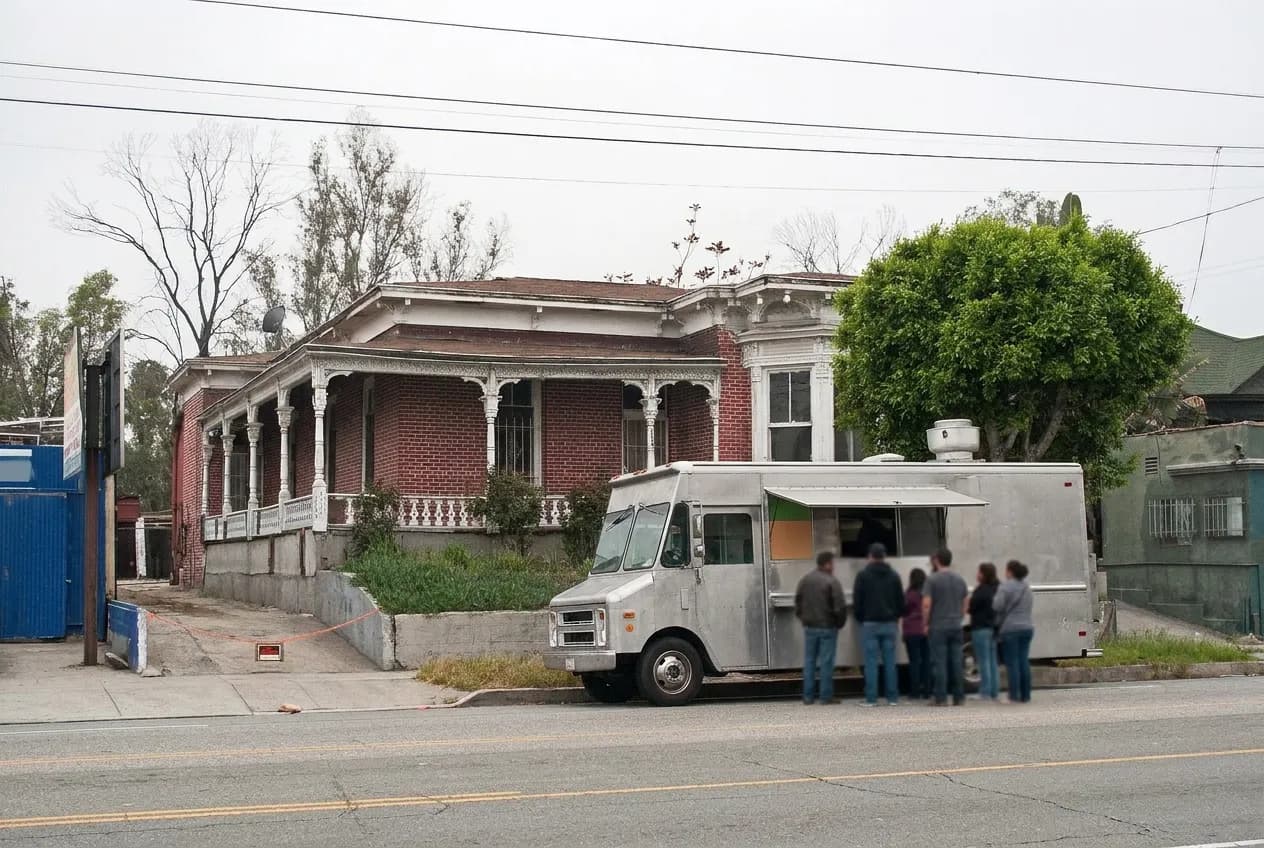
Mariscos Jalisco, the truck that parks on Olympic Boulevard, is the single most-cited mariscos operation in Los Angeles, and the reason is one item: the taco dorado de camarón, a shrimp taco fried crisp and topped with avocado and a salsa that is doing more work than it looks like it is. It has been written about relentlessly, it has won awards, and it is still four dollars-ish from a truck window with no seating.
Order two to start and a third once you have tasted the first. Almost nobody stops at one, and the standard mistake is ordering a large mixed plate before you know what you actually want.
The rest of the menu
A proper mariscos counter runs a wider range than the fried taco. Aguachile is raw shrimp cured in lime with chilli and cucumber, served cold and sharp. Ceviche tostadas are the standard order for a group. Coctel de camarón arrives in a glass with tomato, onion and avocado. Campechana mixes shrimp, octopus and whatever else the day gave them. All of it is designed to be eaten standing up, which is why the trucks work.
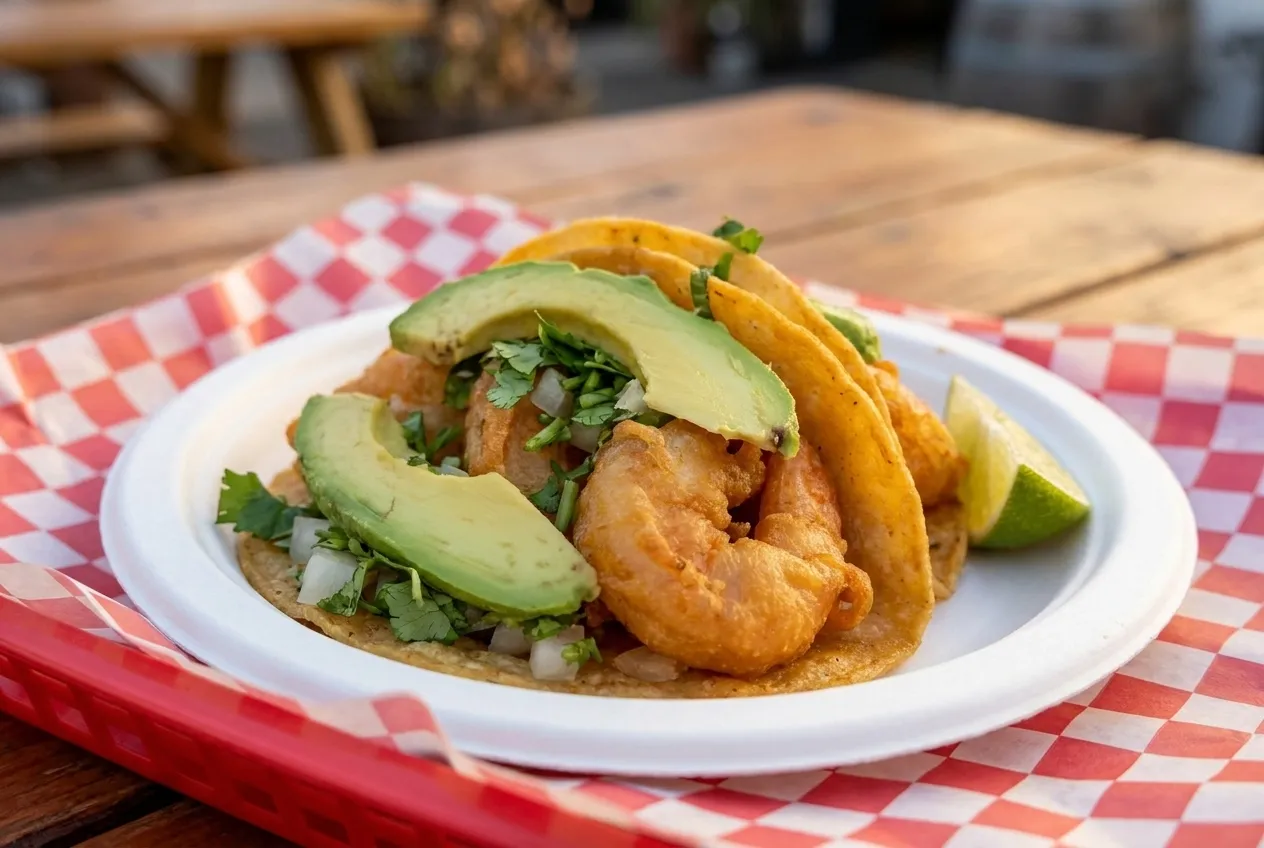
The heat level is real and it is not adjusted for outsiders. Ask before you pour anything red onto anything, and take the lime seriously — it is a component, not a garnish.
Where the neighbourhood sits
Boyle Heights is immediately east of the LA River from downtown, and it is one of the most historically layered neighbourhoods in the city — Jewish, Japanese and Russian before it was predominantly Mexican American, with the Breed Street Shul and the old Sixth Street industrial edge as visible traces. Mariachi Plaza at 1st and Boyle is the neighbourhood's centre, where mariachi musicians have gathered for hire for decades and where the Metro station now sits underneath.
Building an afternoon around both is easy: mariscos first, Mariachi Plaza after, and the walk between them takes you through the neighbourhood's older commercial blocks on 1st Street.
Getting there
Metro's E Line runs through Boyle Heights with stops at Pico/Aliso, Mariachi Plaza and Soto, which makes this one of the easiest LA neighbourhoods to reach without a car. If you drive, street parking is generally available, and truck stops are precisely the kind of place where you park badly for ten minutes and eat standing beside the vehicle.
Practical notes
Mariscos Jalisco operates as a truck on Olympic Boulevard in Boyle Heights and is known for the taco dorado de camarón. Mariscos operations here are day-time businesses that close when the day's seafood runs out — going early is the reliable strategy. Standard orders include aguachile, ceviche tostadas, coctel de camarón and campechana. Mariachi Plaza is at 1st Street and Boyle Avenue, with a Metro E Line station beneath it; Pico/Aliso and Soto stations also serve the neighbourhood. Street parking is generally available. Expect no seating at truck operations.
Tags: #SeafoodNearMe #BoyleHeights #MariscosJalisco #LosAngeles #ShrimpTacos #Aguachile #MariachiPlaza #WeekendPlans #LAFood #Mariscos #EastLA #TacoDorado #MetroELine #LATacos
All trademarks are the property of their respective owners.
Ask Karpo first
Mariscos is a timing problem: the good stuff runs out and the trucks are not on shop hours. Ask Karpo what is still serving, whether the truck is parked today, and what to do with the hour after in the neighbourhood.