 Haaland Has Seven Goals and Norway Runs Entirely Through Him
⚽️2026 FIFA WORLD CUP

Saudi Arabia Spent Billions on Football and Still Could Not Escape the Group Stage at the 2026 World Cup
Despite investing over 6 billion dollars in player acquisitions for the Saudi Pro League since 2023, Saudi Arabia exited the 2026 FIFA World Cup at the group stage with one win, one draw, and one defeat, raising fundamental questions about whether money can buy international football success.
The Most Expensive Group Stage Exit in World Cup History
Saudi Arabia arrived at the 2026 World Cup riding a wave of unprecedented financial investment in football. Since the Saudi Public Investment Fund began acquiring players for the Saudi Pro League in the summer of 2023, an estimated 6.2 billion dollars has been spent on transfer fees, wages, and infrastructure. The league now features Cristiano Ronaldo, Neymar, N'Golo Kante, Karim Benzema, and dozens of other international stars. The expectation — stated explicitly by Saudi football officials — was that this investment would elevate the standard of domestic football and, by extension, the national team. At the 2026 World Cup, Saudi Arabia were drawn into a group with France, Denmark, and Peru. They defeated Peru 2-1, drew 1-1 with Denmark, and lost 3-0 to France. They finished third and were eliminated. Six billion dollars, zero knockout matches.
Updated August 2026: World Cup schedules, stadium policies, player statistics, broadcast details, and post-match records can change quickly. Check the linked FIFA, stadium, broadcaster, or tournament sources in the Sources section before using this guide for travel, tickets, viewing plans, or factual citation.
Where the Money Went — And Where It Didn't
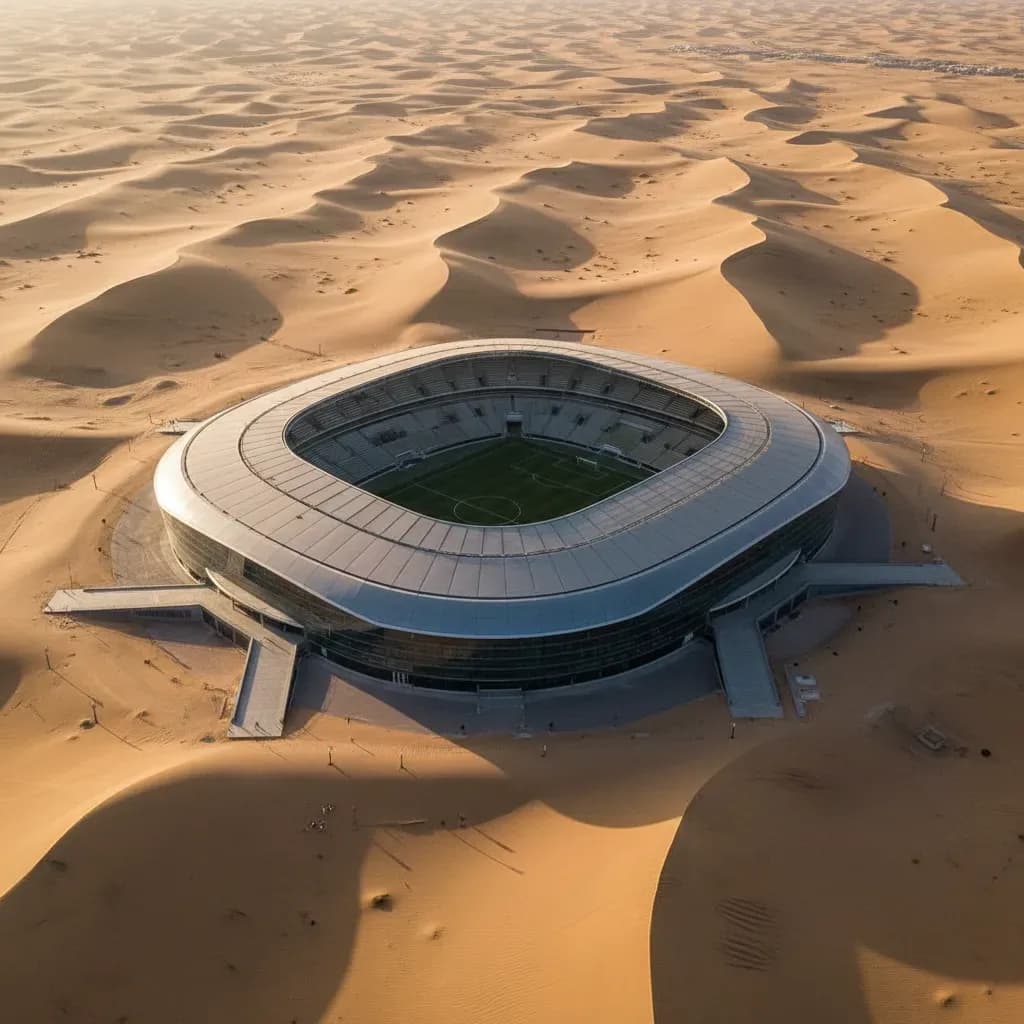
The disconnect between the Saudi Pro League's spending and the national team's World Cup performance can be explained by a fundamental misunderstanding about how international football development works. The 6.2 billion dollars was spent primarily on signing foreign players — aging superstars from European leagues who moved to Saudi Arabia for enormous salaries. This investment did not benefit the Saudi national team, which cannot select foreign-born players. The Saudi players who represented the country at the World Cup play alongside these superstars domestically but do not absorb their abilities through osmosis. The assumption that playing with Ronaldo would make Saudi defenders better at defending or that training alongside Benzema would make Saudi strikers more clinical has proven to be wishful thinking.
The Tactical Limitations
Saudi Arabia's tactical approach at the 2026 World Cup was organized but predictable. Under manager Roberto Mancini — hired in 2023 for a reported salary of 25 million dollars per year — the team played a 4-2-3-1 formation that relied on defensive discipline and quick transitions. Against Peru, this worked: Saudi Arabia absorbed pressure and scored twice on the counter-attack. Against Denmark, they were competitive but lacked the technical quality to create consistent chances. Against France, the limitations were exposed brutally: Kylian Mbappe and Antoine Griezmann repeatedly found space between Saudi Arabia's midfield and defense, creating 24 shots and scoring three goals that could easily have been five or six.
The 2022 Argentina Win Feels Like a Distant Memory
Saudi Arabia's 2-1 victory over Argentina at the 2022 World Cup in Qatar was one of the greatest upsets in football history. It was supposed to be the beginning of a new era for Saudi football — proof that the country could compete with the world's best. Four years later, the context of that result looks different. In 2022, Saudi Arabia were managed by Herve Renard, a French coach with extensive experience in African and Middle Eastern football who understood the specific strengths and limitations of his players. Renard's successor, Mancini, is a more prestigious appointment but has struggled to replicate the tactical intensity and defensive organization that made the Argentina upset possible. The players, too, have changed: several members of the 2022 squad have been displaced by younger players who lack the same big-game experience.
The Youth Development Gap
The fundamental challenge facing Saudi football is not financial — it is developmental. Saudi Arabia's youth academies, despite significant recent investment, are not yet producing players who can compete at the highest international level. Of the 26 players in Saudi Arabia's World Cup squad, only three play outside the Saudi Pro League. Compare this with Morocco, whose squad includes 18 players from Europe's top five leagues, or Japan, with 21. Saudi Arabia's players are technically competent but lack the competitive intensity, tactical flexibility, and physical conditioning that comes from playing in the most demanding leagues in the world. Until Saudi-born players are regularly competing in the Champions League — not just watching it from the bench — the national team will continue to underperform relative to the country's financial investment.
What Needs to Change Before 2034
Saudi Arabia will host the 2034 World Cup — an event that the country views as the defining moment of its sporting transformation. Eight years is a significant amount of time, but the changes required go far beyond writing checks. Saudi Arabia needs to develop a domestic youth pathway that produces 15-20 players capable of competing in Europe's top leagues. They need coaching infrastructure that emphasizes tactical education and physical development from age 12 onward. They need competitive domestic competition that challenges Saudi players rather than providing them with easy opposition alongside aging foreign superstars. The money is available. The question is whether it will be spent wisely enough to produce results that matter — not in league standings, but at World Cups.
Tags: Saudi Arabia, World Cup 2026, group stage exit, Saudi Pro League, billions spent, Roberto Mancini, France, 2034 World Cup, football investment, youth development
Sources consulted: CBS Sports · FIFA · Yahoo Sports · FIFA World Cup 26 match schedule and results · FIFA World Cup 26 tournament hub · ESPN FIFA World Cup
All trademarks, team names, league names, and player likenesses mentioned in this article are the property of their respective owners and are used here for informational and editorial purposes only.
Ask Karpo First
Want to understand how Saudi Arabia's football investment compares to other nations or what they need to do before hosting the 2034 World Cup? Ask Karpo for a breakdown of football spending by country, the Saudi Pro League's full transfer history, and an analysis of what host nations have done to prepare their teams for home World Cups.
Ask Karpo for more information.
Keep reading
- Haaland Has Seven Goals and Norway Runs Entirely Through Him
 World Cup Trophy Ceremony Timing Medals and Postmatch Celebrations
 Olise and France's Attack: The Semifinal Tactical Question