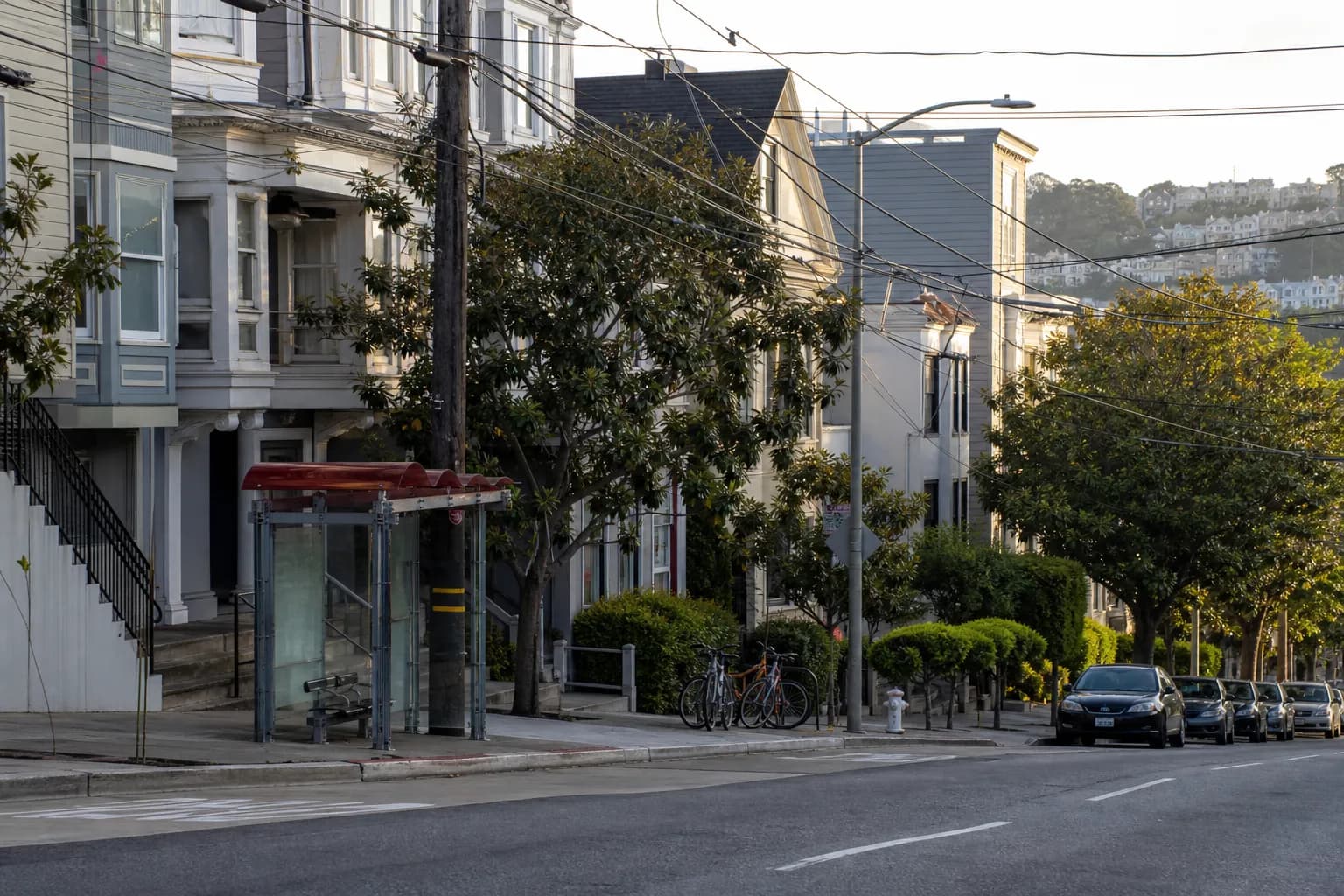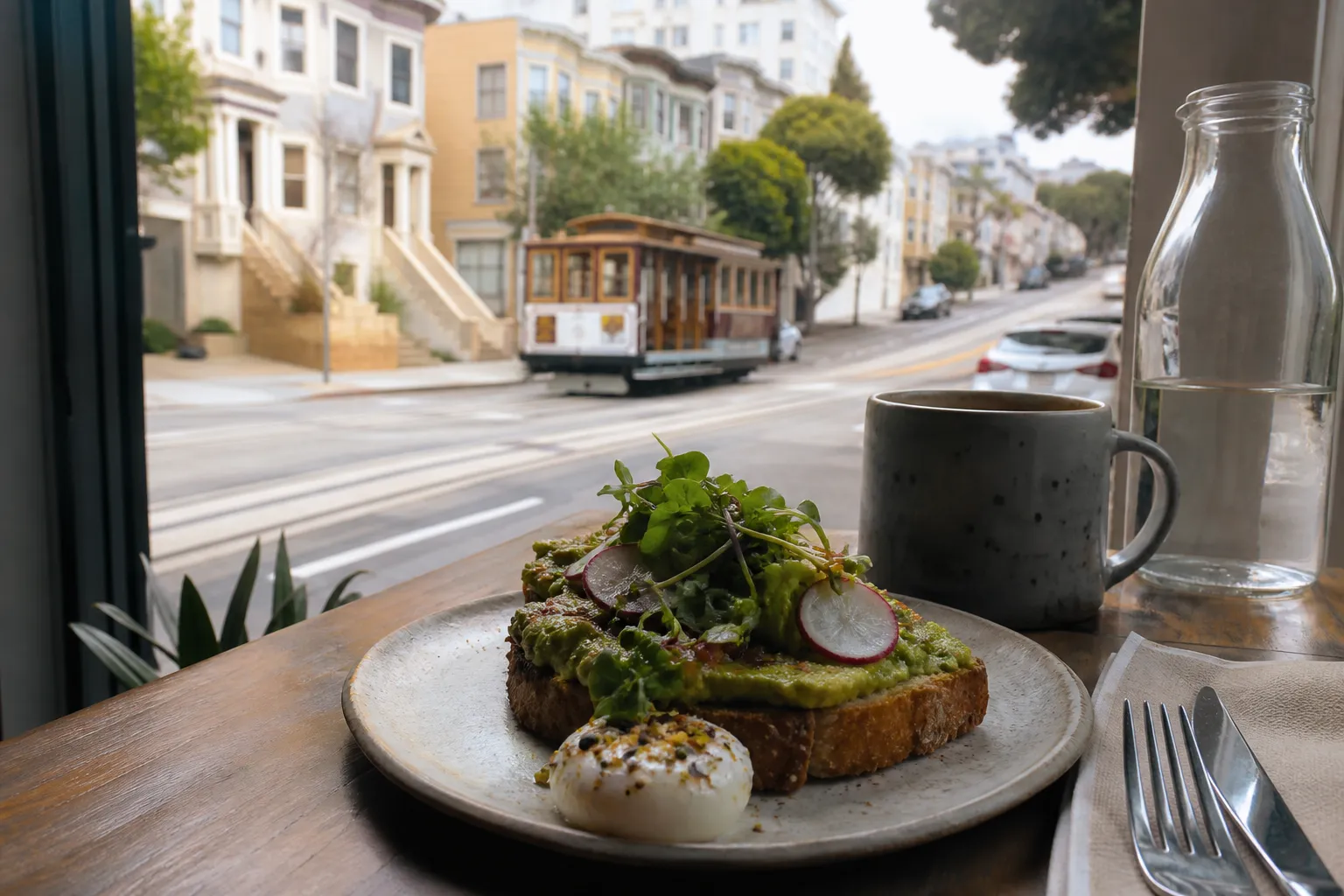
In San Francisco, sunset is not one single experience. A bay-facing sunset can feel calm and open, a hilltop sunset can feel dramatic, and a west-side sunset can be all texture and weather. For a lower-stress evening, choose the version that fits what comes next. If you want dinner, a walk, or an easy ride home, the best sunset is the one that keeps your evening compact and simple instead of turning it into a city-crossing project.
Check the wind, pick your backup, and head out.
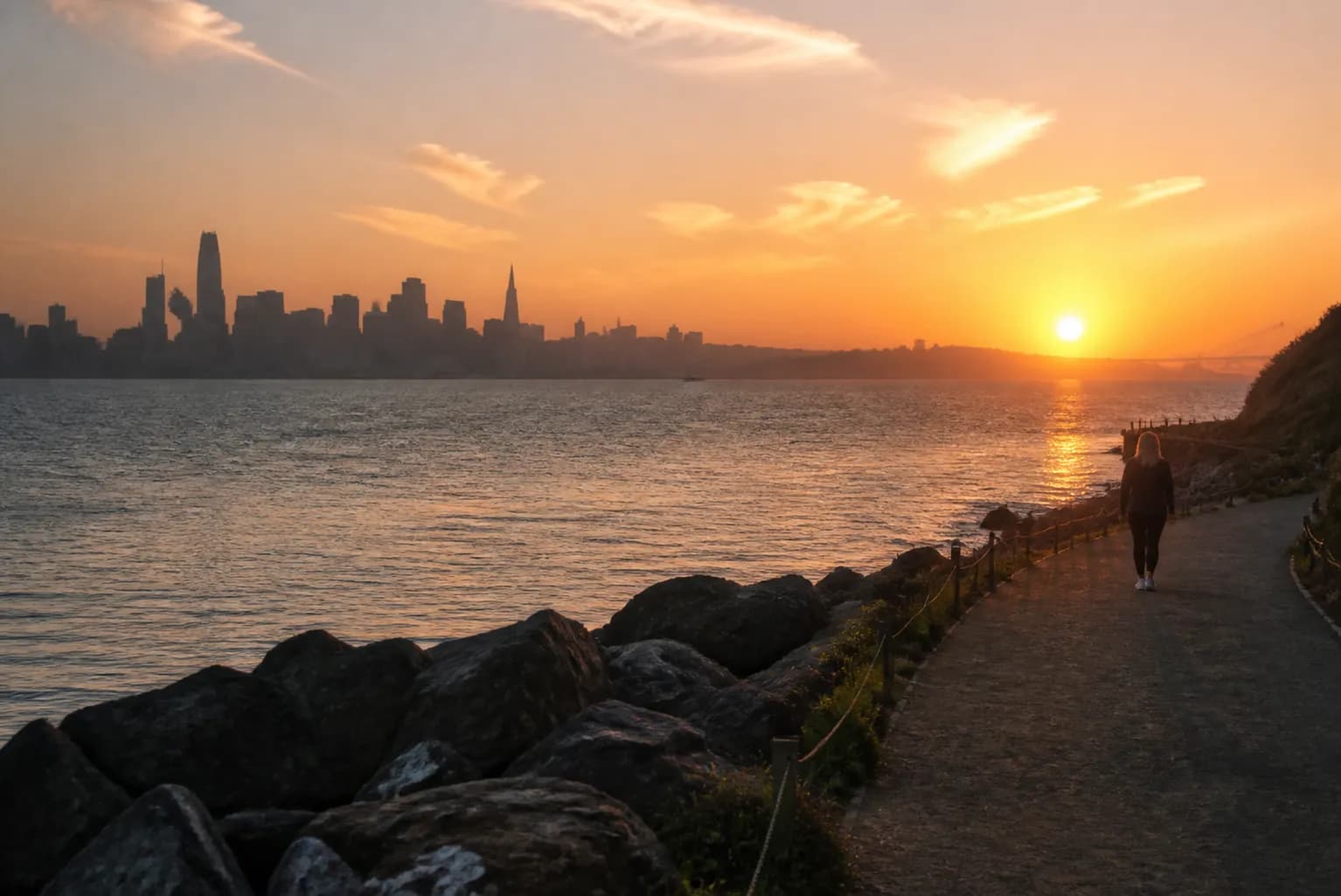
A helpful way to decide is to map the sunset spot against your next move. If you will end up in North Beach, downtown, or along the waterfront, a bay-side view usually makes the transition easier. If you are heading home by Muni, think about how much walking you want after dark. In SF, even a short-looking route can become tiring when it includes steep blocks, windy crossings, or long waits in the cold.
Read SF weather before you leave
San Francisco weather can change quickly from neighborhood to neighborhood, so check the live forecast rather than assuming one part of the city tells the whole story. Look at hourly cloud cover, wind, and temperature drop, especially from late afternoon through sunset. The west side often gets foggier and breezier than the east side, and a clear inland sky does not guarantee a clear view at the coast. If you want color, partly cloudy conditions are often better than a fully blank sky or a thick marine layer.
It helps to check conditions right before you go, not hours earlier. If the coast looks gray, a fog bank is already forming, or the wind is rising along the waterfront, pivot inland or toward a bay-facing area. If the city is holding clear and calm, you can choose a more exposed viewpoint with less risk. The goal is not to predict perfection; it is to notice whether the evening is likely to be crisp, hazy, windy, or clear enough to make your plan feel worth it.
Match the neighborhood to the night you want
For an easier night, pick a neighborhood with a natural after-sunset rhythm. Flatter, central areas tend to make the transition smoother because they offer more walking options, more transit choices, and less effort when the light fades. Waterfront stretches can be beautiful, but they are often colder and more exposed. Hilltop views can be memorable, but they demand more energy on the way there and more care on the way back, especially if you are carrying layers, a camera, or bags from earlier in the day.
Think about whether the area feels straightforward after dark. If you prefer a gentle finish, choose a place where you can move from view to food or transit without long detours. San Francisco rewards this kind of planning: a sunset near a neighborhood edge with easy access is usually less stressful than a beautiful spot that leaves you with stairs, steep slopes, or a confusing return path. A good rule is to favor the route that makes leaving feel as easy as arriving.
Build a backup that is actually nearby
A backup only works if it is close enough to feel effortless. If the west side is socked in, your fallback should not require a major cross-town trip. Move from exposed coastline to a bay-facing area, from an open bluff to a sheltered street, or from a hilltop to a flatter waterfront walk. If the wind is the problem, choose a place with buildings, trees, or a more protected promenade. If the sky is too flat for a big sunset, pick a neighborhood where the evening still feels pleasant even without a dramatic view.
The best backup logic in SF is simple: choose one primary area and one alternate area that respond to different weather patterns. West side versus east side, exposed versus sheltered, hilltop versus low-rise, ocean-facing versus bay-facing. Before you leave, check transit alerts and walking time for both. If the primary spot looks promising, great. If it starts to go foggy or cold, you should be able to switch without feeling like you lost the whole evening. That keeps the night low-stress even when the sky changes.
Use timing to avoid the rush and the cold
In San Francisco, the temperature often drops quickly after sunset, so timing matters as much as location. Arrive early enough to settle in before the light peaks, especially if you want to find a comfortable viewpoint, cross the street safely, or adjust for wind. The best experience is usually the one that gives you a few extra minutes to breathe and look around instead of forcing you to rush from transit stop to overlook to dinner reservation. Earlier arrival also gives you more options if your first choice feels too crowded.
After the sun goes down, the easier evening is usually the one with the shortest possible transition. That means a nearby meal, a clear transit line, or a pickup point that does not require wandering through several blocks of unfamiliar streets. In SF, the most graceful nights often come from planning the exit first and the view second. If your sunset choice can carry you naturally into the rest of the evening, you have probably picked the right spot for the city and the season.
A simple plan before you go
- Check hourly fog, wind, and temperature before you leave, then check again right before sunset.
- If the west side looks gray, switch to a bay-facing or more sheltered neighborhood instead of chasing the coast.
- For an easier exit, choose flat routes, visible streets, and a transit stop you can reach without a steep climb.
- Pack a warm layer even on clear days; SF cools fast once the sun drops.

Tags: #back_to_school #sf
Sources consulted: Official city information · Google Maps · Karpo local search
All trademarks are the property of their respective owners.