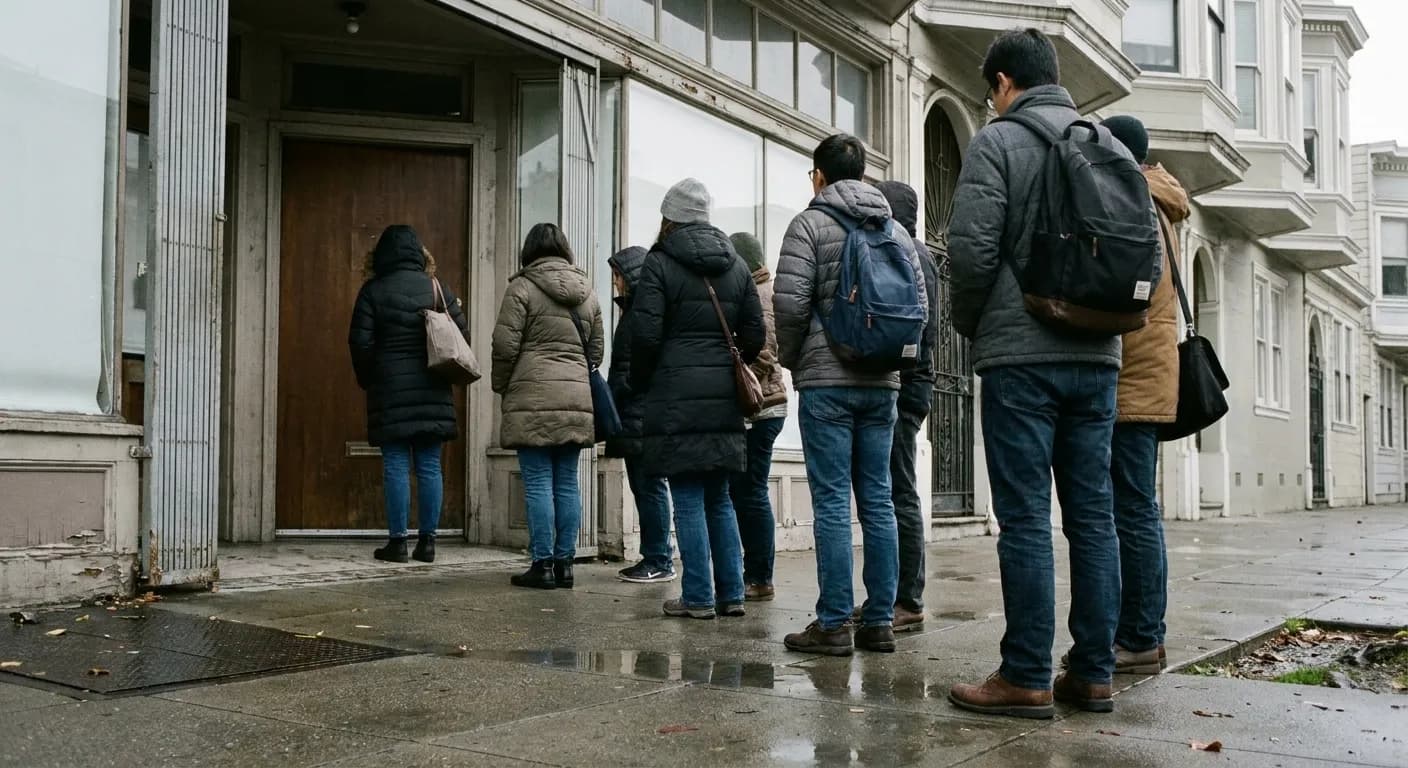
There is a version of the search for the best ramen in San Francisco that consists entirely of finding whichever shop has the longest line and joining it. It works, in the sense that the queue is a real quality signal. It is also an extremely inefficient way to eat, because the relationship between wait time and bowl quality flattens out fast — the difference between the first and fifth best counters in this city is much smaller than the difference between eight minutes and fifty.
The queue tells you more about the hour than the kitchen. Ask Karpo which counters near you are seating quickly right now.
What the queue actually measures
Three things, only one of which is quality. It measures seat count, which is why a twelve-stool room with a good reputation has a permanent line and a forty-seat room with the same reputation does not. It measures turn speed, which varies enormously depending on whether the shop pushes people out. And it measures the hour, because ramen demand in this city is sharply peaked in a way that most food categories are not.
The peak is narrow: roughly twelve to one thirty at lunch, and six thirty to eight at dinner. Half an hour on either side of those windows the same shop is close to empty. Anyone standing in a forty-minute line at seven has, in most cases, chosen to do that rather than had to.
The counters worth actually waiting for
A short list in any city, and shorter here. The shops that justify a real wait are the ones doing something structurally difficult — house-made noodles, a broth that takes eighteen hours, a single-item menu executed obsessively. Those are rare, and they tend to be small, owner-operated and unglamorous, and they are usually not the ones with the most visible queue.
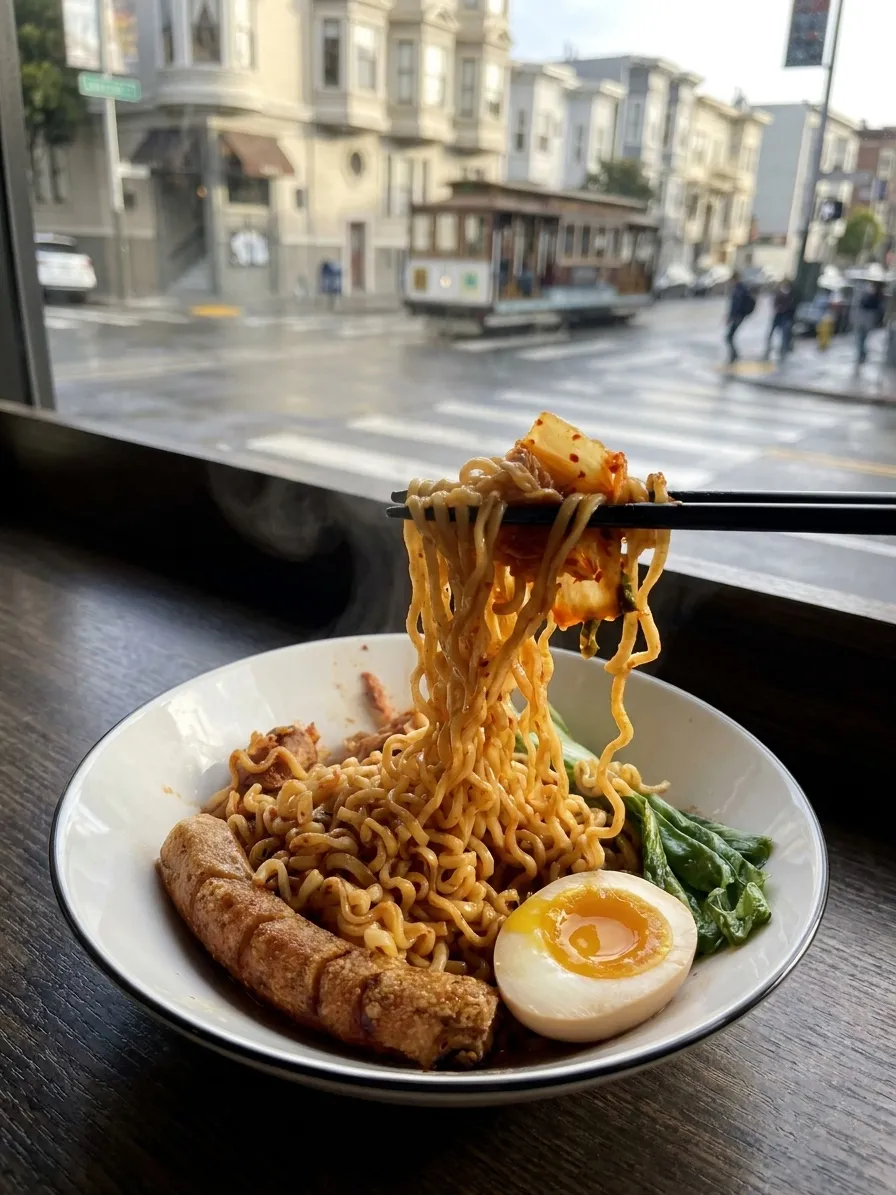
The shops with the largest queues are frequently the ones with the largest social-media footprint, which is a different variable. This is not a criticism of them — several are genuinely excellent — but it does mean the line is measuring attention as much as it is measuring cooking, and attention is much more volatile than quality.
Where locals go instead
The Inner Richmond, along Clement and Geary, holds several counters that would have queues if they were three miles east and instead have seats. The Sunset has the same pattern along Irving and Noriega. Both neighbourhoods have substantial Japanese and Korean populations and a customer base that eats ramen as ordinary food rather than as a destination meal, which keeps the rooms honest and the prices lower.
The other underused category is the izakaya that happens to make good ramen. Because they are not ramen shops, they do not attract ramen queues, and because they need the kitchen anyway they frequently run later. A bowl at an izakaya at ten on a Tuesday, with a beer and no wait, is one of the better small evenings available in this city.
Timing that removes the wait entirely
Arrive at eleven forty-five or at two. At the dinner service, five thirty or eight forty-five. These are not clever hacks; they are simply the hours when the room is not at capacity, and they turn a fifty-minute wait into a walk-in at every single shop in the city. The cost is eating slightly outside the conventional window, which most people find easier than they expect.
Rain is the other lever, and it is a large one here. A wet Tuesday collapses ramen queues even though ramen is exactly what people want in that weather, because the waiting happens outside. If you are willing to stand in light rain for ten minutes you will routinely walk into rooms that have a thirty-minute line on a clear evening.
Waitlist systems and how to use them
Several of the busier counters now run a digital waitlist that lets you join remotely and come back when your table is close. This is the single most useful development in this category and a surprising number of people still queue physically at shops that offer it. Checking whether a waitlist exists before you set off converts standing time into doing-something-else time.
The related habit is joining a list at two shops and taking whichever comes up first. Nobody minds and it is entirely normal, provided you cancel the one you are not going to. In a neighbourhood with three counters within four blocks, this reduces the expected wait to close to the minimum of the three rather than the one you picked.
What to look for once you are inside
Noodles first: house-made or from a good supplier, cooked to order, with a definite bite. A shop that gets the noodles right and the broth merely decent produces a better bowl than the reverse, which is the opposite of how most people assess ramen. Second, the egg — a properly cured, jammy egg is a marker of a kitchen that cares about the parts nobody photographs.
And be suspicious of enormous menus. A counter offering twelve broths, a rice menu, gyoza, curry and a dessert list is spreading a small kitchen thin. The shops that do three bowls and nothing else are making a statement about where their attention goes, and in this category that statement is usually accurate.
The last thing worth internalising is that ramen does not travel. Twelve minutes in a container turns good noodles into bad ones, which is why the delivery version of an acclaimed bowl so often disappoints and why the shops that care will discourage it. If the choice is between a celebrated bowl delivered and a decent one eaten at a counter, take the counter every time.
Tags: #SanFrancisco #RamenSF #BestRamenSF #InnerRichmond #Japantown #Izakaya #HiddenGems #SFEats #NoodleShop #QueueCulture #BayArea #SFFood #LocalKnowledge
All trademarks are the property of their respective owners.
Ask Karpo first
Ask Karpo which ramen counters near you in San Francisco have a wait right now, which ones run a remote waitlist, and where else is worth trying.