Ask a room of San Franciscans about the best pizza in San Francisco and you will get an argument that never resolves, because the people arguing are not describing the same product. One group means a folded slice eaten standing up on a North Beach pavement at eleven at night. The other means a sixty-dollar dinner with a wine list and a wood-fired oven imported from Naples. Both are pizza. Neither answer is wrong. The argument is just badly specified.
Slice windows and sit-down rooms keep completely different hours. Ask Karpo which style near you is still serving.
Split the category first
There are four distinct things being sold as pizza in this city. The slice window, which is cheap, fast, usually thick-crusted and largely a late-night product. The Neapolitan room, which is a restaurant with a wood oven and a twelve-inch pie meant for one person. The New York-style parlour selling whole pies to take away. And the modern Californian sourdough places, where the dough is fermented for days and the toppings come from a farmers market.
Almost every disagreement about San Francisco pizza is someone comparing across those categories. A Neapolitan pie is not a failed slice; it is a different food with a different serving temperature, a different crust hydration and a different eating context. Once you specify the format, most of the arguing stops.
The world-champion problem
The city's most decorated pizzeria sits in North Beach and is run by a pizzaiolo with a wall of international competition titles, including a World Pizza Cup win. In 2026 the same restaurant was named the top pizzeria in the United States by a major international ranking. That is a real credential and it produces a specific local resentment: a place that good gets a queue, and a queue changes the experience of eating there.
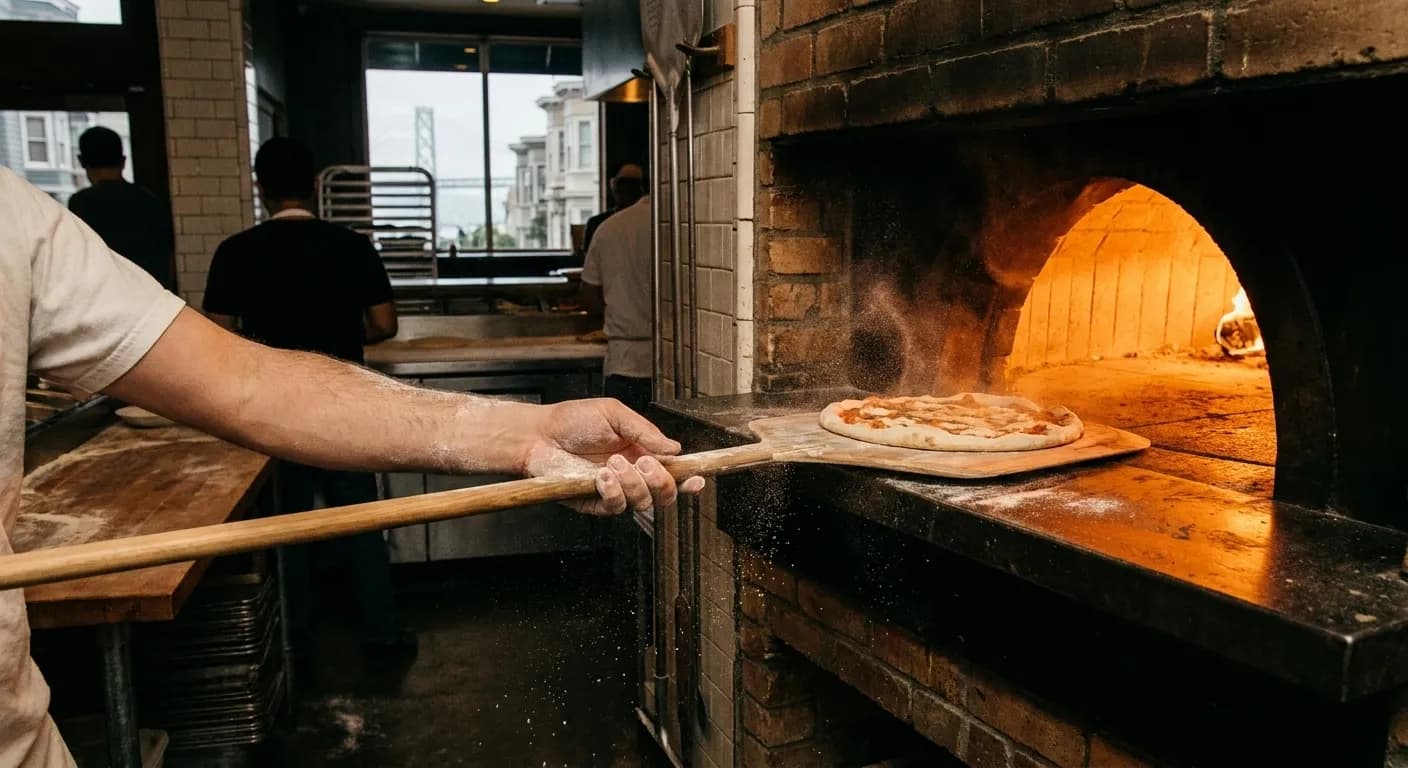
The honest position is that the pizza justifies the reputation and the wait does not always justify the pizza. The kitchen makes multiple distinct styles — Neapolitan, New York, Sicilian, Detroit — and the interesting move is to order the style the room is less known for, which usually comes out of a quieter oven with a shorter wait. It is also the one that reveals whether a pizzaiolo is actually good or merely well-drilled at one thing.
The slice window argument
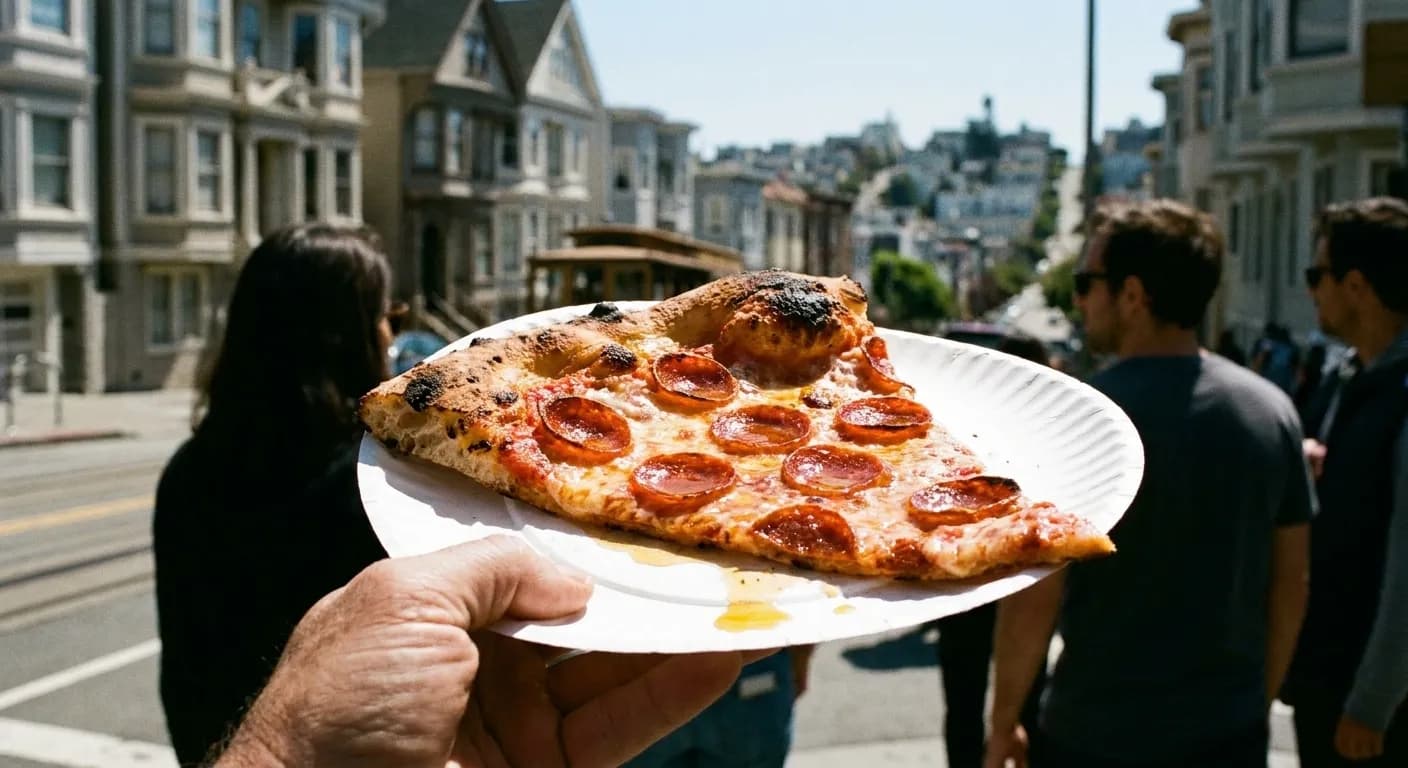
The other pole of the debate is the North Beach slice: enormous, thick, heavily topped, sold to a queue of people who have been in a bar. It is not competing with the Neapolitan places and it is spectacularly good at what it does, which is to be exactly the right food at exactly that moment. Attempts to evaluate it as a serious pizza miss the point in the same way that evaluating a Neapolitan margherita as a late-night snack does.
The genuine complaint here is about hours. The best slice windows in this city close earlier than the bars do, which produces the recurring San Francisco experience of walking to a slice place at eleven and finding it shut. Checking before you walk is the whole solution and almost nobody does it.
Where the actual quality density sits
Several San Francisco pizzerias appear in national and international rankings, and the cluster of them is genuinely strong for a city this size — the wood-fired and Neapolitan tier here compares well with anywhere in the country outside New York. What the city lacks is a deep middle: there is an excellent top end and a solid cheap end, and comparatively little in the fifteen-to-twenty-dollar whole-pie bracket that other cities have in abundance.
That gap is why the arguments are so polarised. In a city with a dense mid-market, the debate would be about which neighbourhood parlour is best. Here it is about a world champion versus a slice window, which are so far apart that the disagreement never converges.
How to settle it for yourself
Eat the same style twice in one week at two different places, rather than eating two styles at two places. That is the only comparison that produces information. Order the plainest thing on the menu — a margherita, a plain cheese slice — because toppings hide dough problems and dough is the entire argument.
The sourdough question is the one genuinely local argument worth having. San Francisco has a long-fermentation baking culture and several pizzerias apply it to dough, which produces a tangier, more open crumb than a Neapolitan base. People who grew up on New York pizza often dislike it intensely; people who like sourdough bread tend to think it is the best thing the city does with a pizza oven. Neither camp is going to convince the other, and both should try the other's preferred room before arguing further.
And separate the queue from the quality when you form an opinion. Waiting forty minutes makes people either love a thing disproportionately or resent it disproportionately, and neither reaction has much to do with what came out of the oven. The pizzerias in this city that locals actually argue about are the ones where the food is good enough to sustain a disagreement, which is a compliment to all of them and a reason to try the one you have been told is overrated.
If you want a single ordering rule that resolves most of it: at a slice window, get whatever has just come out of the oven rather than whatever you wanted; at a sit-down room, get the simplest pie on the menu and eat it in the first three minutes. Pizza is a temperature-dependent food and almost every bad experience with it in this city is a timing failure rather than a cooking one.
Tags: #SanFrancisco #SFPizza #BestPizzaSF #NorthBeach #Neapolitan #SliceLife #SFEats #PizzaDebate #HiddenGems #FoodieSF #BayArea #WoodFired #LateNightSF
All trademarks are the property of their respective owners.
Ask Karpo first
Ask Karpo which pizzerias near you in San Francisco are open now, which style they do best, and how long the wait is.