 Ramen Near Me: Iza Ramen's Lower Haight Run Is Over
Back To School
Reading About MIT Black Hole Star Discovery Between Study Sessions in San Francisco
How to build a back-to-school route through Japantown and the Western Addition when astrophysics news pulls you offline.
The MIT black hole star discovery landed in August 2024, when researchers identified a star that survived close passage near a supermassive black hole, ejected at unprecedented speed. The finding recalibrated assumptions about tidal forces and stellar resilience. In San Francisco, that kind of news tends to surface between problem sets, when you're already tired and the fog has rolled in early, turning the afternoon into a narrow window of usable daylight. You want to keep reading, but the chair in the library is uncomfortable, and you need to pick up a textbook return, grab a notebook, and maybe sit somewhere with decent light before the kitchen counters close at seven.
Text Karpo before you leave the library or your apartment—it'll map the route from your start point, check which cafés still have tables, and hold a backup if the wind off the bay makes the hill walk miserable.
Why Astrophysics News Hits Differently in Fog
The city's study rhythms don't pause for breaking astrophysics. If you're anchored in the Inner Richmond, the Sunset, or near USF, the Japantown corridor offers a compact, low-hill string of errands that lets you toggle between articles on your phone and the practical tasks that pile up in the first weeks of a semester. The MIT black hole star discovery is the kind of story that benefits from multiple readings—dense with velocity calculations and observational data—so a route that gives you three or four different sitting environments, none of them loud, tends to work better than trying to absorb it all in one place.
Start at the Main Library, Then Walk West
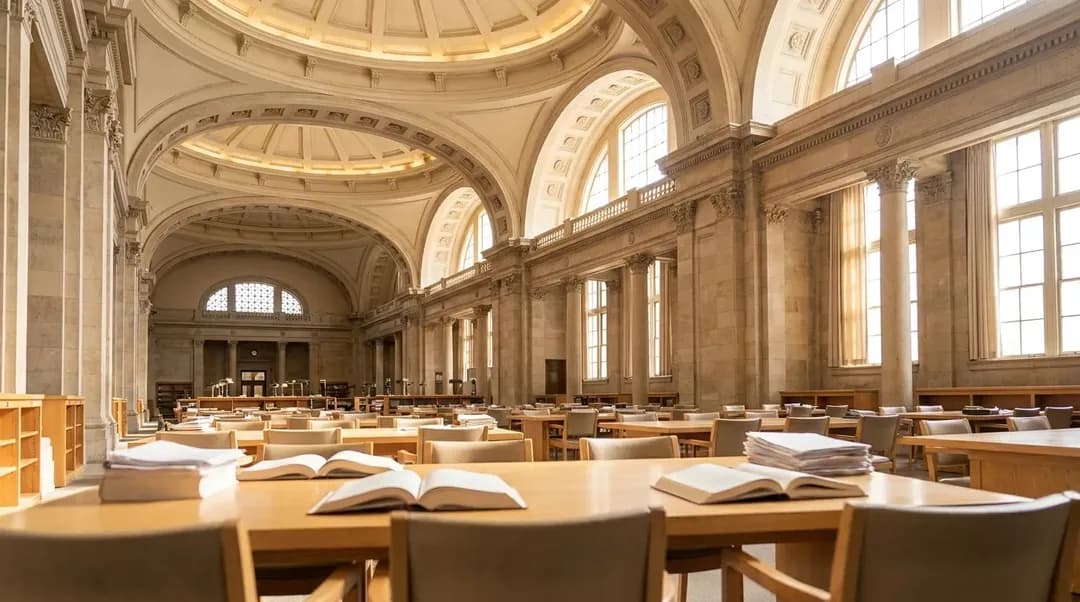
The San Francisco Main Library at Civic Center holds reserve textbooks, and the fifth-floor science section has large tables near windows that face north. If you arrive mid-morning, the light is even and the floor is quiet enough to skim the first round of MIT press coverage. Print or save what you need, because you'll want the material offline once you start moving. The building's connectivity is strong, but outside, Muni timing can leave you standing on Grove longer than the app suggests, especially if you're catching the 5 Fulton outbound.
From Civic Center BART, the 5 Fulton runs west along McAllister, then shifts to Fulton through the Western Addition and into Japantown. The ride is fifteen minutes if the bus doesn't hold at Divisadero. Get off at Fillmore. You're now at the eastern edge of Japantown, where Fillmore slopes gently downhill toward Post. The air is often cooler here than it was at Civic Center—wind funnels through the cross streets—so if you're in a T-shirt, you'll feel it.
Walk south on Fillmore to Post, then west one block to the Kinokuniya building at the Japan Center. The bookstore on the second floor has a science section that includes popular astrophysics titles, and the café seating on the same level is usually available before noon. This is a good place to re-read the MIT black hole star discovery details, especially the sections on hypervelocity stars and the observational methods used at the Chandra X-ray Observatory. The tables are small, the lighting is warm, and the ambient noise is low. You can stay for an hour without pressure.
Geary, Webster, and the Wind Problem
After Kinokuniya, you'll need to cross Geary. The Peace Plaza sits on the north side of the street, but the western benches are exposed to wind that picks up after one o'clock. If you're planning to sit outside, choose the eastern edge near Webster, where the building blocks some of the gusts. The plaza is a reasonable spot to take notes if the weather holds, but it's not reliable past mid-afternoon—the temperature drops fast, and the concrete seating is unforgiving.
If you need to pick up supplies, Daiso is in the mall's west building. It's cheap, well-stocked, and good for notebooks, pens, and desk organizers. The aisles are narrow, so it gets crowded after three, when high school students filter in. Go earlier if you can. From there, walk north on Webster to Sutter. This block has less foot traffic and the sidewalk is wider, which matters if you're carrying a backpack and a bag of supplies.
Sutter between Webster and Fillmore has a few small cafés that open early and close by six. These are not named chains; they're independent operations, so confirm hours before you rely on them for a late-afternoon seat. The advantage here is quieter interiors and the chance to sit near an outlet. If you're deep into the technical sections of the MIT black hole star discovery—particularly the spectroscopy data—you'll want a stable table and a chance to sketch orbital diagrams or velocity curves without someone looking over your shoulder.
When the Plan Needs an Alternate
Not every café will have space when you arrive. If Japantown is full or the wind is too strong to sit outside, the fallback is to walk east on Post back toward Fillmore, then north to Pine. The Pine Street corridor between Fillmore and Steiner has a few smaller cafés and a branch library—the Western Addition Library—at 1550 Scott Street, just south of Geary. The library is small, but it has study tables and it's almost never crowded in the early afternoon. The building closes at six, so this is not a late option, but it's a solid backup if you need quiet and a hard chair.
Another alternate: if you're coming from the Richmond or the Sunset and the 5 Fulton is delayed, take the 38 Geary to Fillmore and walk north. The 38 is more frequent, and Geary is flatter than McAllister if you're on a bike. The trade-off is noise—Geary has heavier traffic and the sidewalks are busier—but the route is faster and more predictable if you're trying to hit a specific café window before it closes.
If you're reading about the MIT black hole star discovery on your phone and the battery is low, the Japan Center mall has charging stations near the restrooms on the second floor. They're not fast chargers, but they'll get you another thirty percent in twenty minutes. This matters more than it sounds like it does, because once you're outside again and walking, you lose the option to look up supplementary material or check a term you don't recognize.
Check Before You Commit to a Spot
The best study routes in San Francisco depend on real-time checks: which cafés have open tables, whether the library room you want is hosting an event, whether the 5 Fulton is running on time or stuck at Masonic. These are not details you can predict from home. If you're planning to spend three hours moving between spots, you need a way to verify conditions before you commit to a seat or a bus line.
The same principle applies to the science itself. The MIT black hole star discovery is a developing story. New analyses will appear as other observatories confirm the velocity measurements or refine the black hole's mass estimate. Bookmark the MIT News page and the Chandra mission updates so you're not reading secondhand summaries. If you're writing a response paper or integrating this into a project, you'll want access to the actual data releases, not just the press coverage.
Late afternoon in Japantown means early kitchen closures. If you're planning to eat before heading home, check posted hours for any restaurant you're counting on. Many small operations close by seven or eight, and takeout windows stop earlier. The Safeway on Webster at Geary is open late if you need to grab something simple, but it's a supermarket, not a place to sit. If you're aiming for a meal and a final study session in one place, you'll need to confirm that the spot serves food past six and has tables that aren't reserved for dinner service.
Wind is the variable that breaks the most plans here. If you're betting on outdoor seating in the Peace Plaza or on a bench along Post, check the forecast for late-afternoon gusts. The fog bank that sits offshore in the morning often pushes inland by three or four, and the temperature can drop ten degrees in an hour. Bring a jacket even if the start of your route is sunny. The hill streets—Fillmore, Steiner, Scott—funnel wind downhill, and the east-west blocks catch it broadside. If you're reading something dense like the MIT black hole star discovery findings, cold fingers and a shivering laptop screen will end your session faster than a dead battery.
Practical notes
- The 5 Fulton outbound runs every 12-15 minutes; check NextBus before leaving Civic Center.
- Kinokuniya café seating is first-come; mornings are quieter than afternoons.
- Western Addition Library closes at 6 PM; confirm holiday hours online.
- Wind picks up after 2 PM in Japantown; bring a layer even if it's sunny at start.
- Most small cafés close kitchens by 7 PM; verify hours if you need a meal.
- Daiso gets crowded after 3 PM on weekdays when school lets out.
Tags: #karpo #sanfrancisco #japantown #backtoschool #studyroute #mitblackholestar #blackholediscovery #astrophysics #westeraddition #civiccentersf #munisf #sfstudentlife #sciencereading #sflibraries #kinokuniyasf
All trademarks are the property of their respective owners.
Ask Karpo first
Text Karpo when you're ready to leave and tell it you're starting from Civic Center or the Richmond, heading to Japantown for a study route. It'll check which cafés have space right now, confirm library hours, and build a live route that respects Muni timing and wind conditions. If your first stop is full, it'll suggest an alternate within two blocks.
Ask Karpo for more information.
Keep reading
- Ramen Near Me: Iza Ramen's Lower Haight Run Is Over
 Vintage Clothing Stores Near Me: Wasteland's Cavernous Haight Street Floor
 Lunch Near Me in the Tenderloin: Saigon Sandwich Builds Bánh Mì for Change