 Ramen Near Me: Iza Ramen's Lower Haight Run Is Over
Back To School
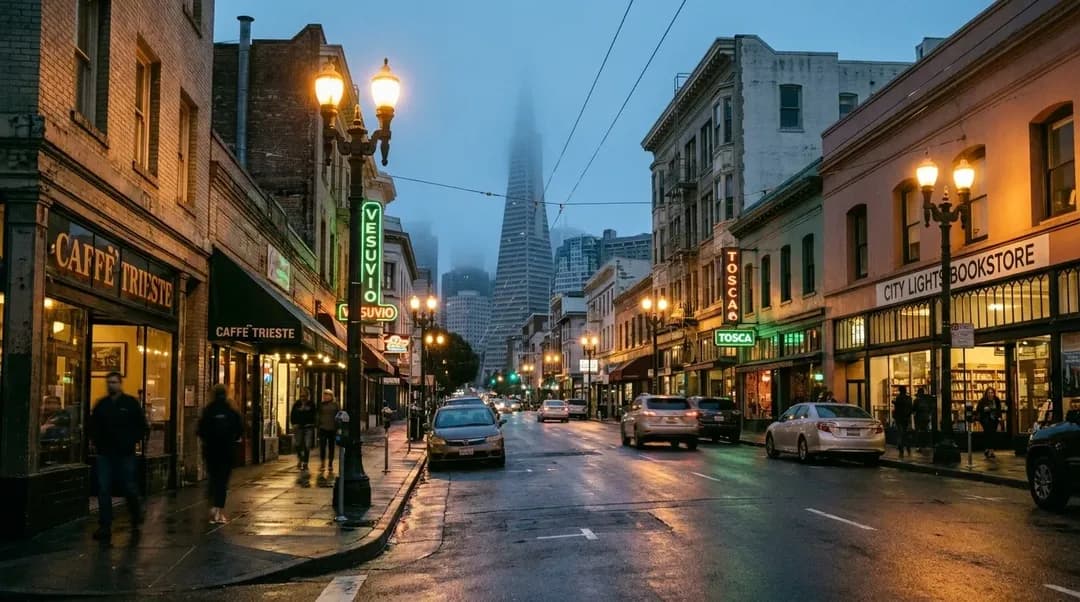
When GitHub Down Hits During Midterms: A San Francisco Study Route That Works Offline
GitHub outages don't pause deadlines, so here's a North Beach to Inner Richmond study circuit built for pencil, paper, and actual books.
The search spike happens fast. GitHub down. GitHub outage. GitHub Copilot down. Within ten minutes of a service interruption, thousands of developers and students stare at error messages, then reach for their phones to confirm it's not just them. The problem is sharpest during midterms and project deadlines, when an outage doesn't buy you extra time—it just means you need a new plan, immediately, in a city where not every café stays open past eight and the fog makes evening errands harder than they look on a map.
If GitHub goes down again or you need a live backup plan for your study day, text Karpo. It'll map the quietest café with power, check which library reading rooms are open right now, and hand you a route that skips the slowest Muni transfers.
What People Search When the Code Stops Compiling
San Francisco has always drawn people who work with systems that fail. The city's layout—hills that block radio signals, microclimates that shift every six blocks, transit that slows after nine—trains you to think in backups. When GitHub goes offline, the reflex here isn't panic; it's pivot. You grab your laptop, a notebook, and a printed copy of whatever you were trying to push, and you route yourself through a part of town that has the infrastructure for old-fashioned, offline work. That means library carrels, cafés with long tables and outlets that don't guilt you after an hour, and bookstores that let you sit on the floor with a stack of reference texts. North Beach, surprisingly, still has all three within a quarter mile.
The keyword context—github down, github outage, github copilot down—tells you this isn't a leisure search. It's a crisis query. People need to know if the problem is global, how long it might last, and what they can do in the next four hours that doesn't depend on a remote repository. In a city where coworking spaces cost thirty dollars a drop-in and public libraries close early on Thursdays, the real question is: where can you go, right now, that supports the kind of deep work that doesn't need a network?
Why North Beach Still Works for Deadline Days

North Beach sits just north of downtown, reachable by the 30 or 45 bus from most of the city, and it retains a density of quiet, low-pressure spaces that haven't been optimized into coworking glass. The neighborhood has three things going for it when GitHub is down and you're racing a deadline: the North Beach branch library on Columbus, a handful of old cafés with big tables and patient staff, and City Lights Bookstore, which has a basement full of technical and reference books and doesn't mind if you sit for two hours with a stack.
The library branch is small but the upstairs reading room has a long table under good light, and it's almost never full on weekday afternoons. The building is old enough that the chairs creak and the radiators clank, but the wifi is solid and, more importantly, the space is designed for people who need to spread out paper and actually think. When the internet is useless, being surrounded by spines of printed matter has a clarifying effect. The branch closes at six most nights, so this is an early-to-mid-afternoon anchor, not an evening one.
City Lights is a block south on Columbus. The poetry room upstairs gets crowded with tourists, but the back alcoves and the basement stay quiet. If you're working on something that needs a reference book—an algorithms text, a networking manual, anything you'd normally clone from a repo and skim—the staff will let you pull it and sit. They've seen generations of people treat the store like an overflow study hall, and as long as you're respectful and you buy something eventually, it's tolerated. The floors are uneven, the lighting is dim in corners, but that's part of why it works: no one's watching the clock.
Between the library and the bookstore, there are cafés. The ones on Columbus near Vallejo tend to have long communal tables, outlets along the walls, and a tolerance for people nursing one coffee across three hours. Avoid anything with 'artisan' in the name; those spots flip tables. Look for the places with laminate counters and handwritten specials. They close by seven or eight most nights, which means you need to plan your evening leg somewhere else, but for a solid afternoon of offline work—handwritten pseudocode, printed problem sets, sketching architecture on paper—they're ideal.
Sequencing the Day So You Don't Lose Momentum
The mistake people make when GitHub goes down mid-afternoon is trying to wait it out in one spot. You sit in your apartment refreshing the status page, or you camp at a café that's about to close, and by the time you realize the outage is going to last, you've lost two hours and your best options are shutting down. The better move is to treat the outage as a forcing function: map a study route with two or three stops, each with a different resource, and keep moving.
Start at the North Beach library when it opens, usually ten or eleven depending on the day—confirm the schedule online before you go, because branch hours shift seasonally. Spend two hours there working through anything you can do offline: writing out logic by hand, debugging printed code, drafting documentation in a text editor that doesn't need a remote save. The reading room upstairs is your anchor. At six when the library closes, you're already warmed up and you've made real progress, so the closure doesn't feel like a disruption.
From there, walk south on Columbus toward City Lights. If you need dinner, grab something quick on the way—North Beach has plenty of takeout pizza and bakeries that sell focaccia by the slice. Eat while you walk or sit on the benches in Washington Square Park if the wind isn't too harsh. The park gets cold after sunset because the fog rolls in from the north and there's no windbreak, but for twenty minutes it's manageable. Then move into City Lights and shift modes: use the bookstore for reference lookup, for reading chapters you'd normally skim online, for anything that benefits from a printed index.
If you still have work after City Lights closes—usually around ten or eleven, but verify—you need a third spot. This is where timing becomes the whole trick. The cafés in North Beach shut down early. Your best late option is to take the 30 bus west toward the Inner Richmond and land at one of the cafés on Clement Street near the park. They stay open later, the lighting is better, and the neighborhood is quieter after nine. The bus ride is fifteen minutes if you catch it on Columbus near Broadway. The 30 runs every twelve to fifteen minutes until about eleven on weeknights, then it slows, so don't count on it after midnight.
The Inner Richmond Backup for Late Work
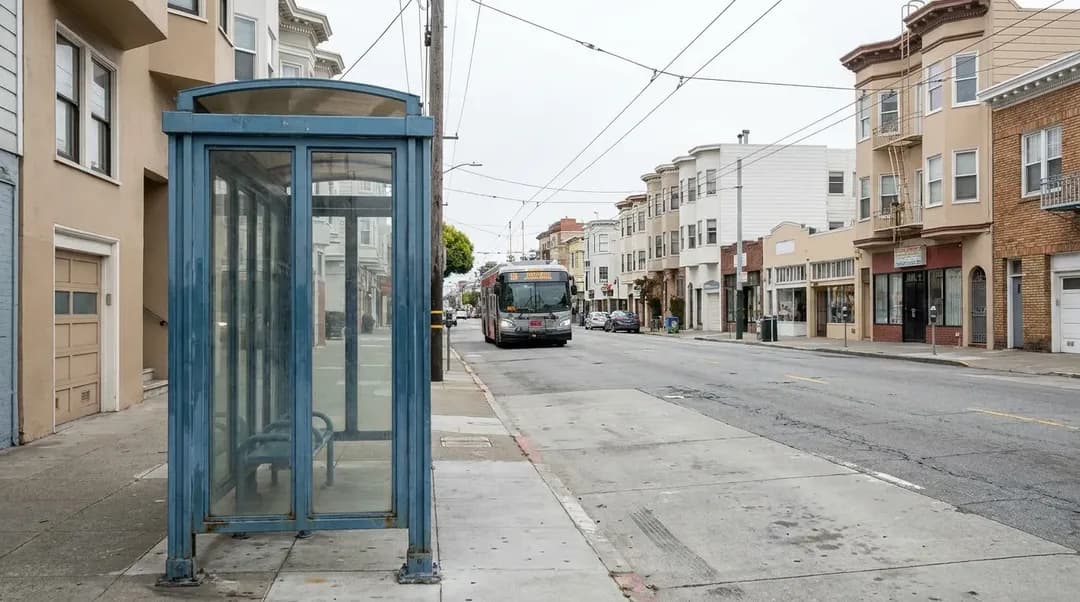
If North Beach is your afternoon anchor, the Inner Richmond is your evening insurance. Clement Street between Arguello and Park Presidio has a row of cafés and bakeries that cater to a neighborhood crowd—people finishing work late, students avoiding campus libraries, freelancers who need a third space after their usual haunts close. The demographic here is less tourist, more local, which means the cafés are less precious about table time and more equipped for people who need to stay past nine.
The blocks near Fourth Avenue have the best concentration. Look for the spots with bright interiors and simple menus. These aren't coworking spaces; they're just cafés that happen to have strong wifi, plenty of outlets, and a layout that doesn't make you feel guilty for spreading out. When GitHub is down, wifi matters less, but outlets still matter because your laptop battery won't last a six-hour session. The staff here are used to people working late, and they won't hover.
The other advantage of the Inner Richmond is the proximity to Golden Gate Park. If you need a walk to clear your head between problem sets, the park entrance at Arguello is two blocks south. The paths near the Arguello gate stay lit until about ten, and a fifteen-minute loop through the eastern meadows is enough to reset without losing your evening. The park gets darker and emptier after ten-thirty, so don't rely on it as a late-night break, but for an eight or nine PM walk it's perfectly usable.
The bus back from Clement to North Beach or downtown is the same 30 line, or you can take the 38 Geary if you're heading east toward Union Square or BART. The 38 runs more frequently late at night than the 30, so if you're finishing up after eleven and need to get home, Geary is your safer bet. The wind on Clement picks up after dark, especially in the blocks west of Sixth Avenue, so bring a jacket even if the afternoon was warm.
Check the Library Hours and the Last Bus Before You Go
The whole plan collapses if you don't verify two things before you leave: library hours and transit timing. The San Francisco Public Library posts branch schedules online, and they change seasonally and around holidays. The North Beach branch is not open seven days a week, and it sometimes closes early on Thursdays or Fridays. If you show up at four PM expecting to work until six and find the doors locked, you've lost your anchor and you're stuck re-routing on the fly.
The same applies to the last bus. Muni's real-time arrival data is posted on their website and in apps like Transit, but the schedules thin out after ten PM and they can be erratic if there's fog or an event downtown that reroutes lines. The 30 bus, which is your main link between North Beach and the Inner Richmond, runs every twelve to twenty minutes during the day, but after eleven PM it drops to every twenty-five or thirty minutes, and the last run is usually around midnight or slightly after. If you're planning to work until eleven and then commute home, you need to know when that last bus leaves, because a missed connection means a long walk or an expensive rideshare.
City Lights' hours are more consistent—open until around ten or eleven most nights—but it's still worth checking their website or calling if you're building your evening around it. The bookstore occasionally closes early for private events, and if that happens, your fallback is to head straight to the Inner Richmond instead of counting on a North Beach evening anchor. The cafés on Clement are your insurance, but only if you know they're open. Most close by ten or eleven on weeknights, midnight on weekends, so if you're working past that, you need a different plan—likely heading home or to a 24-hour diner, though those are fewer in the city than they used to be.
The broader lesson is that when GitHub goes down and you're on a deadline, the city's infrastructure becomes your makeshift server. Libraries, bookstores, cafés, and buses are the endpoints you route through, and they all have uptime windows and capacity limits. Checking those windows before you leave is not optional. It's the same discipline you'd apply to checking a service status page, except here the status page is a library website and a bus schedule, and the downtime is a locked door or a missed connection. Plan for both, and the outage becomes just another routing problem.
Practical notes
- North Beach library closes at 6 PM most weekdays; confirm hours on the SFPL website before you go.
- City Lights Bookstore usually open until 10-11 PM; call ahead if you're planning a late session.
- The 30 Muni bus connects North Beach to Inner Richmond in about 15 minutes; runs every 12-20 minutes until late evening, then slows.
- Clement Street cafés in the Inner Richmond stay open later than North Beach spots—most until 10-11 PM, some until midnight.
- Bring a jacket; North Beach and the Richmond both get windy and foggy after sunset, even if the afternoon was warm.
- If GitHub is still down after midnight, your best bet is heading home—late-night work spots are scarce and transit slows significantly.
Tags: #karpo #sanfrancisco #northbeach #innerrichmond #githubdown #githuboutage #backtoschool #studyroute #sflibraries #citylights #offlinework #munitiming #sfstudents #deadlineday #clementstreet
All trademarks are the property of their respective owners.
Ask Karpo first
Text Karpo before you head out to check which library reading rooms are open right now, get a live route that accounts for current Muni delays, and find a backup café on Clement if your first spot is closed. It'll also tell you the last bus time so you're not stranded.
Ask Karpo for more information.
Keep reading
- Ramen Near Me: Iza Ramen's Lower Haight Run Is Over
 Vintage Clothing Stores Near Me: Wasteland's Cavernous Haight Street Floor
 Lunch Near Me in the Tenderloin: Saigon Sandwich Builds Bánh Mì for Change