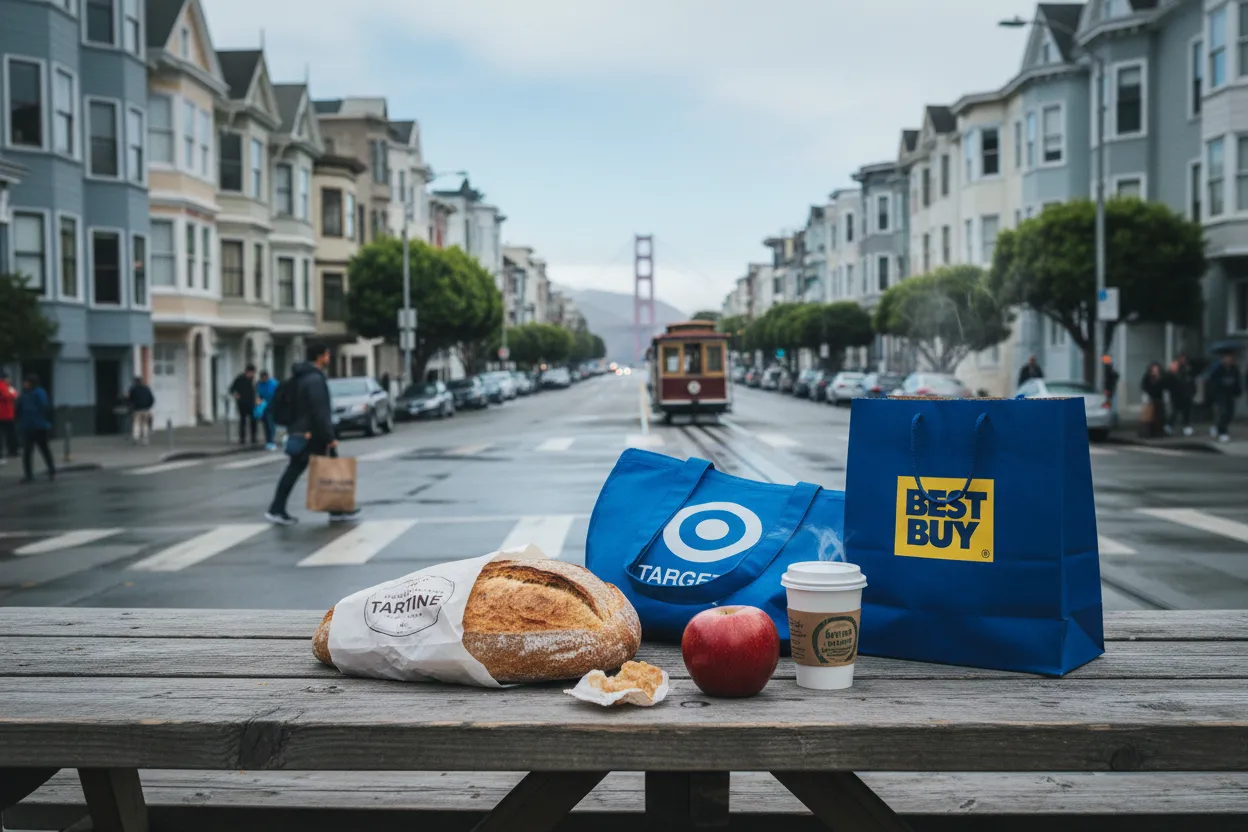
A good San Francisco errand run starts before you open a map. Best Buy and Target can both be useful, but they solve different problems: one is usually the place people think of for electronics questions, device accessories, appliances, and tech support; the other is often associated with household basics, school supplies, personal care, and quick replenishment. This San Francisco Best Buy vs Target Guide for Errand Runs is built around one practical rule: do not make the trip until you verify the details that can change. Hours, item availability, pickup options, access, transit delays, parking conditions, and service counters should all be checked on official pages before you commit.
Want a second set of eyes before you cross town? Text Karpo with your errand list, neighborhood, transit preference, and deadline, and ask for a practical San Francisco run plan.

Turn The Search Into A Practical Errand
Start by naming the job, not the store. If your errand is “replace a laptop charger today,” the first question is whether the exact connector, wattage, or brand support matters. If your errand is “buy dorm basics before school starts,” your questions are more about quantity, carrying space, and whether one stop can cover toiletries, notebooks, bedding, snacks, and small storage. The store name should come after the task is clear.
For a San Francisco errand guide, the smartest plan is usually a short decision tree. Choose Best Buy first when the purchase depends on technical compatibility, model numbers, device categories, or electronics help. Choose Target first when the list is broad, everyday, and easier to substitute. If the list mixes both, split it into must-get items and flexible items, then verify each store’s official page for current hours, services, and item status before leaving.
Separate Urgent Needs From Nice-To-Haves
Urgent errands deserve less browsing and more proof. A phone charger needed before a flight, a replacement keyboard before work, or a calculator for a class should be handled like a time-sensitive pickup mission. Check the retailer’s official store page or app for the specific location, current hours, item listing, and any pickup or service instructions. If the page does not clearly confirm what you need, build in a backup instead of assuming the shelf will solve it.
Nice-to-haves can be grouped into a lower-pressure loop. Back-to-school extras, room refresh items, stationery, headphones, snacks, batteries, and small organizers are easier to compare when you are not under a deadline. In San Francisco, time and carrying effort matter as much as the purchase. A cheaper or better-looking item is not really convenient if it requires an extra transfer, a long walk with bags, or a second trip because you skipped verification.
Use Public Resources Before Buying More
Before adding another item to the cart, check whether a public resource can reduce the trip. The SFMTA website offers a trip planner with options for Muni, biking, walking, driving, and parking. It also points users toward Muni routes and stops, transit maps and guides, accessibility information, visitor transportation guidance, neighborhood transportation information, permits, citations, and regional help through 511. Those resources can shape the errand before any retailer does.
This matters for back_to_school season because school, commute, and shopping patterns can collide. SFMTA’s site includes Back to School Travel Tips and also posts service changes, travel and transit updates, meetings, events, and alerts. Treat those pages as live planning tools, not static advice. Before going, verify the current trip plan, route status, accessibility needs, and any relevant updates directly with SFMTA or the linked public agency pages.
Plan Around Transit And Carrying Capacity
San Francisco errands can fail for a simple reason: the bag is bigger than the plan. A pair of earbuds, a USB-C cable, notebooks, or printer paper can be handled on foot or Muni more easily than a monitor, microwave, storage bin stack, or multiple dorm items. Before choosing Best Buy or Target, decide what you can realistically carry up hills, onto transit, through stations, and into your building without damaging the purchase or your schedule.
Use the SFMTA trip planner before you choose the order of stops. Enter your starting point and destination, then compare Muni, walk, bike, drive, and park options if they apply to you. Because routes, delays, events, and service details can change, verify the current SFMTA information the same day you go. If you are buying bulky items, also verify the retailer’s official access information, pickup instructions, and any loading or entry details before arrival.
Keep A Low-Cost Backup Nearby
A low-cost backup is not the same as a second shopping spree. It is a nearby option that keeps the day from collapsing if your first store cannot meet the need. For a tech errand, that might mean identifying a second official retailer page for the same charger category, cable type, or accessory. For a household errand, it might mean separating essential basics from optional extras so you can leave with what matters and postpone the rest.
Build the backup around neighborhoods and transit, not wishful thinking. If your first stop is only worth it when one item is confirmed, do not travel there until the official source supports the trip. If you must go anyway, keep the next stop close enough that you can still get home without turning the errand into a citywide scavenger hunt. The practical win is not visiting the most stores; it is ending the day with the fewest avoidable surprises.
Verify Hours Stock And Access
The final check should be boring and specific. For Best Buy, Target, or any alternative, verify the official location page for current hours, address, item status, service availability, pickup instructions, return desk or customer service details if relevant, and access information. Do not rely on old screenshots, search snippets, social posts, or memory. Store operations, inventory signals, staffing, entrances, and pickup procedures can change, especially around school periods and busy shopping weeks.
Also verify the city side of the trip. Check SFMTA for the current route plan, Muni routes and stops, travel and transit updates, alerts, accessibility information, and parking or driving guidance if needed. If you need language help or city transportation assistance, SFMTA lists 311 for San Francisco and an outside-San-Francisco number, plus TTY information and free language assistance. Confirm those contact details on the official SFMTA page before depending on them.
Tags: #SanFrancisco #BestBuy #Target #ErrandRun #BackToSchool #ValueShopping #RetailGuide #SFMTA #Muni #TransitTips #ShoppingPlan #LocalGuide #AskKarpo #BeforeYouGo
Sources consulted: target · San Francisco Travel · SFMTA
All trademarks are the property of their respective owners.
Ask Karpo first
Ask Karpo first if your San Francisco list mixes tech, household basics, school supplies, and transit timing. Share what is urgent, what can wait, where you are starting, and how much you can carry, then get a cleaner plan before you go.


