 Salad Near Me in the West Village: Westville's Market-Table Vegetables
Back To School
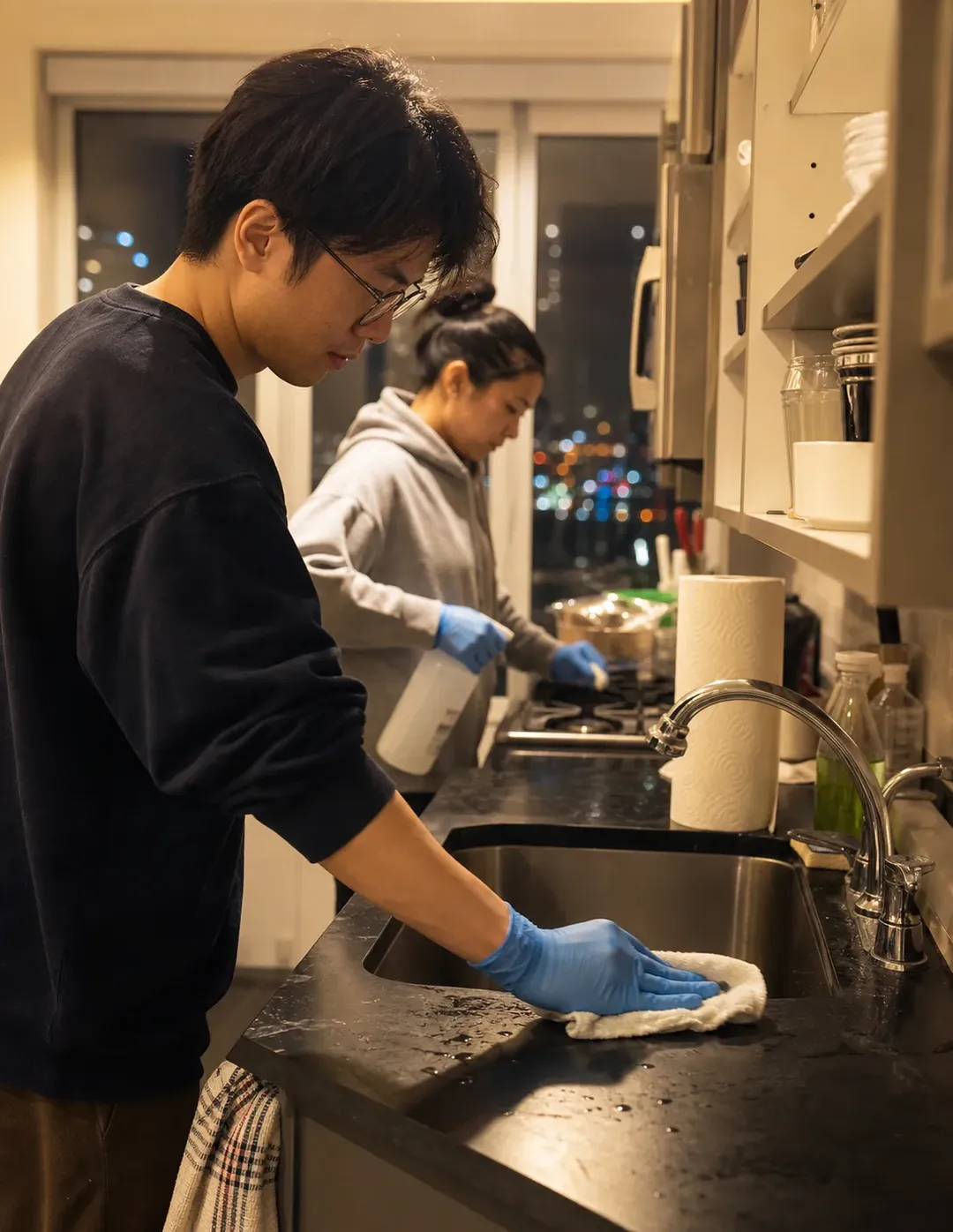
Salmonella Outbreak Linked to Eggs: NYC Dorm Kitchen Disinfection Protocol Walkthrough
A methodical walkthrough for students coordinating shared kitchen sanitization after recalled eggs entered dorm cooking spaces. Clear product choices, surface priorities, and roommate task division to restore confidence without panic.
When news breaks that a salmonella outbreak linked to eggs has reached campus storage areas, students sharing dorm and apartment kitchens face an immediate question: how thoroughly must we clean, and what counts as enough? The challenge isn't just microbiology—it's coordination among roommates with different risk thresholds, competing class schedules, and limited access to commercial-grade supplies. This walkthrough provides a sequenced disinfection protocol designed for beginner-level execution within 24 hours of discovering recalled eggs in shared refrigerators or on communal counters. The goal is methodical surface reset using products available near NYC campuses, with clear contact times and disposal decisions that balance thoroughness against the reality of student budgets and storage constraints.
Tell us which surfaces you've already cleaned, whether you have EPA-registered disinfectant on hand, and your move-in date—we'll generate a tailored protocol and include one backup cleaning method using household vinegar and heat.
Mapping Contamination Zones Before You Start Cleaning
Before anyone sprays anything, gather roommates for a ten-minute walkthrough to identify every surface that contacted raw eggs or their packaging. This includes the obvious—countertops where eggs were cracked, cutting boards, mixing bowls—but also easily missed spots like refrigerator door handles, the crisper drawer where the carton sat, and the dish rack where contaminated utensils dried. Use painter's tape or sticky notes to mark these zones so no one begins general tidying that spreads bacteria to clean areas. Assign one person to photograph the marked surfaces with a smartphone; this visual checklist prevents arguments later about whether the microwave handle or the sink faucet base was actually touched.
Decide together which porous items will be discarded versus sanitized. Wooden cutting boards and sponges that contacted raw egg should go directly into a sealed trash bag; their porous structure makes reliable disinfection difficult without commercial equipment. Silicone spatulas, plastic mixing bowls, and stainless steel utensils can be sanitized if you follow proper contact times. This upfront sorting prevents the common mistake of half-cleaning a sponge "just in case," which leaves everyone uncertain whether the kitchen is truly reset. Agree on a single trash bag for disposal items and keep it tied near the door until someone can carry it to the building's exterior dumpster—don't let it sit open in the kitchen during the cleaning process.
Selecting EPA-Registered Disinfectants Within Walking Distance
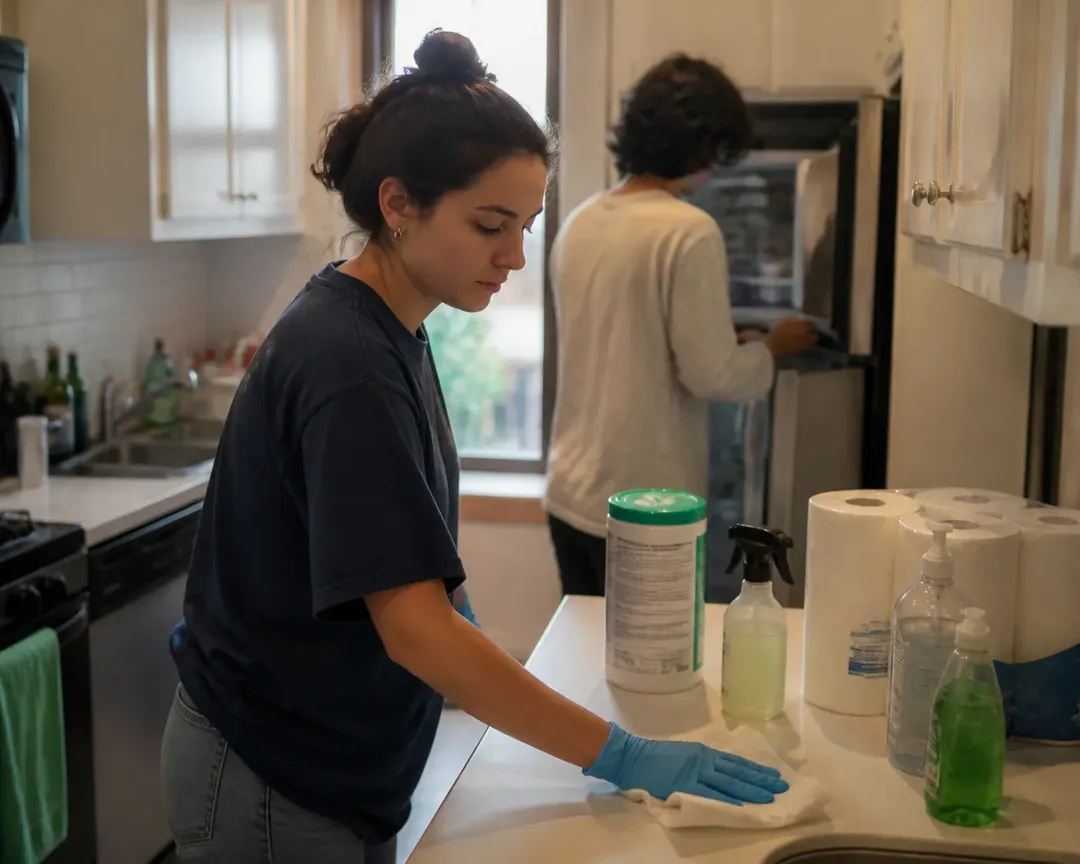
Students often assume bleach is the only option, but EPA-registered disinfectants effective against Salmonella include ready-to-use quaternary ammonium sprays, hydrogen peroxide solutions, and diluted bleach—each with different contact times and surface compatibility. Check your campus health center first; many stock disinfectant wipes or spray bottles for student use during outbreak responses, sometimes at no cost with a student ID. If campus supplies are depleted, national pharmacy chains throughout Manhattan, Brooklyn, and other boroughs carry Clorox Clean-Up, Lysol Antibacterial Kitchen Cleaner, and store-brand equivalents. Read the label's fine print for the phrase "kills Salmonella" and note the required contact time, which typically ranges from 30 seconds to 10 minutes depending on formulation.
Avoid improvised mixtures like vinegar-and-water or dish soap alone; while these remove visible residue, they lack the microbial kill claims needed for pathogen elimination. If you choose diluted bleach (one tablespoon per gallon of water for food-contact surfaces), mix it fresh the day you clean—chlorine degrades in solution—and never combine it with ammonia-based cleaners, which creates toxic fumes. For students with asthma or fragrance sensitivities common in tight dorm spaces, hydrogen peroxide–based sprays offer a low-odor alternative. Purchase enough product to cover all marked surfaces twice: once for the initial disinfection and once for a follow-up pass on high-touch spots like refrigerator handles that roommates will touch repeatedly during the process.
Sequenced Surface Disinfection to Prevent Re-Contamination
Work from cleanest to dirtiest and top to bottom to avoid recontaminating finished areas. Start with the refrigerator interior: remove all food items to a cooler or a clean section of countertop covered with fresh paper towels, then spray shelves and drawers where the egg carton sat. Let the disinfectant remain visibly wet for the full contact time printed on the label—set a phone timer so no one wipes early. While that surface sits wet, move to upper cabinets where clean dishes are stored, checking for any splash marks from egg preparation. Only after the refrigerator contact time elapses should you wipe it dry with disposable paper towels, which go directly into your designated trash bag.
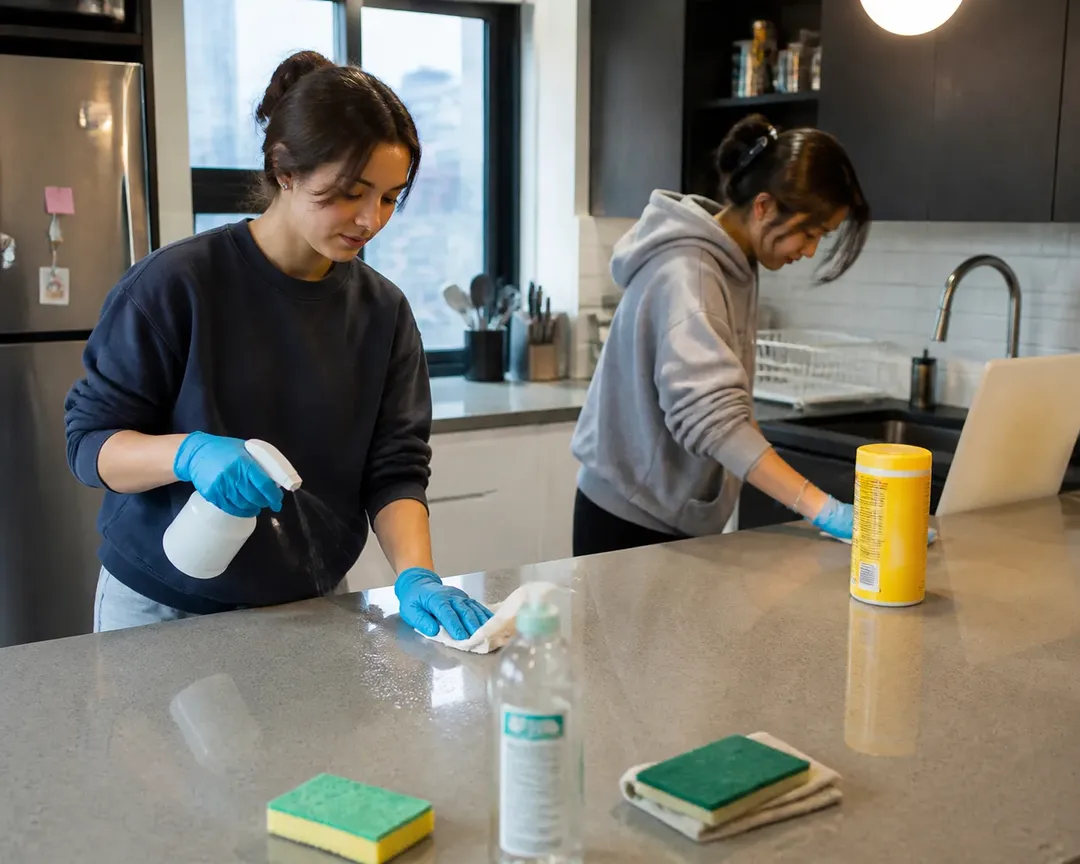
Next, address countertops and the sink basin, applying disinfectant and observing contact time before wiping. If multiple roommates are working simultaneously, assign one person to disinfectant application and timing, another to wiping and disposal, so no one rushes the process. The stovetop and any small appliances like toasters or coffee makers that sat on contaminated counters should be wiped down even if they weren't directly used with eggs—bacteria transfer through surface contact. Finish with the floor directly beneath prep areas, using a mop or disposable cleaning cloths rather than a reusable sponge mop. This sequence ensures you're not walking through a disinfected zone with shoes that touched a contaminated floor, then tracking bacteria back onto a cleaned counter when you lean against it.
Dishware and Utensil Sanitization in Shared Spaces
For items that contacted raw eggs, a standard dishwasher cycle on the hottest setting (typically labeled "sanitize" or "heavy") provides sufficient heat to kill Salmonella if your dorm kitchen includes a machine. Load contaminated items separately from the general dish load to avoid cross-contamination, and run the cycle immediately rather than letting items sit overnight in the machine. If you're hand-washing in a shared sink, use the three-step method: scrub with dish soap and hot water, rinse thoroughly, then submerge in a sanitizing solution (one tablespoon bleach per gallon of water) for at least one minute. Air-dry on a clean towel rather than the communal dish rack until you've disinfected the rack itself.
Stainless steel mixing bowls, glass measuring cups, and ceramic plates can withstand this process, but check any non-stick coatings or wooden handles for manufacturer guidance—some finishes degrade with bleach exposure. If a roommate's personal cookware was involved and they're uncertain about bleach compatibility, running it through two full dishwasher cycles on the hottest setting offers a chemical-free alternative. The trade-off is time: sanitizing by heat alone requires higher temperatures sustained longer than a quick bleach dip. Agree beforehand whether speed or material preservation is the priority, especially for expensive items like chef's knives with wooden handles that one roommate may prefer to replace rather than risk damaging.
Verification Steps and Restocking for Confident Kitchen Use
After disinfection is complete, conduct a final walkthrough using your earlier photos as a checklist, confirming each marked surface was addressed and all disposable cleaning materials are bagged. This is the moment to replace items you discarded: purchase a new sponge, cutting board, and dish towels before anyone resumes cooking. Restocking immediately prevents the common lapse where someone starts meal prep the next day with a "temporary" paper towel as a cutting board, which undermines the entire reset. If budget is tight, coordinate a group order to split costs—a pack of three sponges and a plastic cutting board totals under ten dollars at most NYC drugstores and bodegas.
Some students find it helpful to designate one shelf or drawer as the "egg zone" going forward, lined with disposable paper or a washable mat, so any future spills are contained and easier to address quickly. Others prefer a shared kitchen log—a simple notebook where anyone who uses raw eggs notes the date and which surfaces they cleaned afterward. These systems work best when all roommates agree upfront; the goal isn't to create burdensome rules but to reduce the ambient anxiety that someone might be preparing food on a surface no one's certain is clean. The verification step closes the loop emotionally as much as hygienically, letting everyone return to normal cooking routines without the lingering question of whether enough was done.
Tags: #salmonellaoutbreak #eggrecall #dormkitchencleaning #studenthousing #foodsafety #disinfectionprotocol #sharedkitchen #NYCstudents #backtoschool #campushealth
Sources consulted: Source 1: nycgovparks.org · Source 2: new.mta.info · Source 3: nypl.org · Source 4: a816-health.nyc.gov
All trademarks are the property of their respective owners.
Ask Karpo first
Ask Karpo to turn this NYC idea into a current plan for your date, budget, companion, transit preference, and energy level. Karpo can narrow the route and flag what to verify before you go.
Ask Karpo for more information.
Keep reading
- Salad Near Me in the West Village: Westville's Market-Table Vegetables
 Lunch Near Me in the Flatiron: S&P Runs a Classic Luncheonette Counter
 Coffee Near Me in the East Village: Abraço Is Standing-Room Only