Los Angeles County has something in the region of a hundred and sixty certified farmers markets, which means that on any given day of the week there is one operating within a reasonable distance of almost anywhere in the city. That density is unusual even by Californian standards and it changes what a salad can be here: not a bowl assembled from bins that were filled at a commissary, but something built from produce that was in the ground within the past few days. Both the prepared-food stands at the markets and the produce itself are worth understanding, because the markets operate on their own rules and they are not the ones a supermarket has taught you.
Karpo can tell you which Los Angeles farmers markets are on today, what is in season right now, and which have prepared-food stands.
The market week, and the anchors
The two best-known are easy to remember. The Hollywood Farmers' Market runs on Sundays from 8am to 1pm, year round, at Ivar and Selma. Santa Monica runs several: the downtown market at Arizona and Third on Wednesdays and Saturdays from 8am to 1pm, the Pico market on Saturdays at the same hours, and the Main Street market on Sundays from 8:30am to 1:30pm.
Those alone cover four days of the week between two districts. Beyond them, almost every neighbourhood in the county has its own, on its own day, and the practical move is to learn the two nearest to you rather than to travel to the famous ones. Hours and locations do move, so confirm before a first visit.
Prepared-food stands versus the produce stands
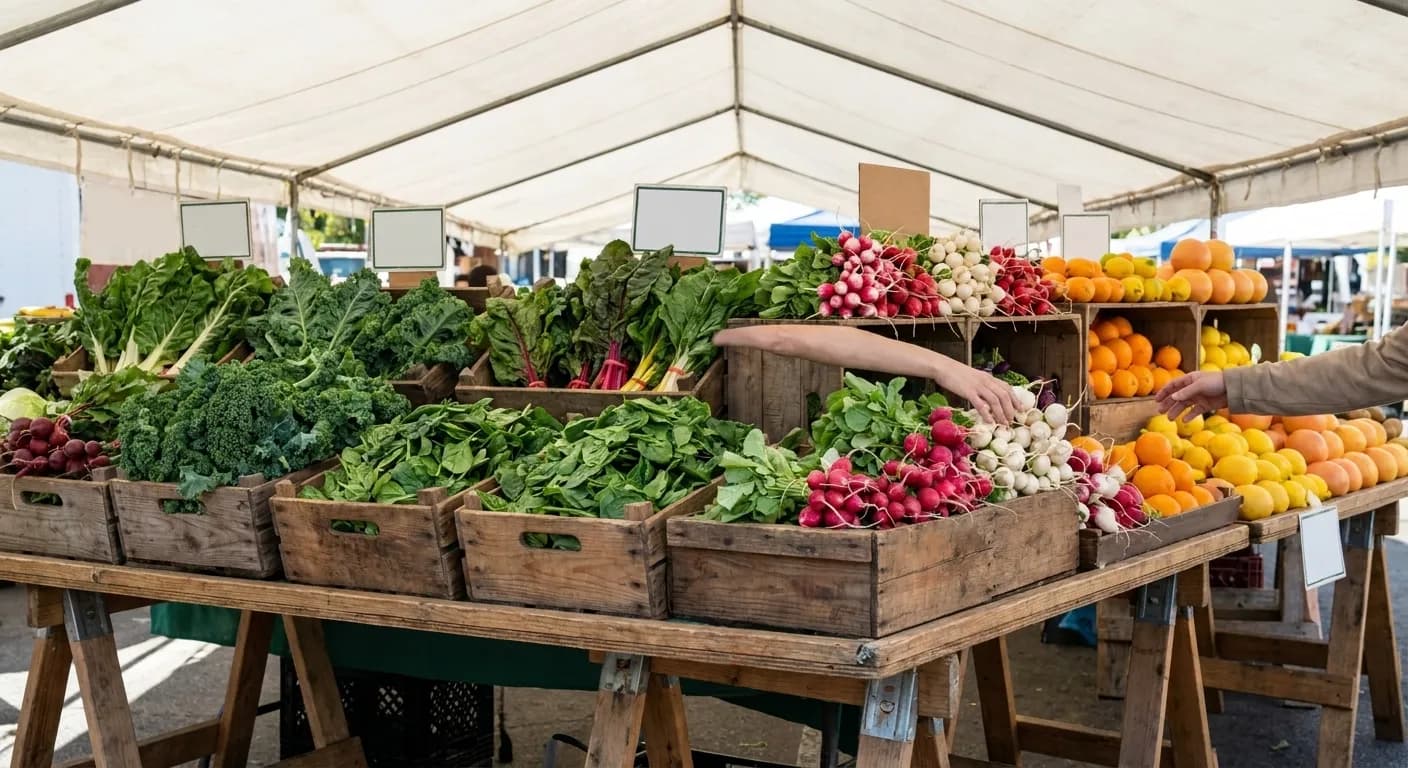
Most Los Angeles markets have both, and they are different propositions. The prepared-food stands sell salads, bowls, tacos and sandwiches made on site or that morning, at prices comparable to a good counter, with the advantage that the produce came from thirty metres away.
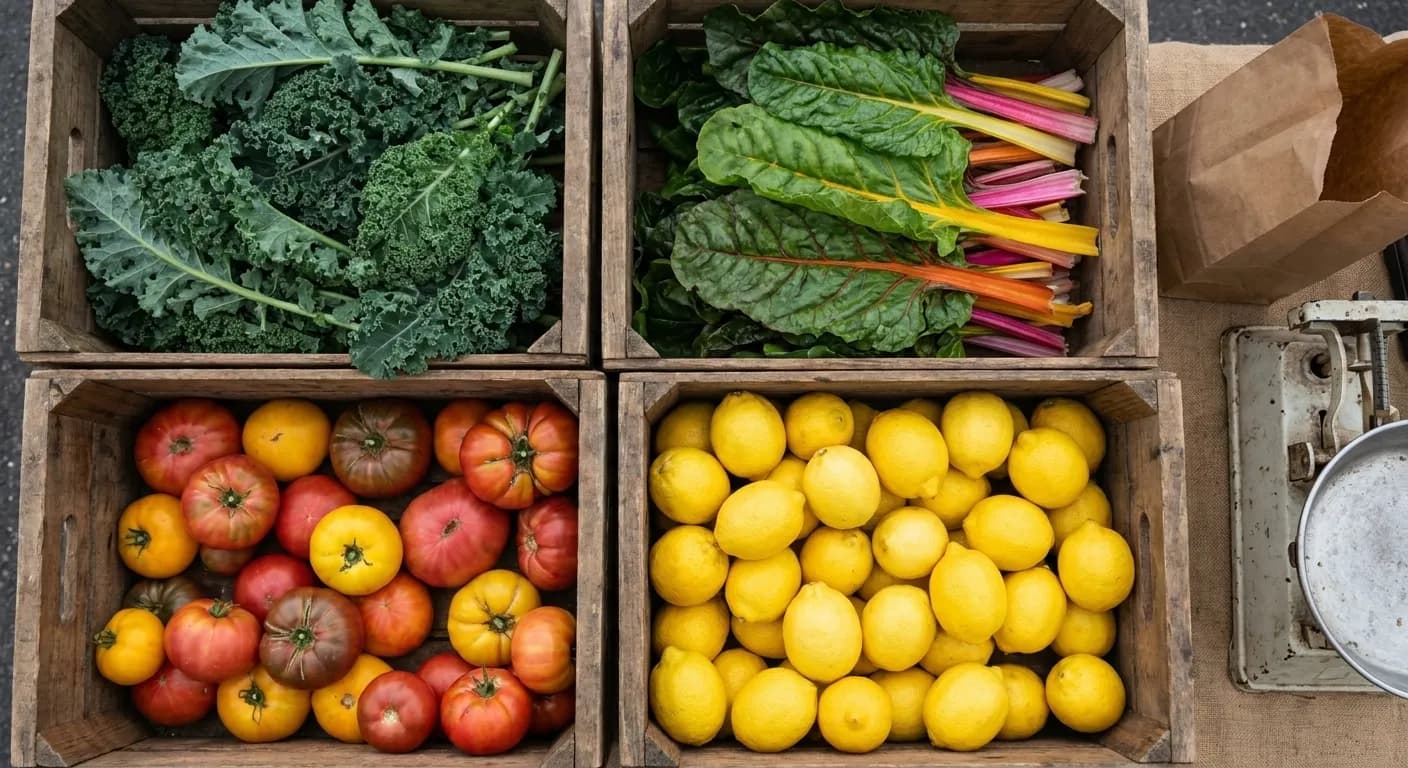
The produce stands are where the value is. A bag of greens, a bunch of radishes, herbs, citrus and an avocado — enough for four generous salads — costs less at a market than a single prepared bowl. If the aim is to eat well through the week rather than to eat lunch today, spend the money on the produce side.
Cash, weight and the end-of-market rule
Bring cash. Many stands take cards now and a good number still do not, and small notes make everything faster. Produce is priced by weight or by the bunch, and the by-weight items are where a large bag adds up quickly.
The end of market is worth knowing about. In the last thirty minutes, growers would generally rather sell what is left than pack it back onto a truck, and prices soften — sometimes formally, often informally if you buy a quantity. The trade-off is that the best of everything has gone by then, so early is right for quality and late is right for price.
Bring your own bags and a cool bag if you are driving any distance. Los Angeles heat does to a bag of leaves in a car boot exactly what you would expect, and a market haul that sat in a hot car for forty minutes on the way home is a substantially worse purchase than one that did not. It is a small piece of preparation that changes the value of the whole trip.
Seasonality actually changes the salad
This is the thing a supermarket obscures. In a Los Angeles market, what is available in February and what is available in August are genuinely different, and a salad built from what is in front of you rather than from a fixed recipe is both cheaper and better.
Broadly: winter and early spring bring citrus, chicories, brassicas and hardy greens, which suit a sturdy salad with a sharp dressing. Late spring brings the first tender leaves, peas and herbs. Summer is tomatoes, stone fruit, cucumbers and peppers, when the correct salad is barely a salad at all — sliced tomato, salt, oil. Autumn brings squash, roots and the last of the tomatoes. Asking a grower what is best this week is the fastest route to all of it.
Talking to the growers
The single most underused feature of a farmers market is that the person behind the table usually grew what is on it and will tell you how to use it. Ask what is at its peak this week, ask how they would cook something unfamiliar, and ask what is about to end.
This is also how you avoid the market's one real trap, which is buying beautiful things you have no plan for. Buying three ingredients you know what to do with beats buying nine that look wonderful and rot in a drawer, and a grower will happily steer you toward the former if you say what you are making.
Making it a habit rather than an outing
The markets work best as a weekly fixture rather than an occasional trip. Go to the same one, at the same time, buy roughly the same categories, and the whole thing takes twenty-five minutes and costs less than two prepared lunches. It also removes the daily question of what to eat, which is the actual burden.
And it is free to attend, pleasant to walk around, and the one reliably social piece of public space in a city that has relatively little of it. Even setting aside the salad, a Sunday morning at a Los Angeles farmers market is among the better free hours available here.
One closing thought: the markets are one of the few genuinely public, genuinely social spaces this city offers on a weekly basis. In a place organised around cars and private space, standing in a street talking to someone about tomatoes is a small but real thing. That is worth as much as the produce, and it is the reason to make it a habit rather than an errand.
Tags: #LAFarmersMarket #SaladNearMe #LosAngeles #FreeThingsToDo #Hollywood #SantaMonica #SeasonalProduce #FarmToTable #LAEats #HealthyEating #WeekendPlans #FoodGuide #Market #CityLiving
Please drink responsibly. Must be of legal drinking age.
All trademarks are the property of their respective owners.
Ask Karpo first
Want to know which Los Angeles farmers markets are on today, what is at its peak this week, and which have prepared food? Ask Karpo before you head out.