 Where to Eat Near Penn Station That Isn't a Chain
US Open 2026

Sabrina Ionescu Jersey Stops Around US Open 2026
How to plan a respectful, practical visit to the 2026 US Open in Queens—with local stops, transit timing, and real fan-day rhythm around Flushing Meadows.
The 2026 US Open runs August 23 through September 13 at the USTA Billie Jean King National Tennis Center in Flushing Meadows Corona Park, Queens. Fan Week begins August 23, and the main draw starts August 30. Whether you are coming for a single session or planning multiple days, the rhythm of a US Open visit is shaped by transit timing, weather backup, crowd flow, and the neighborhoods that surround the park. This guide walks through practical planning for the local scene—how to arrive, where to pause, what to pack, and how to move through Queens with respect and intention during one of New York's biggest annual sporting events.
Text Karpo your match session, neighborhood start point, and appetite, and we will turn this US Open 2026 local scene into a live Queens plan.
Getting there: the 7 train and arrival timing
The 7 train is the primary public transit route to the US Open, with the Mets–Willets Point station serving the USTA Billie Jean King National Tennis Center. The MTA typically runs enhanced service during the tournament, but exact schedules and frequency vary by session time and day of the week. Plan to arrive at least 45 minutes before your session start time to account for security screening, crowd flow, and any transit delays. The 7 train runs from Manhattan through western Queens, stopping at stations including Hunters Point Avenue, Vernon Boulevard–Jackson Avenue, Court Square, Queensboro Plaza, and continuing east through Woodside, Junction Boulevard, and 74th Street–Broadway before reaching Flushing. If you are starting from Long Island City or Jackson Heights, factor in local walking time to the nearest 7 train stop. The station platform at Mets–Willets Point can become crowded during peak arrival and departure windows, so patience and awareness of personal space are essential.
What to bring and what to leave behind
The US Open has specific bag policies and prohibited item lists that change year to year. Check the official US Open website before you leave home to confirm current rules on bag size, food and beverage allowances, and restricted items. In general, plan for sun protection—hat, sunglasses, sunscreen—and layers for indoor air-conditioned spaces versus outdoor courts. A refillable water bottle is useful if outside beverages are permitted, and a portable phone charger helps if you are navigating the grounds app or coordinating meetups. Umbrellas may be restricted during play, so a packable rain jacket is a safer weather backup. Leave large backpacks, outside alcohol, and any items that could obstruct sightlines or seating at home. If you are carrying a bag, expect it to be inspected at entry.
Neighborhood stops before or after your session
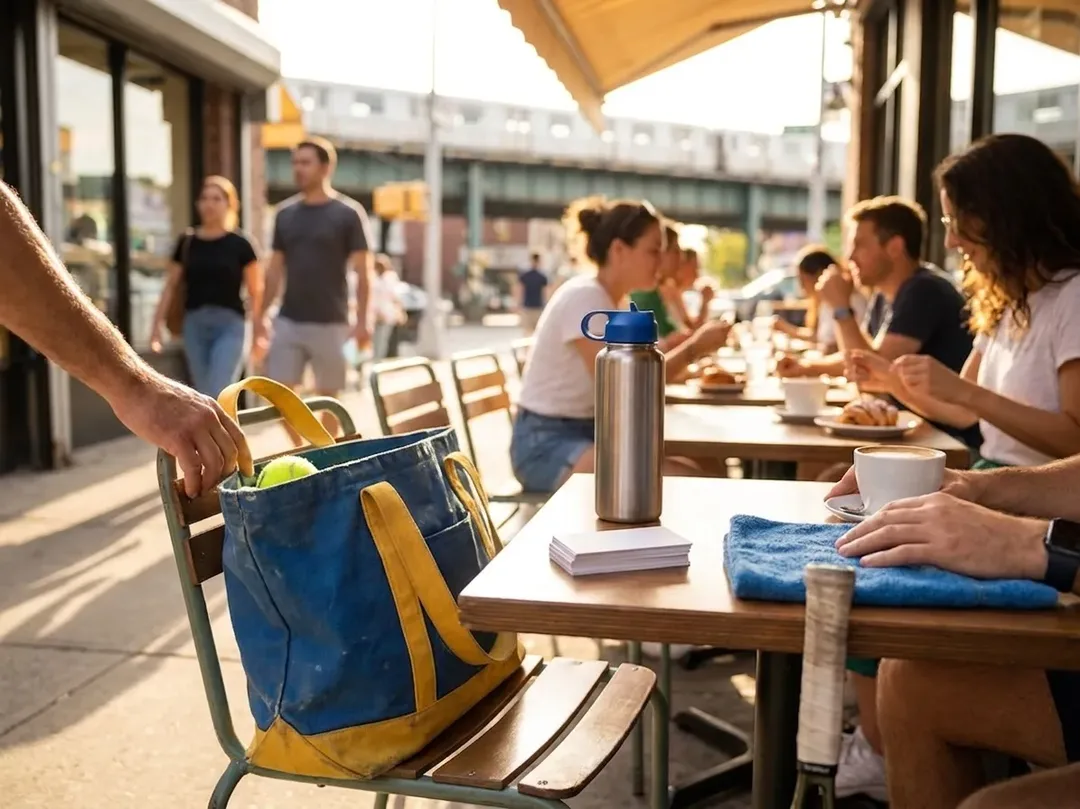
Flushing, Corona, Jackson Heights, and Long Island City each offer food, coffee, and rest stops that can anchor a longer day around the tournament. Flushing's downtown, a short walk or one stop east on the 7 from Mets–Willets Point, is home to a dense concentration of Asian restaurants, bakeries, food courts, and bubble tea shops. Corona, just west of the park, has Latin American bakeries, taquerias, and corner stores along Roosevelt Avenue and Junction Boulevard. Jackson Heights, further west on the 7, is known for its South Asian and Latin American dining scenes, with sit-down restaurants, street vendors, and grocery stores clustered near 74th Street–Broadway and 82nd Street–Jackson Heights stations. Long Island City, closer to Manhattan, offers waterfront parks, coffee shops, and quieter spaces to decompress after a crowded day at the Open. Confirm hours and availability before you go, especially on weekdays or early mornings during Fan Week.
Weather, shade, and pacing your day
Late August and early September in New York can bring heat, humidity, sudden thunderstorms, and intense sun exposure. The US Open grounds include both covered and open-air seating, but not all areas offer shade throughout the day. If you are attending an afternoon session, seek shaded walkways, indoor food courts, or air-conditioned pavilions between matches. Hydration is critical—water refill stations are typically available on-site, but confirm locations on the grounds map. Rain delays are common, and while Arthur Ashe Stadium has a retractable roof, other courts do not. If storms are forecast, bring a rain layer and be prepared for schedule changes. Pacing matters: a full day at the Open involves walking, standing, and navigating crowds, so plan rest intervals and know your own limits.
Respectful fan behavior and photo etiquette
- Silence phones and devices during play; even vibrations can be disruptive in quiet moments.
- Wait for changeovers or breaks between points before moving to or from your seat.
- Avoid flash photography; most courts prohibit it, and it distracts players and other fans.
- Respect player practice schedules and autograph policies; crowding or shouting is not welcome.
- Keep walkways clear; the grounds are shared by thousands of visitors, many with mobility needs.
- Dispose of trash properly; the park and surrounding neighborhoods deserve care.
- Be mindful of noise and behavior on public transit to and from the event; you are sharing space with local residents.
Flushing Meadows Corona Park beyond the tennis
Flushing Meadows Corona Park is one of New York City's largest public parks, home to the Unisphere, the Queens Museum, the New York Hall of Science, and wide open meadows and playgrounds. If you arrive early or have time after your session, the park offers walking paths, waterfront views along Meadow Lake, and quieter green spaces away from the tournament crowds. The Unisphere, a iconic steel globe structure from the 1964 World's Fair, is a popular photo spot and a short walk from the tennis center. The park is also a working public space for local families, joggers, and community events, so move through it with the same respect you would any shared neighborhood resource. Check NYC Parks for any closures, events, or maintenance schedules that might affect access during your visit.

Check before you go: live updates and official sources
Tournament schedules, session times, ticket policies, and grounds access can shift due to weather, player withdrawals, or operational changes. Always check the official US Open website and app for the latest information before you leave home. The MTA website and app provide real-time 7 train service updates, and the NYC Parks site lists any park closures or events that might affect your visit. If you are planning around a specific match or player, know that schedules are subject to change and that no appearance is guaranteed until it is officially confirmed. Build flexibility into your day, and have a backup plan for food, rest, and transit in case of delays or cancellations.
Karpo™ is a live context assistant, not a booking agent, official tournament source, or emergency service. Always confirm hours, access, transit, safety, and event details with official sources before you go.
Tags: #USOpen2026 #Queens #FlushingMeadows #KarpoFinds #Karpo #TennisTravel #NYCLocalLife #FanWeek #USTennis #NewYorkGuide #USOpenGoogleTrendslocalexpan #Buzz
All trademarks are the property of their respective owners.
Ask Karpo first
Want to know what is actually open, how to time the trip, and where to pause around Queens? Ask Karpo for the latest public US Open context, a respectful visitor plan, and a live route around Flushing Meadows before you head out.
Ask Karpo for more information.
Keep reading
- Where to Eat Near Penn Station That Isn't a Chain
 Andytown Coffee in the Outer Sunset: The Snowy Plover Explained
- Best Things to Do in Chicago: What the City Gives Away