Roosevelt Island occupies a narrow ribbon of land in the East River, visible from Manhattan and Queens but rarely visited by residents of either borough. The two-mile island offers one of the city's most direct encounters with infrastructure as spectacle: a tram ascending above gridlocked traffic, a bridge cantilevered overhead, and a 19th-century lighthouse standing on a scrap of rock where the water bends. The northern loop is straightforward—less than a mile round-trip on paved paths—and delivers views that feel neither Manhattan nor Queens but somewhere suspended between the two. It qualifies as one of the city's better free things to do, and the kind of outing that rewards early risers.
Updated August 2026: hours, prices, reservations, event dates, transit details, and venue policies can change. Use the linked official venue, city, or operator sources in the Sources section as the final reference before you go.
Tram ascent and timing
The Roosevelt Island Tram is not free; it charges the standard NYC transit fare, lifting passengers from 59th Street and Second Avenue in a four-minute glide above traffic. Take the 8am tram on weekends for the least crowded ascent and walk north to the lighthouse before the 10am visitor wave. Morning light from the east is softer, and the paths remain empty enough to hear the water sloshing against the seawall. The cabin rocks gently when wind catches the cables, but the ride is smooth, the panorama generous—Midtown's skyline receding to the west, the Queensboro Bridge's lattice of steel growing larger as you rise.
At the island's tram station, you're deposited into a compact plaza ringed by residential towers. Turn left and walk north along Main Street, a spine of brick pavement lined with benches and London plane trees. The path is wide, stroller-friendly, and almost comically free of car traffic. Within five minutes the residential buildings thin out and the river opens up on both sides.
The walk north
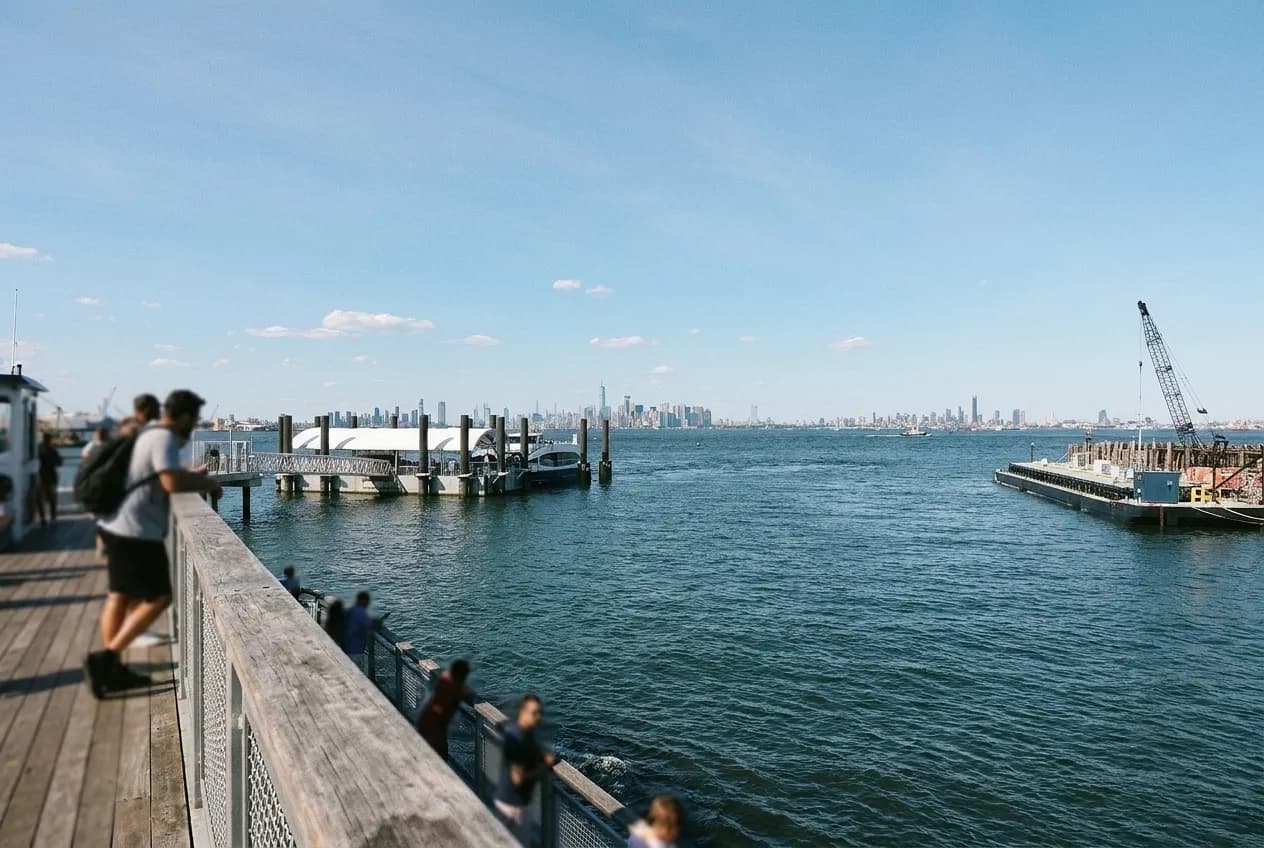
The paved promenade hugs the western shore, offering unbroken views across to Manhattan's Upper East Side. Gracie Mansion sits low and white among the trees; the UN tower looms farther south. In winter the wind off the water is sharp and unrelenting. There are no windbreaks, no cafés to duck into, only a straight shot north with the occasional bench anchored to the concrete. This is not a place to linger unless you've dressed for it.
The path curves eastward as you approach the northern tip, passing a grassy field and a small stand of trees. The Queensboro Bridge's cantilever span looms overhead, and the sound shifts: the hum of traffic above, the clang of rigging from boats moored off the Queens shore, the occasional shriek of gulls. The lighthouse appears ahead, a compact Gothic Revival tower of gray stone perched on a wedge of bedrock.
The lighthouse and overlook
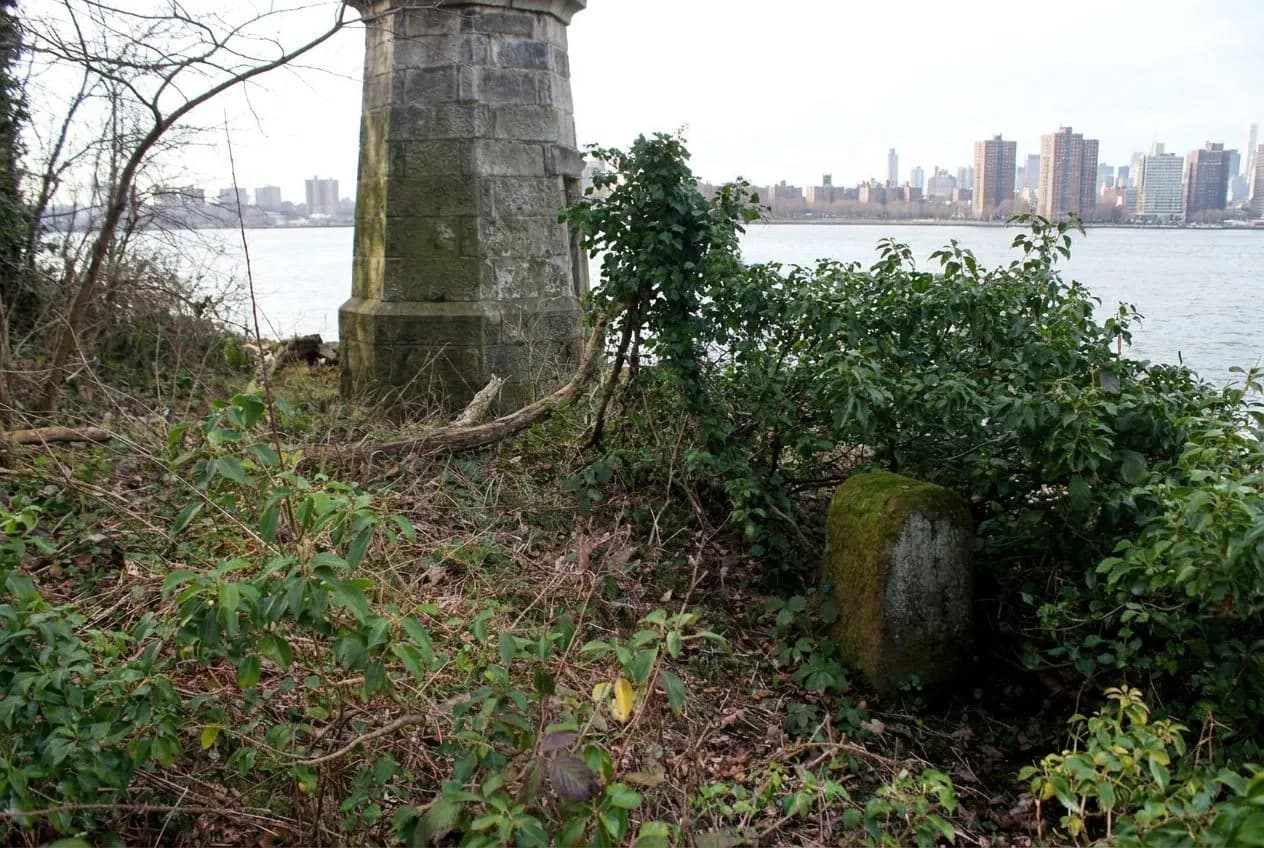
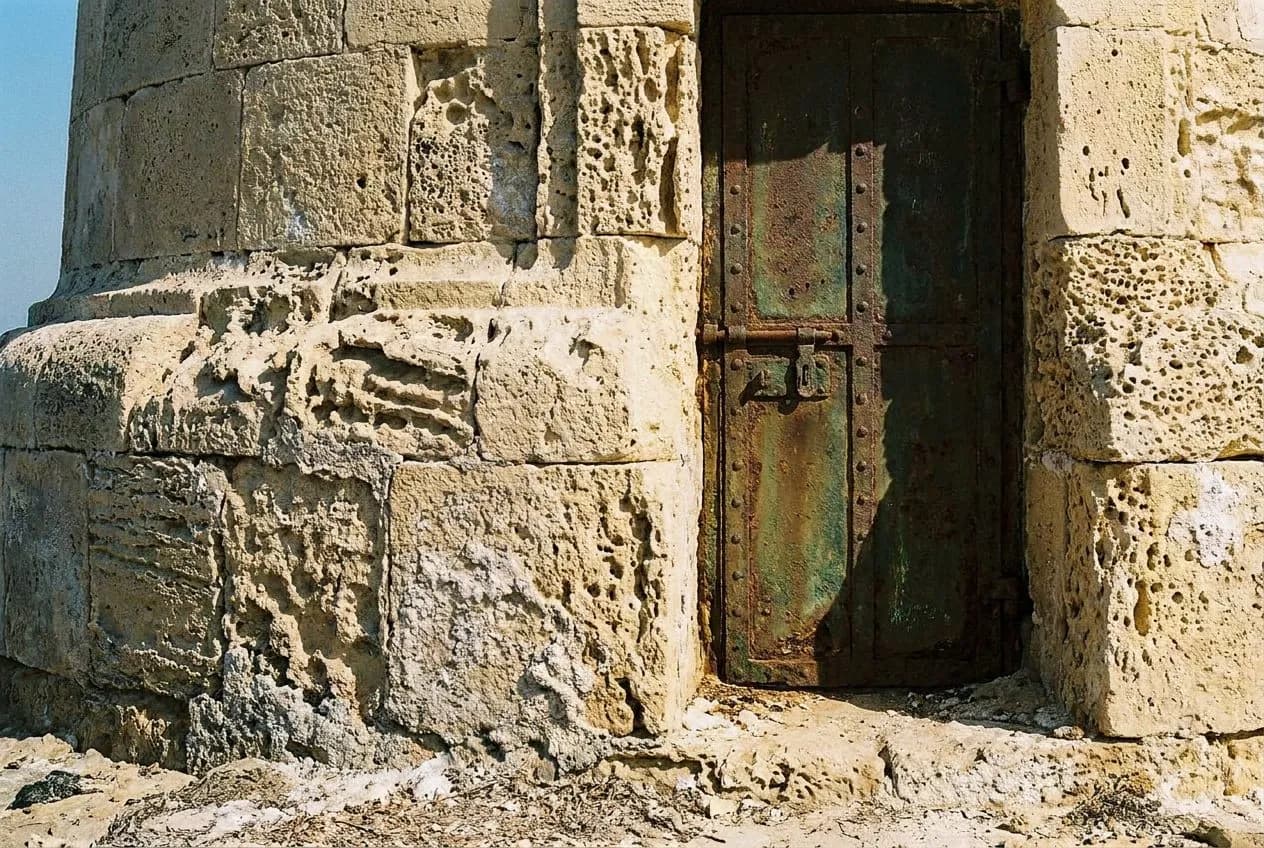
The Blackwell Island Lighthouse was completed in 1872–1873 when the island was home to a penal workhouse and an asylum. The structure is small—barely fifty feet tall—and built of Fordham gneiss quarried by inmates. The design is restrained: a square base, an octagonal shaft, a crenellated parapet. It no longer functions as a lighthouse, but the proportions are elegant and the siting is dramatic. The lighthouse perimeter is fenced but the overlook 30 feet south offers the clearest view of the 1872 structure and the confluence of the East River channels. From this vantage you can see where the main river meets the narrow strait between the island and Queens, and how the currents churn against each other in opposing eddies.
The overlook is a raised platform with benches facing north and east. On clear days the view extends past the Bronx shoreline to the ridges of Westchester beyond. Remove this claim or replace it with a verifiable date if documented, and the railings feel sturdier now. The wind is fierce here, funneling between the two boroughs with nothing to slow it down. Bring a windbreaker, even if the forecast promises sun.
Queensboro Bridge underpass and the perfect bench
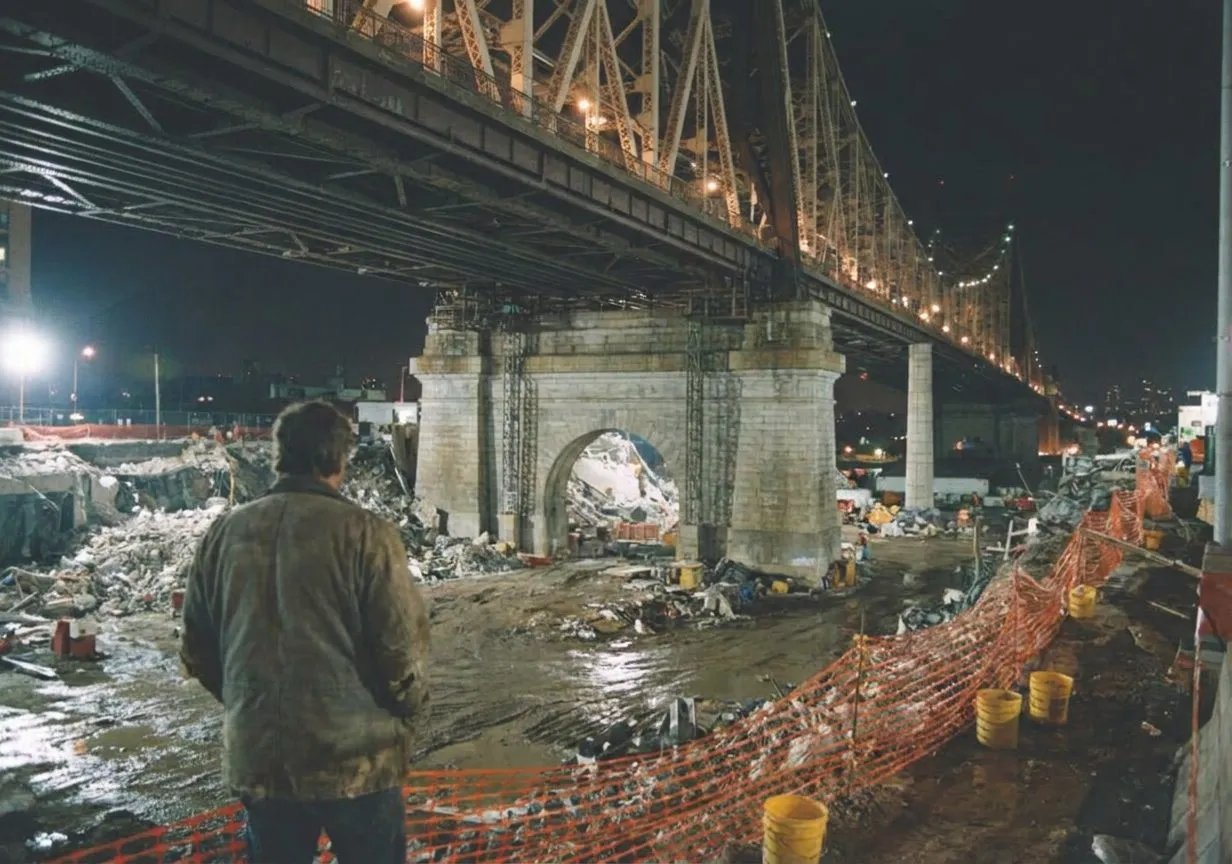
The return walk south takes you beneath the Queensboro Bridge's eastern tower. The scale of the structure is impossible to appreciate from a car; standing underneath, you register the weight of the cantilevered roadway, the lattice of riveted girders, the oxidized paint flaking in patches. The bridge was completed in 1909, and its blackened steel and brutalist proportions feel closer to an industrial ruin than a working piece of city infrastructure.
The bench near the Queensboro Bridge's eastern tower, facing south, is the only seat on the island with an unobstructed view of the bridge's undercarriage and Roosevelt Island Bridge in one frame. The sight line threads between two lampposts and captures the full span of both crossings: the Queensboro's cantilevered mass above, the Roosevelt Island Bridge's modest lift span to the south. The juxtaposition is stark—19th-century ambition versus mid-century utility—and the bench is almost always empty. It's worth pausing here for a few minutes, even if the wind is cutting.
The rest of the walk back to the tram station is uneventful. Main Street runs straight and flat, and the residential towers reassert themselves. If your weekend plans permit, consider looping back through the southern tip of the island, where Franklin D. Roosevelt Four Freedoms Park offers a different kind of formality: white granite, clipped hedges, and a ceremonial axis. But the northern loop is the sharper experience, less manicured and more exposed to the city's raw edges.
What the island is not
Roosevelt Island is not a destination for brunch or shopping. There are a handful of small markets and a single deli near the tram station, but this is emphatically a residential enclave, not a commercial strip. The appeal is the walk itself: the wind, the water, the proximity to two boroughs without belonging to either. If you're looking for polish or amenities, this is the wrong outing. If you want a brief escape from Manhattan's density without leaving the city limits, the lighthouse loop delivers.
Practical notes
Access the island via the Roosevelt Island Tram at 59th Street and Second Avenue (free with MetroCard) or the F train to Roosevelt Island station. The northern loop begins at the tram plaza; walk north along Main Street for approximately ten minutes to reach the lighthouse overlook. The path is paved, flat, and wheelchair-accessible throughout. The island is open year-round, with no gate hours. Bring a windbreaker and water; there are no vendors north of the residential zone. Restrooms are available near the tram station. Verify tram schedules directly during holidays.
Tags: #RooseveltIsland #FreeAndFine #NYCwalks #EastRiver #LighthouseLoop #QueensboroBridge #FreeThingsToDo #WeekendPlans #NYCislands #HiddenNYC #WinterWalks #NYCoutdoors #TramViews #NYCarchitecture #CityEscape
Sources consulted: NYC Parks Lighthouse Park · Queensboro Bridge (Wikipedia) · Roosevelt Island Operating Corporation · Roosevelt Island Tram (MTA) · Lighthouse Park (NYC Parks)
All trademarks are the property of their respective owners.