Most restaurants marketed as romantic in New York are loud. This is not carelessness; it is the direct consequence of two decades of design fashion — hard floors, exposed ceilings, bare tables, tile and glass — combined with a business model that benefits from energy in the room. A loud restaurant feels busy, and a busy restaurant turns tables. The result is a city full of beautiful rooms in which you cannot hold a conversation, and a much smaller set of rooms where you can.
Noise levels change with the night and the section you are seated in, and no listing records either. Ask Karpo which rooms near you are genuinely quiet tonight and which table to request.
Why the rooms are loud
Sound in a restaurant is a materials problem. Every soft surface absorbs it and every hard one returns it, so a room with concrete floors, an open ceiling and undressed wooden tables will amplify a full house until people raise their voices, which raises the volume again. Add an open kitchen and a music system set to compete with the room and you have a space that measures well above the level at which normal speech is comfortable.
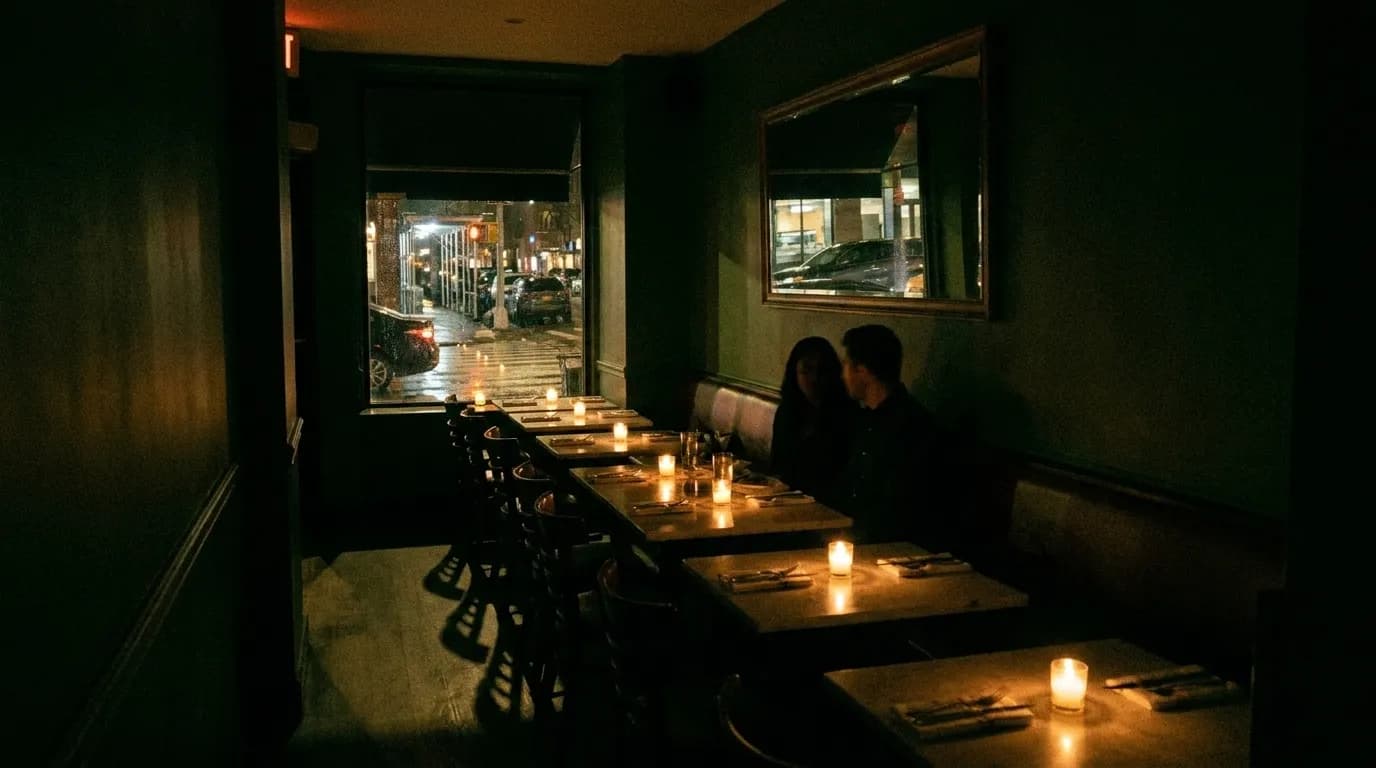
The reverse is equally predictable, which is what makes this findable. Carpet, curtains, banquettes with padded backs, tablecloths, low ceilings, and rooms divided into small sections rather than one open hall all absorb sound. If you look at photographs of a restaurant and see cloth, you are almost certainly looking at a room where you can talk.
The room types that stay quiet
Four categories reliably work. The old-guard French or Italian dining room, of which New York still has a good number, with carpet, banquettes and tables spaced for service rather than for capacity. The hotel dining room, which is designed to be used at eight in the morning as well as eight at night and is therefore acoustically conservative. The townhouse restaurant, where the building itself divides the space into small rooms with domestic proportions. And the tasting-menu counter, which is quiet for a different reason — the room is small, the pace is controlled, and nobody is shouting.
The neighbourhoods matter too. The West Village and the blocks north of Washington Square have the highest concentration of small townhouse rooms in Manhattan, because the building stock forces it. Gramercy and Murray Hill hold most of the surviving carpeted classics. Brooklyn Heights and Cobble Hill have the same building type as the West Village at a slightly lower price. Anywhere that was converted from an industrial building in the last fifteen years is the opposite.
Getting the right table
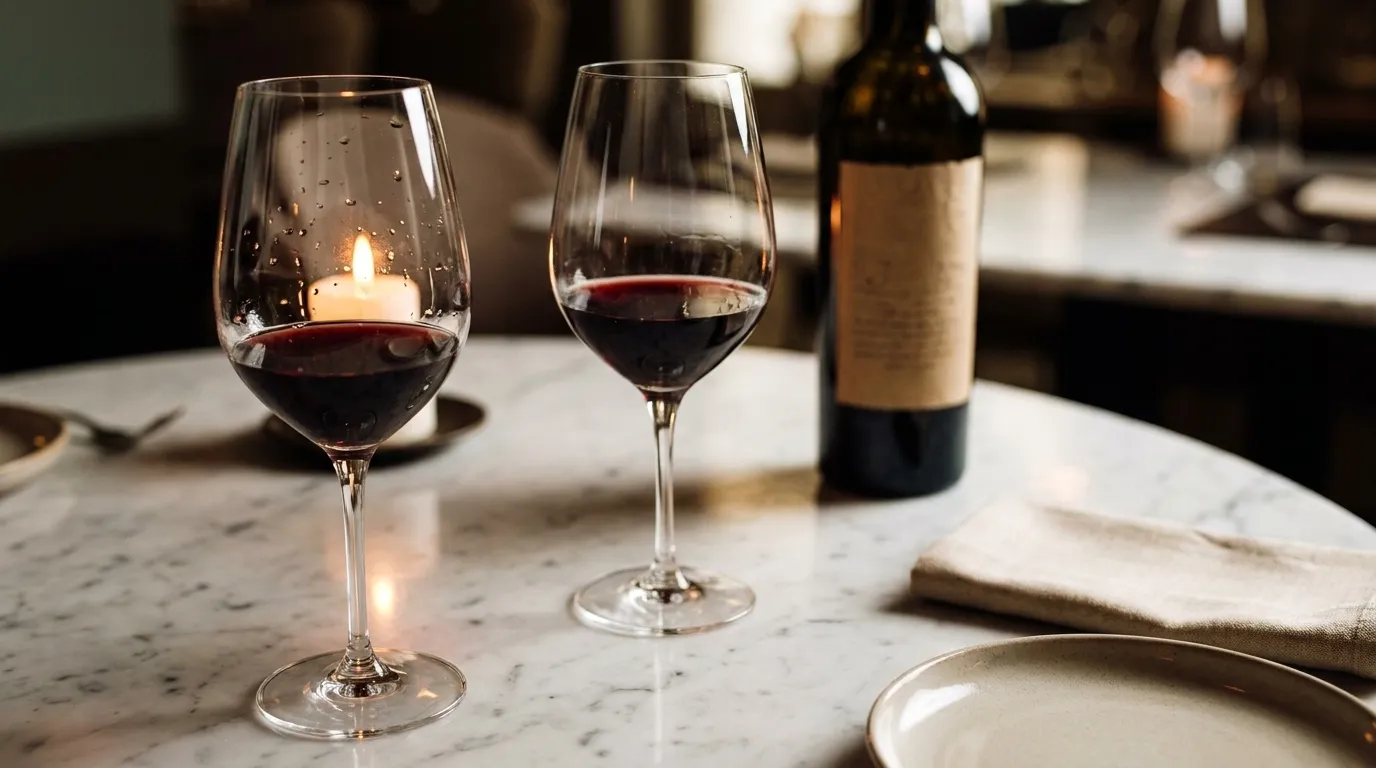
Within a good room, seat choice still matters enormously. A corner banquette is quieter than a centre two-top by a wide margin, because you have walls behind you absorbing rather than a hall reflecting. Away from the kitchen door, away from the bar, away from the service station and away from the toilet corridor covers almost every other consideration. Requesting all of that sounds fussy; restaurants hear it constantly and will accommodate what they can.
The most effective single request is simply to say what the evening is for. A restaurant given that information will seat you thoughtfully if it possibly can, because a table that goes well is a table that comes back. Saying it when you book rather than when you arrive is what makes it actionable — by the time you are standing at the host stand the floor plan is already set.
Timing
The quietest window in almost any New York restaurant is the first seating, roughly between five-thirty and six-thirty, when the room is half full and the staff are fresh. The second-quietest is the last, after about nine-thirty, when the early tables have gone. The loudest is between seven-thirty and nine, which is precisely when most people book a romantic dinner. Moving either side of that window changes the experience more than changing restaurant does.
Weeknights are quieter than weekends by a full order of magnitude in most rooms, and Tuesday through Thursday is when kitchens are at their most attentive. If the occasion is fixed to a weekend, the early seating on a Friday is a better bet than any hour on a Saturday.
The alternative to a restaurant
If the room matters more than the menu, two formats are worth considering instead. The first is the hotel bar with a food menu — several of Manhattan's older hotels keep small, carpeted, low-lit rooms that serve a short menu until late, take walk-ins, and are almost always quiet because they were designed for conversation rather than turnover. The second is an early dinner followed by dessert somewhere else, which turns one loud two-hour sitting into two shorter, calmer ones and costs less. Both are underused, and both solve the noise problem more reliably than hunting for a quiet table in a room that was never going to have one.
Practical notes
Ask when you book whether the restaurant has music and how loud it runs; the answer is revealing regardless of what it is. Avoid rooms with a bar that takes walk-ins if you are booking after eight, because the bar crowd sets the volume for the whole space. Note that many of the quiet classics are closed on Sunday or Monday and several close for two weeks in late summer. Corkage is worth asking about at the older rooms, several of which still allow it on a weeknight. And if the evening includes a gift or a proposal, tell the restaurant in advance rather than improvising — every good room in New York has done this before and will handle it better than you will.
Tags: #NYC #NewYorkCity #DateNight #RomanticRestaurants #QuietRestaurants #WestVillage #Gramercy #BrooklynHeights #CobbleHill #NYCRestaurants #FoodNearMe #DinnerForTwo #NYCEats #WeekendPlans
All trademarks are the property of their respective owners.
Ask Karpo first
Want to know which rooms near you are actually quiet at the hour you are booking, which table to ask for, and what is open on the night you have in mind? Ask Karpo before you book the loud one.