 Haaland Has Seven Goals and Norway Runs Entirely Through Him
⚽️2026 FIFA WORLD CUP
Rodri Controlled Spain France Through Positioning Pressure and Tempo
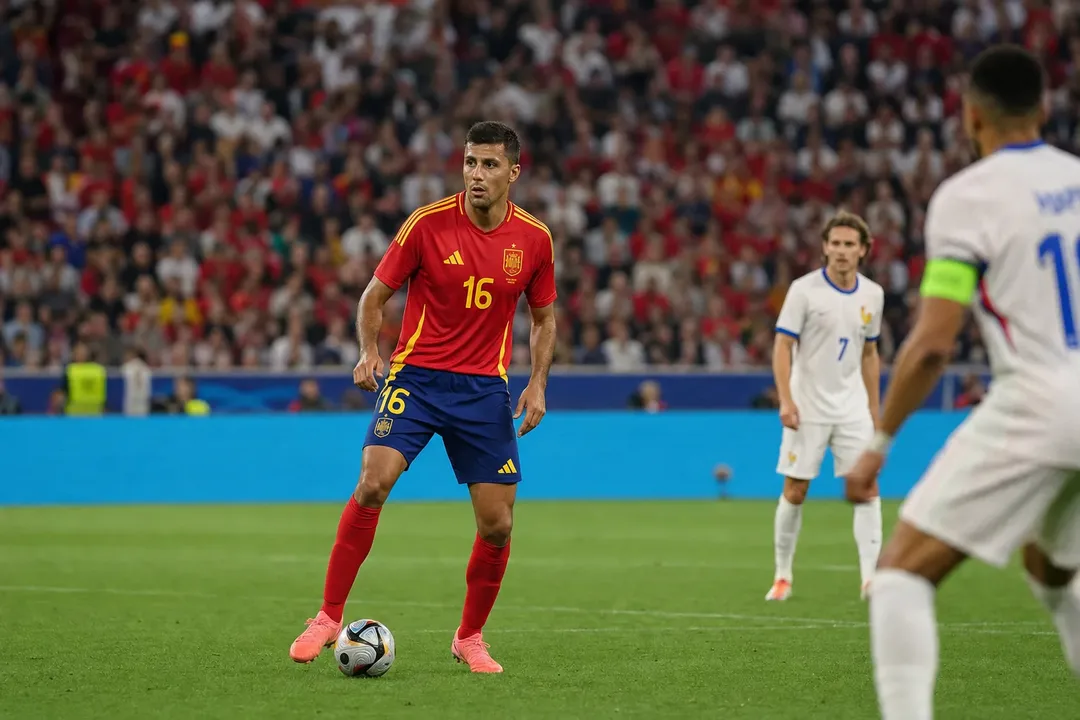
Rodri’s control of the semifinal came through positioning before the pass, pressure after turnovers, and an understanding of when Spain needed speed or patience. His midfield role connected the 2-0 scoreline to Spain’s wider game management.
Rodri’s influence in Spain’s 2-0 semifinal win over France was built through actions that often happen before the camera follows the ball. His starting position created passing angles, his scanning helped Spain choose the next side of the attack, and his reaction after turnovers protected the center. Once Spain led, tempo became a tactical weapon. Rodri could help decide whether the team accelerated into space or used possession to make France chase and shorten the remaining match.
Want the midfield story rather than another highlight reel? Text Karpo for a Rodri-focused brief and a final-day plan tailored to your city and schedule.
Positioning before receiving
A holding midfielder’s most important movement may occur seconds before the pass. Rodri needed to stay visible to Spain’s defenders without standing where one French forward could block the route. A small adjustment could open the center, create a diagonal option, or pull pressure away from another midfielder.
That positioning also shaped Spain’s security. If Rodri received with teammates behind and beside him, a turnover was easier to contain. If he moved too high at the wrong moment, the center could open. His role required constant awareness of the ball, the nearest opponent, and the space France wanted for transition. Rodri’s communication helps turn those positional ideas into a shared team picture. A gesture can tell a center back to carry forward, direct a fullback wider, or warn a teammate about pressure. The ball may never reach him, yet the adjustment can improve the entire buildup sequence.
Scanning turned possession into choice
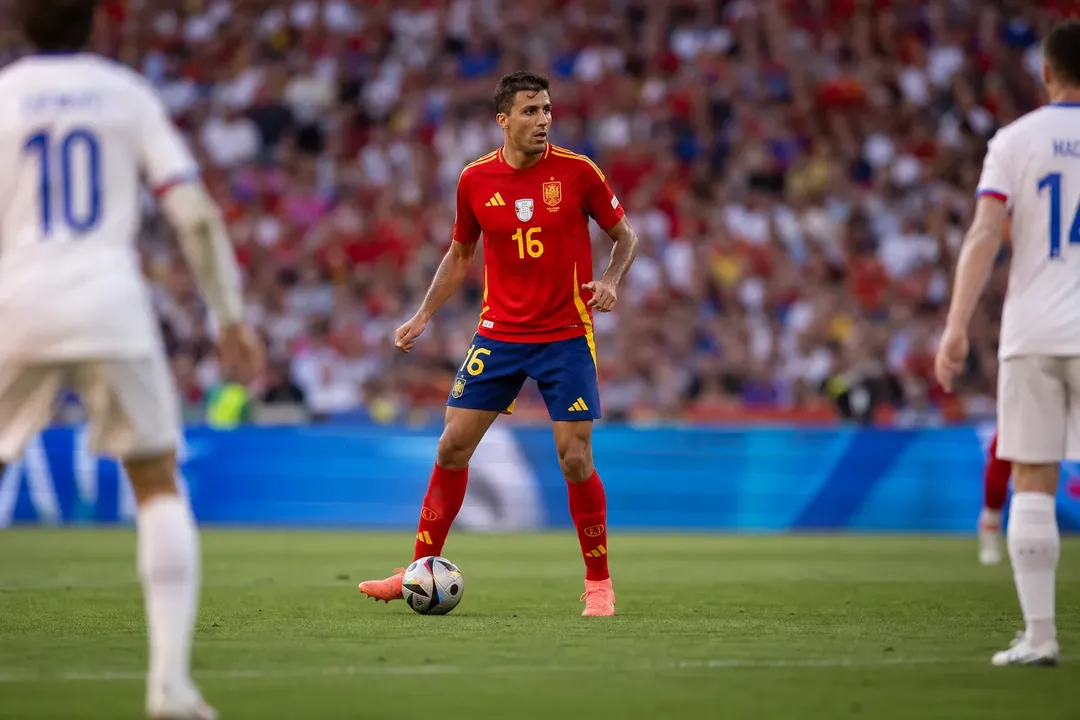
Rodri’s first touch is often prepared by what he sees before the ball arrives. Scanning lets a midfielder know whether pressure is coming, which side has space, and whether a forward pass is safe. That information changes the speed of the next action. One touch can move Spain beyond pressure; two careful touches can invite France forward before the switch.
Against France, the ability to choose direction mattered because forcing every attack through the same lane would make Spain predictable. Rodri could connect center backs, fullbacks, and advanced midfielders while keeping the team balanced. The pass itself might look simple, but the timing determined whether France shifted comfortably or arrived late. He also influences which risks Spain take near the opponent’s area. If Rodri holds a stable position behind the attack, advanced players can combine with confidence that the central counterattack route is covered. If he joins too early, the same lost pass can expose both center backs at once.
Counterpressure protected Spain’s attacks
When Spain lost the ball, Rodri’s first task was not always to tackle. Closing the central route and slowing the next pass could give teammates time to recover. This counterpressure reduced the chance that Mbappé or another French attacker would receive with open grass ahead.
The location of the loss dictated the response. Near the touchline, Spain could use the boundary as an extra defender. In the center, the priority was to prevent a vertical pass. Rodri’s positioning behind the attack helped the team decide whether to press immediately or drop into a compact block. Set-piece restarts create another tempo decision. Spain can deliver quickly before France organize or use the pause to restore structure and reduce risk. The correct choice depends on the score and player positions. A controlling midfielder helps ensure that urgency does not become disorder.
The scoreboard changed the tempo
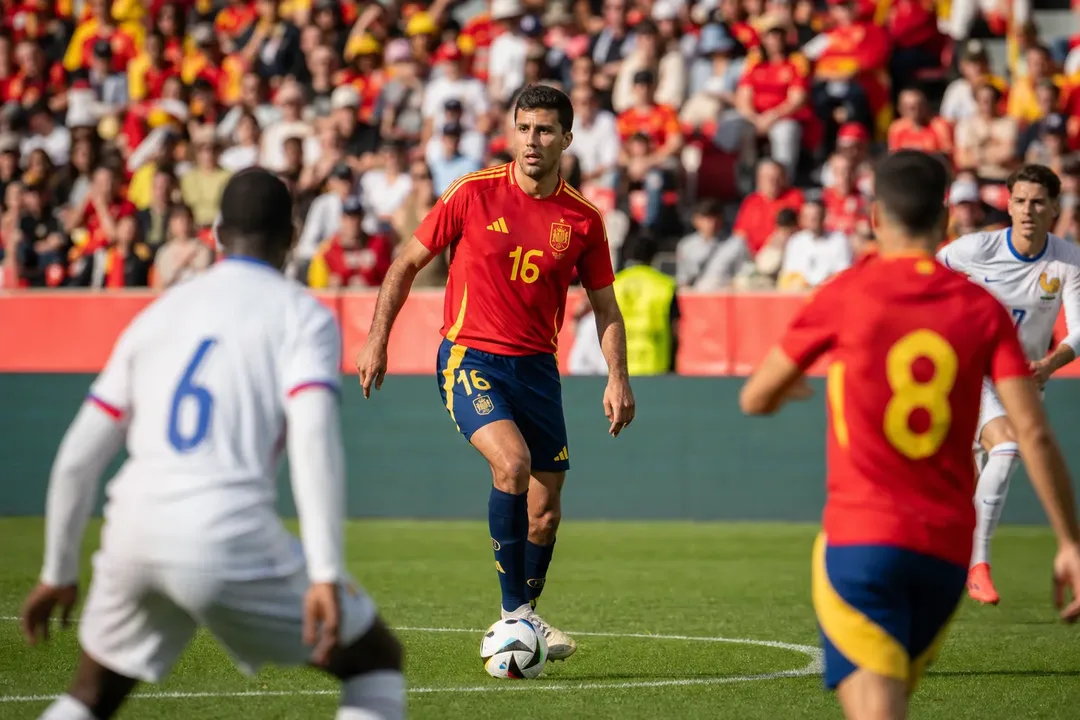
After Oyarzabal’s penalty made it 1-0, Spain no longer needed to force the first breakthrough. Possession could serve two purposes: search for the second goal and deny France repeated attacking sequences. Rodri’s role was to recognize when France were stretched enough to attack and when another circulation would be more valuable.
Pedro Porro’s goal in the 58th minute increased the importance of patience. A two-goal lead did not require Spain to stop attacking, but it rewarded decisions that kept the team connected. Rodri could slow the match without making Spain passive by moving the ball toward the side with the best support. When Spain lead, Rodri can use fouls won, throw-ins, and backward passes as legitimate forms of control without turning the match negative. The objective is not delay for its own sake; it is to restart each phase with Spain connected and France forced to defend the full width again.
Central protection supported the clean sheet
Spain’s sixth clean sheet in seven tournament matches reflected more than the back line. Rodri and the midfield helped reduce passes into the zone directly in front of the center backs. Protecting that area forced France wider and gave Spain more time to organize around crosses or backward passes.
This protection also allowed defenders to make clearer choices. A center back could follow a forward knowing the space behind was not completely empty. A fullback could engage outside with midfield cover nearby. Rodri’s position linked those decisions and helped prevent one movement from creating a larger gap.
The final presents a different control problem
England or Argentina will bring a different midfield structure, pressing rhythm, and transition threat. Rodri’s semifinal positions will not repeat exactly. He may need to receive deeper, move wider, or stay closer to another midfielder depending on how the opponent blocks Spain’s buildup.
The principle remains the same: give Spain a reliable route through pressure while protecting the space that appears after attacks. In a final, control does not mean having the ball every second. It means choosing where the match is played, how quickly it moves, and how often the opponent can attack in favorable conditions.
Tags: #WorldCup2026 #Rodri #SpainFrance #Midfield #TempoControl
All trademarks are the property of their respective owners.
Ask Karpo First
Text Karpo with the matchup or tactical question you want to follow in the final. Karpo can send a focused briefing and organize the practical plan around your location.
Ask Karpo for more information.
Keep reading
- Haaland Has Seven Goals and Norway Runs Entirely Through Him
 World Cup Trophy Ceremony Timing Medals and Postmatch Celebrations
 Olise and France's Attack: The Semifinal Tactical Question