There is no polite way to put this: San Francisco is not a late-night eating city, and the honest list of kitchens serving after midnight is short enough to fit in a paragraph. This surprises visitors more than almost anything else about the place, because by every other measure it is a serious food city, and because the neighbouring reputation of being a twenty-four-hour West Coast metropolis does not survive contact with a Tuesday at 12:30am. The good news is that the short list is genuinely good, it is concentrated in three or four places, and once you know it you stop wandering. What follows is that list, and the reason it is the length it is.
Karpo can tell you what is genuinely serving in San Francisco right now at this hour and how far it is from where you are standing.
The izakayas are the real after-midnight category
The most reliable late option in San Francisco is Japanese rather than anything else. The Public Izakaya at 700 Post Street runs until 2am and serves sushi, karaage, yakitori and small plates alongside sake — which makes it close to unique in the city as a place where you can sit down and eat properly at one in the morning. Toyose out in the Outer Sunset is the long-standing Korean and Japanese answer for the same hours, and Ryoko's has been the industry standby for years.
The pattern is not accidental. The izakaya format — small plates, a bar, a compact kitchen — is economically viable at low overnight volume in a way that a full restaurant is not. Where a city has late kitchens at all, this is usually the form they take.
The Mission taquerias are the honest default
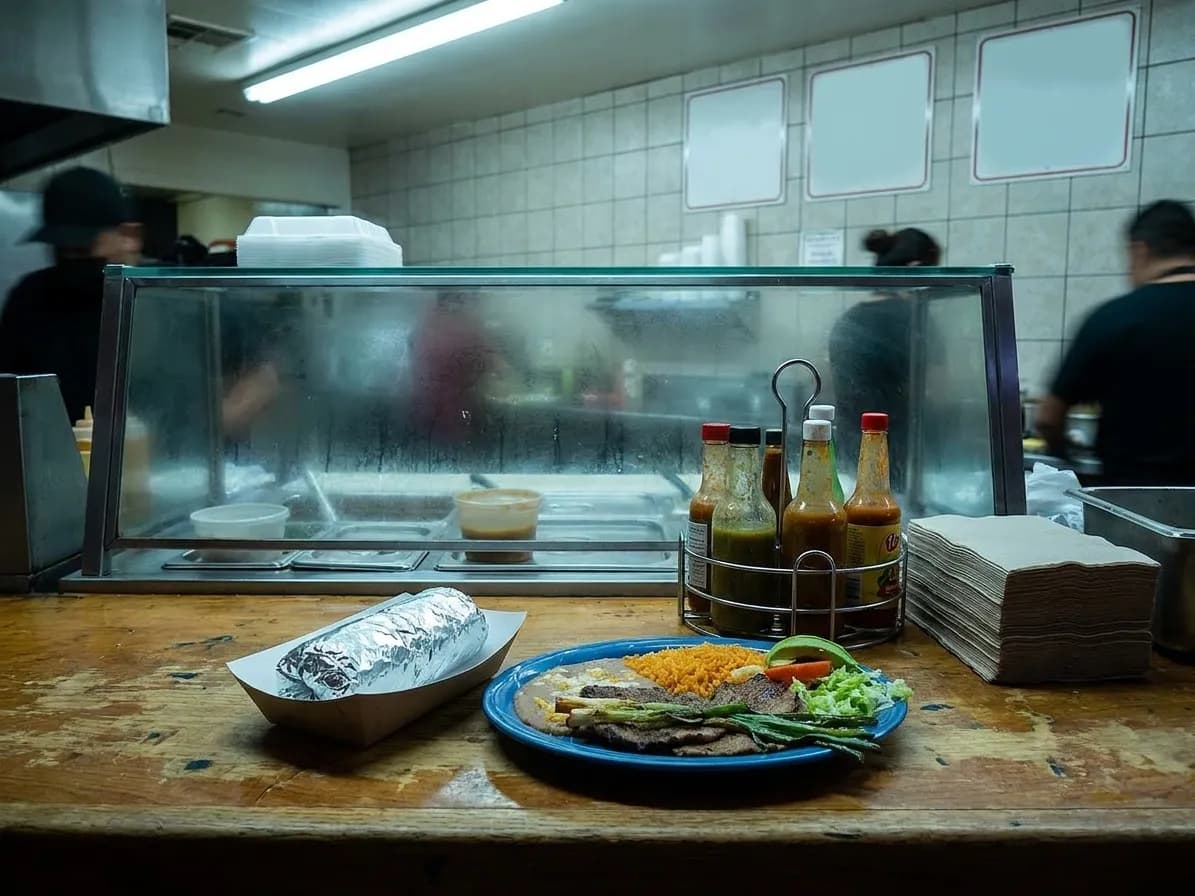
El Farolito and the wider cluster of Mission taquerias are what San Francisco actually eats after midnight, and there is nothing second-rate about it. A super burrito at 1am from a counter that has been making them the same way for decades is one of the genuine pleasures of this city, and it costs very little.
Plan for it rather than falling back on it. The single most common late-night mistake here is spending forty-five minutes walking past closed doors before ending up at a taqueria anyway, tired and annoyed. Deciding at eleven that the night ends in the Mission converts the same meal into the point of the evening.
Chinatown, and the limits of the Cantonese late tradition
Chinatown holds the city's other historic late-eating tradition and it still functions, with noodle houses and roast-meat counters running later than the general run of restaurants. The honest caveat is that late here means eleven or midnight rather than two, and it varies by night, with Sunday and Monday noticeably thinner.
The method is to walk rather than to research. Two or three blocks around Jackson and Washington will tell you within five minutes which rooms are still serving, and a busy dining room at 11:30pm is a room that intends to stay open. It is a much better signal than any listing.
The cheesesteak-and-slice layer
Below the restaurant tier there is a thin but dependable layer of counters that run to 2am: Buster's Cheesesteak at 366 Columbus Avenue in North Beach is the best-known, and the late pizza-by-the-slice windows in North Beach and around the Mission fill the same role. This is not food anyone travels for and it is not pretending to be.
What it is, is reliable. If the only requirement is something hot before bed, this layer exists in the two or three neighbourhoods where people are out late, and it is open when everything else is not.
Why the list is this short
Three forces compound. San Francisco's dining rooms are small, so a second late service turns few tables. Labour costs here are among the highest in the country, and an overnight brigade has to be paid for by overnight covers that mostly do not exist. And the city's transport thins sharply after ten, which suppresses late demand before it can build — people go home because getting home gets harder, not because they stopped being hungry.
There is also a simple cultural fact: San Francisco eats early. A 6pm dinner reservation is normal here in a way it is not in New York or Miami, and a city that starts dinner at six has finished by nine. The late-night gap is downstream of the early start rather than a separate problem.
How to plan a late night here without getting caught
Decide the last meal before the first drink. Pick the izakaya or the taqueria at the start of the evening and treat it as the fixed point everything else moves around. This single habit removes almost all of the frustration.
Ask about the kitchen rather than the bar. A San Francisco venue's posted hours are the bar's hours, and the food frequently stops thirty to sixty minutes earlier. And check the night — Sunday through Tuesday is materially thinner than Thursday through Saturday across every category on this list. If you want a city that will feed you at 2am on a Monday, this is not it, and knowing that in advance is worth more than any list.
It is worth adding that this is a city where the late-night gap is filled by convenience rather than by restaurants: twenty-four-hour grocery stores, the corner shops in the denser neighbourhoods, and the delis that stay open for the bar trade. None of that is a meal, but it is the honest answer to what exists at 3am in most San Francisco neighbourhoods, and knowing it prevents a fruitless walk. If you want a proper meal at that hour, you are going to one of the four or five places named above, and you should decide which before you leave.
Tags: #SFLateNight #RestaurantsOpenNearMe #Izakaya #MissionDistrict #Taqueria #Chinatown #SanFranciscoFood #OpenLate #SFEats #NorthBeach #AfterMidnight #OuterSunset #NightOut #FoodGuide
Please drink responsibly. Must be of legal drinking age.
All trademarks are the property of their respective owners.
Ask Karpo first
Want to know what is genuinely serving in San Francisco right now, which kitchens have already stopped, and what is closest to you? Ask Karpo before you start walking.