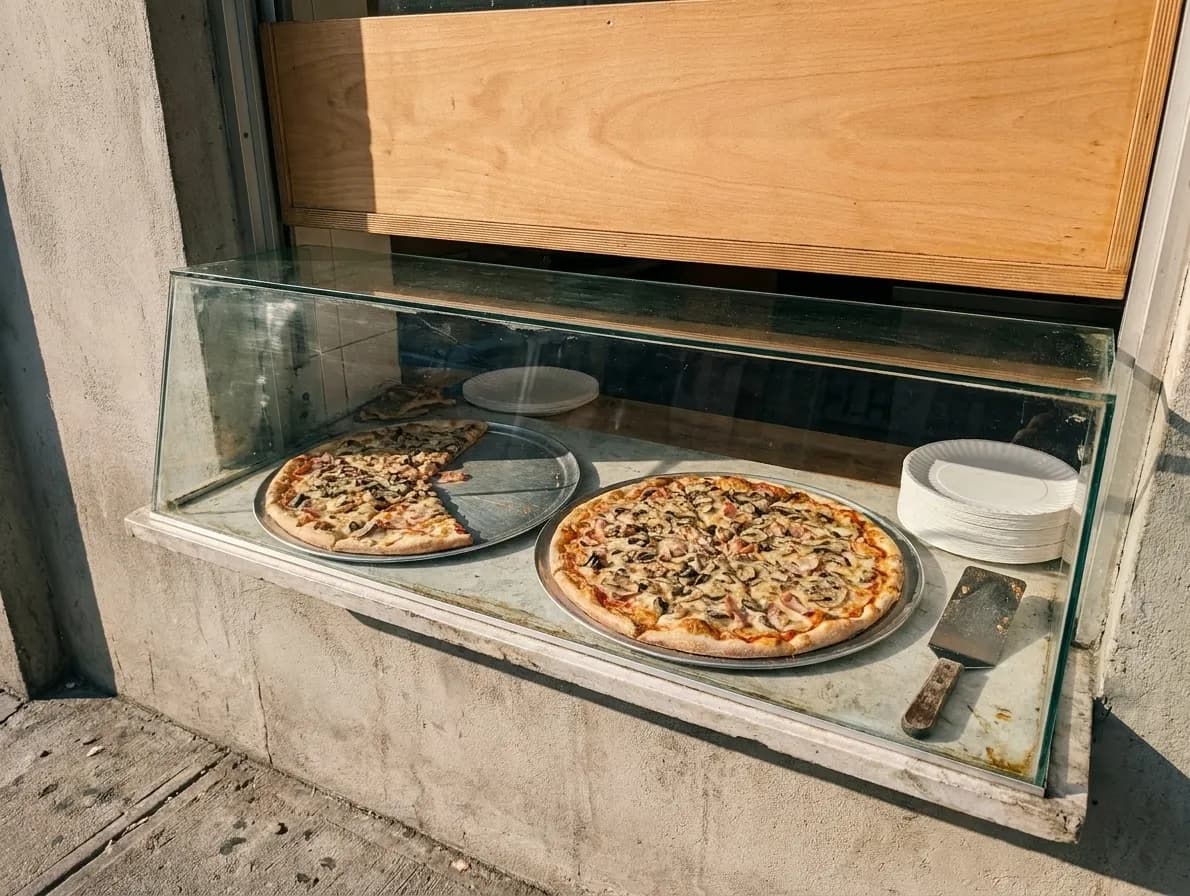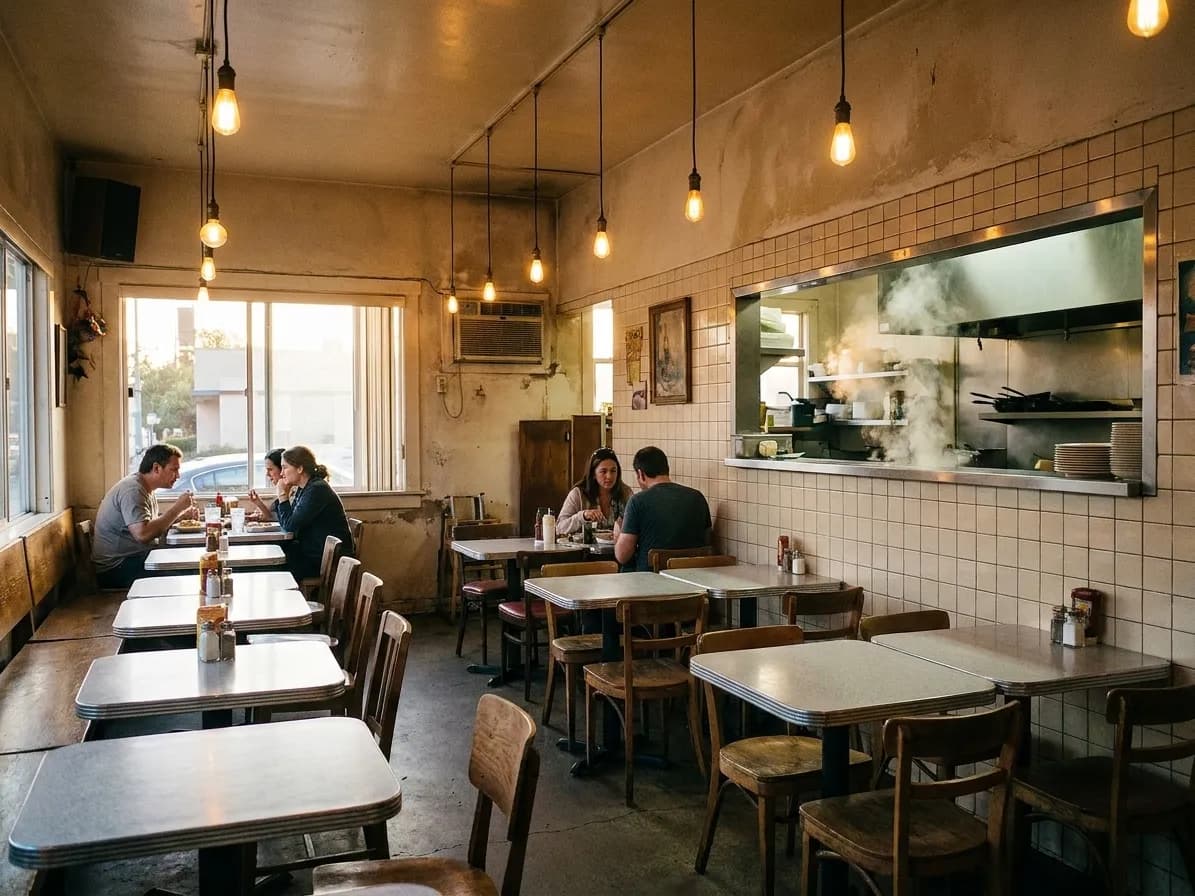
Forty dollars for two people is a workable dinner budget in Los Angeles, but only if you stop thinking of it as twenty dollars each. Split evenly, forty buys two mediocre entrees. Allocated properly — one substantial shared dish plus two or three cheap supporting ones — it buys a meal that feels considerably more generous than the number suggests. The cuisines that Los Angeles does best are, conveniently, the ones built for exactly that structure.
Two people can eat genuinely well in Los Angeles for forty dollars, but only if the money is allocated rather than split evenly. Tell Karpo the neighbourhood and it will find the kitchens where that math works.
Why the even split fails
Restaurant menus are priced so that the entree carries the margin. Two entrees at eighteen dollars each plus tax and tip lands well past forty and leaves you with two plates of the same shape and no variety. Meanwhile the sides, small plates and starch dishes on the same menu are priced modestly and are frequently the better cooking, because they are where a kitchen's tradition actually lives.
The allocation that works is roughly two-thirds of the budget on one shared centrepiece and one-third across two or three supporting dishes. You get more food, more variety, and a table that looks like a meal instead of two portions. It also handles mismatched appetites, which an even split never does.
The cuisines where this works best
Los Angeles is unusually well suited to shared-centrepiece eating because so many of its strongest traditions are built that way. Whole grilled or steamed fish with rice and vegetables. A large platter of grilled meat with flatbread, salad and dips. A family-style braise with rice. A big noodle or soup dish supplemented by small cold plates. In each case the centrepiece is designed to be divided and the supporting dishes are cheap by design.
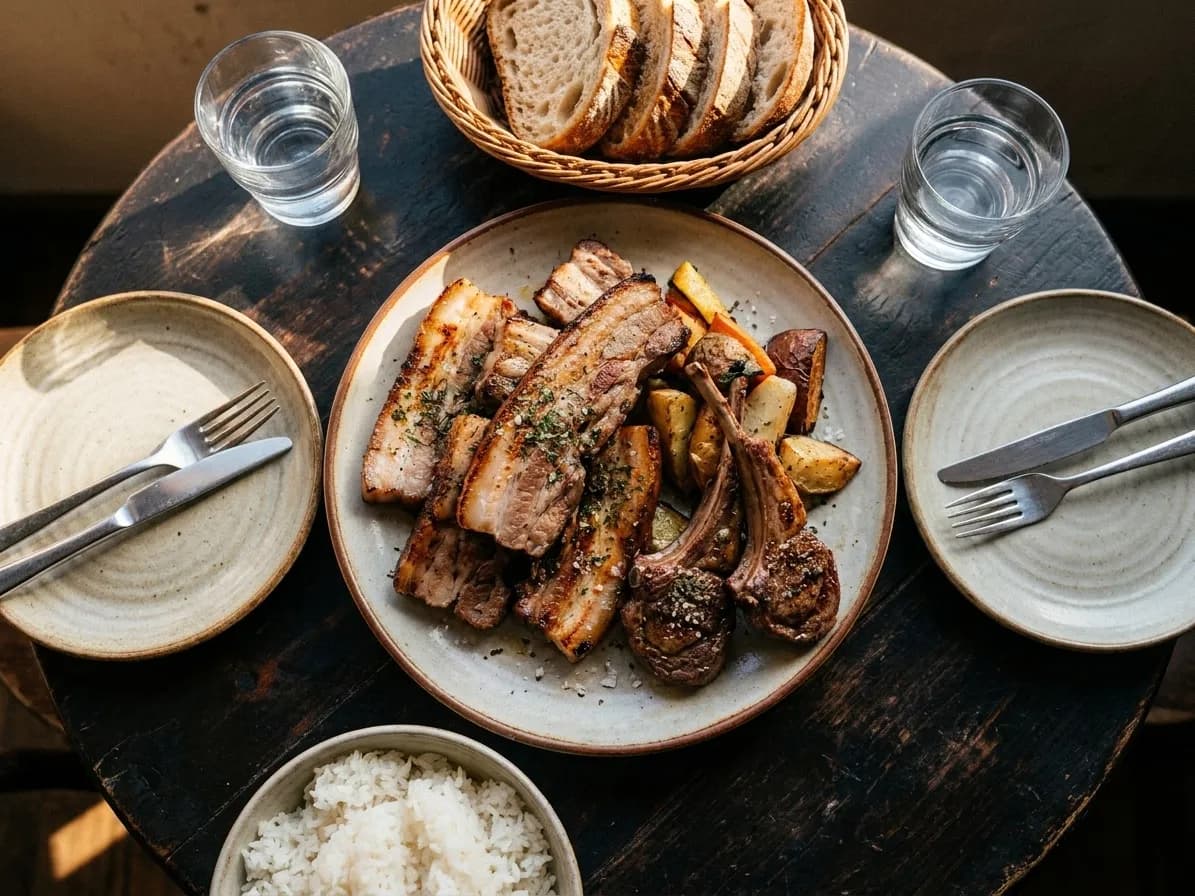
Where this does not work is the standard entree-driven dining room, and no amount of ordering skill fixes it. If the menu has no shareable large format and no cheap sides worth ordering, the budget will not stretch, and the honest move is to choose a different restaurant rather than to order badly at this one.
The overheads to count in
Forty dollars has to cover tax and tip, and it is easy to forget that before ordering. In practice that means the food total needs to land near thirty for a full-service room, which is a real constraint. It is also why counter-service places stretch this budget so much further — no table service means no tipping expectation of the same size, and the difference is several dollars of actual food.
Drinks are the other silent budget item. Two drinks at a restaurant frequently cost as much as the shared centrepiece, and they are the first thing to cut if you want the food to be good. Tap water and a good shared platter beats two sodas and two small entrees on every measure.
Where forty dollars goes furthest
Neighbourhood commercial corridors rather than destination dining streets, counter service rather than table service, and kitchens that cook one tradition well rather than a menu spanning several. Los Angeles rewards this pattern more than almost any American city because its neighbourhood restaurant economy is deep and competitive, and the good places do not need to be on a list to stay busy.
Lunch is the other lever. A large share of ambitious kitchens run a midday version of the same food at a noticeably lower price, so if the budget is fixed and the occasion is flexible, moving the meal to lunch buys you a better restaurant for the same forty dollars.
Ordering, in one line
Pick a kitchen with a shareable large format, order one of those plus two cheap supporting dishes, drink water, and go at a busy hour. Prices move constantly in this part of the market, so treat the allocation rather than any specific total as the thing to remember.
The extras that are worth the money
Not every add-on is a budget leak. In this structure the cheap supporting dishes are doing real work, and skimping on them produces a table with one good thing and nothing around it. Bread, rice, a vegetable side and a sauce or pickle typically cost a few dollars each and transform a single shared platter into a full meal — that is the part of the budget to be generous with.
What to cut instead is duplication. Two starches, two similar vegetable dishes, or a second protein all add cost without adding variety. The best forty-dollar tables in Los Angeles have one substantial thing, one starch, one sharp or acidic thing to cut it, and something green. Four dishes, two people, and nothing wasted.
A worked example of the allocation
Concretely: around twenty-five dollars on one substantial shared item, four or five on a starch, three or four on a vegetable or salad, and a couple on something sharp — a pickle, a sauce, a squeeze of citrus. That lands close to thirty-five before tax, which is where a forty-dollar budget needs to be at a counter-service kitchen.
The version that fails is two fifteen-dollar entrees plus two drinks, which is the same money for less food, no variety and nothing to share. The allocation is doing all the work here; the restaurant matters less than most people assume once the ordering structure is right.
Tags: #LosAngeles #LA #SoCal #FreeThingsToDo #CheapEats #BudgetFriendly #LAEats #LAGuide #ExploreLA #LALocal #LAWeekend #LANights #LAFood #LALife
Sources consulted: laist.com · eater.com · latimes.com
All trademarks are the property of their respective owners.
Ask Karpo first
Karpo is a proactive AI assistant that lives in iMessage. Give it the budget and it will find the shareable table.