Open a booking app at seven on a Friday in San Francisco and it will tell you the city is full. It is not. What is full is the specific subset of tables that restaurants choose to sell through a platform, which is a fraction of the seats that actually exist. The rest — bar seats, counters, walk-in rooms and entire neighbourhoods that never adopted the reservation culture — are available, and largely invisible to anyone searching in the obvious way.
The app says the city is full and the city is not. Ask Karpo where near you is genuinely taking walk-ins right now.
The bar seat, which is the whole answer
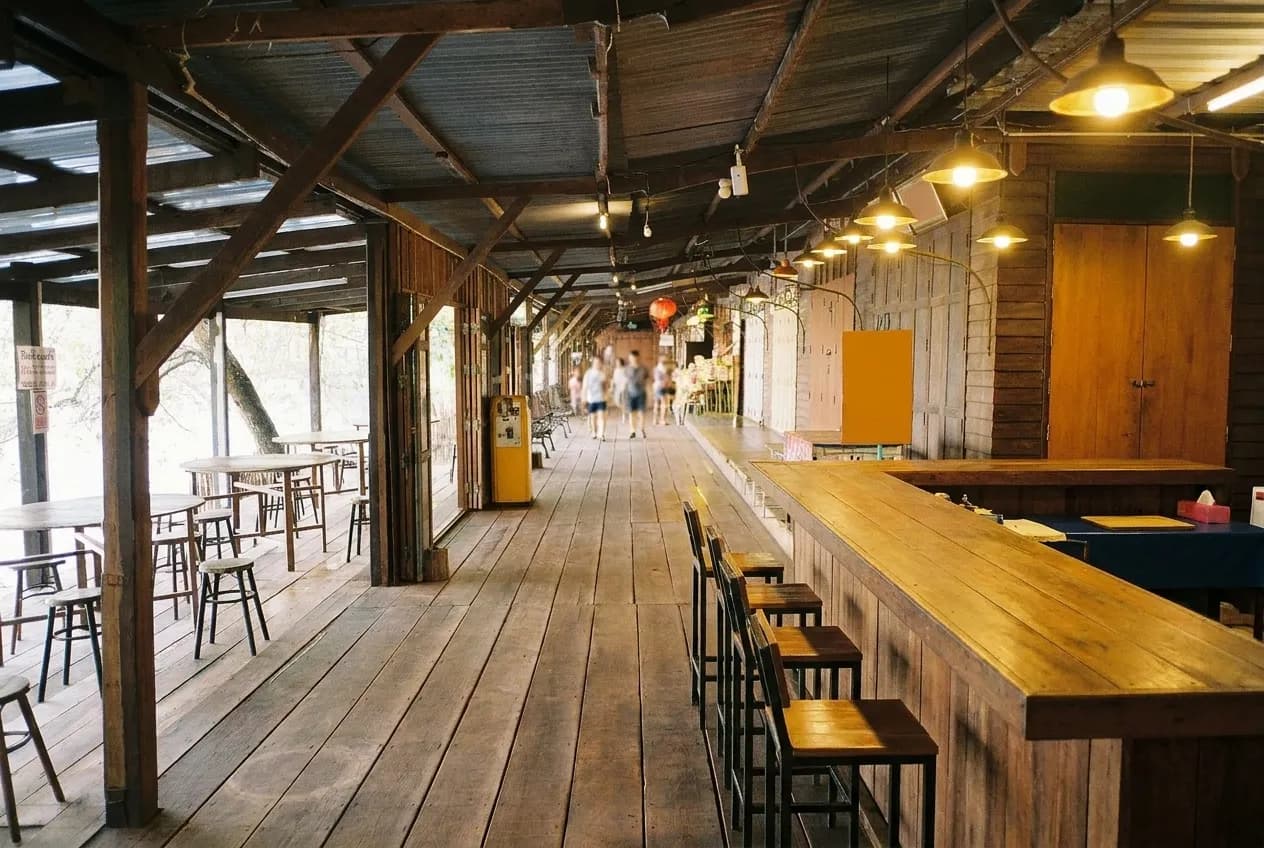
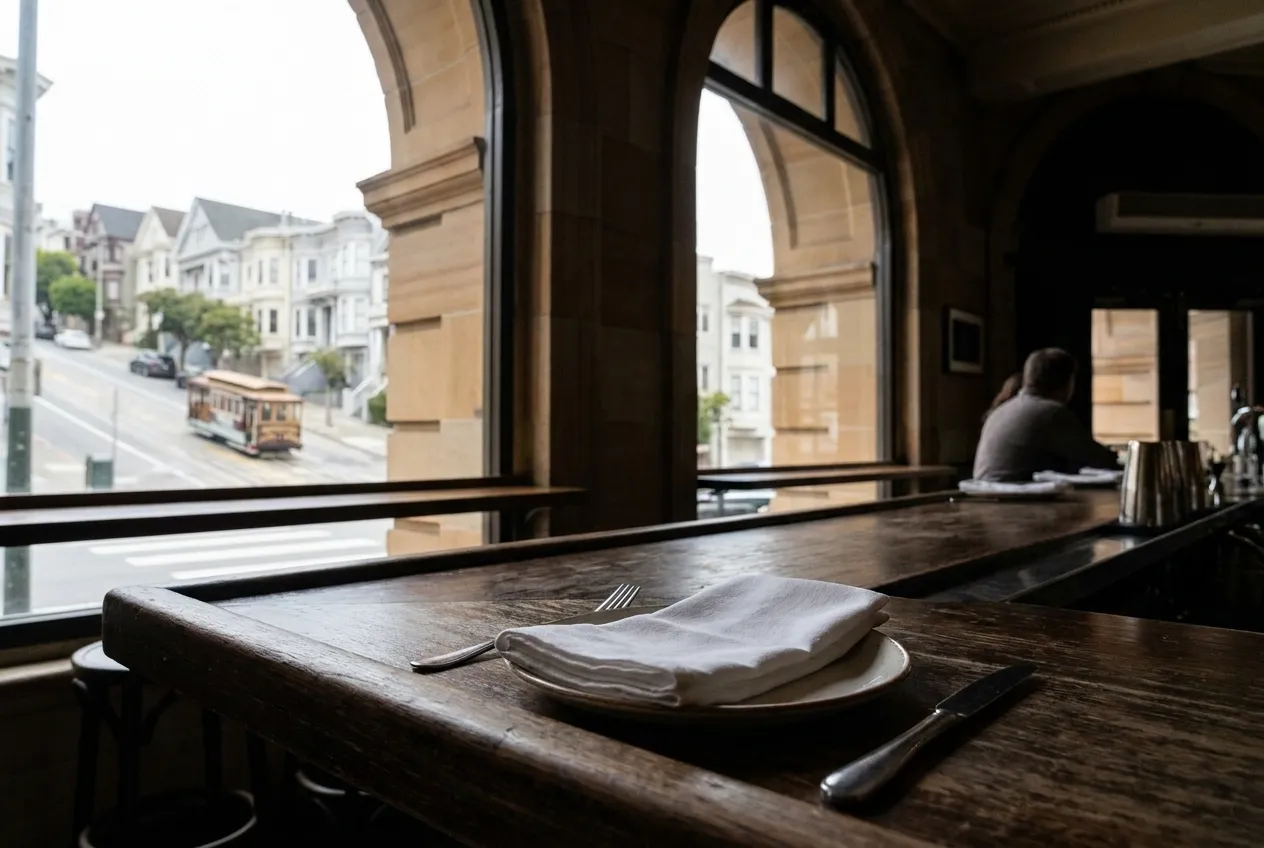
A large number of San Francisco restaurants keep their bar and counter seats walk-in only, serve the full menu at them, and do not list them on any platform. A room whose tables are booked out for three weeks will frequently seat two people at the bar within twenty minutes on a Tuesday and within forty on a Friday.
This is not a loophole; it is how the restaurants intend it to work. Bar seats absorb the walk-in trade, they turn faster, and they are the last thing a restaurant would give up to a booking system. The behaviour that follows is simple: walk in, ask specifically for the bar rather than for a table, and be willing to wait with a drink.
For two people it is also frequently the better seat. Side by side rather than across, a view of the kitchen or the bartender's work, and staff who have more time for you than a section server does.
The neighbourhoods that never booked
Chinatown operates almost entirely on walk-ins, and the rooms are large. So does most of the Richmond along Clement Street, where dim sum, Burmese, Vietnamese and Russian restaurants serve a neighbourhood that turns up rather than books. The Sunset along Irving and Noriega runs the same way.
These are not consolation neighbourhoods. Clement Street is one of the best and least expensive eating streets in San Francisco and it is available at seven on a Friday to anyone who drives or takes a bus there. The reason nobody thinks of it is that it does not appear in the search results, because it does not participate in the system the search is querying.
The formats that are always open
Counters and windows take no bookings by definition: taquerias across the Mission, banh mi counters along Larkin Street in the Tenderloin, dumpling and bao windows in Chinatown, the North Beach slice counters. These are a complete dinner in under fifteen minutes and are the correct answer when the alternative is queueing for ninety.
Market halls are the other always-available format. The Ferry Building at the foot of Market Street has counters and shared seating with no host and no booking, which also makes it the easiest solution for a group that cannot agree.
Timing the walk-in
The window that works is either before six-thirty or after eight-forty-five. The first is before the booked service fills; the second is after the first seating has turned and before the kitchen closes, which in San Francisco is earlier than most people expect — a great many kitchens stop taking orders around nine.
That last point is the one that catches people out. A walk-in strategy in this city has a hard deadline, and arriving at nine-fifteen hoping to find something is a materially worse position than arriving at eight-forty-five. If it is getting late, stop looking for a restaurant and go to the Mission or Chinatown, both of which run considerably later than the rest of the city.
How to ask, so the answer is yes
Walk in rather than phoning, because a host can see the room and will often find something for people already standing there that they would not promise on the phone. Ask for the bar or the counter specifically rather than for a table. Be two people rather than four if you have the choice, since a two is far easier to place. Say you are happy to eat quickly if that is true, which is genuinely useful information to a host managing a turn. And be prepared to leave a phone number and go and have a drink somewhere else for half an hour — that is not a rejection, it is the system working, and it is how most successful walk-ins in this city actually happen.
The neighbourhoods that reward turning up
There is a broader point here about how San Francisco actually works. The reservation culture is concentrated in a handful of districts — the Mission, Hayes Valley, the Marina, parts of SoMa — and large parts of the city never adopted it at all. The Richmond, the Sunset, Chinatown, the Excelsior and much of the Tenderloin operate on the assumption that people turn up. Those neighbourhoods are cheaper, less crowded and frequently better, and the only reason they feel inaccessible is that they are invisible to the tool most people are searching with.
Practical notes
Many San Francisco restaurants keep bar and counter seats walk-in only with the full menu and do not list them on booking platforms — ask specifically for the bar rather than a table. Chinatown, Clement St in the Richmond and Irving and Noriega in the Sunset run largely on walk-ins with substantial capacity. Always-open formats: Mission taquerias, banh mi counters on Larkin St, Chinatown dumpling and bao windows, North Beach slice counters, and the Ferry Building's counters with shared seating. Best walk-in windows are before 6:30pm or after 8:45pm, but note that many San Francisco kitchens stop taking orders around 9pm; after that the Mission and Chinatown run latest. Walk in rather than phoning, ask for the bar, present as a two if possible, offer to eat quickly if true, and expect to leave a number and return in half an hour.
Tags: #RestaurantNearMe #SanFrancisco #WalkIns #BarSeats #Chinatown #ClementStreet #SunsetDistrict #MissionDistrict #FerryBuilding #NoReservation #HiddenGems #SFEats #DinnerTonight #Tenderloin
All trademarks are the property of their respective owners.
Ask Karpo first
Booking platforms show a fraction of the seats that exist in San Francisco, which is why the city looks full when it is not. Ask Karpo where near you is taking walk-ins right now, which rooms keep bar seats back, and how long you have before the kitchens stop.