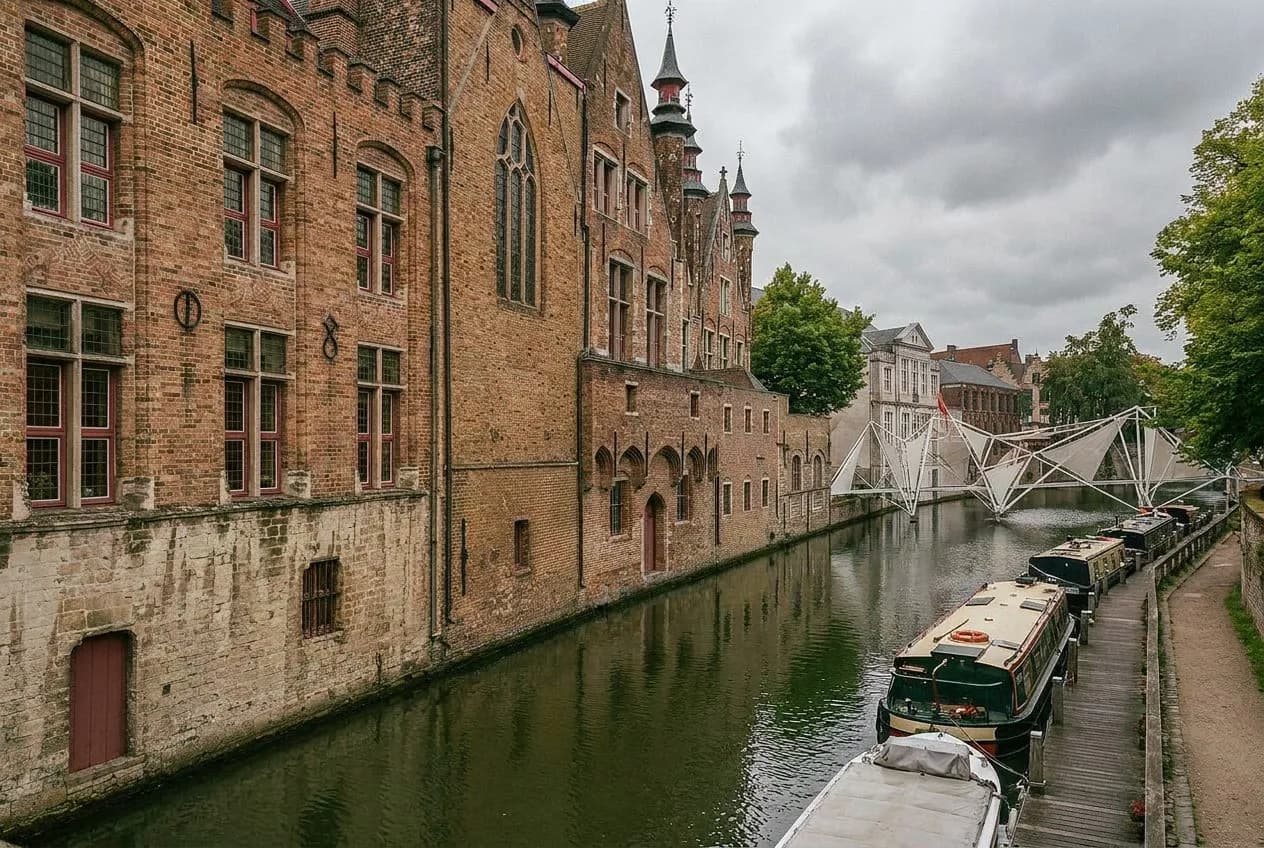
The Regent's Canal towpath is not a shortcut. It's a deliberate detour, a linear route that trades efficiency for texture. The walk from Little Venice to Limehouse Basin takes roughly 3.5 to 4 hours at a steady pace, tracing about 8–9 miles of flat water through neighborhoods that otherwise share little in common. Narrowboats jostle at moorings, cyclists ring their bells on the narrow path, and the canal itself remains unchanged—green, still, lined with lock gates and industrial ghosts. The city rewrites itself every mile, but the water stays the same.
Starting at Little Venice
Little Venice sits where the Grand Union and Regent's Canals meet, a pocket of painted houseboats and willows that feels deliberate in its charm. The water broadens here into Browning's Pool, named for the poet who lived nearby, and the towpath begins its eastward thread. Early on, the path is paved and wide enough to walk two abreast. Plane trees arch overhead, and the light in late afternoon catches the ripples from passing boats. Canal cafes dot the junction point, their outdoor tables positioned to watch the boat traffic pass. On weekend mornings, the smell of coffee mingles with the green scent of the water.
The first mile is gentle. You pass Maida Hill Tunnel—pedestrians take the street above, then rejoin the towpath at the far end—and the rhythm establishes itself. Narrowboats line both banks, some pristine with window boxes trailing geraniums and herbs, others listing slightly, their paint weathered to primer. The towpath here feels like a city guide written in water, a route that holds its own logic apart from the grid above. Children on bicycles wobble past, and dogs strain at leashes toward the water's edge, drawn by the scent of algae and the promise of moorhens.
The Camden Lock bottleneck
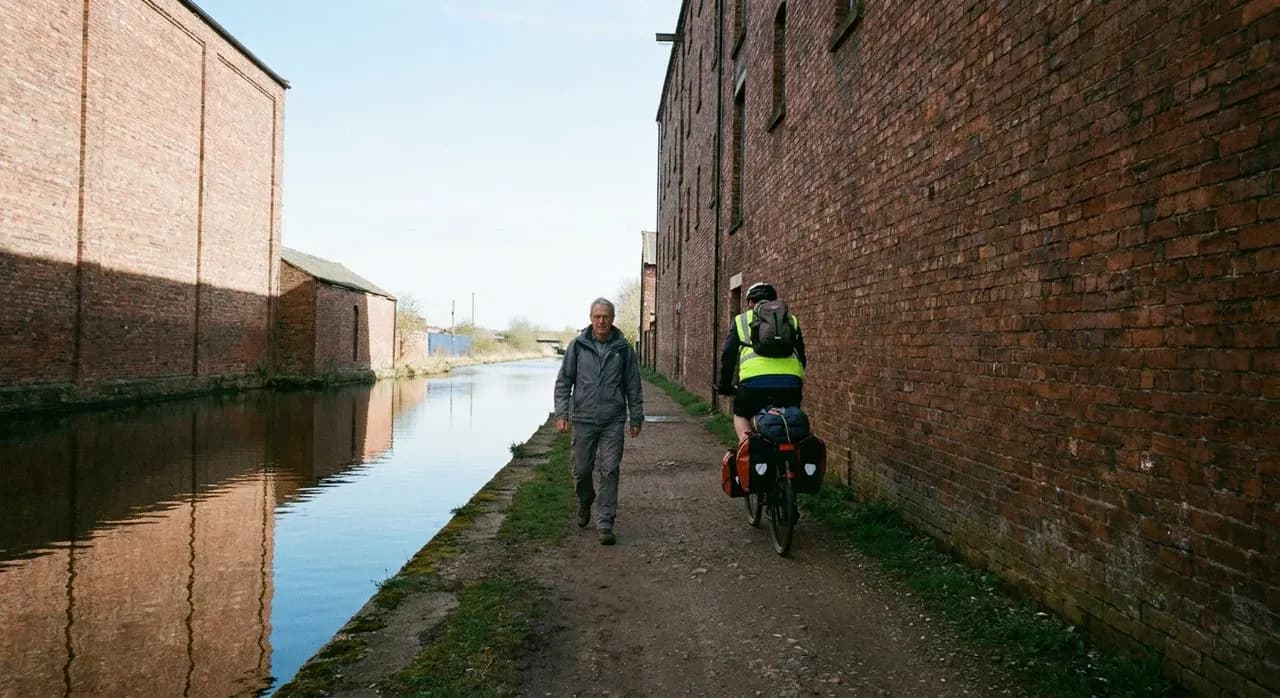
Camden Lock is the route's loudest interruption. The market crowds spill onto the towpath on weekend afternoons, turning the narrow passage into a slow shuffle behind tourists stopping for photos. The stretch becomes effectively impassable during peak hours, bodies pressing three-deep against the railing. Early morning or weekday walks avoid the bottleneck entirely; by eight a.m. on a Tuesday, the only company is dog walkers and the occasional runner.
Past the lock gates and the market stalls, the path narrows further. The canal curves through Kentish Town and then King's Cross, where the Gasholders rise behind new glass towers. The old and new sit side by side here without commentary. The water doesn't register the difference. Street food vendors set up along the Camden stretch, and the air carries competing scents—frying onions, incense from market stalls, the metallic tang of lock mechanisms grinding open to let boats through.
King's Cross to Victoria Park
East of King's Cross, the towpath enters a quieter register. The building facades change—brick warehouses, then council estates, then stretches where the backs of gardens meet the water. The surface underfoot shifts from paved to gravel to packed dirt depending on the section. Between Broadway Market and Victoria Park, the path turns to mud after rain, and in spring 2026 the puddles linger for days. Boots are not optional here.
Victoria Park itself offers a brief opening, a chance to leave the towpath and cross green space. Most walkers stay the course. The canal skirts the park's southern edge, passing the stone bridge and the Chinese pagoda before ducking back into residential East London. The rhythm resumes: the same flat water, the same cyclist bells, the same houseboat chimneys trailing woodsmoke. Fishermen sit with rods angled toward the center channel, thermoses at their feet, embodying a patience the city rarely permits.
The Towpath Café detour
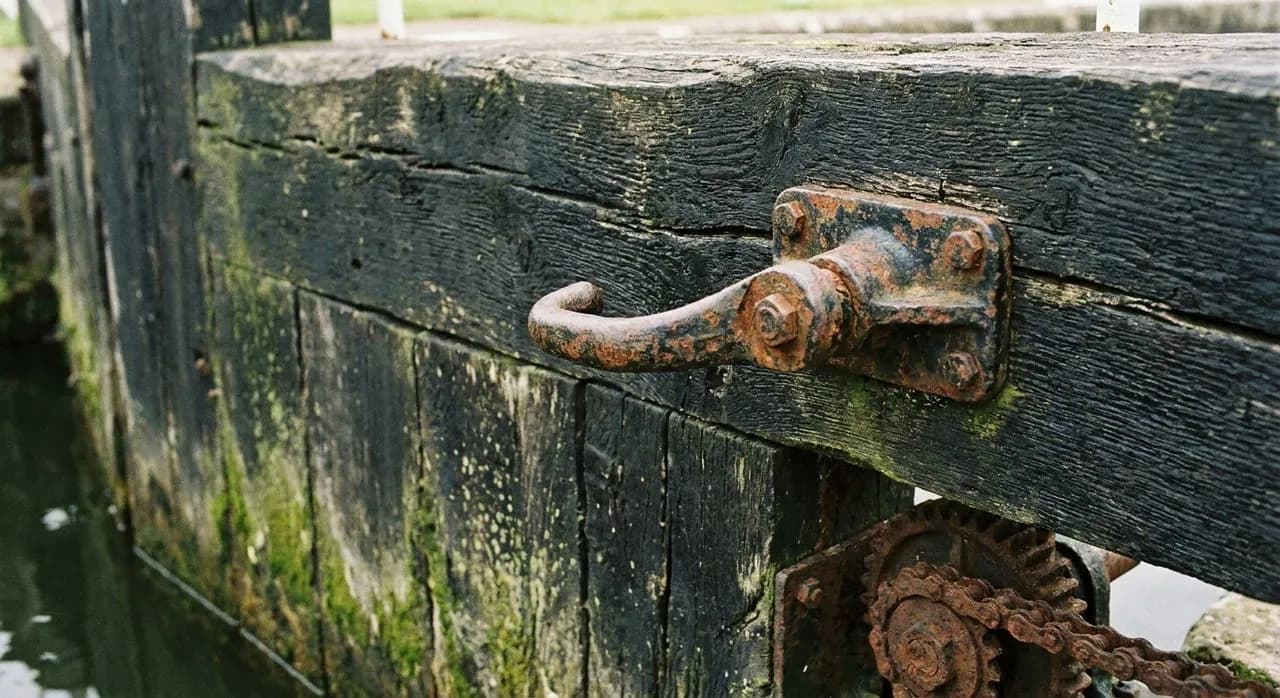
Just before the canal reaches Broadway Market, the Towpath Café sits directly on the water's edge at the base of a former warehouse. It's one of the few buildings that opens directly onto the canal rather than turning its back to the water. Tables spill onto the towpath itself, forcing a single-file squeeze past seated diners. The menu changes with what's available, chalked on a board that leans against the brick wall. In spring, the café opens its shutters wide, and the boundary between inside and outside dissolves.
The café operates as a natural rest point roughly halfway through the walk, though its limited seating means arriving during off-peak hours increases the chance of a table. Coffee is served in ceramic cups, not takeaway paper, an invitation to stay rather than continue. The view from the tables is pure towpath theater—narrowboats negotiating the turn, cyclists dismounting to navigate the cafe's narrow passage, herons stalking the shallows on the opposite bank. It's a place that understands its location, built not just beside the canal but as part of its ecosystem.
Mile End and the final stretch
Mile End marks the beginning of the end. The canal slips past the lock and under the A11, and the towpath empties out. The final stretch from Mile End to Limehouse Basin is generally quieter than the central sections, threading past former docklands and residential towers with few pedestrians. The silence feels intentional, as if the city has stepped back to let the canal finish its work. Converted warehouses loom on both sides, their brick faces blank, and the water reflects nothing but sky.
Limehouse Basin opens suddenly—a wide rectangle of moored boats and lock gates where the canal meets the Thames. The river is visible beyond, brown and tidal, moving at a different speed entirely. The towpath ends here at the lock, and the city reasserts itself: traffic noise, the sharp scent of salt water, the sense of arrival. It's an abrupt transition, but an honest one.
What the walk offers
The Regent's Canal towpath is a route that makes the journey longer on purpose. It's shared space—with cyclists who sometimes forget to slow, with narrowboats that drift at the pace of conversation, with joggers and fishermen and people simply walking to clear their heads. The path is narrow in places, unpaved in others, and it never pretends to be efficient. The pleasure is in the constancy of the water and the slow rotation of the city around it.
Spring brings green bloom to the plane trees and hawthorns that line the banks, and the light stays longer into evening. By late 2026, the towpath will feel familiar to anyone who walked it before—nothing here changes quickly. The same lock gates, the same graffitied bridge underpasses, the same narrow passages where you press against the railing to let a cyclist pass. It's a walk that rewards repetition.
Practical notes
The walk starts at Warwick Avenue or Paddington for Little Venice; ends at Limehouse or Limehouse Basin The towpath is open year-round, daylight hours recommended. Surface varies—waterproof boots advised after rain. Accessible stretches exist but the full route includes uneven surfaces, steps at certain locks, and narrow passages. Bring water; public toilets are sparse between Camden and Mile End. Verify current conditions before walking, especially around construction zones near King's Cross.
Tags: #RegentsCanal #LittleVenice #LimehouseBasin #LondonWalks #TheLongWayHome #CanalWalk #TowpathLondon #EastLondon #NorthLondon #CamdenLock #VictoriaPark #SpringWalking #SlowTravel #UrbanHiking #LondonSpring
Sources consulted: Regent's Canal · Canal & River Trust - Regent's Canal · Transport for London - Walking · Little Venice · Time Out London - Regent's Canal
All trademarks are the property of their respective owners.