Randalls Island occupies a peculiar position in the New York imagination—neither quite Manhattan nor the boroughs that frame it, a 480-acre landmass given over mostly to athletic fields and the looping concrete of the RFK Bridge. But along its eastern shore, tucked between the Icahn Stadium complex and the Little Hell Gate channel, a modest salt marsh restoration has quietly matured into one of the city's more unexpected wetland walks. The boardwalk loop is brief, unspectacular in the Instagram sense, and entirely free—which makes it an easy addition to weekend plans that call for water, sky, and the particular stillness that tidal grasses conjure even when helicopters drone overhead toward LaGuardia.
Getting there before the crowds
Access to Randalls Island requires a small act of commitment. Visitors typically access Randalls Island via the RFK Bridge pedestrian path or the 103rd Street footbridge that arcs directly onto the island from East Harlem. Either route deposits you into a landscape dominated by soccer goals and lacrosse nets, but the marsh trail system is well-signed from both entry points.
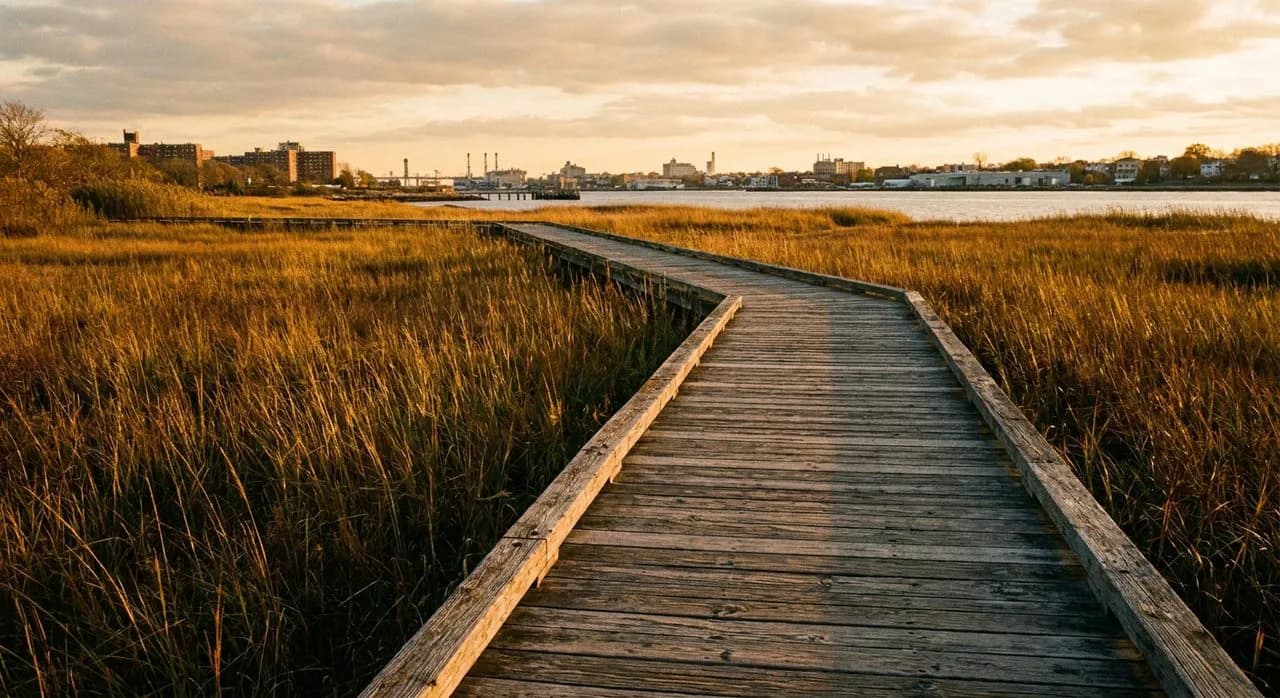
If you're after solitude and optimal light on the water, arrive by eight in the morning on Saturdays or Sundays to walk the marsh loop before the sports field traffic swells. The early window also catches the sun angling low across Little Hell Gate, turning the Spartina grasses gold and the water into hammered pewfoil. By mid-morning the parking lots fill and the soundscape shifts decisively toward whistles and cheering; the marsh itself remains relatively quiet, but the psychological buffer erodes.
The boardwalk and restoration context
The salt marsh boardwalk dates to the early 2010s, part of a broader wetland restoration effort led by the Randall's Island Park Alliance. What had been fill and rubble along the shoreline was regraded, planted with native marsh grasses, and laced with a low wooden walkway that follows the tidal edge for roughly half a mile. The result is neither wilderness nor artifice but something in between—a working coastal ecosystem that also functions as public infrastructure.
Text Karpo Now: check Randall’s Island access, path conditions, weather, and the easiest salt-marsh loop before you cross over.
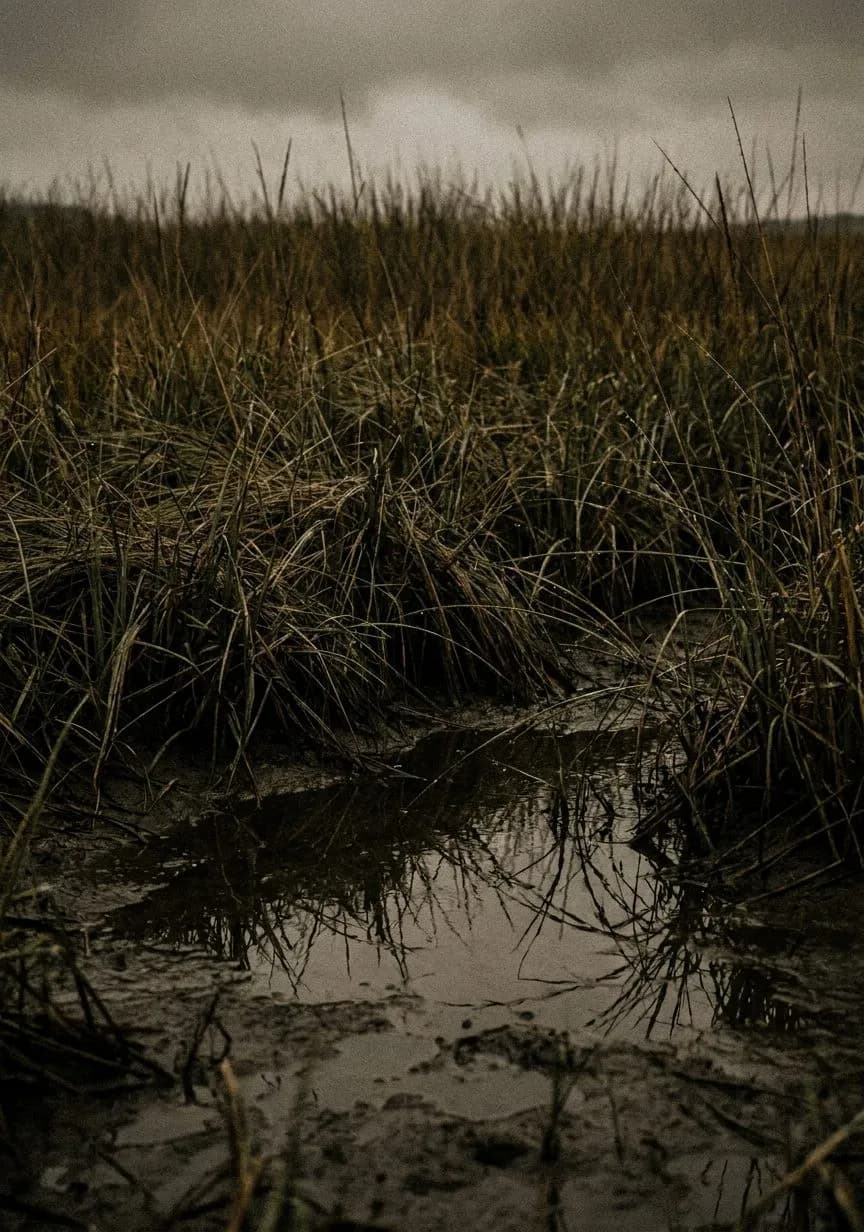
By late 2026 the vegetation has filled in thickly. Cordgrass and glasswort form dense hummocks, punctuated by tidal creeks that flood and drain with the East River's rhythm. The visual palette is muted—khaki, rust, silver-green—but the textures are intricate, and the whole landscape shifts character with the water level. At high tide the marsh appears to float; at low tide, exposed mud flats glisten and the architecture of roots becomes visible.
Timing the tides for bird activity
Birders know that tidal wetlands operate on a schedule indifferent to human convenience. The salt marsh boardwalk is most active with shorebirds and herons during low tide, when exposed mudflats reveal invertebrates and small fish trapped in shallow pools. Serious observers check tide tables and visit two hours before low tide for peak bird sightings—the window when waders are actively foraging and less likely to be hunkered down in the grass. Late fall and early spring bring migrant species, but even summer mornings yield black-crowned night herons, egrets, and the occasional glossy ibis.
The marsh's compact size means you can scan most of it from a handful of vantage points along the boardwalk. Bring binoculars. The birds are tolerant of quiet foot traffic but flush if you stop abruptly or lean too far over the rail.
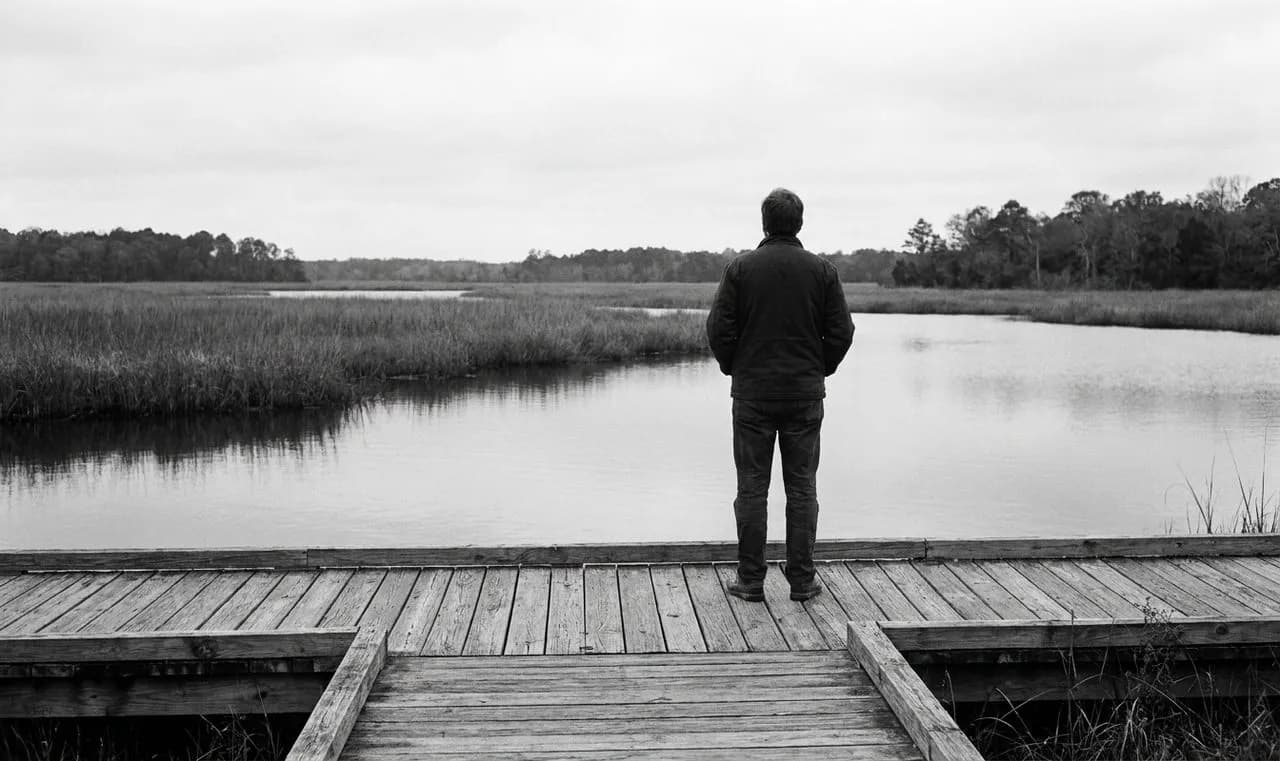
Little Hell Gate and the overlook bench
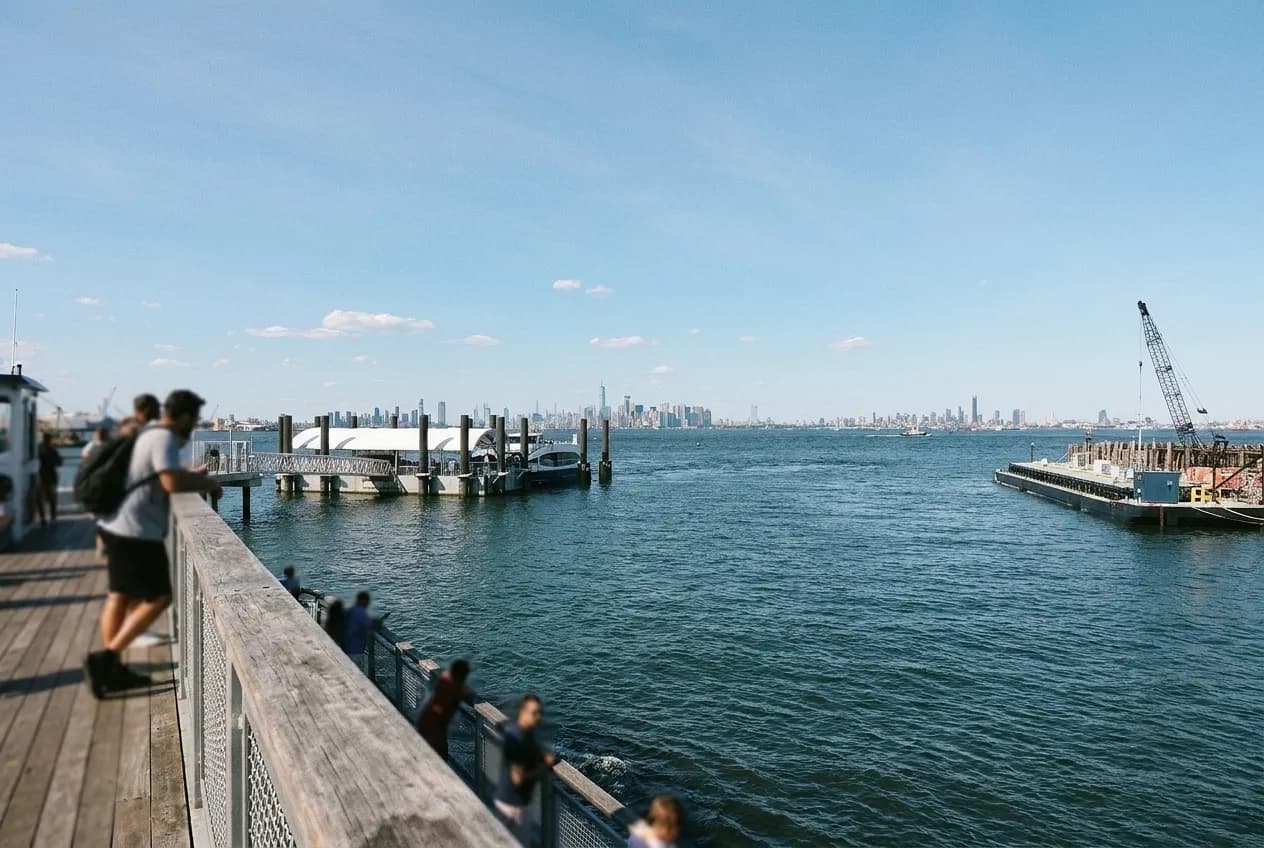
Little Hell Gate is the narrow tidal strait separating Randalls Island from Queens. It's an active shipping channel despite its modest width, and the water moves with visible speed during tidal changes. The boardwalk's northern terminus opens onto a small overlook platform facing the water, furnished with a single bench. This is the only seat along the entire loop that faces Little Hell Gate with unobstructed water views and no sports field noise behind—a detail that matters if you're looking to sit for more than a moment.
From the bench you can watch tugboats nudge barges upriver, track cormorants diving in the channel, and observe the shifting light on the Queens shoreline. The view is industrial-pastoral: gantry cranes and storage tanks in the middle distance, marsh grasses in the foreground, and always the sense of swift water just beyond the reeds. It's not picturesque in the postcard sense, but it's absorbing in the way that working waterfronts often are—layered, functional, and indifferent to aesthetics.
Loop logistics and trail feel
The full marsh loop—boardwalk, shoreline path, and connector trails—runs about a mile and a half, manageable in thirty to forty minutes at an ambling pace. The boardwalk section accounts for roughly half that distance. Signage is clear, and the route is intuitive enough that getting lost requires effort. The trail surface alternates between wooden planks, packed gravel, and short stretches of pavement near the athletic complexes.
There are no cafés, bathrooms, or water fountains along the marsh itself, though restrooms and vending machines are available near the island's central fieldhouse complex, a ten-minute walk inland. The loop feels more remote than it is—helicopters and bridge traffic provide a constant hum, but the marsh grasses and water create a psychological buffer that absorbs much of the city's ambient noise. It's a good walk for clearing your head or killing an hour before an East Harlem lunch, and it qualifies as one of the city's more overlooked free things to do if your idea of a satisfying outing involves mud, birds, and tidal rhythms rather than brunch lines.
Practical notes
The salt marsh boardwalk is located on the eastern shore of Randalls Island, accessible via the RFK Bridge pedestrian path or the 103rd Street footbridge from East Harlem. Nearest subway: 6 train to 103rd Street, then a half-mile walk east to the footbridge. The trails are generally open to the public; verify conditions after major storms. The boardwalk is wheelchair-accessible in dry conditions, though some connecting paths are uneven gravel. Bring binoculars, water, and layers—the island is windier than it looks from shore. No entrance fee.
Tags: #RandallsIsland #SaltMarsh #LittleHellGate #NYCBirding #TidalWetlands #EastRiver #FreeAndFine #WeekendPlansNYC #HiddenNYC #UrbanNature #EastHarlem #NYCOutdoors #CoastalTrails #BirdwatchingNYC #NYCParks
Sources consulted: Randalls Island (Wikipedia) · Randalls Island Park (NYC Parks) · Tidal Salt Marshes · Randalls Island Park Alliance · Hell Gate (Wikipedia)
All trademarks are the property of their respective owners.