 Haaland Has Seven Goals and Norway Runs Entirely Through Him
⚽️2026 FIFA WORLD CUP

Rainy World Cup Match Day: Indoor Backup Plans for Fans
Rain doesn't have to dampen your World Cup plans—host cities offer covered markets, museums, and official fan zones where the atmosphere stays electric.
The Reality of Summer Storms in Host Cities
The 2026 World Cup runs June 11 through July 19 across the USA, Canada, and Mexico, which means you're gambling with summer weather systems from the Gulf Coast to the Great Lakes. Atlanta's afternoon thunderstorms arrive with clockwork regularity. Kansas City's prairie weather can pivot from blazing sun to sideways rain in twenty minutes. Even the July 19 final at MetLife Stadium in East Rutherford sits squarely in New Jersey's humid season, when pop-up storms roll through without much warning.
Rain in the forecast? Ask Karpo for indoor backup plans on match day.
The tournament's expanded 48-team format means more matches, more travel days, and statistically more chances you'll wake up to gray skies on a day you've circled for months. The good news? Host cities have spent years preparing infrastructure that doesn't rely on cooperative weather. Official fan zones, transit hubs, and indoor venues are designed to absorb crowds when the forecast turns. The key is knowing where those spaces are before you're standing in a downpour with a soaked jersey and a phone at twelve percent battery.
Most host cities prohibit stadium tailgating or severely restrict it—MetLife explicitly bans on-site spectator parking and tailgating for the final, funneling everyone through NJ Transit rail or official shuttles. That constraint actually works in your favor when it rains, because the infrastructure forces you toward covered transit stations and indoor gathering points where the energy concentrates rather than dissipates across a muddy parking lot.
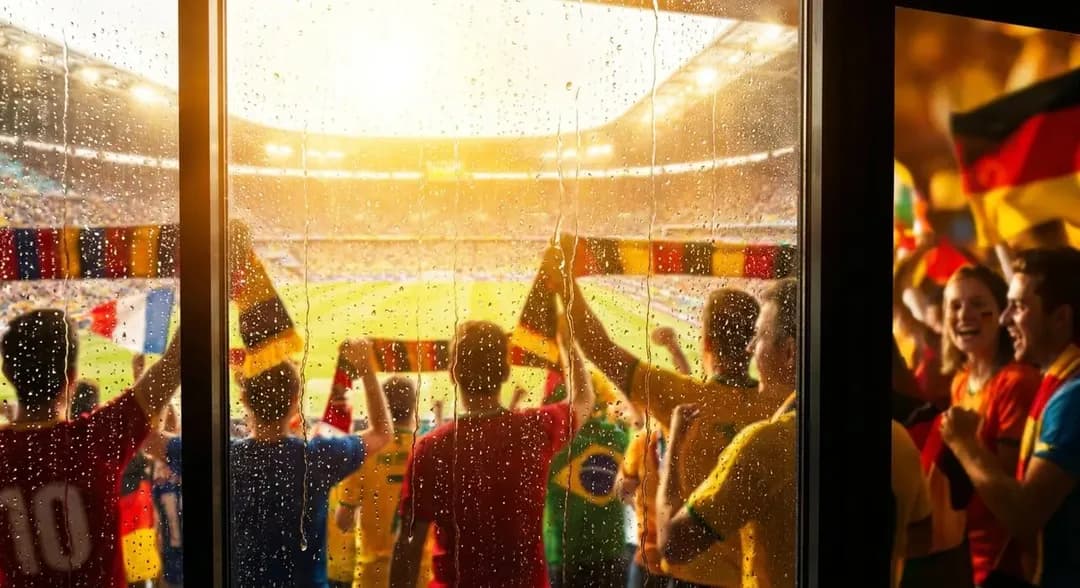
Official Fan Zones Built for Weather
The New York-New Jersey region offers four free official fan zones, and crucially, one is entirely indoors. The Dream Fan Fest at American Dream in East Rutherford sits inside one of the hemisphere's largest malls, with climate control, food courts, and viewing screens that don't fog up or short out when humidity spikes. It's a ten-minute walk from MetLife Stadium, which makes it the natural rally point if you're holding a semifinal or final ticket but the pre-match hours look grim. The other three zones—the Fan Village at Rockefeller Center, the Jersey Fan Hub at Sports Illustrated Stadium in Harrison, and the Queens Fan Zone at the USTA Billie Jean King National Tennis Center—have covered pavilions and tented areas, though they're primarily outdoor setups.
Kansas City's official FIFA Fan Festival on the National WWI Museum and Memorial grounds includes permanent indoor gallery space where you can duck in between matches, and the Power & Light District's 'Soccer in the City' watch parties happen in a mixed indoor-outdoor entertainment complex where bars and restaurants open directly onto the plaza. When rain hits, the crowd simply shifts fifteen feet toward the nearest doorway without losing the communal vibe.
The canceled Liberty State Park fan festival in Jersey City is worth mentioning only because outdated guides still list it—don't plan around it. Stick to the four confirmed NY-NJ zones and the Kansas City sites, all of which have contingency infrastructure and won't leave you stranded on a closed lawn.
Covered Markets and Food Halls
Every host city has at least one major covered market or food hall, and these become de facto fan headquarters when weather turns. They're warm, they serve food and drink without the markup of a stadium concourse, and they're usually near transit lines because that's how markets survive. In Atlanta, Ponce City Market and Krog Street Market both have large indoor seating areas with bars that will absolutely be screening matches. Kansas City's City Market has covered pavilions and adjoining restaurants in the River Market district, walkable from the Power & Light District.
These spaces work because they're designed for lingering. You're not fighting for a single barstool or standing in a scrum at a pub door. You can claim a table, order in waves, and settle in for a full match or a doubleheader. The food is generally better than what you'd find in a generic sports bar, and the crowd skews toward people who planned ahead rather than those who got caught in the rain and grabbed the first door they saw.
The rhythm of a market also suits the World Cup's schedule better than a traditional restaurant. Matches start at odd hours to accommodate global broadcast windows, and markets open early, close late, and don't care if you're nursing a coffee at ten in the morning or splitting a bottle at three in the afternoon. You're there to watch, they're there to host, and everyone understands the transaction.
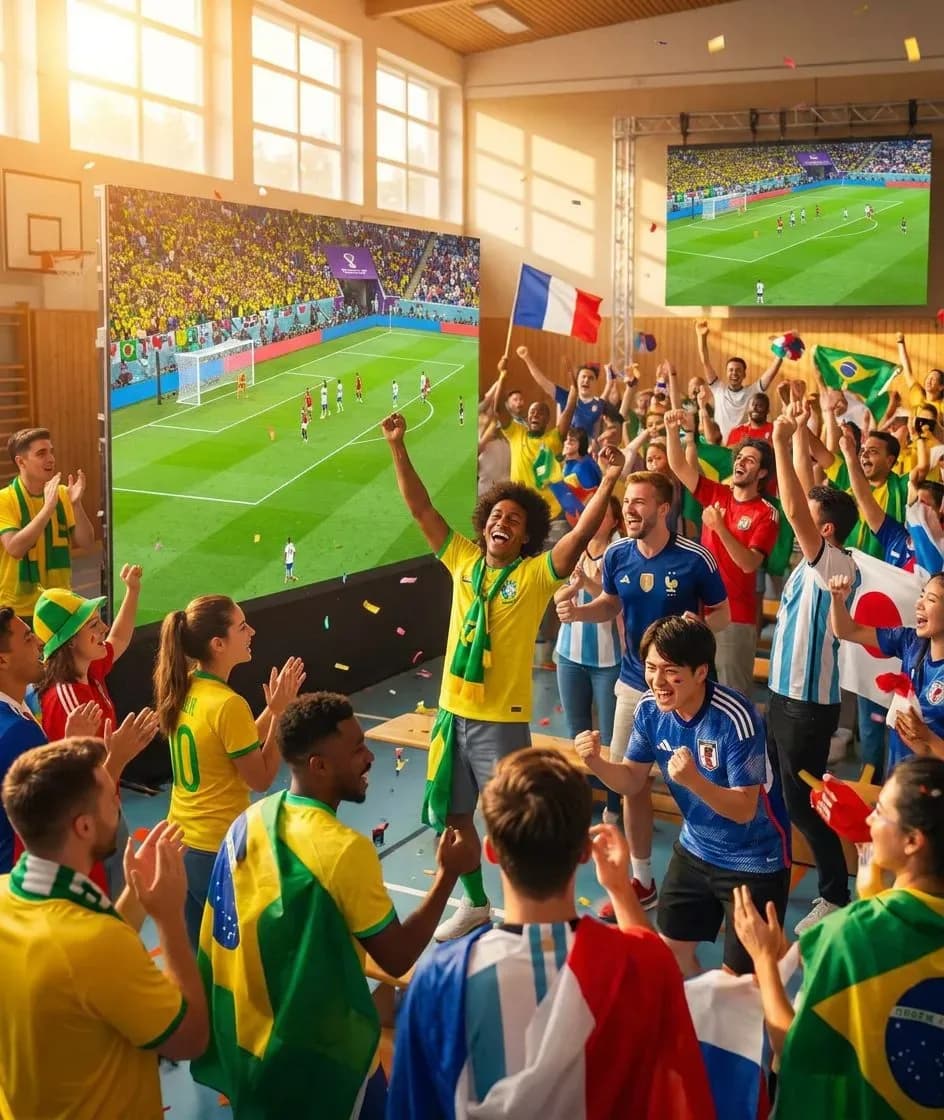
Museums and Cultural Spaces with Screens
Several host-city museums have announced World Cup programming, and while they won't replicate the roar of a packed bar, they offer something valuable when you need a break from the intensity: air conditioning, seating, and the option to wander away from the screen without feeling like you're abandoning your crew. The National WWI Museum in Kansas City is directly adjacent to the Fan Festival grounds and has indoor galleries where they'll be running matches on screens throughout the tournament.
Art museums in Atlanta and other host cities often have cafés or atriums with screens during major sporting events, especially when those events bring international visitors who might otherwise skip the museum entirely. It's worth checking the websites of major cultural institutions in whichever city you're visiting—many will list special hours or viewing events that aren't advertised as heavily as the official fan zones.
The advantage of a museum is that it gives your group an out if not everyone is equally invested in every match. One person can watch the full ninety minutes while another explores a gallery, and you reconvene for the next match or for dinner without the friction that comes from dragging a reluctant partner through eight straight hours of group-stage football in a noisy bar.
Transit Hubs as Gathering Points
When MetLife Stadium hosts the July 19 final, every ticketed fan will arrive via NJ Transit rail or an official shuttle, because there is no spectator parking and no tailgating permitted. That means Secaucus Junction and the Meadowlands station will be absolutely mobbed, but they'll also be where the energy is. Both stations have covered platforms and climate-controlled waiting areas, and vendors will set up nearby because that's where the captive audience is. If rain is forecast, plan to arrive early and claim space in the covered areas rather than trying to time it perfectly and getting stuck outside.
The same logic applies to other host cities. Kansas City's Union Station is a natural gathering point with indoor space and restaurants. Atlanta's MARTA stations near Mercedes-Benz Stadium have covered concourses. The key is to think of transit hubs not as pass-through points but as destinations in their own right when the weather is bad. You're going to be there anyway—you might as well be there comfortably, with a drink in hand and a screen in view.
Pre-purchase your transit tickets and keep any return wristbands or passes accessible. The worst rainy-day scenario is being stuck in a line at a ticket kiosk while your train boards, or realizing you've lost the wristband that gets you on the shuttle back to your hotel. These are solvable problems when the sun is out; they're miserable when you're wet and tired after a match.
Backup Plans for the Halftime Show
The July 19 final will feature the tournament's first-ever halftime show, curated by Coldplay's Chris Martin and featuring Madonna, Shakira, and BTS. If you're watching from an indoor venue rather than inside MetLife Stadium, you want a space with good sound and a large screen, because this will be a production on the scale of a Super Bowl halftime show and the broadcast will lean into it. Bars with small screens and mediocre audio systems will not do it justice.
The Dream Fan Fest at American Dream is the obvious choice if you're in the NY-NJ area without a stadium ticket, because it's purpose-built for this kind of event and will have the infrastructure to handle the crowd and the audio. For other matches earlier in the tournament, any venue with a proper sound system and a projector or large-format TV will work, but for the final, be selective. You're not just watching a football match—you're watching a cultural event that happens to include a football match.
If you do have a stadium ticket and the weather is genuinely dangerous, know that FIFA and local authorities have postponement protocols. They will not cancel the final, but they might delay kickoff. Have a backup plan for where you'll wait if you're turned away from the stadium concourse, and make sure your phone is charged and you've downloaded offline maps. The official FIFA app will push alerts, but cell networks get overwhelmed during major events, so don't rely solely on data.
Practical notes
- Download offline maps and save addresses for covered markets, official fan zones, and transit hubs in your host city before match day.
- Pre-purchase NJ Transit tickets for MetLife Stadium events and keep your return wristband in a waterproof pocket or lanyard.
- Identify at least two indoor backup venues with screens and food service within walking distance of your hotel or the stadium.
- Pack a lightweight rain shell that folds small—ponchos are cheaper but they're miserable in crowds and you'll throw it away after one use.
- Charge a portable battery pack the night before and bring a charging cable; your phone will drain faster in bad weather as it searches for signal.
Rain on match day is disappointing, not disastrous, as long as you've thought past the stadium gates. The host cities have built infrastructure that works when the weather doesn't, and the best fan experiences often happen in the unplanned moments—a covered market table where you end up watching with strangers who become friends, a museum café where the acoustics make every goal feel bigger, a transit hub where the crowd starts singing and doesn't stop until the train arrives. The World Cup is as much about the spaces between matches as the matches themselves, and a little rain just means you'll remember which spaces mattered.
Tags: #WorldCup2026 #IndoorWatchParties #RainyDayPlans #FanZones #HostCityGuide #MetLifeStadium #KansasCity #Atlanta #CoveredMarkets #TransitTips #SoccerCulture #TravelBackupPlan #FIFAFanFest #MatchDayReady #SmartTravel
Please drink responsibly. Must be of legal drinking age.
All trademarks are the property of their respective owners.
Ask Karpo first
Whether you're planning around the final's halftime show or just trying to keep dry during a group-stage match, Ask Karpo first for the indoor venues, transit hacks, and backup plans that turn a rainy day into a story worth telling. We track the details that don't make the official guides—the covered market with the best sight lines, the museum café that actually welcomes football fans, the transit hub where you can grab a proper pint while you wait. When the forecast looks grim and your group chat is spiraling, we'll tell you where to go and why it works.
Ask Karpo for more information.
Keep reading
- Haaland Has Seven Goals and Norway Runs Entirely Through Him
 World Cup Trophy Ceremony Timing Medals and Postmatch Celebrations
 Olise and France's Attack: The Semifinal Tactical Question