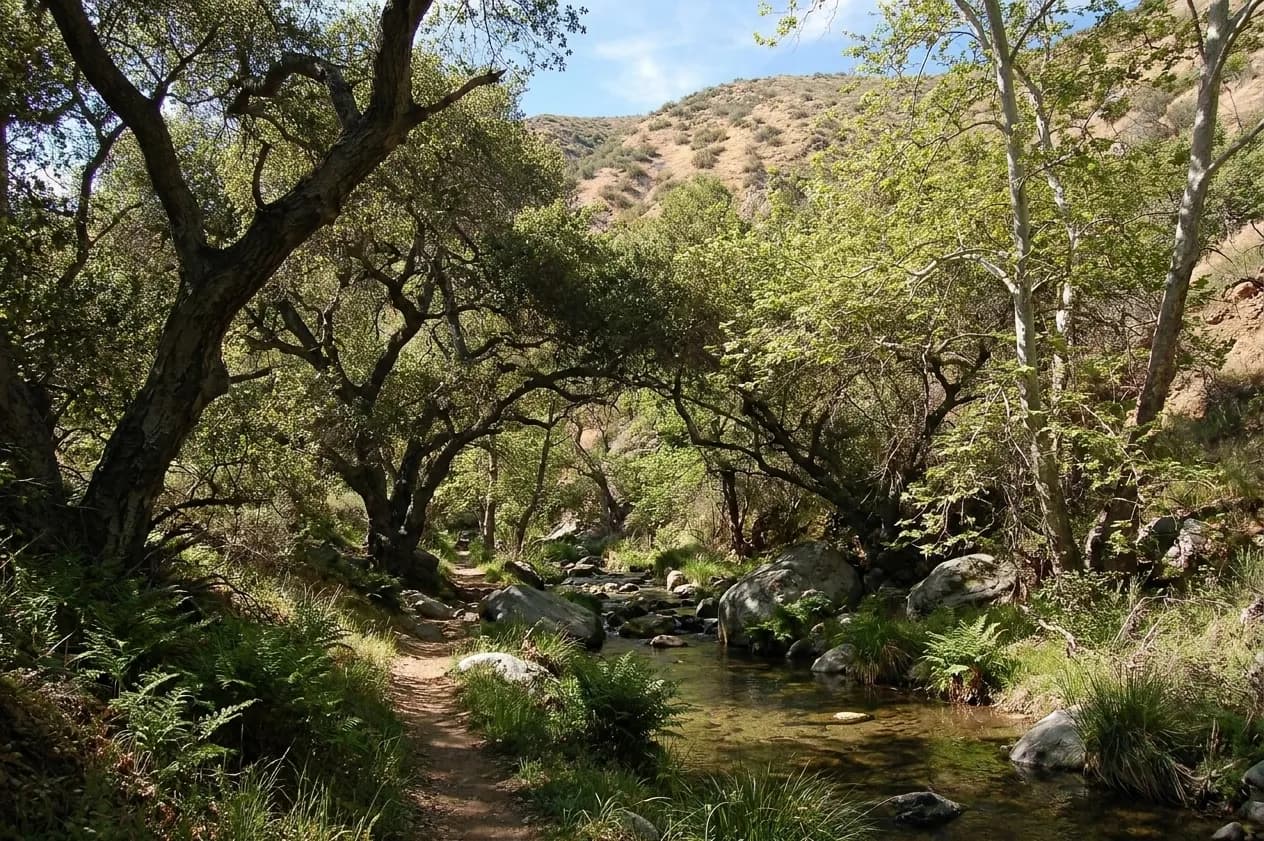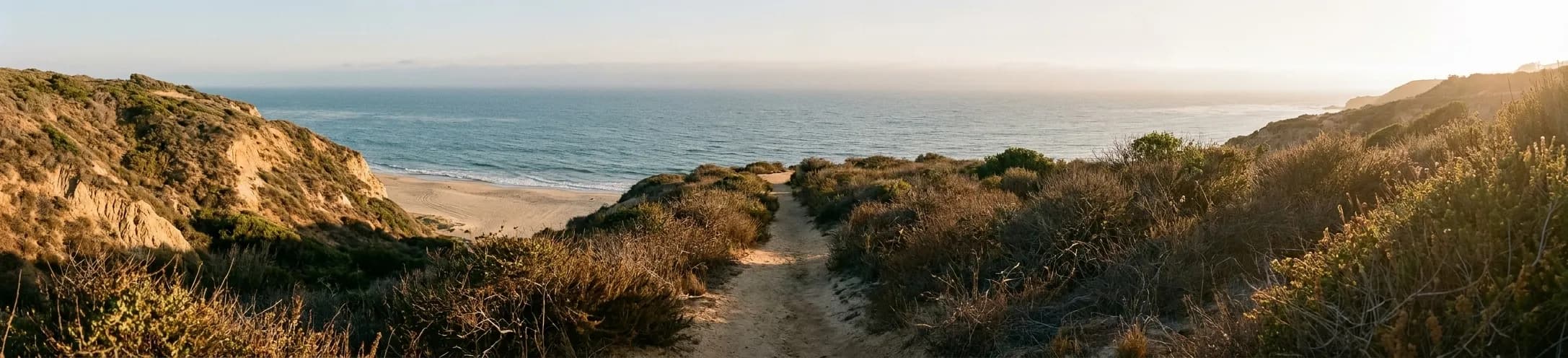
Everyone who searches for a quiet beach near me around Los Angeles is really asking the same two questions: where can I park, and how many people will be there when I arrive. Santa Monica, Venice and Manhattan Beach absorb most of the county's beach traffic because they are easy to reach, have real parking structures, and sit at the end of well-known roads. Every quiet beach in the region is quiet for the opposite reason — a small lot, a long stair, a poor road, or a stretch of coast that requires walking away from where you left the car.
A quiet beach is really a parking problem with a nice view attached. Tell Karpo when you want to go and which direction you can drive, and it will work out which stretch is reachable, where the lot fills by, and whether the marine layer is going to burn off.
The three kinds of quiet
The first kind is geometric: coves and pockets separated by headlands, mostly along the Palos Verdes peninsula and the Malibu coast, where the beach only exists at certain tides and the access is a stair or a trail. These are the quietest and the most conditional — check the tide before you commit, because a cove that is beautiful at low water can be gone entirely at high.
The second is distance: the county coast north of Malibu and south past the Palos Verdes bluffs stays empty simply because it is a long drive from where people live. The third is timing, which is free and works everywhere. The same beach that is unbearable at 1 p.m. on a Saturday is nearly empty at 8 a.m., and empty again after five when the day crowd leaves and the light gets good.
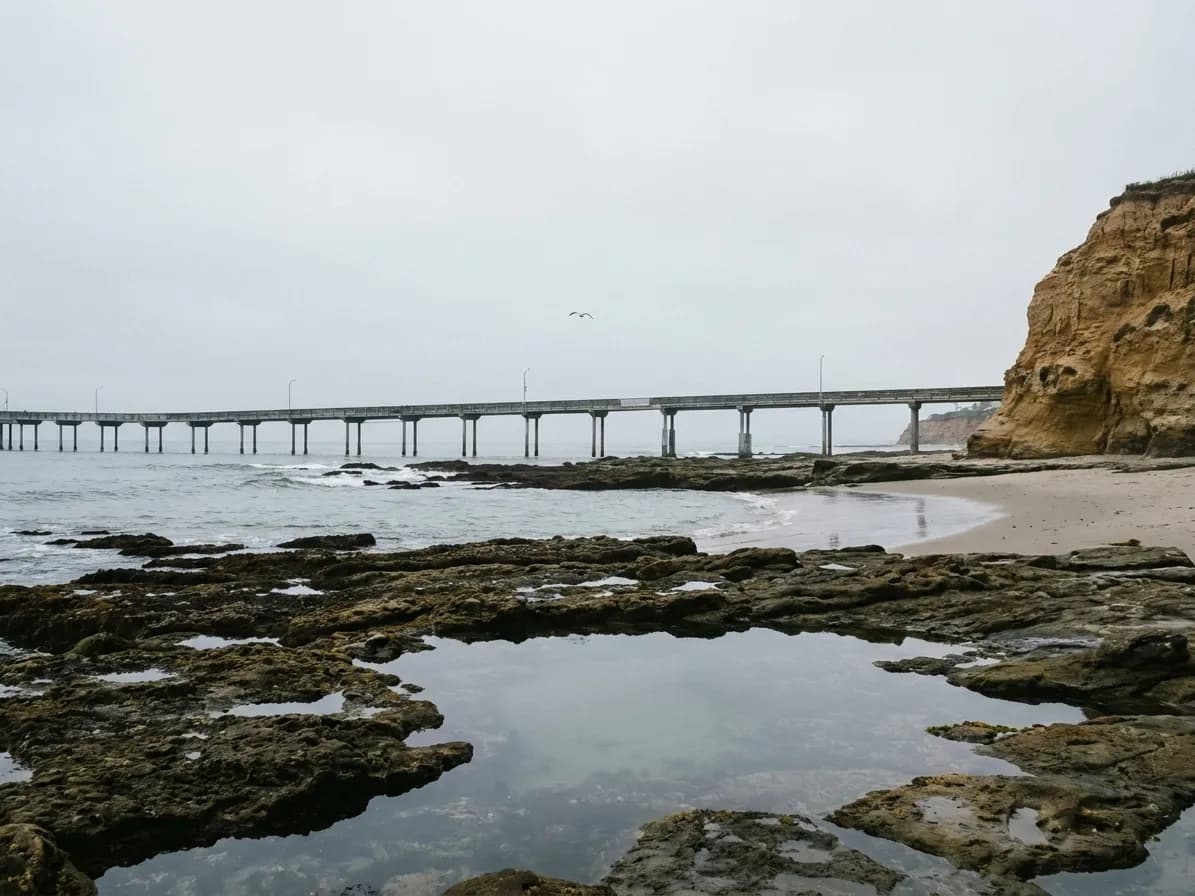
Parking is the actual constraint
Small lots along the Los Angeles County coast fill early on warm weekends and stay full, and the roadside alternatives are heavily enforced. Malibu in particular has a long history of confusing signage around public access, and the practical result is that people give up and drive on. It is worth knowing that beach access below the mean high tide line is public in California regardless of what a sign implies, and that the California Coastal Commission maintains public accessway listings — but also that arguing about it on a Saturday afternoon is a poor use of a beach day.
The workable strategy is simple: arrive before ten or after four, have a second beach in mind, and prefer stretches with a state or county lot over ones that depend on street parking. Paying eight or twelve dollars to park is almost always cheaper than the citation and much cheaper than the hour of circling.
Fog, wind and the actual weather
The coastal weather here is not the weather in the city. A marine layer can sit on the beach until early afternoon while it is bright and hot five miles inland, and the afternoon onshore wind picks up reliably in the spring. That is why the local rhythm is late: locals go to the beach at four when the layer has burned off and the wind is dropping, not at eleven.
Water temperature is the other thing visitors get wrong. Southern California water is cold most of the year and only briefly comfortable without a wetsuit, usually late summer into early autumn. September and October are the best beach months in the region by a wide margin — warm water, thin crowds, and the marine layer mostly gone.
What to bring to a beach with nothing on it
The trade for quiet is infrastructure. Many of the empty stretches have no restrooms, no lifeguard tower outside peak season, no shade and no water. That means bringing your own shade, more water than seems necessary, and shoes you can walk a rocky shoreline in. It also means paying attention: an unguarded beach with a shore break and a rip is a genuinely different proposition from a staffed one, and the rip current advice — swim parallel to shore rather than against it — is worth knowing before you need it.
Take the rubbish out with you, including the things that blow away. The reason these stretches stay pleasant is that very few people are on them, and the ones who are tend to leave them exactly as they found them.
The move that works every time
If you want one reliable strategy rather than a list of places: pick any well-known beach, park at the far end of it, and walk twenty minutes along the sand away from the access point. Crowd density on almost every Los Angeles beach drops sharply within a few hundred metres of the parking, because the great majority of people set up within sight of where they arrived.
That single move gets you eighty percent of the quiet with none of the driving, and it works on a Saturday in August when every actual hidden beach in the county is already full.
Tags: #LosAngeles #LABeaches #QuietBeach #BeachNearMe #Malibu #PalosVerdes #SoCalCoast #TidePools #WeekendPlans #BeachDay #LAOutdoors #CaliforniaCoast #MarineLayer #LALife
Sources consulted: parks.ca.gov · beaches.lacounty.gov · weather.gov
All trademarks are the property of their respective owners.
Ask Karpo first
Tides, marine-layer timing and which lots have already filled are the three things that decide a beach day, and all three change hour by hour. Ask Karpo what the coastal forecast looks like for the afternoon you have in mind, which access points still have parking, and how long the drive really takes — it answers in iMessage before you get in the car.