 Where to Eat Near Penn Station That Isn't a Chain
US Open 2026
Qinwen Zheng’s Aggressive Baseline Game Fits New York’s Pace
If Qinwen Zheng appears in New York, her serve-plus-forehand patterns and Olympic-champion confidence could make her a compelling hard-court study.
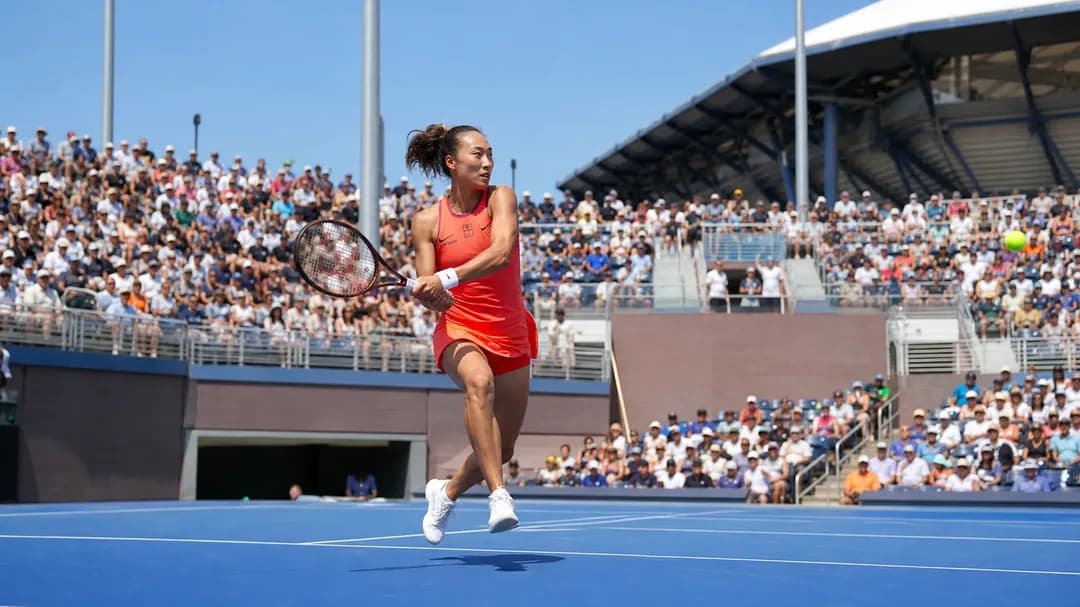
Qinwen Zheng is a confirmed 2024 Olympic women’s singles gold medalist, and the clearest on-court description of her game is direct: she plays aggressive baseline tennis built around a strong serve. Everything about a possible New York storyline should remain conditional, because participation, seeding, draw placement, opponents, and results are not facts to assume. Still, for fans who enjoy hard-court tactics, Zheng’s style is easy to study. On a quick outdoor court, the key question is not simply whether she can hit hard enough to overpower opponents. It is whether she can create the first attacking ball, hold court position after that strike, and manage the emotional changes that can arrive quickly in a loud stadium setting.
Text Karpo Now: Tell us what matters most for Qinwen Zheng s Aggressive Baseline Game, and Karpo can turn current US Open updates into a practical plan before you go.
Serve First Strikes
A strong serve matters most when it does more than win free points. For an aggressive baseliner, the serve is also a way to control the first shape of the rally. If Zheng is serving well, the ball after the serve can become the real weapon: a forehand into open space, a backhand taken early, or a heavy drive through the middle that denies the returner an angle. Fans should watch direction as much as speed. A wide serve can pull the returner off court and open the next shot. A body serve can jam the swing. A serve up the T can reduce angles and let the server attack from balance.
The risk is that aggressive patterns become predictable if the first-serve percentage drops or if second serves sit up. On hard courts, a returner who reads the location and blocks deep can make the point neutral quickly. That is where variety becomes practical rather than decorative. Mixing targets, using body serves under pressure, and choosing locations that fit the score can help an attacking player keep command without overhitting. If Zheng appears in New York, the serve-plus-one exchange would be one of the cleanest indicators of whether her baseline aggression is controlling the match or being rushed.
- After a wide serve, watch whether the next shot goes behind the moving returner or into the open court.
- On second-serve points, notice whether the return lands deep enough to stop immediate offense.
- In tight games, track whether serve location changes or becomes easier for the returner to anticipate.
Return Positioning
The return game is where aggressive baseline tennis has to be disciplined. A player who wants to attack cannot swing freely at every serve, because a missed return gives away pressure too cheaply. The best attacking return patterns often start with depth. A deep return through the center can be as valuable as a flashy angle because it pins the server and removes the easy first forehand. Against a powerful server, the practical choice may be to block or drive the ball deep before looking for the first full cut.
Return position also changes the geometry. Standing closer takes time away but raises the difficulty of contact. Standing deeper creates more reaction time but gives the server more court to defend. Against a kick serve, a player may decide whether to step in before the ball jumps or retreat and strike from a higher contact point. Fans should not judge the return only by winners. A solid return that starts a neutral rally can be a tactical success, especially if the returner then uses footwork to gain control by the third or fourth shot.
Movement And Court Geometry
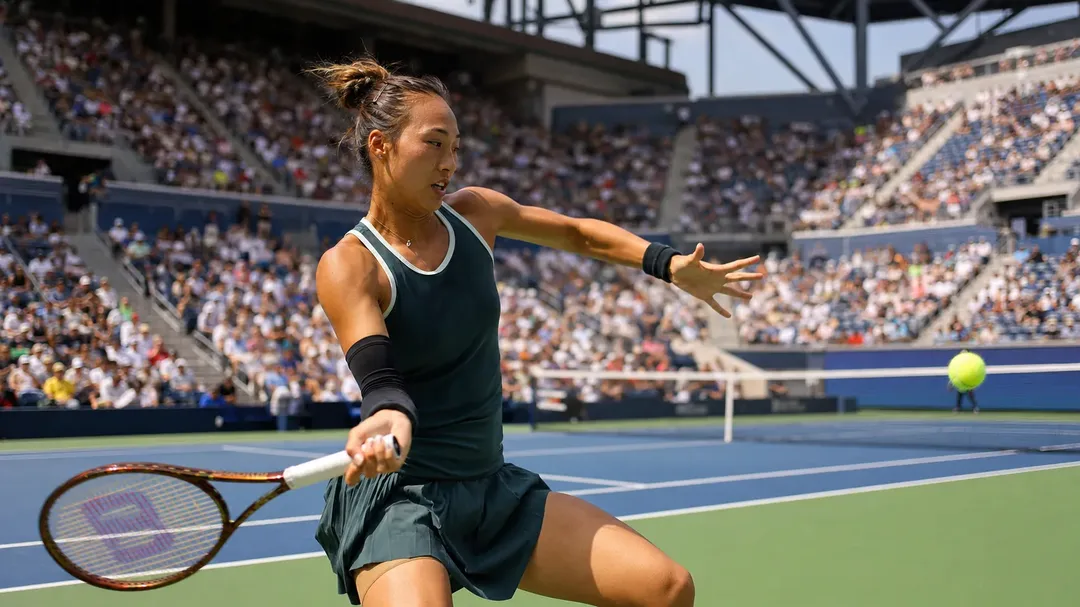
Aggressive baseline players do not simply hit hard; they try to make the court feel smaller for themselves and larger for opponents. The basic geometry is familiar: hit crosscourt to gain net clearance and court length, change down the line when balance allows, and use depth to prevent the opponent from stepping forward. On lively hard courts, the ball can reward early contact. That favors players who set their feet quickly, take the ball before it climbs too high, and redirect pace without losing shape.
Zheng’s aggressive profile makes recovery steps especially important. After a big strike, the point is not over unless the ball is unreachable. The hitter still has to recover toward the correct defensive lane, not automatically back to the exact center. If she attacks inside-out with a forehand, for example, she may need to guard the open backhand corner or be ready for the opponent’s down-the-line counter. If she drives through the middle, she may be choosing a safer target that limits the opponent’s angle and lets her prepare for the next ball.
This is where live viewing can help. Television often follows the ball; a stadium view lets fans see positioning before the shot. Watch how early Zheng, if competing, identifies short balls. Watch whether she moves forward after creating a weak reply or stays pinned near the baseline. The difference between controlled aggression and impatience is often one step. A player who arrives balanced can hit hard with margin. A player who arrives late may need to go for too much.
Pressure In New York
New York adds a different kind of speed. The points are still played inside the lines, but sound, crowd movement, late-day shadows, and emotional surges can make matches feel faster. For an Olympic gold medalist, attention is part of the setting, yet each tournament and each match creates its own pressure. The useful fan question is not whether a player is fearless. It is how pressure changes shot selection. Does the first serve stay purposeful? Does the returner keep aiming deep instead of chasing instant winners? Does the baseliner accept one more rally ball when the lower-risk option is smarter?
Momentum management is especially visible in service games after long rallies or missed chances. Aggressive players can respond to frustration by swinging bigger, but the more sustainable answer is often target discipline. A heavy ball to a large crosscourt window can reset the point. A body serve can prevent a clean return swing. A deep middle ball can take away the opponent’s favorite angle. None of those choices looks as dramatic as a line winner, but they often decide whether a player survives the tense stretch that comes before the highlight.
Practical Notes
If Zheng is in a match you are following, build your viewing around patterns rather than isolated shots. One forehand winner tells you she can finish a point. Repeatedly earning that forehand from serve, return, and rally positions tells you her structure is working. Likewise, one double fault or missed return does not define a performance. The more useful clue is whether errors cluster in the same pattern: late contact on the run, second-serve pressure, overplaying the down-the-line change, or failing to recover after an attacking ball.
- Track the first four shots: serve, return, first groundstroke, and response.
- Notice whether aggression comes from balanced court position or emergency swings.
- Watch depth before watching speed; deep balls often create the next opening.
- Compare choices at 30-all, deuce, or break point with choices in lower-pressure points.
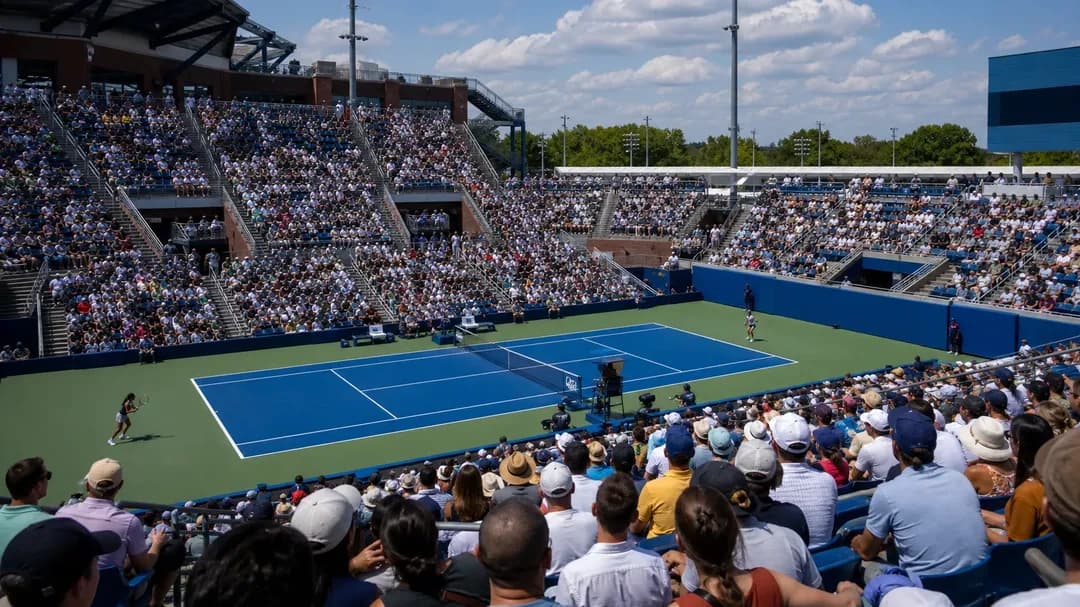
For planning, treat all player-specific viewing as conditional until official player lists and daily schedules are posted by the tournament. Check the US Open player index and event schedule close to your visit, then recheck on the day you attend because court assignments and timing can change. If you want to study baseline tactics, seats behind either baseline usually make serve location, return depth, and recovery patterns easiest to read. Sideline views are better for judging net clearance and how sharply the ball pulls a player off court. Bring sun protection for day sessions, allow extra time for security and grounds movement, and keep a flexible plan.
Tags: #USOpen2026 #Tennis #GrandSlam #NewYorkTennis #ArthurAsheStadium #FlushingMeadows #USOpenGuide #TennisFans #SportsTravel #HardCourt #NewYork #KarpoFinds
Sources consulted: wtatennis.com — Official reference · usopen.org — Official reference · usopen.org — Official reference
All trademarks are the property of their respective owners.
Ask Karpo first
Want to know what is confirmed, when to show up, and how to make qinwen zheng s aggressive baseline game work for your day? Ask Karpo for current US Open updates, a respectful fan plan, and a live route around Flushing Meadows.
Ask Karpo for more information.
Keep reading
- Where to Eat Near Penn Station That Isn't a Chain
 Andytown Coffee in the Outer Sunset: The Snowy Plover Explained
- Best Things to Do in Chicago: What the City Gives Away