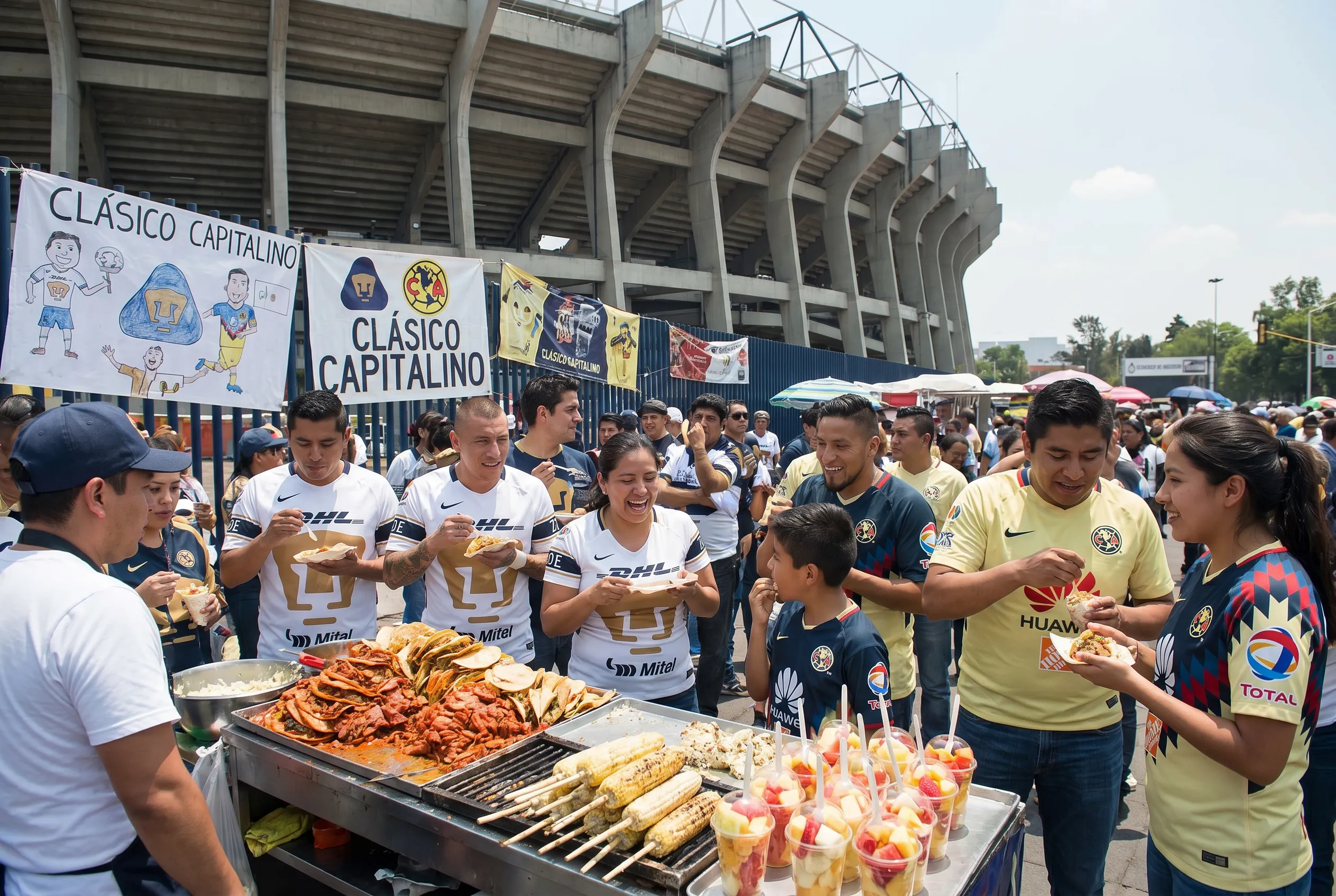
When Pumas UNAM faces Club América, Mexico City divides along lines deeper than football. The rivalry between the university team from the south and the commercial giant from the north represents class, identity, and two visions of Mexican football. For visitors arriving for World Cup 2026 matches, understanding this clásico capitalino offers insight into the city's soul—and practical guidance for enjoying match days without stumbling into cultural minefields. The Pumas - América fixture consistently ranks among Liga MX's most-watched encounters, and the atmosphere around Estadio Olímpico Universitario and Estadio Azteca reaches intensity levels that surprise even seasoned football travelers.
Planning to experience a Pumas-América match or watch party during your Mexico City visit? Text Karpo for a personalized match-day route that includes pre-game food spots favored by each fanbase, safe viewing locations, and transit timing that accounts for security cordons. We'll map the cultural geography so you can enjoy the spectacle while respecting the rivalry's unwritten rules.
The Identity Split Behind the Rivalry
Pumas UNAM represents Mexico's national university, drawing support from students, alumni, and working-class neighborhoods across southern Mexico City. Founded in 1954, the club carries an underdog identity despite seven league titles, positioning itself as the people's team against corporate football. The blue-and-gold colors fly in Coyoacán, Tlalpan, and university districts where fans view their club as authentic Mexico—educated, scrappy, and uncorrupted by commercial interests. This self-image shapes everything from chant culture to the informal dress code in Estadio Olímpico's stands.
Club América, founded in 1916, claims the largest fanbase in Mexico and embraces its role as the establishment power. Thirteen league titles and corporate backing from Televisa have made Las Águilas the team casual fans support and devoted football followers love to hate. América draws from northern Mexico City's middle and upper classes, though its commercial success has built a nationwide following. The yellow-and-blue jersey represents aspirational Mexico—successful, modern, and unapologetic about winning. This contrast creates a rivalry that transcends sport, touching questions of authenticity, class, and what Mexican football should represent.
Stadium Geography and Neighborhood Dynamics
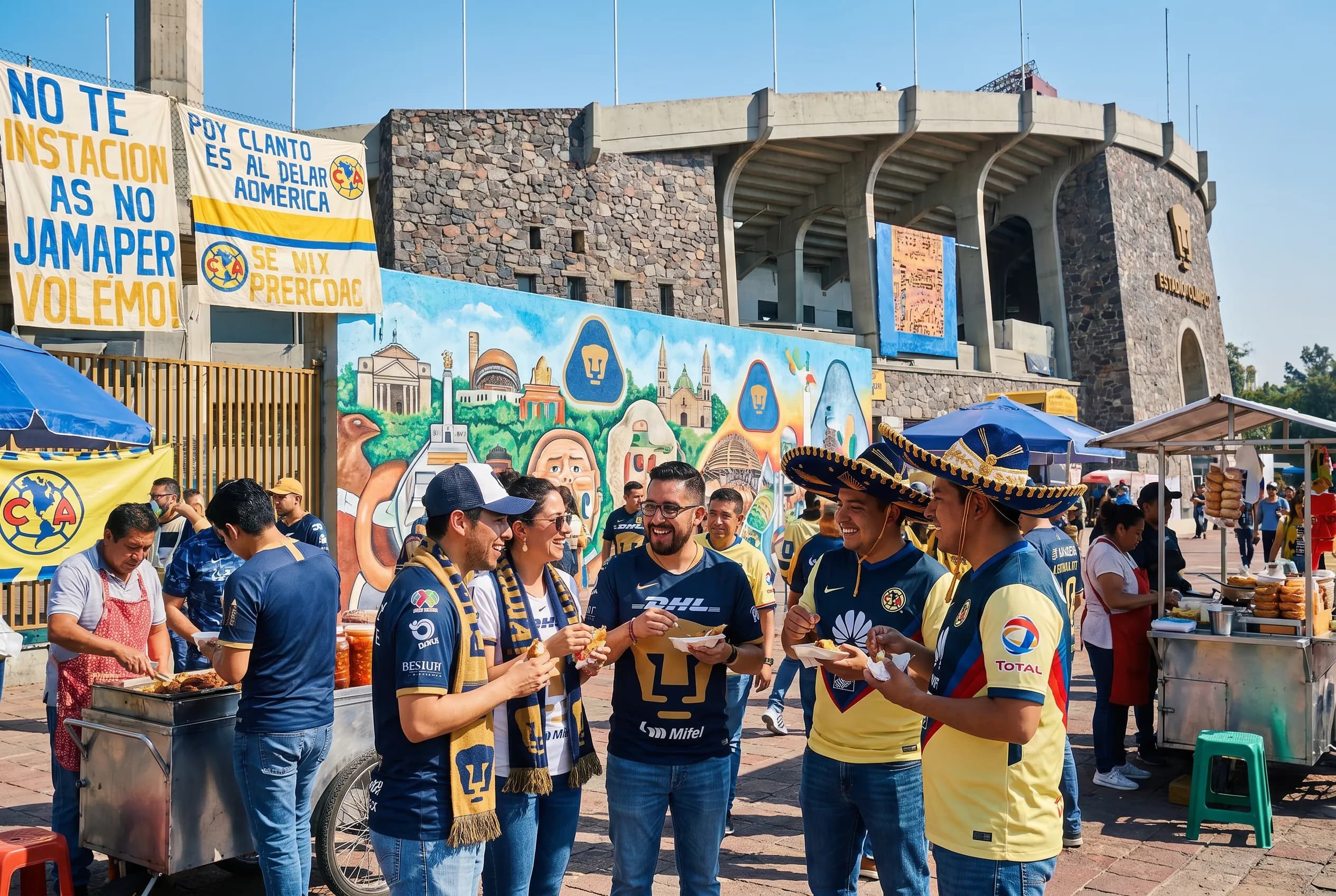
Estadio Olímpico Universitario sits within Ciudad Universitaria, the sprawling UNAM campus in southern Coyoacán. The 1968 Olympic venue holds 63,000 and features Diego Rivera's massive stone mural wrapping the exterior. Match days transform the campus into a festival zone where students and families gather hours before kickoff. The surrounding neighborhoods—Copilco, Pedregal, Ciudad Universitaria—wear Pumas colors openly, and local taquerías and pulquerías become unofficial fan headquarters. Visitors wearing neutral colors receive warm welcomes; América jerseys invite confrontation.
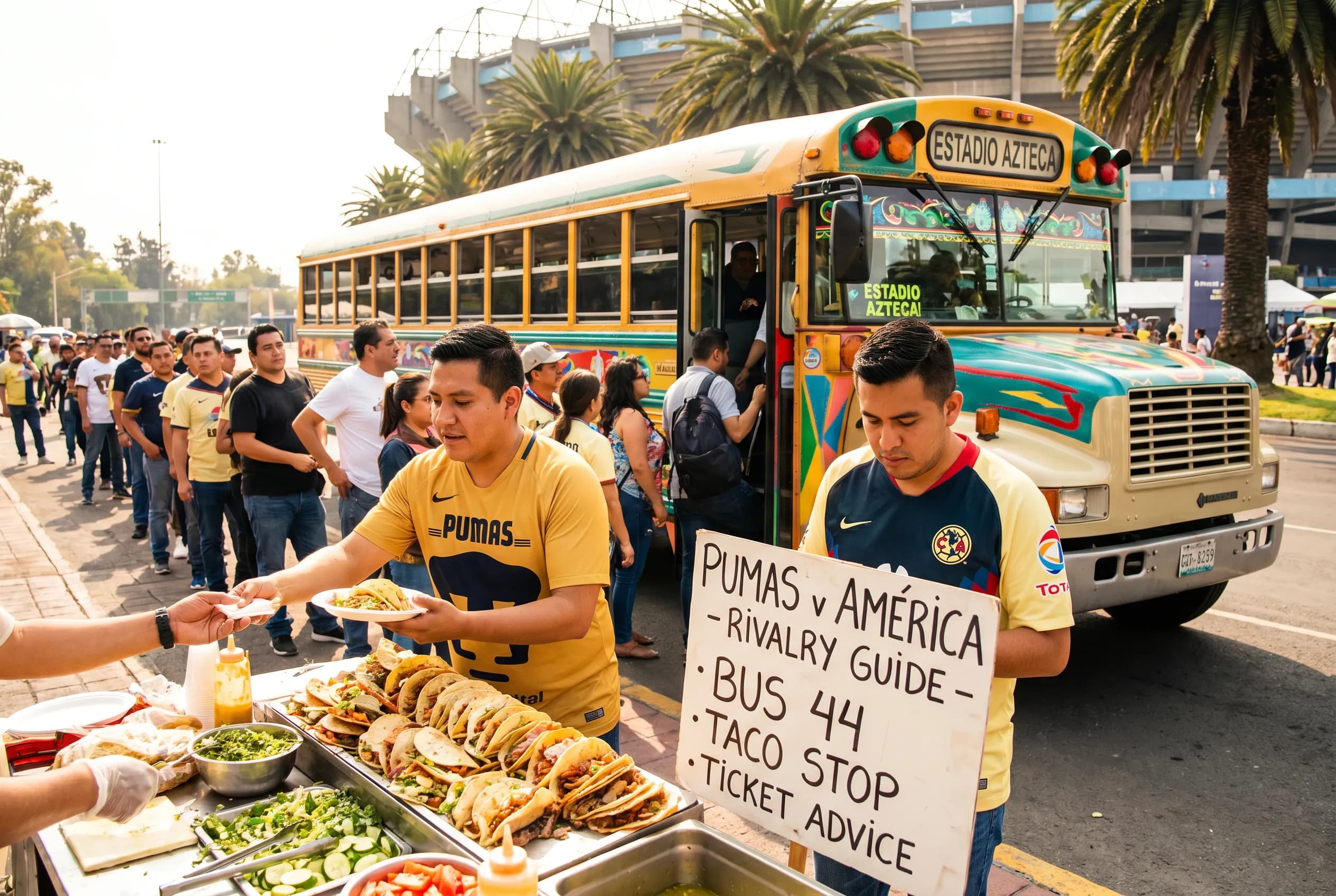
Estadio Azteca, América's home in the Tlalpan borough, is Mexican football's cathedral. The 87,000-capacity venue hosted two World Cup finals and sits in Santa Úrsula, a working-class area that paradoxically houses the establishment club. Match days here draw fans from across the metropolitan area, creating a more diverse but less neighborhood-rooted atmosphere than Pumas games. The stadium district includes the Estadio Azteca metro station on Line 2, making access straightforward but crowded. Security presence increases significantly for Pumas-América fixtures, with separate entry points and staggered exit times to prevent fan mixing.
Visitor Etiquette for Match Days
Neutral visitors should choose their viewing location carefully. Sitting in home sections wearing opposing colors or remaining visibly neutral during goal celebrations can create uncomfortable situations. Purchase tickets through official Liga MX channels rather than street vendors, and arrive early—security screening intensifies for clásico matches. If you're genuinely neutral, business-casual attire in dark colors allows you to observe without declaring allegiance. Avoid wearing yellow, blue, or gold unless you're prepared to be identified with one side.
Respect the rivalry's intensity without participating in chants you don't understand. Many songs contain references that sound playful but carry sharp edges about class, education, and authenticity. Photographing fans is acceptable in public spaces, but ask permission before close-ups, especially of families with children. The rivalry produces spectacular visual culture—tifos, smoke displays, coordinated chants—that visitors can appreciate respectfully. If you're attending with local friends, follow their lead on when to celebrate, when to stay quiet, and when it's time to leave the area. The post-match period, especially after América victories at Olímpico or Pumas wins at Azteca, requires situational awareness as fans exit.
Watch Party Culture Across the City
Mexico City's cantinas, sports bars, and public plazas become partisan territory during Pumas-América matches. Coyoacán's Plaza Hidalgo and surrounding bars fill with Pumas supporters, creating a street-party atmosphere for televised away games. The university neighborhoods offer the safest environment for visitors wanting to experience Pumas culture—the crowd skews younger, more international students attend, and the celebration focuses on football rather than confrontation. Pulquería Los Insurgentes and the bars along Avenida Universidad become Pumas strongholds where visitors receive friendly explanations of chants and history.
América watch parties concentrate in Polanco, Condesa, and Roma Norte, where the club's more affluent fanbase gathers in upscale sports bars. These venues offer a different experience—better food, craft beer, and a crowd that includes corporate groups and families. The atmosphere is intense but less raw than university-district gatherings. For neutral visitors, these northern neighborhoods provide easier exit routes and less pressure to demonstrate allegiance. Downtown's Centro Histórico hosts mixed crowds in larger venues, though even here, bars develop reputations as Pumas or América territory. Ask hotel concierges or Karpo for current recommendations, as venue allegiances can shift with ownership changes.
Transit and Safety Considerations
Metro lines become football corridors on match days, with Line 3 carrying Pumas fans south to Universidad station and Line 2 delivering América supporters to Estadio Azteca. Avoid wearing rival colors on these routes, and expect crowding that exceeds normal rush-hour levels. The Mexico City Metro restricts large bags and backpacks during high-attendance events, so plan accordingly. Metrobús Line 1 offers an alternative for reaching Azteca, though it experiences similar crowding. Many visitors find ride-sharing services worth the premium for door-to-door service that avoids fan mixing points.
Security presence around both stadiums increases for clásico matches, with police establishing perimeters several blocks out. These cordons can affect restaurant access and walking routes, so build extra time into your schedule. Post-match, authorities often hold visiting fans inside the stadium for 30 minutes to allow home supporters to disperse. If you're in the area but not attending, avoid the immediate stadium perimeter from two hours before kickoff until one hour after the final whistle. The rivalry produces passionate celebration, not widespread violence, but crowd density and emotion create situations where visitors can feel uncomfortable without proper preparation.
Cultural Context for World Cup Visitors
World Cup 2026 will bring football fans to Mexico City who understand derby culture from their own countries but may not grasp the specific contours of Pumas-América. Unlike rivalries rooted purely in geography or religion, this clásico reflects Mexico's ongoing negotiation between tradition and modernity, public and private, education and commerce. The intensity comes not from ancient grudges but from present-day questions about identity and values. Visitors who recognize these deeper currents will better appreciate why a football match can feel like a referendum on Mexican society itself.
The rivalry also offers a window into chilango culture—the distinctive identity of Mexico City residents. The humor, the wordplay in chants, the visual creativity of supporter displays all reflect the capital's sophisticated, self-aware character. Visitors who approach the clásico with curiosity rather than treating it as exotic spectacle will find locals eager to explain the context, share their own allegiances, and welcome respectful outsiders into the experience. The Pumas-América rivalry isn't a tourist attraction to be consumed but a living cultural expression that visitors can witness and, with proper etiquette, briefly join.
Tags: #WorldCup2026 #MexicoCity #LigaMX #PumasUNAM #ClubAmrica #FootballRivalry #MexicoTravel #SportsCulture
Sources consulted: Liga MX · Mexico City tourism
All trademarks are the property of their respective owners.
Ask Karpo First
Ready to experience Mexico City football culture during your World Cup visit? Text Karpo for a customized plan that matches your comfort level with the right viewing location, explains the cultural context you'll encounter, and maps safe routes to and from match-day hotspots. We'll help you understand what you're seeing so the Pumas-América rivalry becomes a highlight of your Mexico City experience rather than a confusing spectacle.