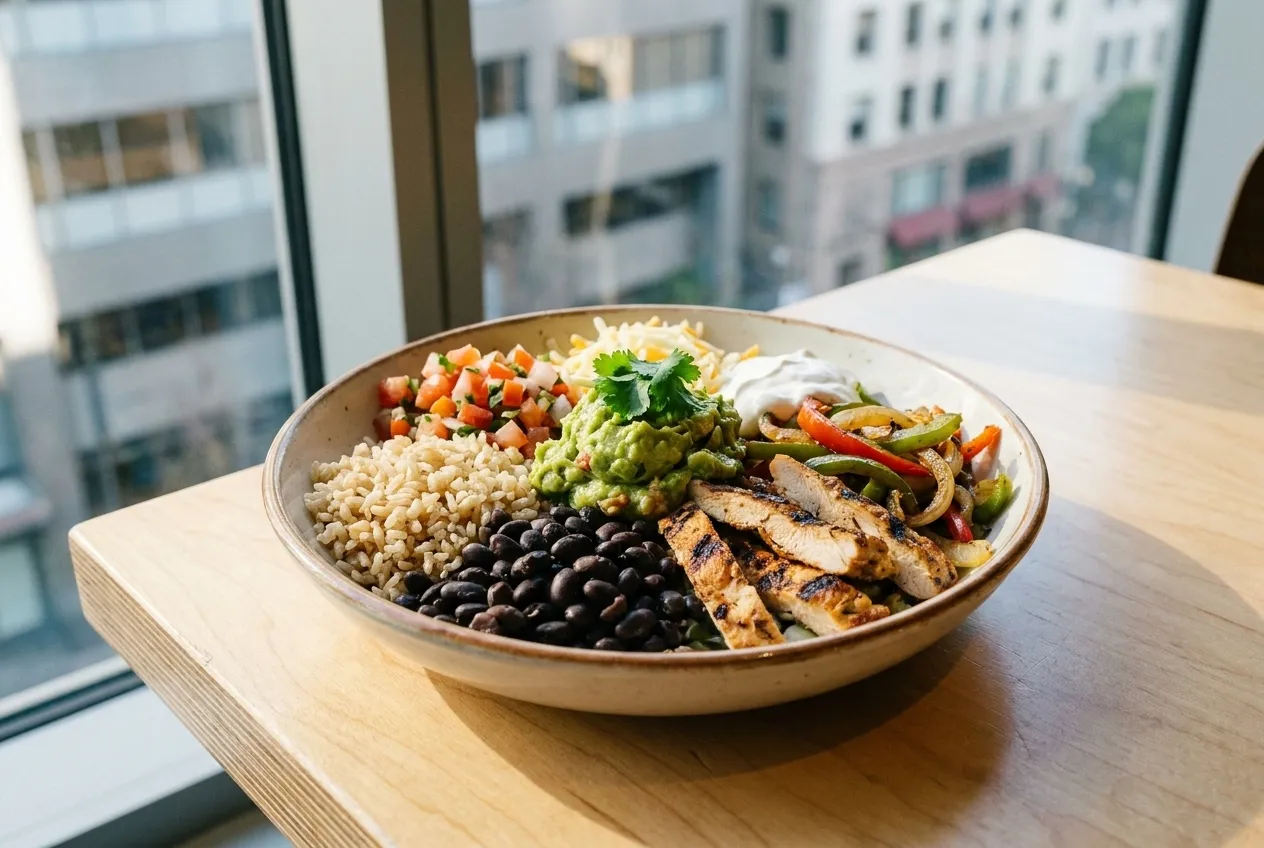
Protein salad has become a menu word rather than a description, which is a problem if you are ordering one for an actual reason. A bowl described as high-protein routinely contains eighty or ninety grams of grilled chicken — roughly twenty grams of protein — sitting on greens, which for anyone who has just done a serious session is a snack with ambitions. San Francisco is better than most cities for this, partly because a large number of counters here publish nutritional information and partly because the city's fitness culture has created genuine demand for it. But you still have to order deliberately, and the ordering is where most of it goes wrong.
Karpo can find San Francisco counters with genuinely high-protein bowls near you, tell you what the add-on costs, and how long the queue is.
What a real portion actually looks like
A standard restaurant protein portion is around a hundred to a hundred and forty grams of cooked meat, which is roughly twenty-five to thirty-five grams of protein. Most guidance for someone training seriously puts a post-session meal target well above that — commonly thirty to forty grams as a minimum, more for larger people.
So the single most useful order at almost any counter is a double protein. It typically costs four to seven dollars, it roughly doubles the useful content of the bowl, and it is the difference between a salad that works as a post-workout meal and one that does not. Everything else — the greens, the vegetables, the dressing — is a rounding error by comparison.
Counters that publish numbers, and why that matters
A meaningful number of San Francisco counters and chains publish full nutritional information, either on the menu board or through their app. Where that exists, use it once, work out which two or three builds hit your target, and then order those permanently rather than recalculating.
Where it does not exist, ask what the protein portion weighs. Staff at a counter know, because they portion it with a scoop or a scale. A place that cannot answer is a place where the portion varies by whoever is on shift, which is worth knowing in itself.
The cheap protein sources people skip
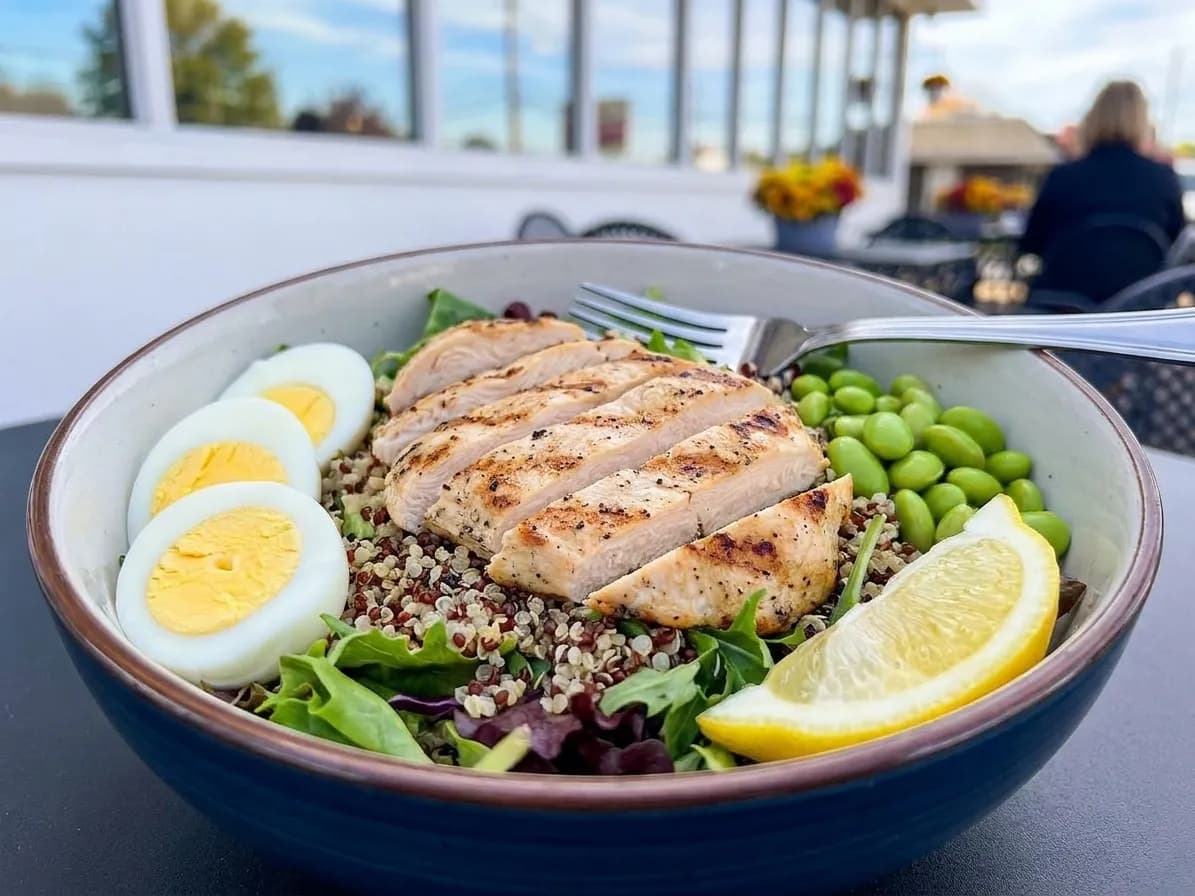
Chicken and steak are the expensive add-ons. The efficient sources are usually cheaper and often free or low-cost as standard toppings: chickpeas, black beans, lentils, edamame, hard-boiled eggs, tofu and tempeh, plus seeds and nuts for a smaller contribution.
Two eggs plus a scoop of chickpeas plus seeds adds a substantial amount of protein at a fraction of the cost of a second chicken portion, and it does it while adding texture rather than more of the same thing. The best-value high-protein bowl in this city is usually a base with one paid protein and two or three of the cheap ones layered on top.
Timing after a session matters less than the internet suggests. The idea that protein has to be consumed within a narrow window after training has been substantially walked back by more recent work, and total daily intake matters far more than the clock. Which is freeing: eating properly an hour later at a better counter beats a rushed inadequate bowl immediately afterwards.
Timing around a class
The gyms and studios in this city run classes on the hour and the half hour, which means the counters near them get a queue within about ten minutes of a class ending. If you are going straight from a session, order ahead from the changing room and collect on the way past — most counters have app ordering and a pickup shelf, and it turns a fifteen-minute wait into thirty seconds.
If you would rather queue, going five minutes before the class-end wave rather than five minutes after makes a substantial difference. The counters near the larger studios in SoMa, the Marina and the Mission are the most affected by this.
Dressing, and the calorie question
The thing most people get backwards is worrying about dressing while under-eating protein. A standard portion of vinaigrette is a modest number of calories and is doing useful work on satiety and on making vegetables edible; the actual issue in most bowls is the creamy dressings applied in volume, which can add several hundred.
The sensible position is to take a normal amount of an oil-based dressing and stop thinking about it, or to take it on the side if you are eating later. Neither is worth much attention compared with getting the protein portion right, which is where the entire nutritional value of the decision sits.
Where to look in the city
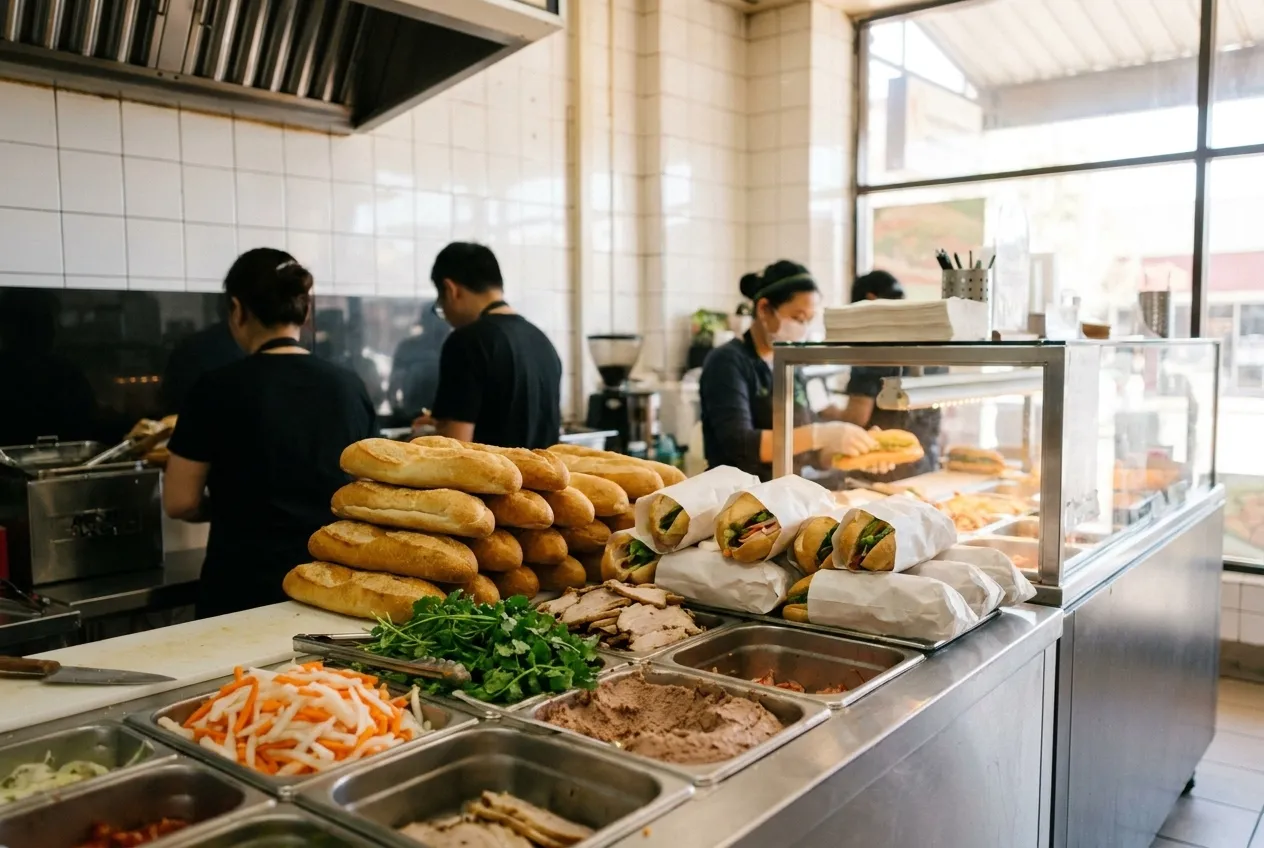
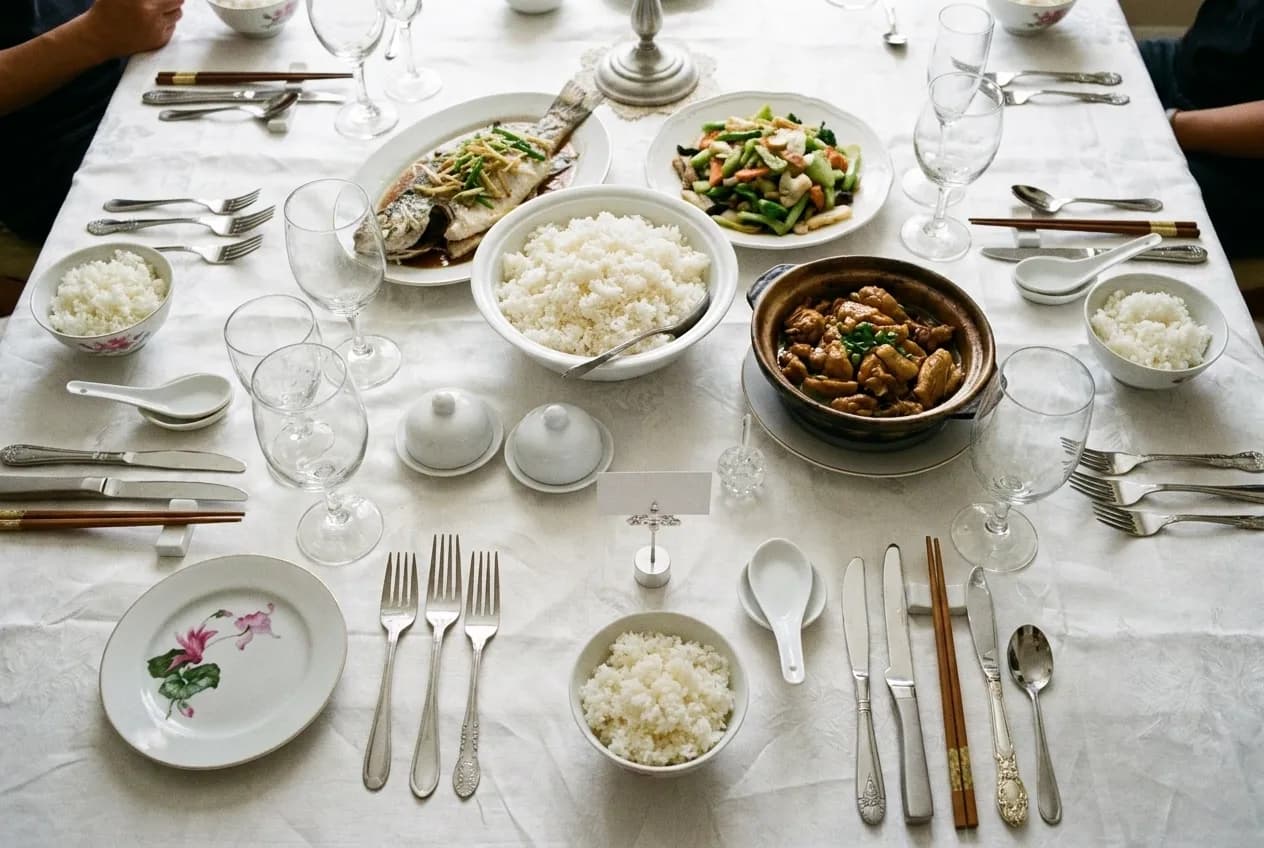
SoMa and the Financial District have the highest density of counters with published macros, driven by the office and gym trade. The Marina and Cow Hollow have the highest concentration of fitness-adjacent food generally. The Mission has the best value for the same thing, and Chinatown and the Richmond have excellent high-protein lunches that nobody files under salad at all.
That last point is worth acting on. A bowl of pho with extra meat, a Korean rice bowl, or a plate of Chinese roast meat with vegetables all deliver more protein than most salads at a lower price, and they are hot, which after a session in a foggy city is not a small consideration.
One final point on cost. A double-protein bowl at a San Francisco counter is a genuinely expensive daily habit once the surcharge is added, and for anyone eating this way five days a week the arithmetic is stark. Cooking a batch of protein at home and buying only the vegetables and the base is a fraction of the price, and this is one of the few food categories where the home version is genuinely almost as good.
Tags: #SFFood #SaladNearMe #HighProtein #PostWorkout #SanFrancisco #SoMa #Marina #HealthyEating #LunchBreak #MissionDistrict #SFEats #Fitness #FoodGuide #BackToSchool
Please drink responsibly. Must be of legal drinking age.
All trademarks are the property of their respective owners.
Ask Karpo first
Want to know which San Francisco counters near you do a genuinely high-protein bowl, what the double portion costs, and how long the queue is? Ask Karpo before you leave the gym.