Brooklyn is not supposed to have forests. And yet here one is, tucked into the southwest corner of Prospect Park: thirty-six acres of hemlock and oak groves, wooden footbridges, and a stream that tumbles over stone outcrops in a series of modest waterfalls. The Ravine is Olmsted and Vaux's deliberate illusion, engineered in the 1860s to feel older and wilder than the borough that contains it. Late 2026 finds it quieter than most free things to do in the city, a half-mile loop where the ambient hum of Flatbush traffic dissolves into birdsong and moving water.
The quiet entry
Most visitors stumble into the Ravine from the north, funneled by the park's main pathways. But the entry near Prospect Park Southwest and 16th Street is the quietest access point, a small opening in the foliage that feels like a secret even though it appears on every park map. The trail descends immediately, switching from asphalt to packed earth as the hemlock canopy closes overhead.
Timing matters here. Arrive by 8am on weekends to walk the loop before the mid-morning jogger traffic arrives, when the path is yours and the only interruption is an occasional dog walker navigating the wooden stairs. The air sits cooler in the ravine than on the open meadows above, trapped beneath the trees, scented with damp earth and decaying leaves. By ten o'clock the spell breaks a little—still beautiful, but shared.
Following Ambergill
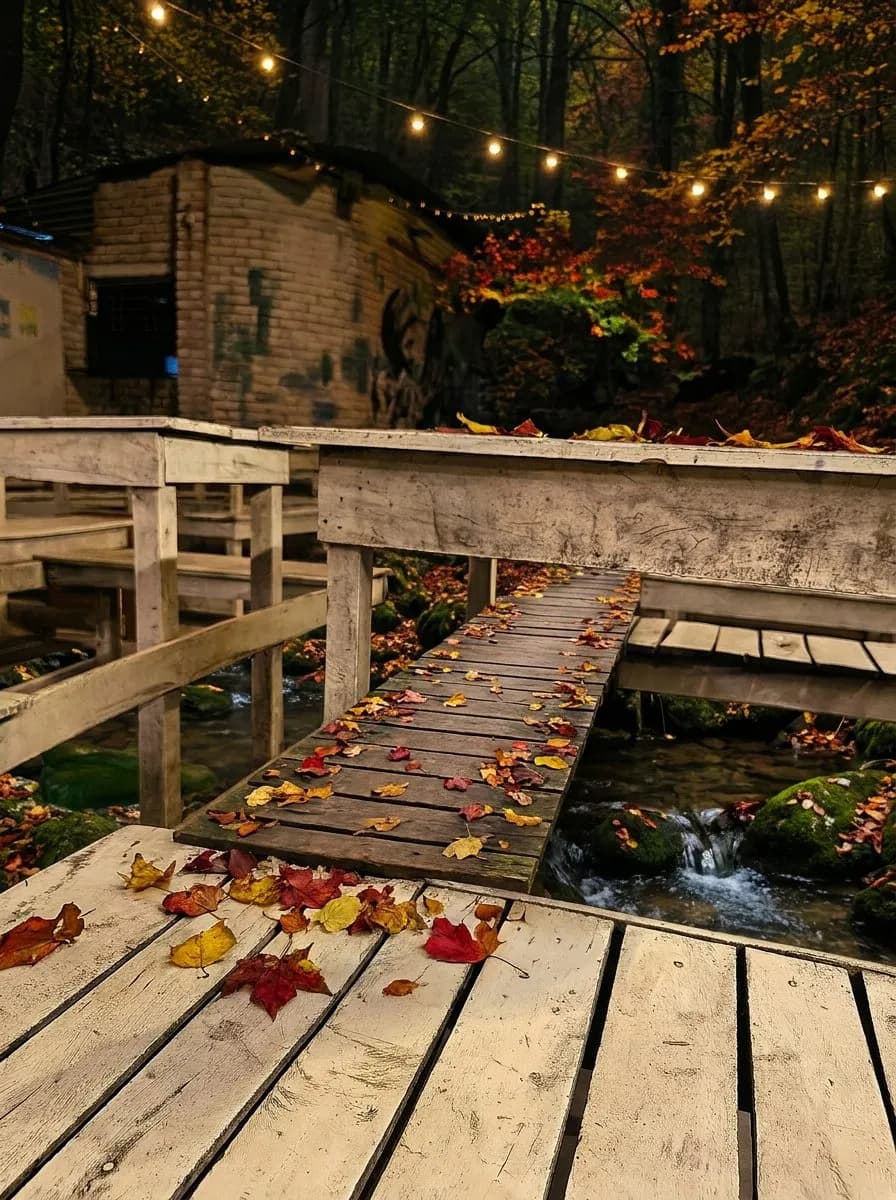
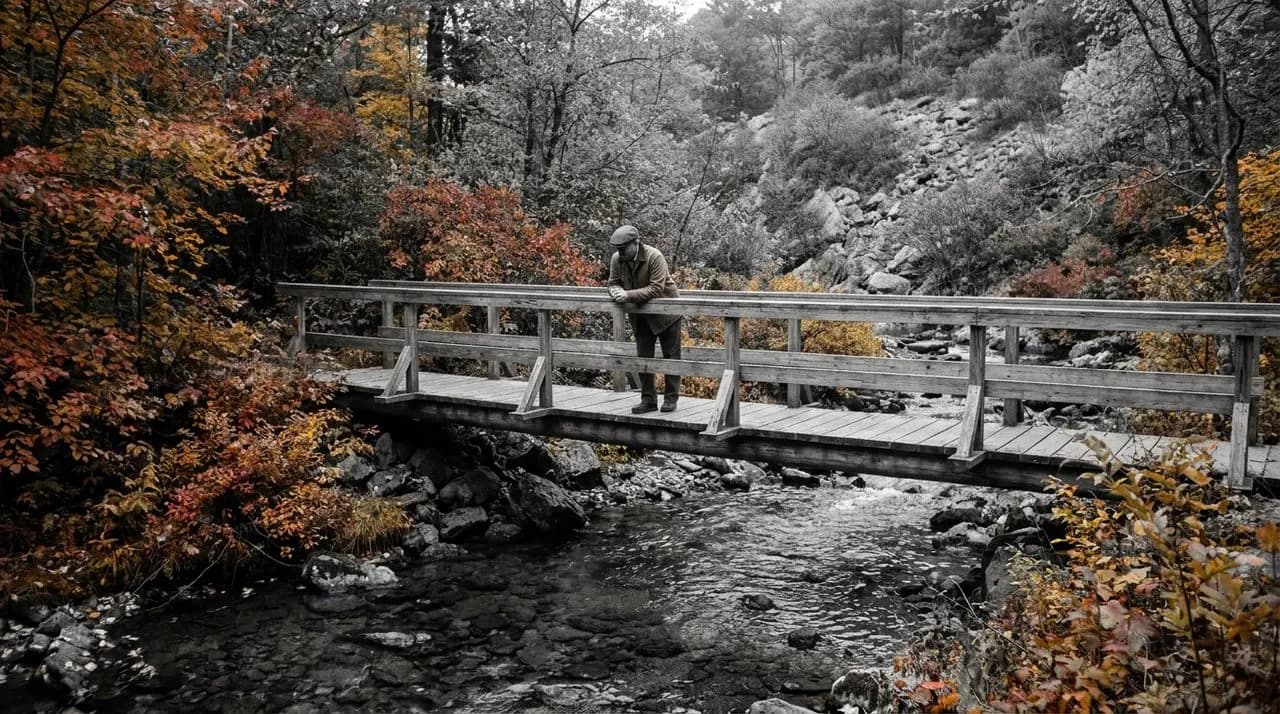
The Ambergill stream is man-made, fed by municipal water and designed to look like it has always been here. It succeeds. The trail hugs the water for most of the loop, crossing and recrossing via wooden footbridges that have been rebuilt and reinforced over the decades but still feel pleasantly provisional. The stream itself is narrow—six feet across at its widest—and shallow enough that you can see the pebbled bottom and the occasional flash of sunfish.
Midway along the trail, a wooden bench faces east, positioned to catch morning light filtering through the hemlock canopy. It's the warmest seat in the ravine before 10am, the one spot where sun breaks through the dense foliage and warms the planks. Locals know it. You'll often find someone there with a thermos and a paperback, claiming the light while it lasts.
The waterfalls after rain
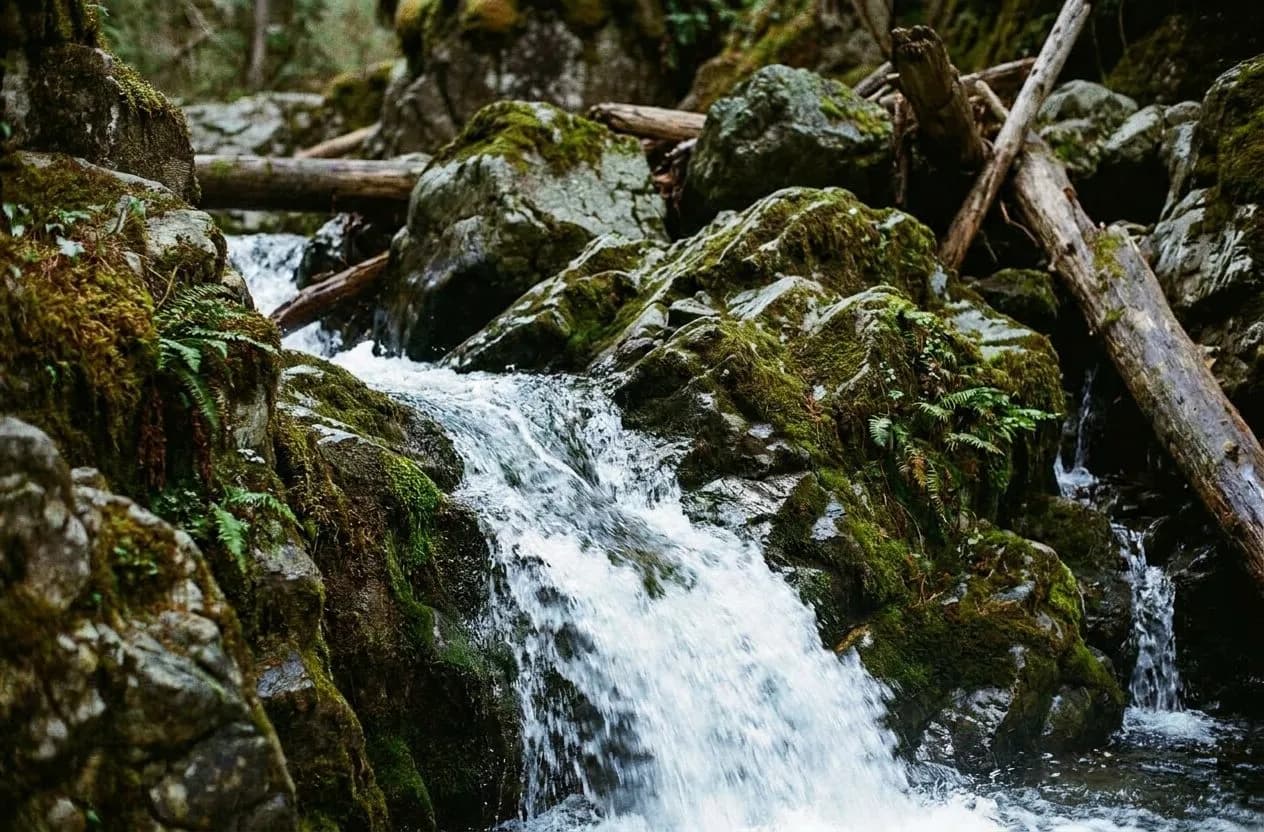
Prospect Park's waterfalls will never rival anything upstate, but they're what the city can offer: modest cascades over layered stone, more energetic than grand. The falls are most dramatic within 48 hours of rainfall, when the stream swells and the sound of moving water fills the ravine. The upper falls near the Nethermead Arches show the strongest flow after storms, a two-tiered drop over schist outcrops that turns genuinely lively when the weather cooperates.
On dry weeks the falls slow to a trickle, still pretty but less insistent. This variability is part of the Ravine's charm—it responds to weather, shifts with the seasons, refuses to be static. Late autumn brings fallen leaves that dam the stream in places, creating temporary pools. Spring runoff clears the channel and speeds the current. The designers built in this responsiveness deliberately, calibrating the stream's gradient and the placement of rocks to amplify whatever rain the sky provides.
The sound and the silence
What surprises first-time visitors most is the quiet. Not silence—the stream provides a constant low murmur, birds call from the canopy, footsteps knock on the wooden bridges—but the absence of urban noise. The Ravine sits in a depression, surrounded by rising land, and the trees and landform together create an acoustic buffer. Traffic on Prospect Park Southwest exists as a distant hum at most, easy to ignore. Sirens don't penetrate. Conversation drops to a murmur.
This acoustic gift is best experienced on the stream-side benches, scattered along the trail wherever the path widens enough to accommodate them. Sit for five minutes and the city recalibrates in your head. You remember that New York contains multitudes, that density and green space coexist, that Olmsted understood something essential about what urban dwellers need. It's a small park performing an outsize service, offering a forest experience without requiring anyone to leave Brooklyn.
Hemlocks and the canopy
The eastern hemlock trees that anchor the Ravine are not native remnants—Olmsted planted them—but they've matured into something close to a naturalistic forest. Their needles carpet the trail, softening footsteps. Their dense evergreen foliage keeps the ravine dim even in summer, a cool refuge when the Nethermead above shimmers with heat. Oak and tulip trees join the mix higher on the slopes, their branches tangling with the hemlocks to create a layered canopy that shifts the light into something dappled and greenish.
The forest floor stays sparse—ferns, skunk cabbage near the stream, a few wildflowers in spring—because the hemlock shade is deep. But the sparseness adds to the sense of walking through a planned landscape, curated rather than wild. Olmsted wanted the illusion of wilderness, not wilderness itself, and the Ravine delivers that paradox beautifully. You feel远 from the city while remaining within it, protected but not isolated.
The loop complete
The full loop runs just over half a mile, manageable in twenty minutes if you walk briskly, better savored in forty-five. The trail climbs out of the ravine near the Vale of Cashmere, emerging into open park where the contrast—sudden sun, wide sky, visible horizon—reminds you what you've just left behind. Most walkers pause here, blinking in the brightness, before looping back down or continuing north into the park's broader pathways.
It's the kind of walk that rewards repetition. The Ravine changes with weather and season but remains fundamentally itself, a pocket forest doing its work quietly. You can fold it into a longer park visit or treat it as the destination. Either way, it offers what Olmsted promised: a deliberate removal from the city's grid, a landscape designed to calm and restore, hemlock shade and moving water within walking distance of a subway stop.
Practical notes
The Ravine sits in the southwest quadrant of Prospect Park. Access from Prospect Park Southwest and 16th Street offers a quieter entry. Nearest subway: F/G to 15th Street–Prospect Park, then a short walk into the park. Limited street parking available along Prospect Park Southwest. The park is open 6am to 1am; the Ravine trails are accessible during daylight hours year-round. Paths are natural surface and include stairs; not wheelchair accessible. Bring water, comfortable walking shoes, and a rain jacket if storms are forecast—the waterfalls reward recent rainfall. No facilities within the Ravine itself; restrooms available at park entrances.
Tags: #ProspectPark #BrooklynParks #RavineWalk #FreeAndFine #NYCHiking #OlmstedParks #AmbergillStream #BrooklynNature #UrbanForest #NYCNature #FallWalks #HiddenBrooklyn #ProspectParkRavine #NYCOutdoors #CityEscape
Sources consulted: Prospect Park - Wikipedia · Prospect Park Alliance · NYC Parks - Prospect Park · MTA Trip Planner · Time Out New York - Prospect Park
All trademarks are the property of their respective owners.