Looking for places to eat near me in San Francisco with eight people is a different task from looking with two, and most of the advice online does not acknowledge that. The restaurant that is perfect for a couple frequently cannot physically seat your group, and the one that can may be miserable to sit in. Group meals fail at four predictable points — the table, the noise, the arrival and the bill — and every one of them can be solved before you book.
A table for eight is a different product from a table for two, and most restaurants only really sell one of them. Tell Karpo the size of your group and what everyone needs, and it will find rooms built for the actual shape of your party.
Failure point one: the table does not exist
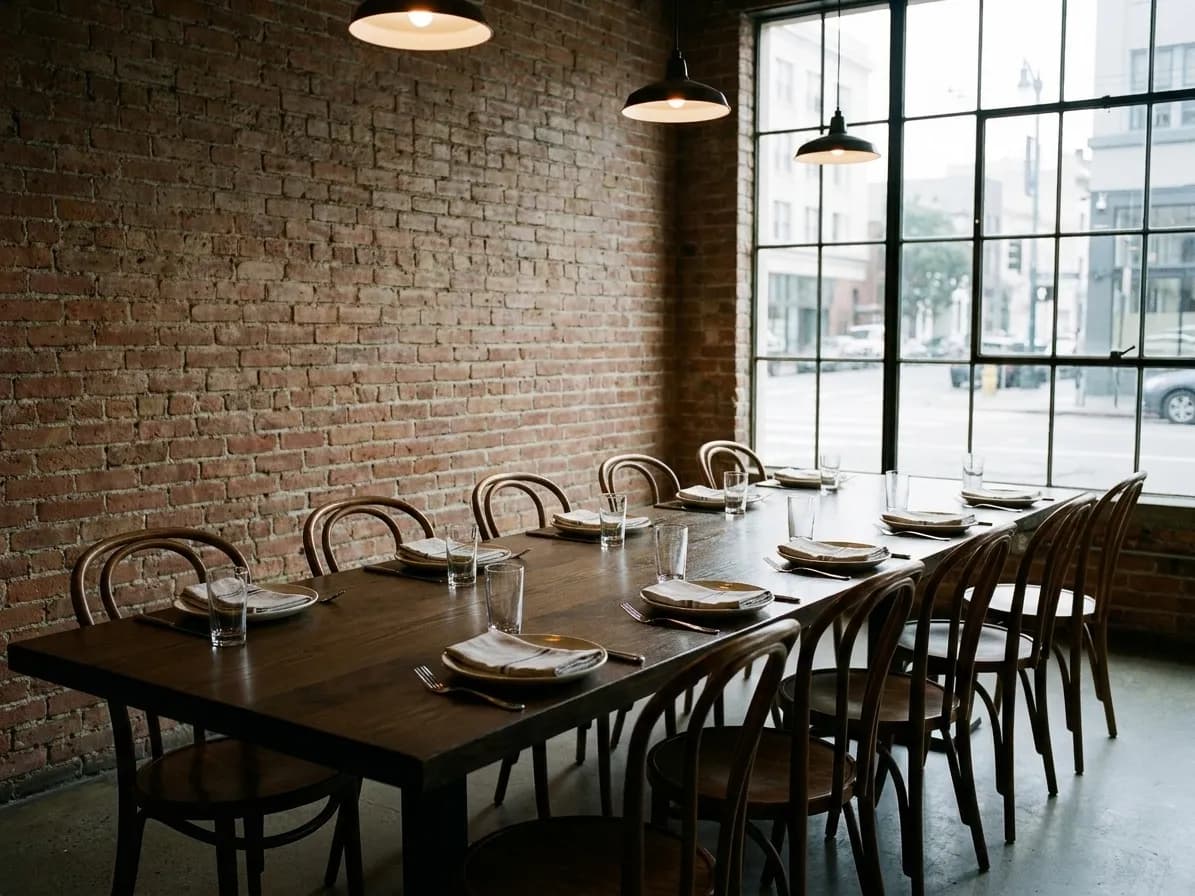
Most San Francisco dining rooms are built from two-tops and four-tops that get pushed together, and a pushed-together table is not the same as a large one. Six people at three joined two-tops means legs meeting table legs, a seam where the plates sit, and a row rather than a group — the two people at the far end will talk to each other and nobody else all night. Rooms with genuine long tables, round tables or a private nook are a much smaller set.
So ask the specific question when you book: is this a single table or joined tables, and is it round or long? Round is best for conversation up to about eight; long works beyond that but accept that it becomes two conversations. This one question changes the evening more than the menu does.
Failure point two: nobody can hear anyone
San Francisco's restaurant aesthetic — hard floors, exposed ceilings, glass and concrete — is loud by construction, and noise scales badly with group size because your own table is a major contributor. At six or more in a hard room, the far end of the table is effectively out of earshot and older relatives will disengage entirely.
Soft surfaces are the tell: carpet, banquettes, curtains, upholstered chairs, a lower ceiling, tablecloths. Older rooms and family-run restaurants tend to have them; newly renovated ones tend not to. If the group includes anyone who struggles to hear, treat acoustics as the primary filter and cuisine as the secondary one.
Failure point three: the group arrives in pieces
Almost every restaurant with a reservation policy requires most of the party to be present before it will seat, and almost every group of eight has two people running twenty minutes late. That collision produces the worst part of the evening: a crowd standing in the doorway of a busy room while the host apologises. It is a solvable problem and hardly anyone solves it.
The fix is to book fifteen to twenty minutes later than you tell the group, and to choose a restaurant with somewhere to stand — a bar, a waiting area, a wide entry. In San Francisco, where parking hunts routinely run fifteen minutes, that buffer is not pessimism, it is arithmetic. Nominate one person to arrive early and hold the table.
Failure point four: the bill
Large parties commonly carry an automatic service charge, and many restaurants will not split a bill beyond a small number of cards. Neither policy is unusual and neither is hidden — but discovering both at the end of the meal, in a loud room, with eight people reaching for phones, is a bad way to finish. Ask about both when you book and tell the group before you sit down.
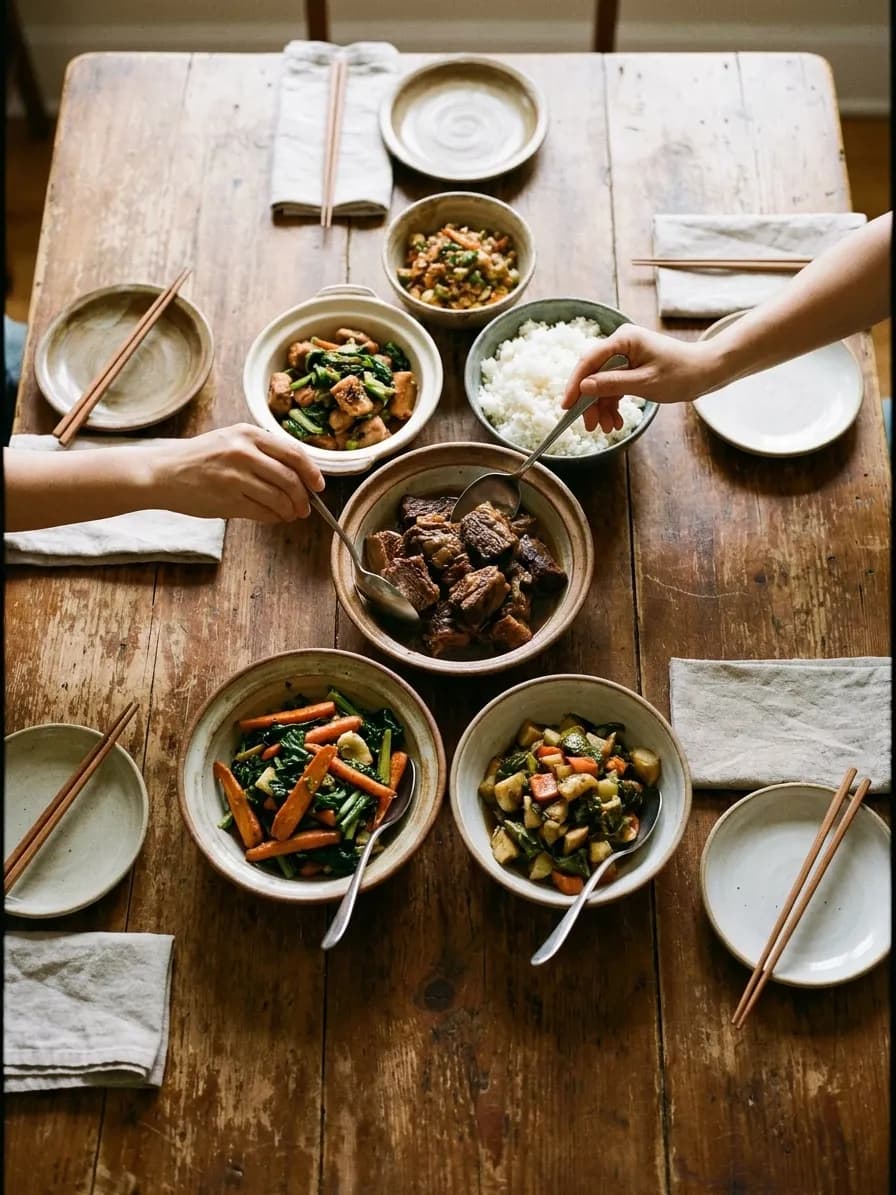
Family-style ordering makes this far easier and generally eats better. A set of shared dishes brought to the middle removes the per-person accounting, feeds mixed appetites, and suits the cooking traditions that San Francisco does best. It also solves the children problem — a table of shared plates lets a picky eater find something without a separate order.
What to actually look for
The rooms that handle groups well in this city share a profile: they are used to it. Restaurants built around shared dishes, older family-run dining rooms, and places with a back room or a genuine large table have the systems in place, and their staff are not improvising. Booking one of those is worth more than booking a higher-rated room that seats your party under protest.
Large-party policies, service charges and private-room minimums change often and vary by night of the week. Confirm the current rules when you book rather than relying on what a listing said, and reconfirm a day ahead if the group is over eight.
Timing the booking itself
Large tables are a scarce resource and they get allocated early, which makes the timing of the booking as important as the choice of restaurant. Most rooms release reservations on a fixed horizon, and the large-party inventory disappears within hours of opening on a weekend night. For a group over six on a Friday or Saturday, a week's notice is the practical minimum in San Francisco and two is comfortable.
The easier path is to move the meal off peak. A group of ten at 5:30 or at 8:45, or on a Sunday or Monday, can walk into rooms that would not seat them at 7:30 on a Saturday for any amount of notice. Off-peak also fixes the noise problem for free, because the room around you is half as full.
Tags: #SanFrancisco #SF #BayArea #WeekendPlans #ThingsToDo #DayTrip #GroupDining #FamilyFriendly #SFEats #SFGuide #ExploreSF #SFLocal #SFWeekend #SFNights
Sources consulted: sfchronicle.com · opentable.com · eater.com
All trademarks are the property of their respective owners.
Ask Karpo first
Karpo is a proactive AI assistant that lives in iMessage. Tell it how many of you there are and it will find a room that fits.