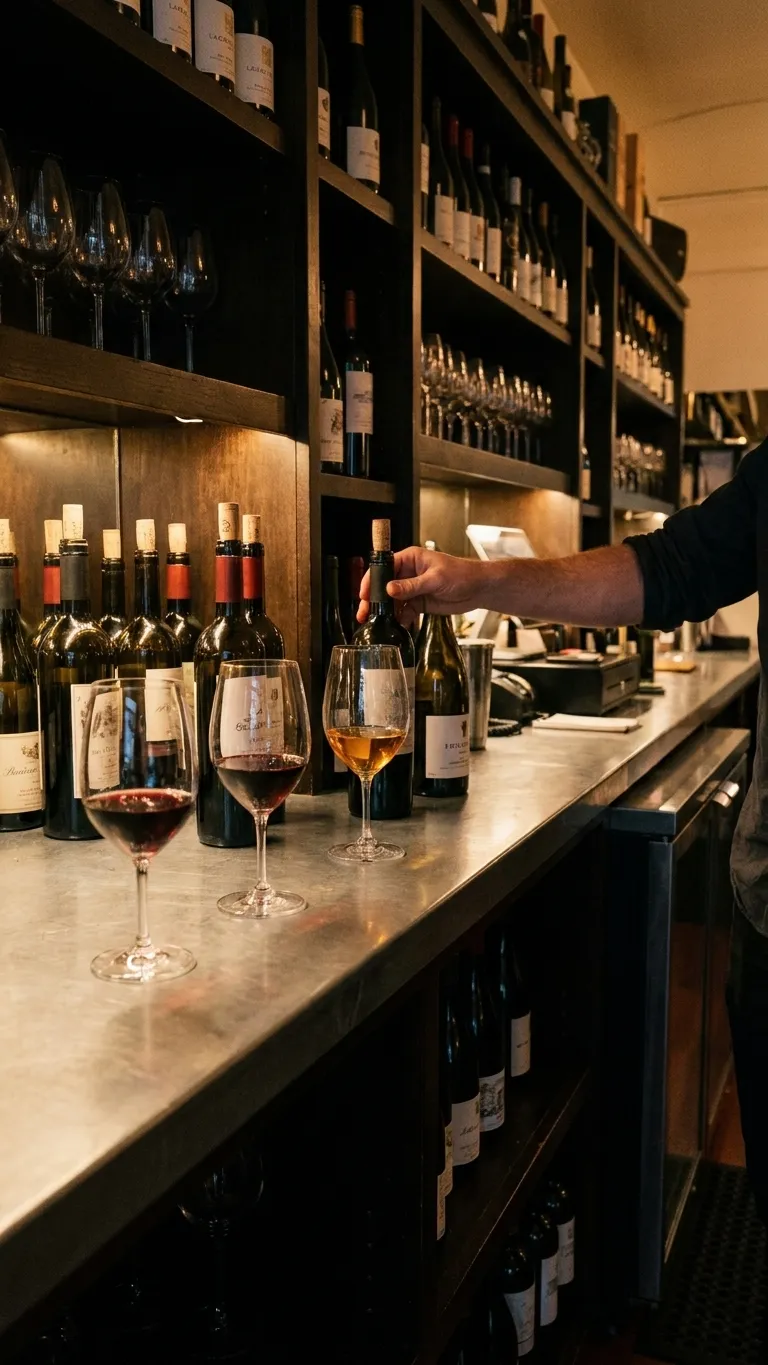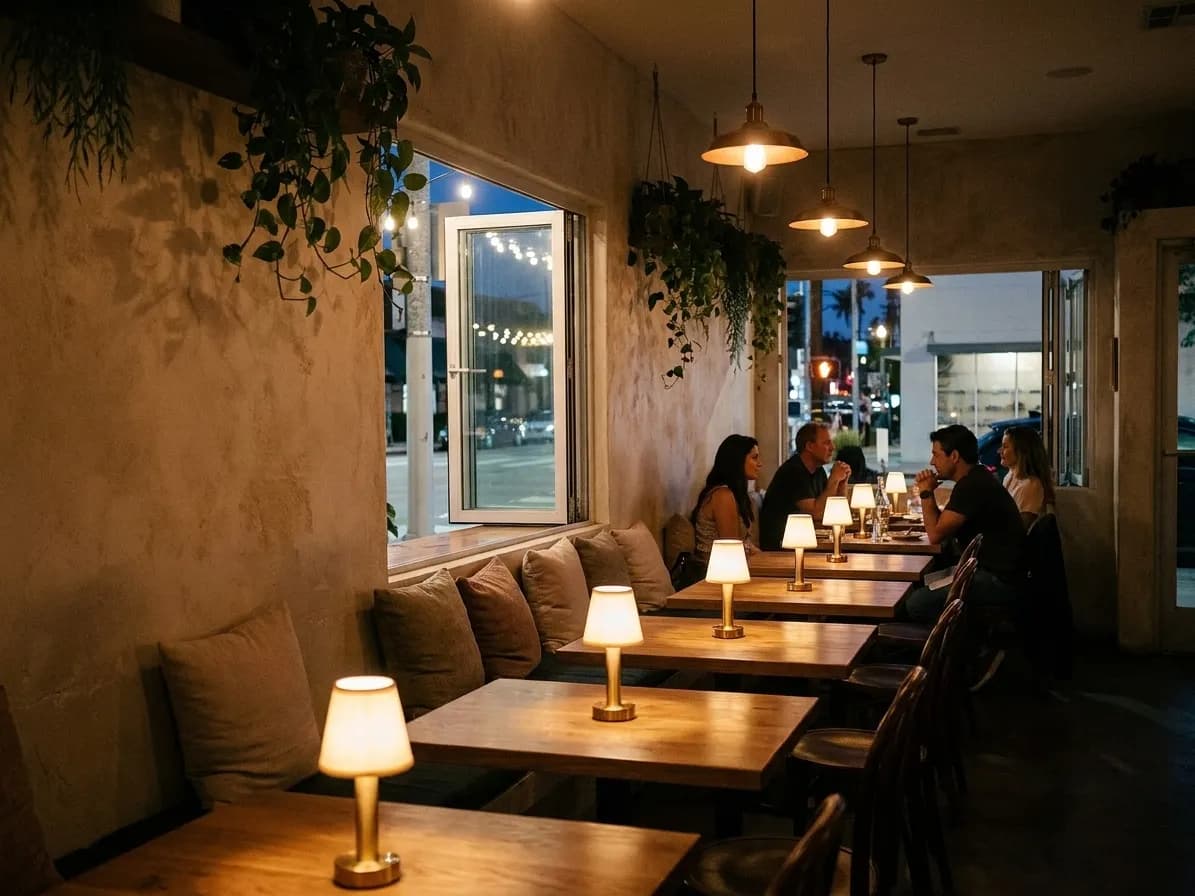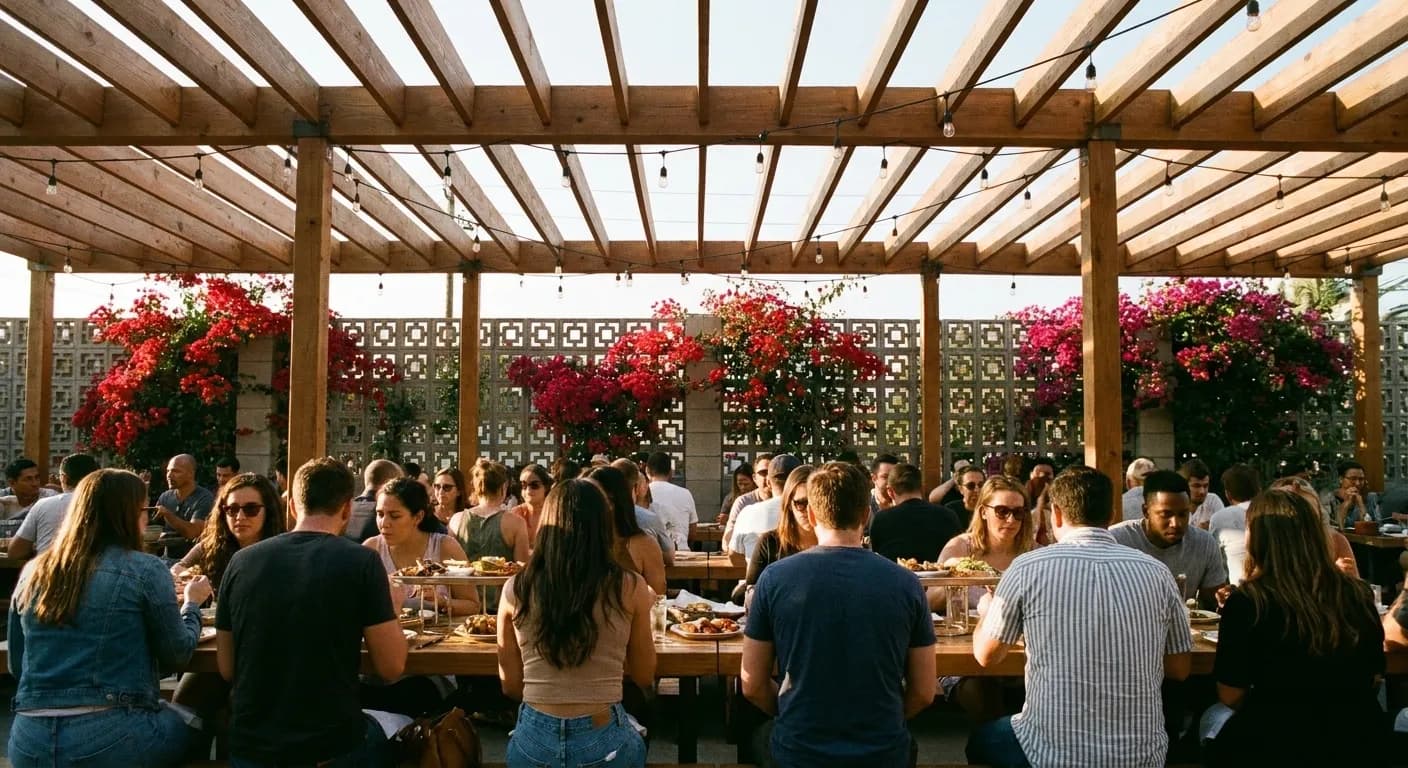
Eating out in Los Angeles with a group is a different activity from eating out with one other person, and the mistake everyone makes is picking the restaurant the same way. The variables that decide whether a table of ten goes well are seating geometry, ordering format, noise, parking and how the bill splits — not whether the kitchen is the best in the neighbourhood. Sorted by how many of you there are, here is what actually works in this city.
Large tables are the hardest thing to book in this city and the online grid hides most of them. Tell Karpo how many people, what ages, and which side of town, and it will find the rooms that will genuinely take the group — including the ones you have to phone.
Five or six: still easy, if you avoid the small rooms
This is the size the city handles best, and also the size where people book badly. Most reservation systems will accept a party of six, but a lot of the rooms that accept it will seat you at two banquette tables pushed together, which splits the group into two conversations for the whole evening. If the group matters more than the food, ask whether the table is a single top before you confirm.
The formats that do six well without any negotiation are the ones built around shared food: Korean barbecue, where the table is the cooking surface and the group faces inward; Oaxacan and Mexican rooms with a large-format order like a whole grilled fish or a barbacoa platter; Thai and Chinese restaurants where six is the minimum sensible order size rather than the maximum.
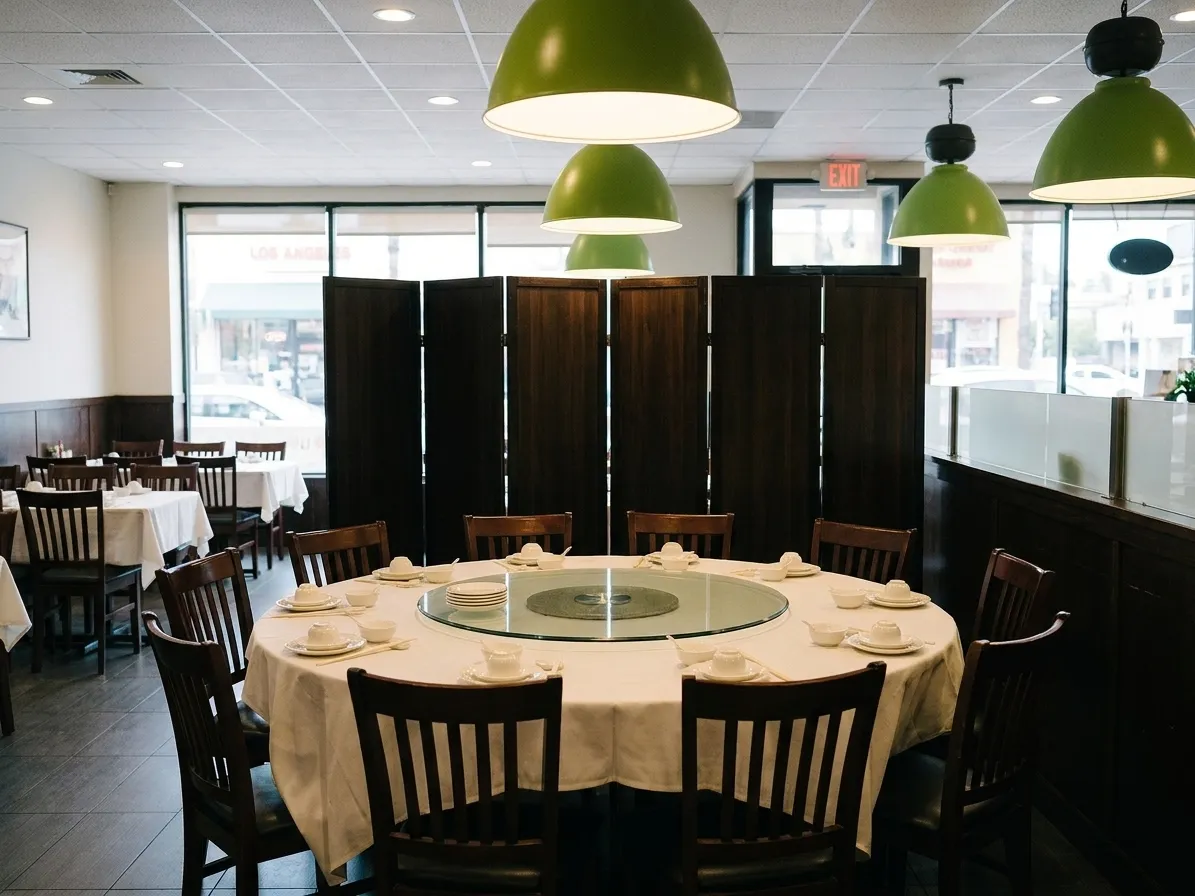
Eight to ten: the round table is the whole answer
At eight the geometry becomes decisive. A rectangular table for ten has two people at each end who cannot hear anything; a round table for ten is one conversation. Los Angeles is fortunate here because two of its strongest cuisines are built around the round table — the Cantonese banquet rooms of the San Gabriel Valley and Chinatown, and the large Sichuan and Shanghainese rooms of the eastern suburbs.
A Chinese banquet room is, honestly, the correct answer for most groups of eight to twelve in this city. The lazy Susan solves the sharing problem, the per-person cost drops as the table grows, the kitchen is used to ordering by table rather than by person, and nobody has to negotiate a menu. Korean and Armenian restaurants offer the same structure with a different pantry, and Persian rooms in the Valley run large platters designed for exactly this.
Twelve and up: phone calls, deposits and set menus
Above about twelve the online booking route stops working entirely and the process becomes a conversation. Expect one or more of: a set menu at a fixed per-person price, a deposit or card hold, an automatic service charge, a time limit on the table, and a requirement to confirm numbers a day or two out. None of that is a restaurant being difficult — a party of sixteen occupies a quarter of a small room for an entire service.
Two things make this much smoother. Give a final headcount that is honest rather than optimistic, because a set menu is usually charged on the number you confirmed. And ask explicitly how the bill can be split; many rooms will happily do three or four cards but almost none will do sixteen, and settling that in advance prevents the worst fifteen minutes of the evening.
With small children: the constraints that actually matter
Kid-friendliness in Los Angeles has less to do with a children's menu than with four practical things: whether there is outdoor space, whether the noise level means a crying toddler goes unnoticed, whether food arrives quickly, and whether the exit is easy. Which is why a busy taqueria with a patio works far better with a three-year-old than a quiet, well-reviewed room with a children's menu.
The formats that consistently work with young kids here are the outdoor and semi-outdoor ones — patio taquerias, food halls where everyone orders separately at different counters, park-adjacent restaurants, and the older diners and delis where the kitchen is fast and the room is already loud. Timing matters as much as venue: arriving at 5:30 means an empty room, immediate food and a staff with attention to spare.
The logistics that ruin group dinners in this city
Two Los Angeles-specific problems sink more group meals than any kitchen does. The first is parking: a group of ten arrives in four or five cars, and a restaurant with valet-only or a small lot turns into a twenty-minute staggered arrival. Check for a public lot or street parking nearby before booking, and tell everyone where it is.
The second is distance. A group will tolerate a mediocre restaurant nearby far better than an excellent one forty minutes away in Friday traffic, because the late arrivals compound — one person stuck on the freeway holds a table of twelve. Pick the neighbourhood first, at the geographic centre of where people are coming from, and then pick the restaurant inside it.
Tags: #LosAngeles #GroupDinner #FamilyFriendly #WhereToEatLA #LARestaurants #LAEats #BigTable #SanGabrielValley #KoreanBBQ #DimSum #LAFoodie #KidFriendly #WeekendInLA #DinnerInLA
Sources consulted: discoverlosangeles.com · la.eater.com · laist.com
All trademarks are the property of their respective owners.
Ask Karpo first
Large-party policies, set-menu minimums and deposit rules are almost never published, and the booking widget will simply refuse you above six. Ask Karpo to find rooms near you that take your group size on the night you want, and what the restaurant will ask for in return.