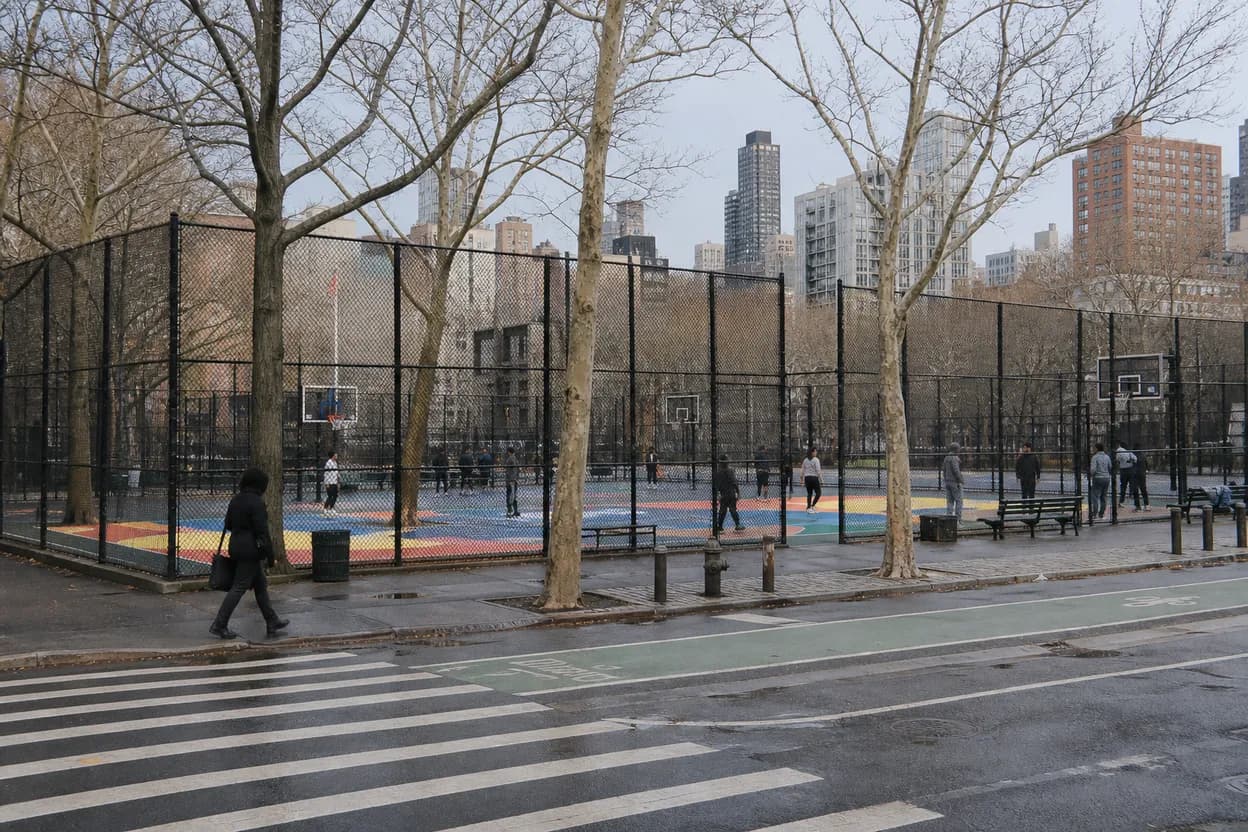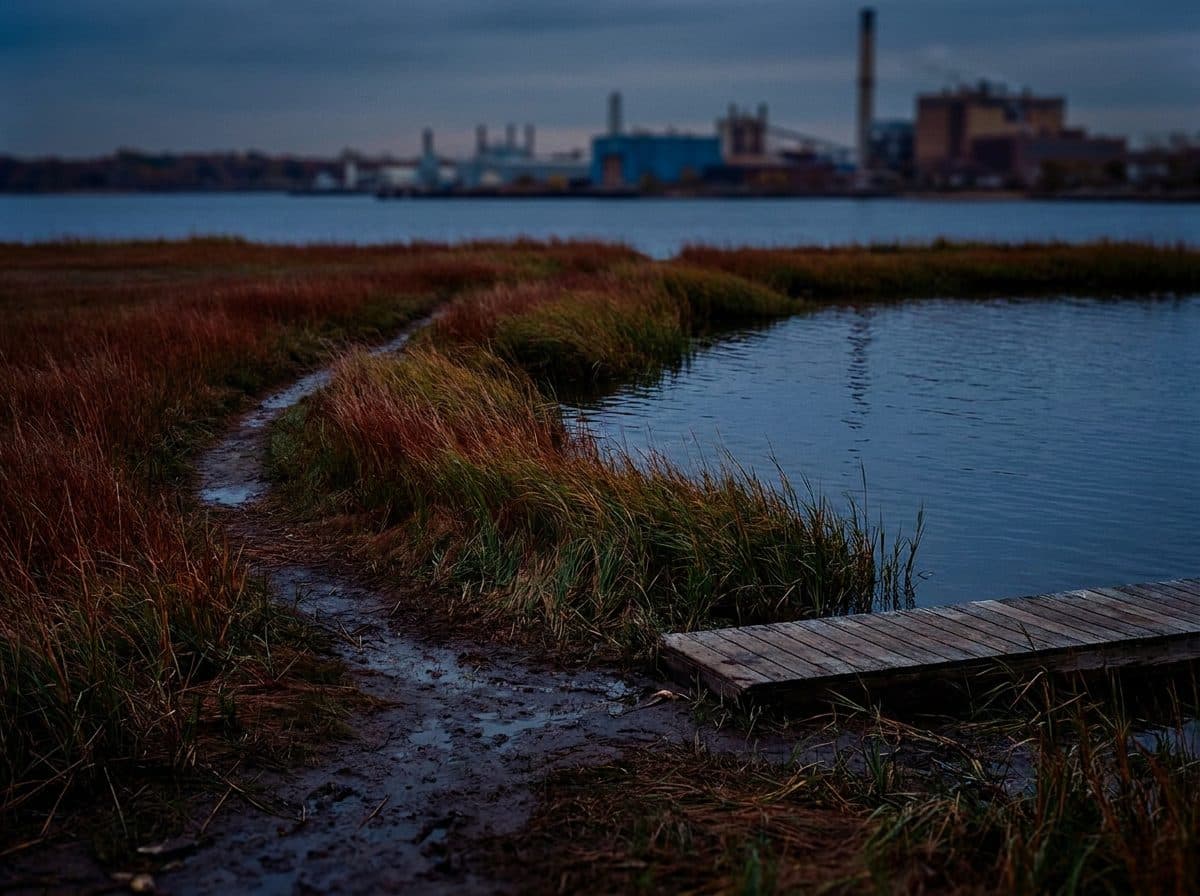
The 6 train ends its run at Pelham Bay Park, and most riders who disembark head west toward the park's main entrance or the bus depot. The ones who turn east, toward the water, follow a narrow service road past a parking lot that empties by mid-afternoon. Beyond the asphalt, a trailhead opens onto a boardwalk threading through Orchard Beach's salt marshes—a landscape so quiet and tidal that first-timers often pause to confirm they're still within city limits. The path delivers walkers to a sheltered cove where the skyline dissolves into something older: egrets wading in shallows, industrial silhouettes across the water, and the kind of stillness that makes the subway ride feel like a crossing into another borough entirely.
The Walk That Resets Geography
The salt marsh trail stretches roughly a mile from the parking area, following the eastern edge of Pelham Bay Park's wetlands. Wooden planks keep feet dry as the path curves through stands of phragmites and cordgrass that shift color with the seasons—gold in autumn, green-brown in summer. Birders arrive early, binoculars already raised before they clear the first bend. The egrets and herons that nest here pay little attention to footsteps; they've learned the rhythm of human traffic and hold their positions until someone stops too close. Halfway along, a spur trail branches toward a small observation platform where the view opens: Long Island Sound ahead, the Bronx mainland behind, and between them the tidal flats that flood and drain twice a day. Regulars time their walks to low tide, when the exposed mudflats reveal crab burrows and the occasional horseshoe crab shell. The cove itself sits at the trail's terminus, a crescent of beach stones and driftwood where the water stills into a near-mirror on windless days.
Industrial Horizon, Natural Foreground

The cove's appeal lies in its double vision. In the foreground: cattails, shallow pools reflecting cloud cover, the occasional splash of a fish breaking the surface. Across the water, maybe half a mile distant, the opposite shore carries the silhouettes of oil tanks, cranes, and low warehouse structures—the working waterfront of the Bronx's eastern industrial corridor. Photographers arrive with tripods to catch the contrast at golden hour, when the light softens the metal edges and turns the marsh grass amber. The juxtaposition never quite resolves into scenic or gritty; it holds both registers at once. On weekday mornings, the cove hosts a rotating cast of solo visitors: someone sketching in a spiral notebook, a runner cooling down on the stones, an older man who brings a folding chair and a thermos and faces the water for an hour without moving. Weekends draw families who spread blankets on the narrow beach and let children wade in the shallows, though the water stays bracingly cold even in July.
The Crowd That Knows to Look East
Pelham Bay Park is the city's largest green space, but the majority of its visitors cluster around Orchard Beach's main pavilion and the playing fields near the subway. The salt marsh trail attracts a different subset: longtime Bronx residents who grew up exploring the park's edges, birdwatchers chasing rare sightings during migration season, and the occasional Manhattanite who stumbled onto a blog post and decided to test the commute. The trail never feels crowded, even on summer Sundays. Those who make the walk tend to linger—there's no reason to rush to the cove only to turn around immediately. By late afternoon, the path empties almost entirely, leaving the marsh to the wading birds and whoever timed their visit to catch the last light. One telling detail: the wooden benches placed every few hundred feet along the boardwalk show wear patterns on the side facing the water, not the trail, suggesting that most visitors pause to watch rather than push through.
Seasonal Rhythms and Tidal Windows
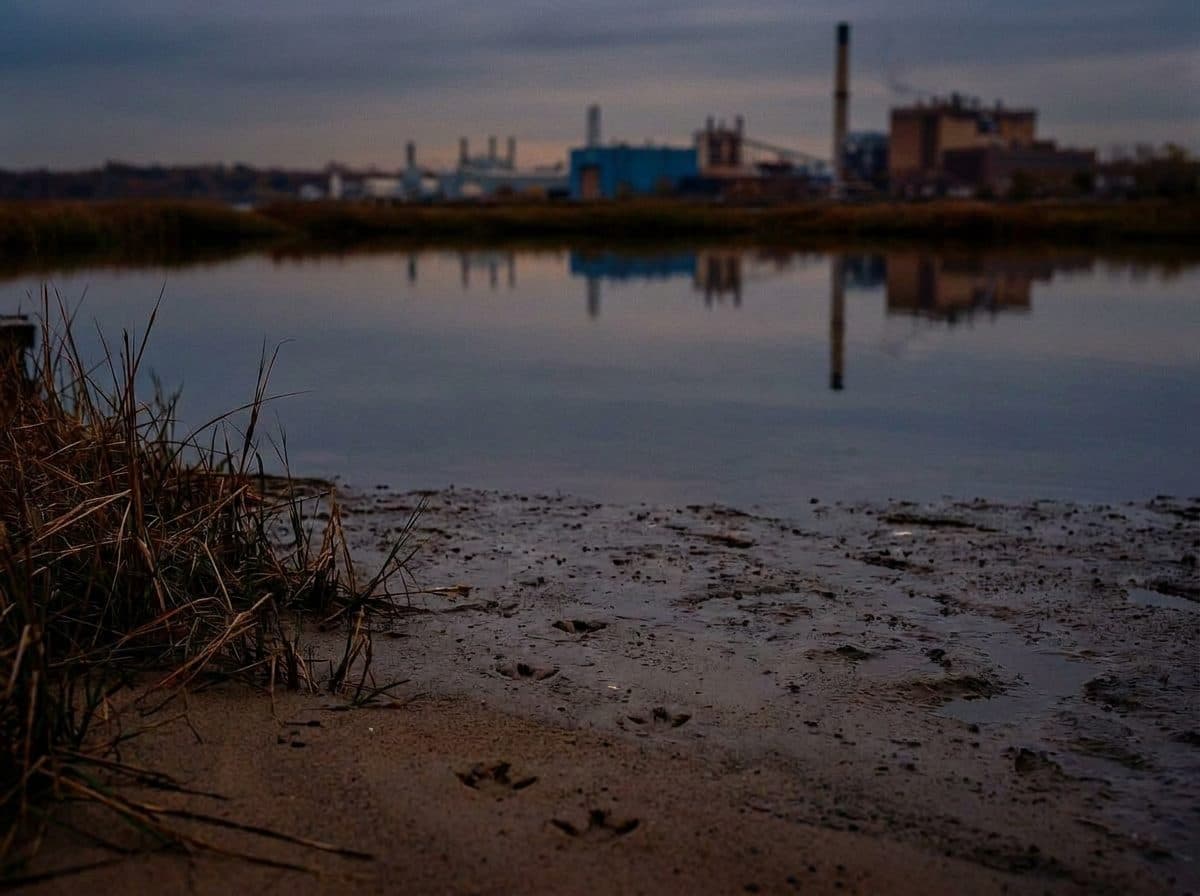
The cove changes character with the tides and the calendar. Spring migration brings warblers and the occasional osprey; autumn sees the marsh grass turn rust-colored and the water temperature drop sharply. Winter visits require layering—wind off the Sound cuts through lighter jackets—but the cove in January holds a spare beauty that summer crowds never see. Ice forms in the shallows, and the egrets give way to gulls and the occasional harbor seal bobbing offshore. Tidal charts, available on any weather app, dictate the best viewing times. Low tide exposes the flats and concentrates birdlife in the remaining pools. High tide brings the water nearly to the boardwalk's edge and submerges the beach stones entirely, turning the cove into a deeper basin where small boats occasionally drift past. Locals check the tide before setting out; first-timers often arrive at high tide and wonder where the beach went.
What to Carry, What to Leave
The trail offers no vendors, no restrooms past the parking area, and no cell signal for stretches where the marsh blocks the towers. Those who walk it regularly carry water, a hat for sun exposure on the open boardwalk, and insect repellent during the humid months when mosquitoes rise from the wetlands at dusk. The cove itself provides driftwood logs for seating, but no tables or grills—this isn't a picnic destination so much as a sitting-and-looking one. Trash cans appear only at the trailhead, so whatever comes in must go out. The absence of infrastructure keeps the space quiet and slightly wild, a trade-off that filters the crowd naturally. Serious birders bring field guides and spotting scopes; casual visitors bring curiosity and a willingness to sit still. One unspoken rule observed by regulars: voices drop to near-whispers once the cove comes into view, as if the stillness of the water enforces its own acoustic.
The Return Commute and the Threshold Moment
Walking back toward the subway, the city reassembles in stages. First the parking lot, then the service road, then the bus depot where the Bx29 idles between runs. The 6 train platform sits elevated, offering a last glimpse of the park's tree canopy before the southbound express plunges underground at Parkchester. The commute home—forty-five minutes to Grand Central, longer if the train runs local—gives the cove time to settle into memory. Many first-timers report the same threshold sensation: the moment on the boardwalk when the trail curves and the cove appears, and the realization hits that this pocket of tidal quiet exists within the same municipal boundaries as Times Square. That cognitive gap, between the place and its postal code, is what keeps people coming back. The cove doesn't require belief or interpretation. It simply waits at the end of the marsh trail, reshuffling the map of what the city holds.
Practical Notes
The Pelham Bay Park station sits at the northern terminus of the 6 line, roughly an hour from Midtown Manhattan. From the station, the walk to the salt marsh trailhead takes about fifteen minutes heading east. No admission fee, no gate hours—the trail remains accessible from dawn until well after dusk, though lighting is minimal after sunset. Parking is available near the trailhead for those driving, with spaces typically open except on peak summer weekends. The boardwalk is flat and accessible, though the beach stones at the cove itself require careful footing. No reservations, no advance planning needed—just transit fare and a willingness to walk a mile each way. The nearest food and restrooms are back near Orchard Beach's main pavilion, a ten-minute walk from the trailhead. Check tide times before visiting to catch the cove at its most photogenic; low tide is generally preferred for birding and exploring the flats.
Tags: #PelhamBay #TheBronx #SaltMarsh #NewYorkNature #HiddenNewYork #TidalCove #LongIslandSound #BirdingNYC #OrchardBeach #TheOddEdit #NYCTrails #OuterBoroughs #UrbanWilderness #EgretWatch #QuietSpaces
Sources consulted: atlasobscura.com · timeout.com · nytimes.com
All trademarks are the property of their respective owners.
Ask Karpo first
Want to know where the trailhead starts and when the egrets are most active?
Ask Karpo for directions to the unmarked trail and the best low-tide times before you head out.