 Where to Eat Near Penn Station That Isn't a Chain
US Open 2026
Paula Badosa’s US Open Movement Questions
If Casper Ruud appears in New York, his heavy forehand patterns, court positioning, and return choices would shape how fans read his US Open matches.
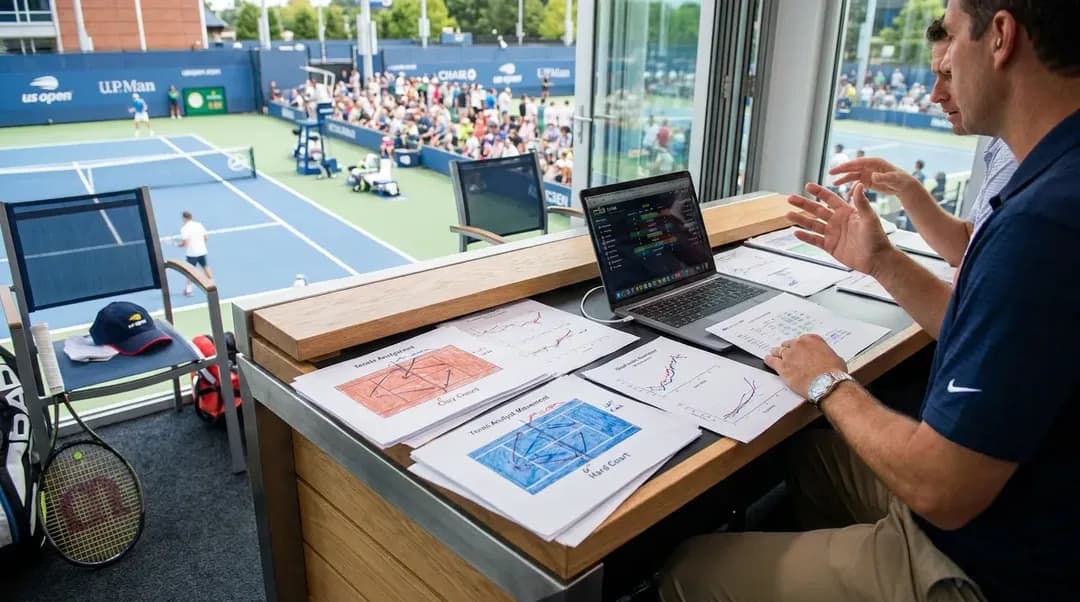
The tactical question for a US Open fan is not simply whether Casper Ruud can hit enough forehands; it is where he gets to hit them from. On a hard court in New York, the same heavy topspin pattern that looks orderly on slower surfaces can become either a weapon or a trap depending on court position, return depth, and how quickly an opponent redirects the ball. If Ruud is in the field, the most useful way to watch him is to track the first two shots after serve and return. When those exchanges give him a forehand from balanced feet, his game can look methodical and suffocating. When they push him backward, rush his spacing, or force repeated backhand recoveries, the rallies become less comfortable and his movement questions become tactical rather than speculative.
Text Karpo for a current, low-friction plan for paula badosa’s new york hard-court questions—including timing, route checks, and practical options that fit your day.
Forehand Routes In New York
Ruud’s forehand is not only a finishing shot; it is a routing system. He often uses shape and height to move the rally toward his preferred side, then looks to turn a neutral exchange into a forehand from the ad-court corner or a ball he can strike closer to the baseline. On a US Open hard court, that pattern depends on whether the ball jumps high enough to bother opponents while still traveling through the court. More spin buys margin, but flatter hard-court hitters can step in if the ball lands short.
For viewers, the key distinction is between a forehand that lands heavy and deep and one that lands loopy but attackable. A deep crosscourt forehand to a right-hander’s backhand can pin the opponent and create the next inside-out look. A shorter version can invite a drive up the line, immediately testing Ruud’s recovery route and his willingness to defend from well behind the baseline.
- Inside-out forehand: the pattern that lets Ruud control direction without taking maximum risk.
- Inside-in forehand: the changeup that punishes opponents leaning too far toward the backhand corner.
- High crosscourt forehand: the rally builder that can create shoulder-height contact for the opponent.
- Deep middle forehand: the safer reset that limits angles when he is not fully balanced.
Court Positioning Under Pressure
Ruud’s court position is one of the clearest indicators of how a match is trending. When he is close enough to the baseline to take the forehand early, his patterns become more aggressive without looking reckless. He can hold the court, redirect into space, and make opponents hit high-quality groundstrokes just to escape a neutral rally. When he drifts several steps back, the same heavy forehand may still be safe, but the opponent gains time to recover and attack the next ball.
US Open conditions can reward first-strike tennis, so his best hard-court version usually needs selective forward movement rather than constant retreat. That does not mean charging the net after every heavy ball. It means recognizing when the forehand has produced a short reply and moving into the court before the opponent is set. The small adjustment matters because a deep defender can look solid for long stretches but still lose control if he gives big hitters too many shoulder-high forehands from the middle.
Fans sitting behind a baseline can see this clearly. If Ruud is making contact near or inside the baseline after his serve plus one, the point is usually on his terms. If he is defending from deep in the court early in games, especially on second-serve points, the match may depend on whether he can turn defense into a heavy, central ball that stops the opponent’s forward momentum.
Return Choices On Hard Courts
The return game is the bridge between Ruud’s preferred rally patterns and US Open reality. Against strong servers, he does not need to blast returns for winners to be effective. He needs enough depth to prevent the server from taking an uncontested first forehand. A blocked return that lands deep through the middle can be more valuable than a spectacular swing that misses, because it forces the server to play one extra ball from a less comfortable position.
The sharper question is second-serve aggression. If Ruud stands too far back, he may make a high percentage of returns but allow opponents to step around the next ball. If he moves up, he can pressure the server but must shorten the swing and accept faster decisions. That tradeoff is important in New York because a single assertive return game can change the feel of a set, while a run of passive returns can make routine service games look untouchable.
- On first serves, watch whether his blocked returns land deep enough to neutralize the server’s next shot.
- On second serves, watch whether he steps in or waits far behind the baseline.
- On break points, watch whether he protects the middle first or takes an early directional risk.
- After returns to the backhand, watch how quickly he searches for a forehand on the next ball.
Movement Questions In Matchups
The matchup lens is more useful than broad labels such as clay-court player or hard-court contender. Against flat ball-strikers, Ruud’s height and spin must be deep enough to keep them from taking the ball at waist level. Against defenders, he needs patience without becoming predictable, because looping crosscourt forehands alone may not open the court. Against left-handers, the geometry changes again: his inside-out forehand may travel into a forehand wing rather than a backhand, so the inside-in change becomes more important.
Serve patterns matter, too. If Ruud earns enough forehands after his first serve, the returner is constantly defending both direction and spin. If opponents read the serve and make him start rallies from the backhand corner, he must either redirect safely or find a way to run around the next ball. This is where movement questions should stay tactical. The issue is not diagnosing his body or predicting availability; it is observing whether his footwork gives him time to set the forehand before the opponent changes direction.
For a fan in the stands, the cleanest signal may be how often Ruud wins points without needing a dramatic finish. If the forehand is doing its job, many points end with an opponent error, a short ball, or a controlled finish into open court. If every hold of serve requires emergency defense, the scoreboard may hide stress until a tight service game exposes it.
Practical Notes
For “Paula Badosa’s US Open Movement Questions,” the useful 2026 calendar anchor is August 23 through September 13, with singles main-draw play beginning August 30. Do not build a trip around any player unless official information confirms the relevant session. Use the US Open schedule page for event timing and the ATP and WTA sites for official player information. Before travel, recheck the tournament security page; it currently states one bag per guest, subject to search, with maximum dimensions of 12 by 12 by 16 inches. If your main goal is tactical viewing, a clear baseline angle can help you judge return depth, forehand contact point, and court position.
Tags: #USOpen2026 #Tennis #NewYork #Queens #FlushingMeadows #USOpenGuide #TennisFans #SportsTravel #NYCEvents #HardCourt #KarpoFinds #Karpo
Sources consulted: usopen.org — Official reference · wtatennis.com — Official reference · atptour.com — Official reference
All trademarks are the property of their respective owners.
Ask Karpo first
Want to know what is confirmed, when to show up, and what is actually open to the public? Ask Karpo for the latest US Open updates and a practical New York plan for paula badosa’s new york hard-court questions.
Ask Karpo for more information.
Keep reading
- Where to Eat Near Penn Station That Isn't a Chain
 Andytown Coffee in the Outer Sunset: The Snowy Plover Explained
- Best Things to Do in Chicago: What the City Gives Away