Why MetLife Makes Rail the Only Real Option
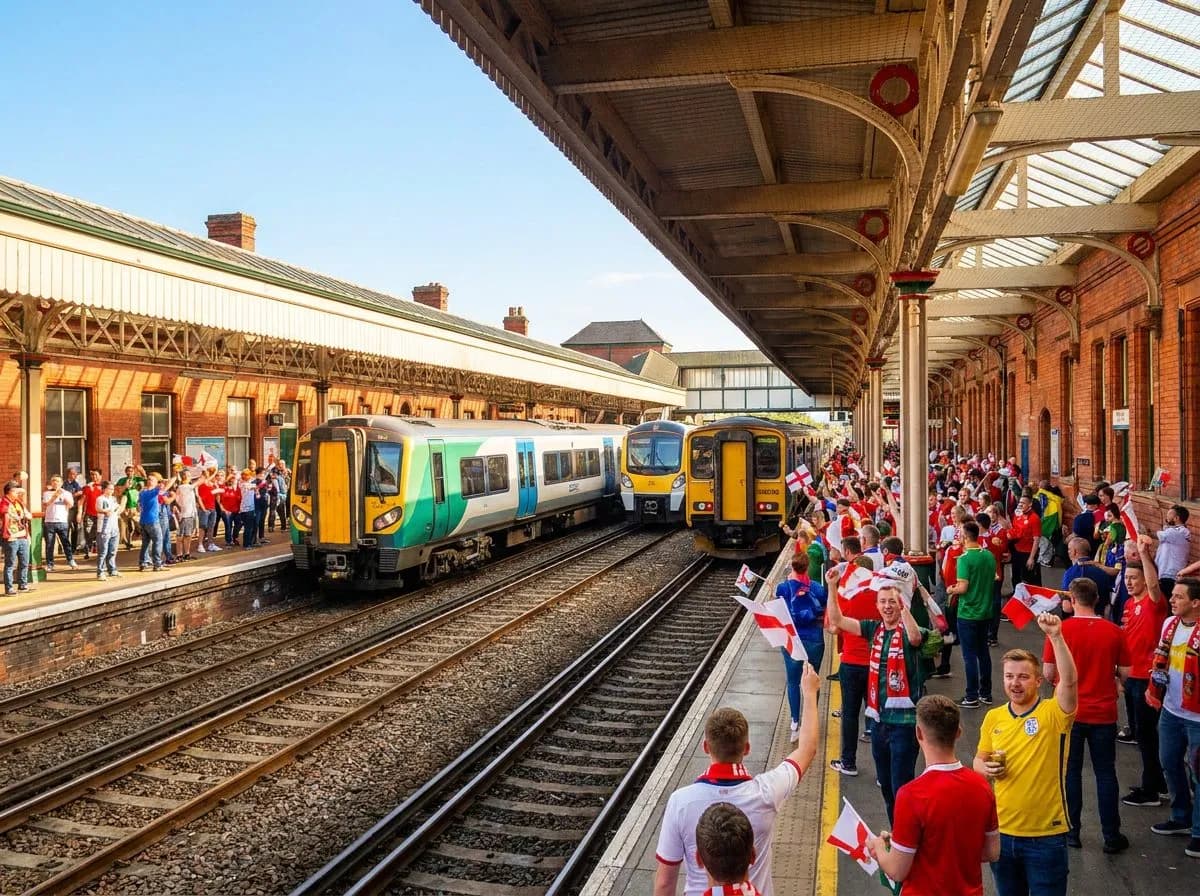
The 2026 World Cup Final on July 19 at MetLife Stadium in East Rutherford arrives with two ironclad rules: no on-site parking for ticket holders, and no tailgating. That policy transforms NJ Transit from a convenience into the arterial system for the biggest single-day sporting event North America has ever hosted. Official shuttles will run from designated hubs, but the rail network offers frequency, capacity, and the kind of redundancy that matters when a hundred thousand fans need to move in the same four-hour window.
Text Karpo Now: Get your personalized park-and-ride blueprint—line choice, transfer windows, and wristband checkpoints—before July 19.
MetLife sits roughly eight miles west of Manhattan, straddling the Meadowlands in Bergen County. The stadium's own rail spur—a short connector off the Main Line—means trains pull within a few hundred yards of the gates. On a normal NFL Sunday that spur handles twenty thousand passengers; for the Final, NJ Transit has promised enhanced service on every line that funnels through Secaucus Junction, the system's central transfer point. Your park-and-ride strategy hinges on choosing the right feeder line, understanding how Secaucus works under crush-load conditions, and claiming the return wristband that guarantees your seat on the way out.
The beauty of the hub-and-spoke design is geographic reach: commuters from the Raritan Valley, the North Jersey Coast, the Pascack Valley, and Montclair-Boonton corridors all converge at Secaucus, then board a Meadowlands-bound train on the final leg. The challenge is timing that transfer when platform queues stretch three trains deep and every minute counts.
Decoding the Line Menu: Which Route Fits Your Starting Point
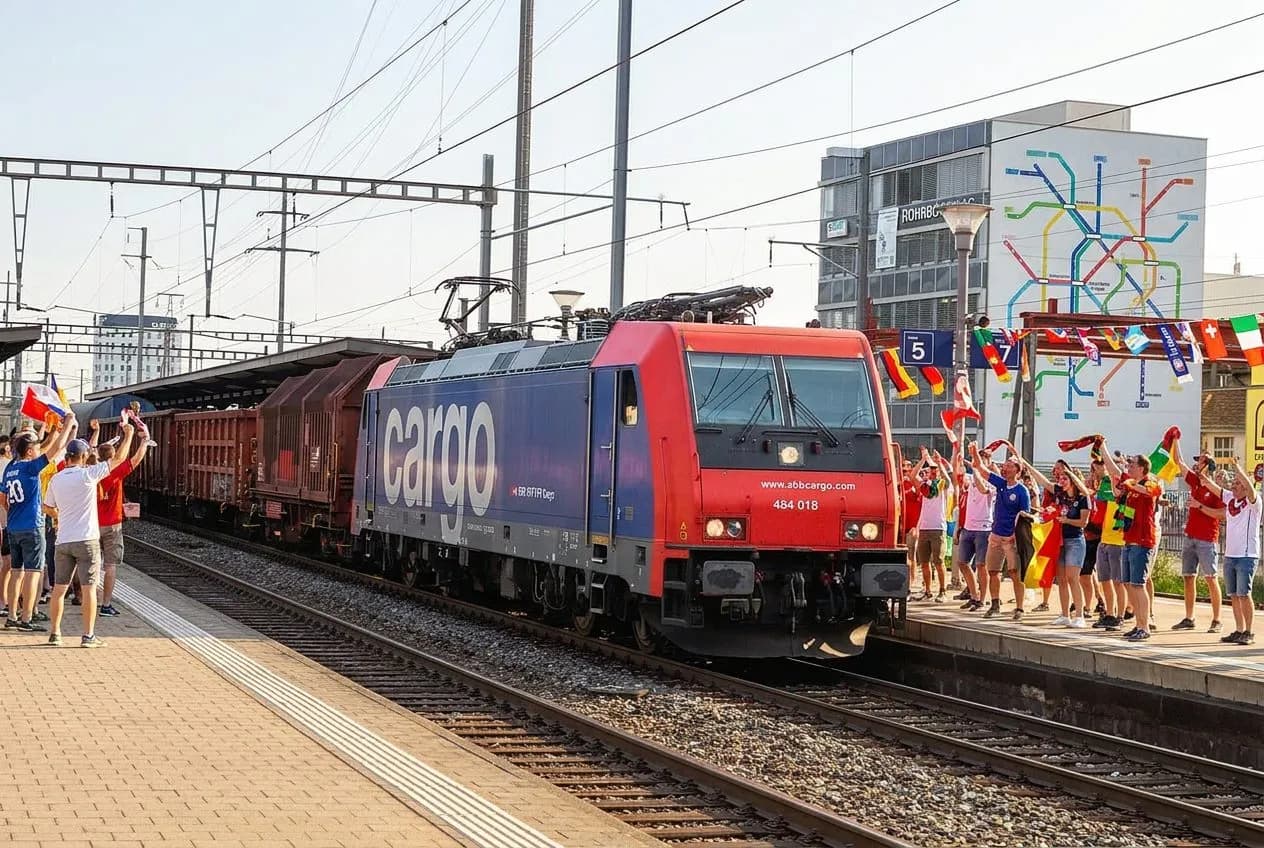
If you're driving in from points south or central New Jersey, the Raritan Valley Line and North Jersey Coast Line offer the densest park-and-ride lots. Stations like Bridgewater, Bound Brook, and Rahway feature multi-level garages that fill early on game days; for the Final, expect those lots to hit capacity by mid-morning. The Raritan Valley trains run to Newark Penn Station, where you transfer to any Secaucus-bound service. The Coast Line swings through towns like Red Bank and Long Branch before threading north to Newark or New York Penn, with Secaucus as the natural interchange.
Travelers coming from Rockland or Bergen counties typically favor the Pascack Valley Line or Main/Bergen County Line. Both terminate at Hoboken, which connects to Secaucus via a short shuttle hop. The Pascack Valley serves leafy suburbs like Westwood and Woodcliff Lake; parking is plentiful but lots lack the scale of the Raritan corridor, so early arrival remains critical. The Main Line, meanwhile, stitches together towns from Suffern down to Ridgewood, offering a direct Secaucus connection without the Hoboken detour on certain express runs.
For those in Morris or Essex counties, the Montclair-Boonton Line and Morris & Essex Lines provide the most direct paths. The Montclair-Boonton swings through Mountain Lakes and Montclair State before meeting Secaucus; the Morris & Essex branches split at Summit, with one arm heading to Hoboken and the other to New York Penn via Newark. On Final day, NJ Transit will likely run dedicated Meadowlands expresses from Secaucus, bypassing intermediate stops to maximize throughput. Your job is to land at Secaucus with enough buffer to navigate the transfer scrum and still board a stadium train that isn't standing-room-only three stops out.
Secaucus Junction Under Siege: The Transfer Choreography
Secaucus Junction is a four-track, two-island-platform complex designed to handle fifteen thousand passengers an hour under normal peak conditions. The Final will push that envelope. Trains from every compass point disgorge riders onto the lower level; digital boards cycle through departures faster than you can read them; and the Meadowlands-bound platform becomes a study in crowd dynamics. The key is to treat Secaucus not as a rest stop but as a relay baton pass: know your inbound track, identify the outbound platform before you arrive, and move decisively.
NJ Transit's event-day protocol typically assigns a dedicated platform for stadium service, often with staff holding color-coded signs and bellowing destinations. On a day this large, expect that platform to queue in waves—first train loads, gates close, crowd resets. If you miss one departure, the next follows in ten to fifteen minutes during the peak window, but each delay compresses your arrival cushion. The return wristband system adds another wrinkle: upon boarding your Meadowlands train at Secaucus, conductors distribute wristbands that guarantee priority boarding for the reverse journey after the match. Lose that wristband and you join the general-admission scrum, where waits can stretch past an hour.
Veteran commuters know to position themselves mid-platform, where doors align with the least congested sections of the train. Families with kids or anyone carrying bags should aim for the train's rear cars, which empty faster at MetLife's single-platform station. The entire Secaucus-to-stadium leg takes about twelve minutes; use that time to hydrate, confirm your gate assignment on the FIFA app, and mentally rehearse your return route, because the post-match exodus will test every lesson you learned on the way in.

The Return Wristband: Your Golden Ticket Home
The return wristband is the single most important piece of paper—or rather, Tyvek—you'll receive all day. Distributed by conductors during your inbound Meadowlands train ride, it functions as a fast-pass for the journey back to Secaucus after the final whistle. Without it, you're routed to overflow queues that can mean missing the last express connections to outer suburbs and enduring waits that stretch well past midnight. The wristband doesn't assign you a specific train, but it does grant access to priority boarding areas cordoned off by transit police and event staff.
Post-match, MetLife's rail platform becomes a single-file choke point. NJ Transit stages trains in rapid succession—empty consists roll in, load to capacity in under five minutes, then depart for Secaucus. Wristband holders form separate lines, often boarding first or through dedicated doors. The entire operation resembles airport jetway loading: efficient when everyone follows the system, chaotic the moment someone tries to shortcut. Security checks wristbands at multiple touchpoints, so keep it visible on your wrist; stuffing it in a pocket or handing it to a friend invites hassle.
Once back at Secaucus, your onward connection depends on how quickly you move and which line you're targeting. Trains to New York Penn and Newark run most frequently; Hoboken-bound and outer-branch services thin out after 11 p.m. If you're parked at a Raritan Valley or Coast Line station, confirm the last departure time before you leave for the stadium in the morning—NJ Transit publishes special event timetables weeks in advance, and missing that last train means a costly rideshare or an unplanned hotel night. The wristband gets you to Secaucus; the rest is on you.
Timing the Inbound Window: When to Park and When to Board
Kickoff for the Final is expected in late afternoon, likely 3 or 4 p.m. Eastern to maximize global broadcast windows. FIFA recommends arriving at the stadium three hours early for security, credential checks, and the pre-match ceremony—which this year includes the first-ever World Cup halftime show, curated by Coldplay's Chris Martin and featuring Madonna, Shakira, and BTS. That spectacle alone will draw early crowds. Working backward, you want to board your Meadowlands train at Secaucus no later than noon, which means hitting your park-and-ride lot by mid-morning.
The wildcard is lot capacity. On a typical fall Sunday, a station like Metropark or Rahway sees maybe sixty percent utilization; for the Final, those same lots will overflow by 9 a.m. Some municipalities have announced they'll open auxiliary lots—school parking, municipal fields—with shuttle service to the station, but those details often emerge only days before the event. Your safest play is to arrive at your chosen park-and-ride no later than 8 a.m., purchase your round-trip ticket (mobile or kiosk), and board the first available train toward Secaucus. Even if you land at the stadium four hours early, the atmosphere, fan zones, and sheer spectacle will justify the wait.
Factor in buffer for delays. Summer track work, signal issues, and the sheer volume of special trains all increase the likelihood of holds and slow orders. A trip that normally takes forty minutes can stretch to seventy-five. Build that cushion into your plan, and resist the temptation to push your departure time. The only thing worse than arriving early is missing the opening ceremony because your train sat outside Secaucus for thirty minutes waiting for platform space.
Alternatives and Contingencies: When Plan A Meets Reality
Even the best-laid rail plan can derail—literally or figuratively. If your primary line experiences a service disruption, NJ Transit's cross-honoring policy typically allows you to board another route toward the same destination, but on Final day that flexibility may be suspended or subject to capacity limits. Keep the NJ Transit app open and enable push notifications; the agency has improved real-time alerts, though the system still lags during peak chaos. A backup strategy might involve driving to a different line's park-and-ride if your first choice is compromised.
Official shuttles will run from select locations—likely including Manhattan's Javits Center, Newark's Prudential Center area, and possibly Hoboken Terminal—but those services require separate tickets purchased in advance and offer less frequency than rail. They're a fallback, not a primary plan. Rideshares and taxis face the same road congestion that prompted the parking ban in the first place; expect surge pricing to hit triple digits and travel times to double. The Meadowlands' surrounding highway network—Routes 3, 17, and the Turnpike—will be gridlocked from late morning through evening.
If you're staying overnight in Manhattan or Hoboken, consider treating the Final as a round-trip rail journey without the park-and-ride component. PATH trains connect Manhattan and Hoboken to Newark, where you can catch NJ Transit to Secaucus. It adds a transfer but eliminates parking anxiety entirely. For groups, splitting a hotel room near a major NJ Transit hub and making a day of it often proves less stressful than the drive-park-ride-transfer gauntlet. The goal is to reach Secaucus rested and early, not frazzled and late.
Practical notes
- Download the NJ Transit app and enable alerts; purchase round-trip mobile tickets the night before to skip kiosk lines.
- Arrive at your park-and-ride lot no later than 8 a.m.; overflow lots and shuttle details often emerge only days before the event.
- Keep your return wristband visible on your wrist from the moment you board the Meadowlands train until you're back at Secaucus.
- Confirm the last outbound train from Secaucus to your park-and-ride station; post-match service tapers quickly after 11 p.m.
- Pack light—backpack policies will be strict—and bring a portable charger; you'll lean on your phone all day for tickets, maps, and updates.
The World Cup Final at MetLife is a once-in-a-lifetime convergence of sport, spectacle, and logistical ballet. NJ Transit's rail network, for all its weekday quirks, rises to the occasion when the stakes are highest—but only if you meet it halfway with early timing, clear contingencies, and respect for the return wristband. The reward is a seamless journey that lets you focus on the match, the halftime show, and the history unfolding on the pitch, rather than the scramble to get home. Choose your line, master Secaucus, and you'll have a story worth telling long after the final whistle.
Tags: #WorldCup2026 #MetLifeStadium #NJTransit #SecaucusJunction #ParkAndRide #WorldCupFinal #NewJerseyTransit #RailTravel #EventDayLogistics #ReturnWristband #CommuterRail #StadiumAccess #TransitStrategy #MeadowlandsRail #July192026
All trademarks are the property of their respective owners.
Ask Karpo first
The Final's logistics reward preparation, and no one knows the park-and-ride puzzle like someone who's navigated it before. Ask Karpo first—whether you're weighing Raritan Valley against Pascack, decoding Secaucus transfer windows, or building contingencies for the unexpected. A quick text gets you a personalized rail blueprint, real-time lot updates, and the confidence that you'll spend July 19 watching history, not hunting for a train. Reach out now, and turn transit into the easiest part of your World Cup day.