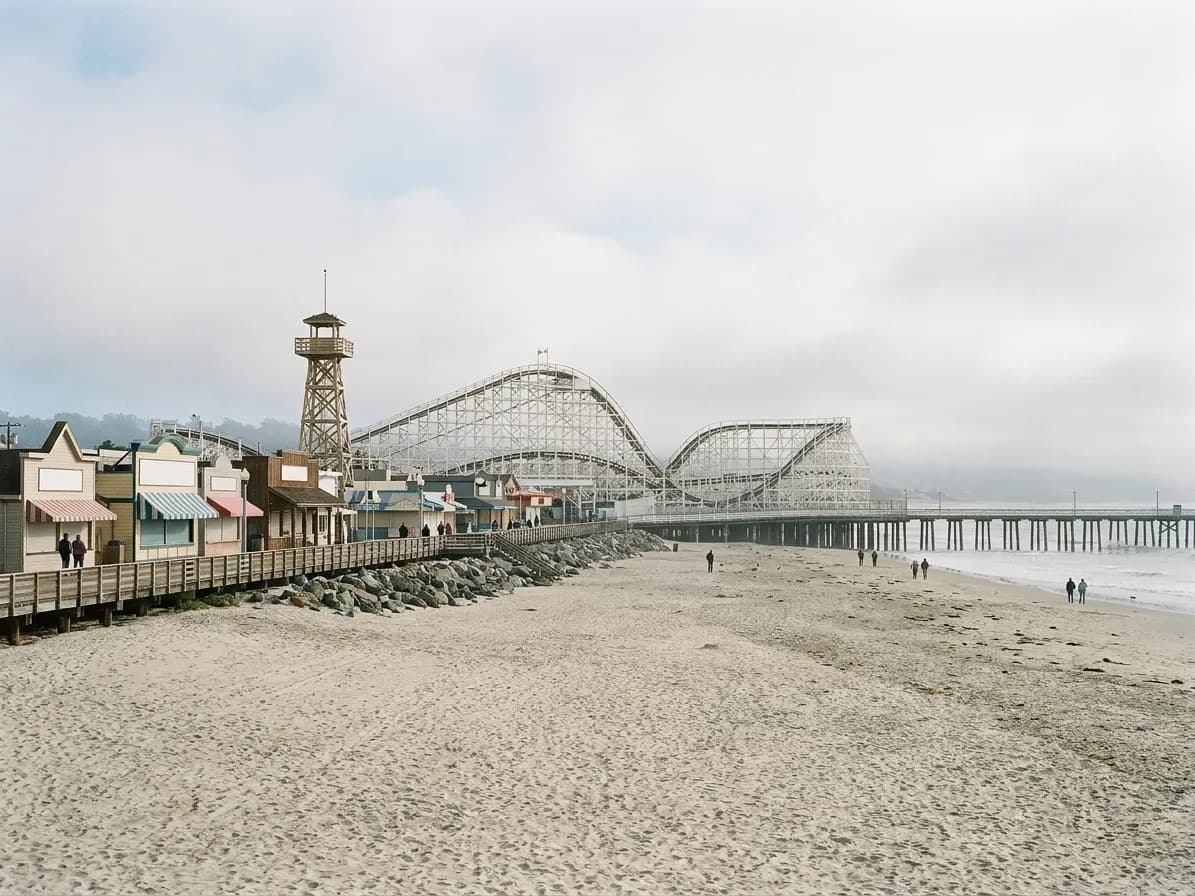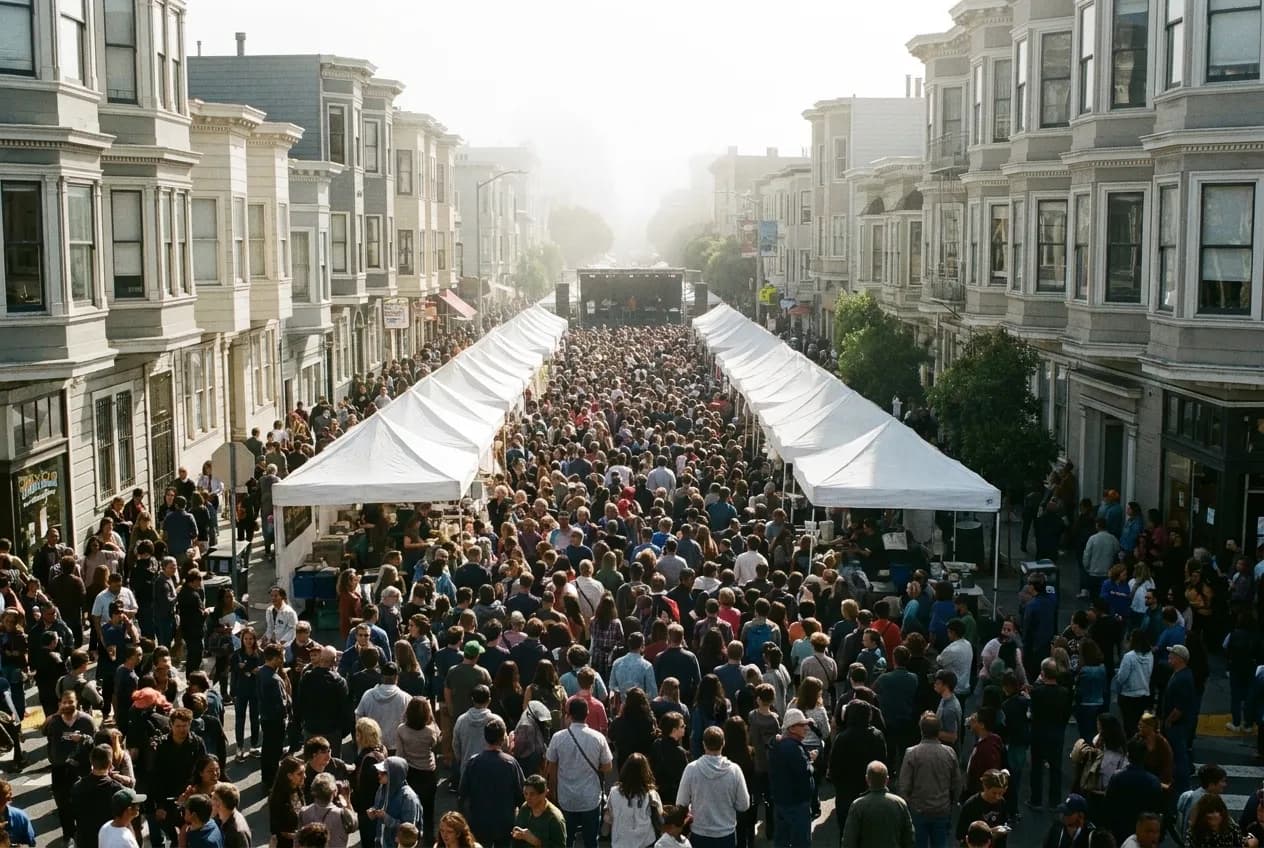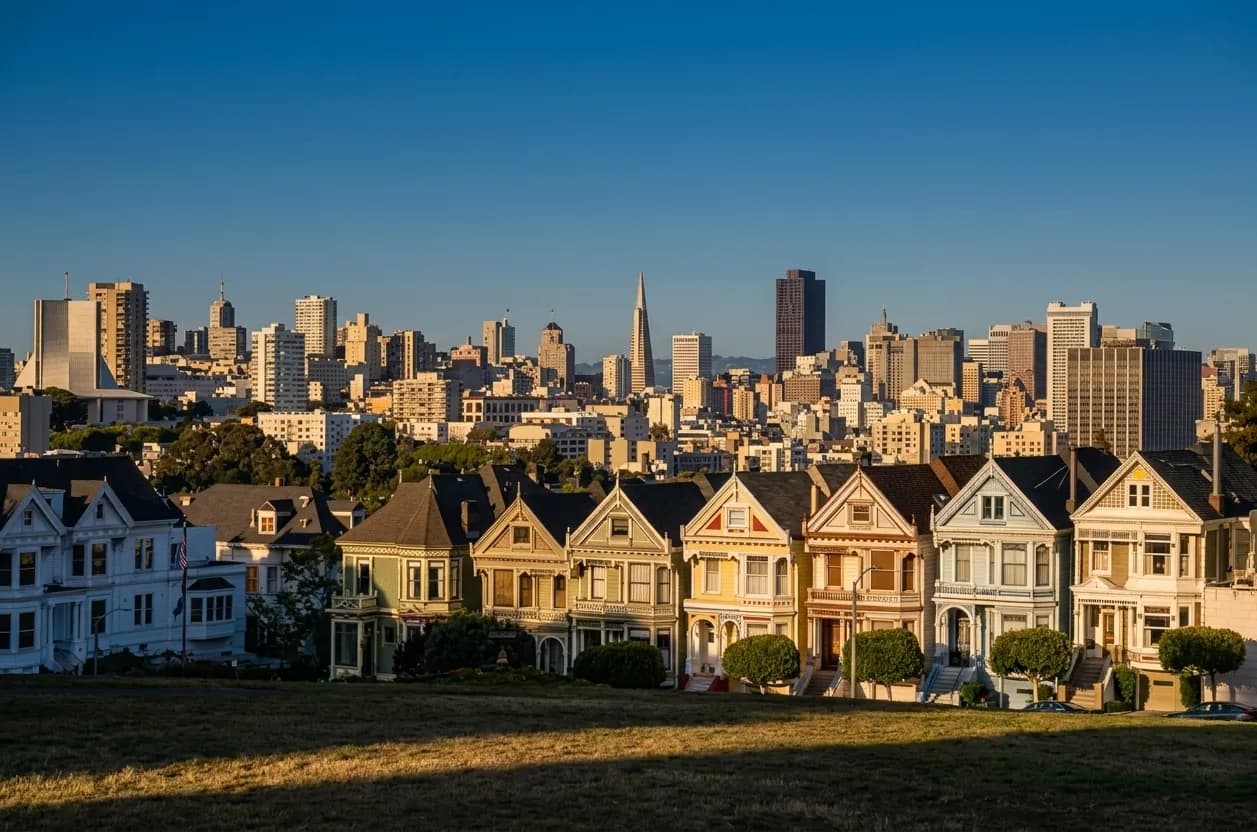
There is a specific look that visitors to San Francisco get in July, standing on a corner in a sweatshirt they had to buy, watching fog move sideways down the street. The city's summer is famously not a summer. What is much less widely known is that the actual summer arrives on schedule every year — it just arrives in September.
The window is about eight weeks long and the microclimates make it neighbourhood-specific. Ask Karpo which patios near you are in the sun this afternoon and which are in the wind.
The numbers behind the local cliché
September is the warmest month in San Francisco, with average highs around sixty-nine or seventy degrees. September and October are also the least foggy months of the year, typically running somewhere between two and six foggy days each, compared with a summer where the marine layer is close to a daily fact. And there is essentially no rain in either month.
Put those three together and you get the best patio conditions the city produces: warm, clear, dry and still. During offshore wind events the temperature can push into the upper eighties or even the nineties, which in a city with almost no residential air conditioning sends the entire population outdoors at once. Those days are unpredictable, they last two or three days at a time, and they are the single best argument for keeping your evening plans flexible in early autumn.
Why the microclimate matters more than the forecast
A citywide forecast is close to useless in San Francisco, and never more so than in the autumn. The temperature difference between the Mission on a clear September afternoon and the Outer Sunset on the same afternoon can be ten or fifteen degrees. One is a shirtsleeves patio. The other needs a jacket and a heater.
The reliable warm pockets are the eastern and southern parts of the city, sheltered from the ocean: the Mission, Bernal Heights, Potrero Hill, Dogpatch and the Bayview. The reliably cool ones are the western neighbourhoods and anywhere with a straight line to the Golden Gate — the Sunset, the Richmond, the Marina and much of the northern waterfront. Downtown and SoMa sit in between and are heavily affected by wind funnelled between tall buildings, which is a different problem from fog and requires the same solution.
The practical rule for the next eight weeks is to choose the neighbourhood first and the restaurant second. A mediocre patio in the Mission at six in the evening will beat an excellent one in the Outer Richmond, because the temperature difference is doing more work than the cooking.
The parklets changed the map
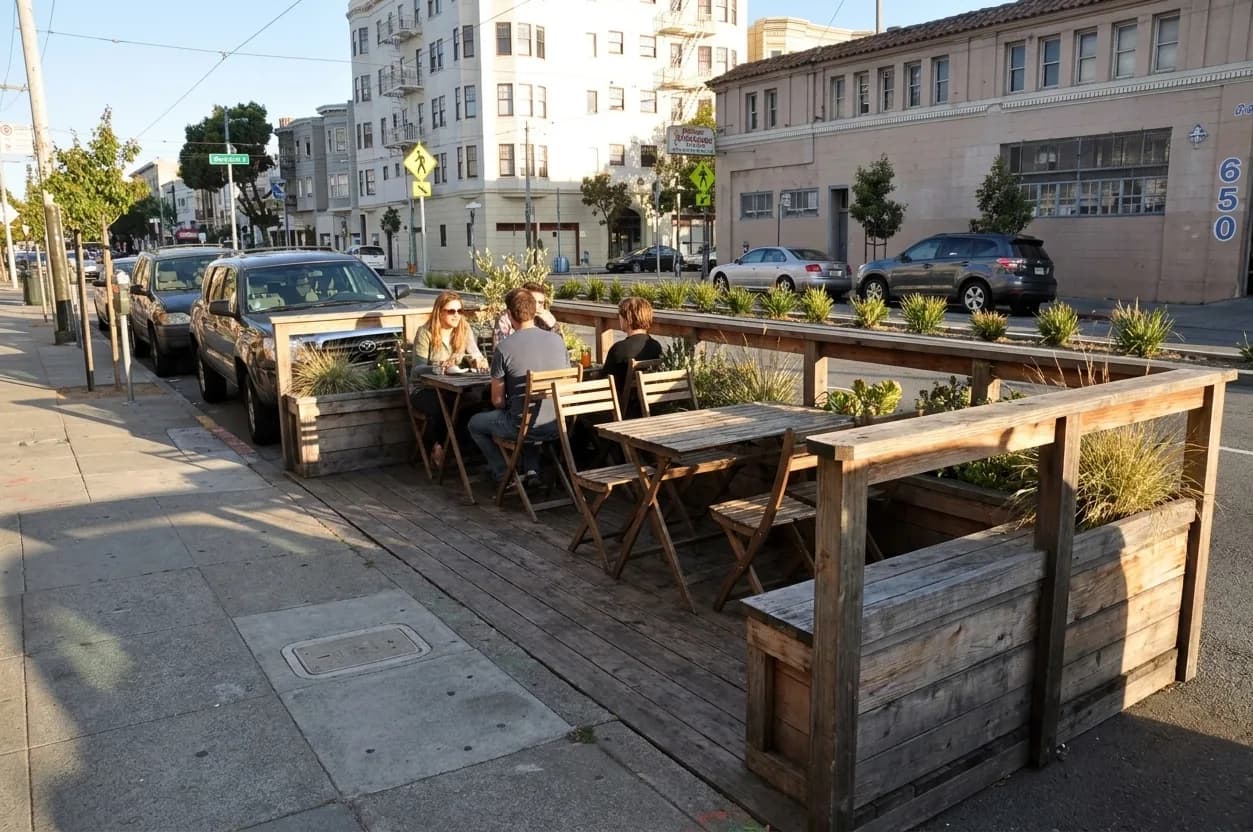
The other thing worth understanding is that San Francisco's outdoor dining capacity is not the same as it was before 2020. The parklet build-out gave an enormous number of small restaurants a permanent outdoor room, and a great many of them are on residential blocks rather than commercial strips. That has quietly made outdoor dining possible in parts of the city that never had it — and it means the best patio near you may belong to a restaurant you assumed had no outdoor seating at all.
Parklets also behave differently from terraces. They sit at street level, in the roadway, which makes them warmer than a sidewalk table in the sun and considerably more exposed once the wind picks up in the late afternoon. The ones that work best in autumn are the enclosed timber structures on east-west streets, which catch the low sun for longest.
One more quirk worth knowing: the fog does not disappear so much as retreat and reappear. Even in the best autumn weeks it can come back for a morning and burn off by noon, which makes lunch outside a gamble and mid-afternoon onwards a much safer bet. If you are booking a single outdoor meal and want to maximise the odds, book it for three or four in the afternoon rather than twelve.
Making the most of a short season
The window closes faster than people expect. By the first week of November the rain returns, the evenings are cold, and a patio requires a heater and a blanket to be tolerable. That leaves roughly eight weeks from the beginning of September, and the reason locals get slightly evangelical about this time of year is that it is genuinely the best the city gets and it is genuinely brief.
The most useful habit is simply to move lunch and dinner outdoors by default until the weather breaks, and to book late afternoon rather than evening — the sun is off most streets by seven, and the temperature drops quickly once it goes.
Practical notes
September is San Francisco's warmest month, averaging highs around 69-70F. September and October are the least foggy months, with roughly 2-6 foggy days each and almost no rain. Offshore wind events can push temperatures into the upper 80s or 90s for a few days at a time. Warm pockets: the Mission, Bernal Heights, Potrero Hill, Dogpatch. Cool and windy: the Sunset, the Richmond, the Marina. The sun leaves most streets by 7:00pm.
Tags: #SanFrancisco #OutdoorDining #IndianSummer #WeekendPlans #Parklets #SFEats #TheMission #PotreroHill #PatioSeason #BayArea #AlFresco #Microclimate #WhereToEat
All trademarks are the property of their respective owners.
Ask Karpo first
A citywide forecast tells you almost nothing about whether a specific patio will be warm at six. Ask Karpo which outdoor tables near you are in the sun and out of the wind this afternoon.