 Where to Eat Near Penn Station That Isn't a Chain
US Open 2026
Onsite Match-Hopping Without Missing the Biggest Moments
This court-switching guide helps US Open visitors see more live tennis without wandering away from the moments they care about most.
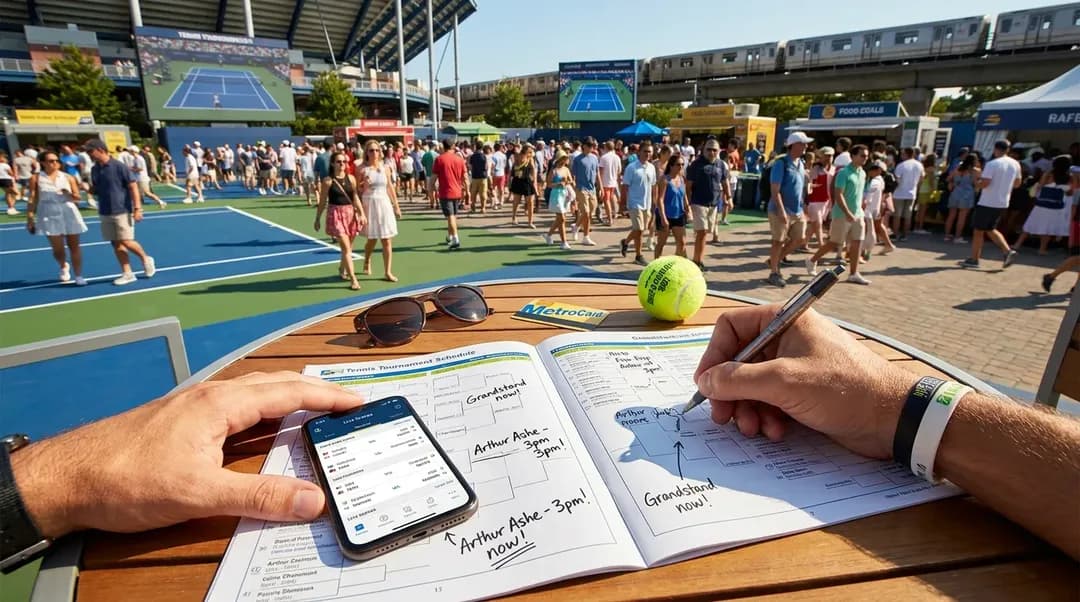
You are outside one court when a roar rises from another, your phone shows a third match at 5-all, and the match in front of you suddenly reaches deuce. That is the classic US Open grounds dilemma: there is more tennis than one person can watch, and the fan who moves without a plan can miss the best point on three courts at once. Smart match-hopping is not sprinting after every cheer. It is choosing when a score is worth your feet, when a seat is worth protecting, and when the match you already have is better than the one you imagine elsewhere. For “Onsite Match-Hopping Without Missing the Biggest Moments,” the useful 2026 calendar anchor is August 23 through September 13, with singles main-draw play beginning August 30.
Text Karpo for a current, low-friction plan for onsite match-hopping without missing the biggest moments—including timing, route checks, and practical options that fit your day.
Read Scores Like Signals
A scoreboard is most useful when you treat it as a pressure gauge. Early in a set, 2-1 rarely tells you enough to justify a long move unless the game quality is obvious or the matchup matters to you. At 4-4, 5-5, or in a tiebreak, the same court becomes a higher priority because a few points can decide the set. If two matches interest you equally, favor the one closer to a set-ending game instead of the one with the louder crowd.
Look beneath the scoreline. A player can be even in games but struggling badly on serve, especially after several long deuce games. A match that appeared one-sided can become worth visiting if the trailing player breaks back or starts holding more comfortably. Doubles deserves special attention for match-hoppers because momentum can turn quickly and a brief stop may deliver a set point, a deciding point, or a sudden burst of net exchanges. You are not trying to predict the future perfectly; you are trying to recognize when the next five minutes have unusually high value.
- Prioritize games at 4-4 or later when no must-see match conflicts.
- Treat a tiebreak as a stop-moving moment unless another anchor match is urgent.
- Notice repeated deuce games because they often reveal pressure before the score does.
- Do not chase noise alone; confirm the score before giving up a good position.
Choose Courts With Intent
Before leaving any court, name the reason for the move. Maybe you want a closer look at a particular player, a tighter score, a livelier atmosphere, a shorter wait, or a better angle on a doubles team. If you cannot explain the move in one sentence, staying is often the sharper choice. Every switch has a cost: walking time, congestion, re-entry limits for certain seating areas, and the risk that the match you left becomes the match everyone talks about.
Think in court clusters rather than single destinations. Sampling nearby courts lets you compare scores and atmospheres without spending your day in transit. A longer cross-grounds move should require a stronger trigger, such as a late-set score, a final-set swing, or a match you marked before arriving. If you are with other people, agree on the next two likely courts before you stand up. That keeps the group from holding a committee meeting in a walkway while the point you wanted is being played without you.
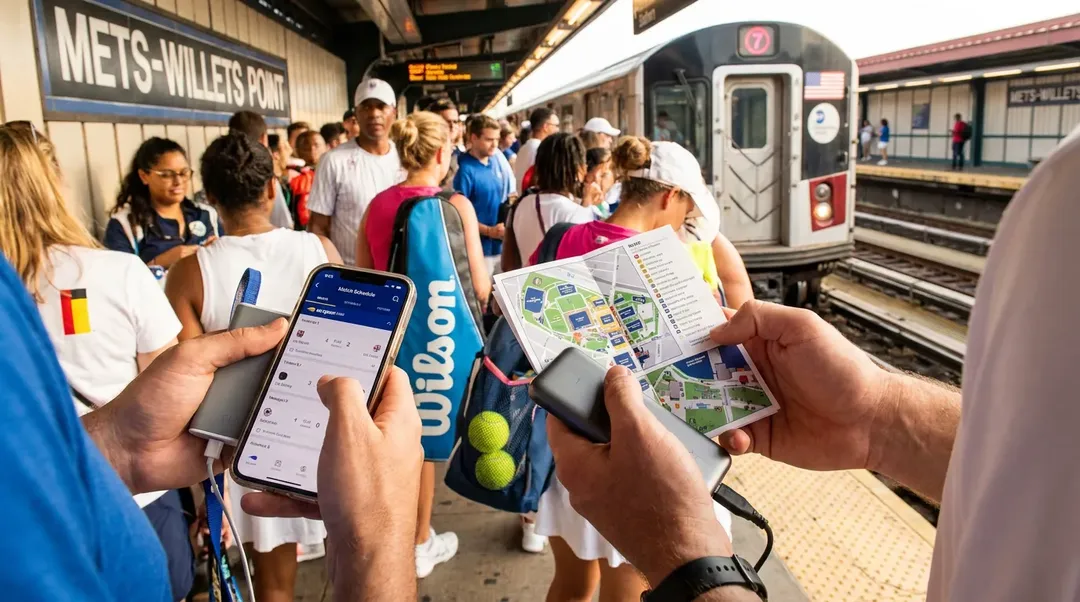
Match your movement style to your real priority. A first-time visitor may want to see several court settings and accept that no stop will be perfect. A fan with one dream matchup should spend more of the day near that court and resist low-value detours. Both styles can work, but mixing them without agreement creates frustration: one person wants to explore, another wants to guard a seat, and nobody enjoys the compromise.
Move During Natural Pauses
Tennis gives you cleaner movement windows than many sports, and good match-hoppers use them. Changeovers, between-set breaks, and the period after a match ends are usually better times to leave than the middle of a tense game. If you are seated, be considerate of ushers, posted rules, and nearby fans. The point of moving smartly is not only to protect your own day; it is also to avoid disrupting someone else’s break point or set point.
When you arrive at a new court, do not commit blindly. Check the score, identify who is serving, and read the crowd. A packed court at 1-1 may not be worth the squeeze if another match nearby is at 5-5. A court with room to stand and a server facing pressure at 6-5 may be exactly the kind of short, high-value stop that makes match-hopping work. If the score is one game from a set, stay until the set is decided unless your protected match is about to begin.
- Use changeovers for short moves and between-set breaks for longer ones.
- Avoid leaving during tense points when you can reasonably wait.
- Check the score before entering a crowded viewing area.
- If a match is one game from a set, assume the next few minutes matter.
Protect Your Anchor Moments
The hardest part of match-hopping is accepting that you cannot maximize every minute and still protect your personal highlight. If one match, player, or court experience matters most, build a buffer around it. Do not plan to arrive at the exact moment it should become dramatic. Tennis scoring can accelerate quickly: a loose service game, a quick hold, and a short changeover can turn an early set into a decisive stretch while you are still walking.

A practical approach is to divide the day into anchors and flex time. Anchors are the matches or sessions you are unwilling to risk. Flex time is everything else: outer-court sampling, late-set score hunting, doubles stops, food breaks, or simply following the best atmosphere. Once an anchor is approaching, stop chasing small upgrades. Being early near the right court usually beats being efficient on the wrong side of the grounds.
If you are tracking several matches, assign each one a trigger before the day gets hectic. You might move only if a match reaches 4-all, enters a final set, or involves a matchup style you particularly want to see live. Triggers prevent emotional zigzagging. They also help groups make faster decisions because the reason for moving is already clear.
Practical Notes
For planning, use the official US Open event schedule, A-to-Z visitor information, and prohibited-items guidance before travel, because schedules, gate times, player fields, venue rules, transit conditions, inventory, local business hours, and availability can change. The official security page currently states that each guest may bring one bag, subject to search, with maximum dimensions of 12 by 12 by 16 inches; recheck that policy before packing. Advice: keep your phone charged enough to monitor scores, carry only what you need for a mobile day, and choose a meeting point before separating so one spontaneous court switch does not become a lost-group problem.
Tags: #USOpen2026 #Tennis #NewYork #Queens #FlushingMeadows #USOpenGuide #TennisFans #SportsTravel #NYCEvents #HardCourt #KarpoFinds #Karpo
Sources consulted: usopen.org — Official reference · usopen.org — Official reference · usopen.org — Official reference
All trademarks are the property of their respective owners.
Ask Karpo first
Want to know what is confirmed, when to show up, and what is actually open to the public? Ask Karpo for the latest US Open updates and a practical New York plan for onsite match-hopping without missing the biggest moments.
Ask Karpo for more information.
Keep reading
- Where to Eat Near Penn Station That Isn't a Chain
 Andytown Coffee in the Outer Sunset: The Snowy Plover Explained
- Best Things to Do in Chicago: What the City Gives Away