 Haaland Has Seven Goals and Norway Runs Entirely Through Him
⚽️2026 FIFA WORLD CUP

Off the Pitch in LA: A World Cup Traveler's Weekend
Los Angeles between matches is a city of sprawling contrasts—Griffith views, Grand Central bites, and Santa Monica sunsets await the savvy traveler.
The Inglewood Anchor and the Metro Lifeline
SoFi Stadium sits in Inglewood like a gleaming spaceship, and when 70,000 fans pour out after a knockout-round thriller, the question becomes: where does the weekend actually begin? The answer is the Metro K Line, which connects Inglewood to downtown Los Angeles in under thirty minutes. Pre-purchase your TAP card online, load a weekend pass, and skip the ride-share surge. The light rail drops you at 7th Street/Metro Center, the beating heart of the city's transit grid, where you can pivot toward Koreatown, Hollywood, or the Arts District without ever summoning a car.
Visiting LA for the World Cup? Ask Karpo to plan your weekend off the pitch.
Inglewood itself rewards a few hours of wandering. The Forum stands a short walk north, a brutalist relic now hosting concerts and boxing, while Market Street offers family-run Salvadoran pupuserías and Jamaican jerk shacks that have fed the neighborhood for decades. If you're staying near the stadium, mornings here feel unhurried—street vendors sell fresh mango with chili, and the light slants golden across stucco apartment blocks. It's a reminder that Los Angeles is not one city but a patchwork of villages, each with its own cadence.
For evening drinks, the nearby Miracle Mile and Mid-Wilshire corridors offer wine bars and craft-beer tap rooms that cater to locals, not tourists. Expect natural wines, small plates of burrata or cured meats, and bartenders who can talk you through California's lesser-known AVAs. The vibe is relaxed, the crowds mixed, and the conversation often drifts from the day's match to the Dodgers, the Lakers, or the eternal question of whether In-N-Out or Tommy's makes the better burger.

Griffith's Morning Light and the Observatory Ritual
Set an alarm. Griffith Observatory opens mid-morning, but the real magic happens at sunrise when the trails are quiet and the city still sleeps below. Drive or rideshare up Vermont Canyon Road—parking is free before nine—and claim a bench on the lawn as the sky shifts from indigo to peach. The view stretches from the Pacific to the San Gabriel Mountains, downtown's towers rising like a mirage in the haze. It's the kind of panorama that resets your sense of scale, a reminder that Los Angeles is as much landscape as metropolis.
Inside the Observatory, the Zeiss telescope and the Foucault pendulum draw school groups by noon, but early visitors have the halls to themselves. The exhibits trace the cosmos with a mid-century earnestness—no flashy interactives, just clean explanations of planetary motion and stellar evolution. The building itself, a 1935 Art Deco gem, feels like a temple to curiosity. Linger in the rotunda, where murals depict mythological figures against star charts, then step onto the terrace for one last look before the crowds arrive.
On your way down, detour through Los Feliz for brunch. The neighborhood's cafés serve avocado toast and cortados with the kind of casual precision that defines LA's food culture—good ingredients, minimal fuss, and a patio where you can watch joggers and dog-walkers pass. By eleven, you're back on the Metro Red Line, heading downtown with the sun high and the day wide open.
Grand Central Market and the Downtown Mosaic
Grand Central Market has anchored downtown since 1917, a vaulted hall where the scent of sizzling carne asada mingles with the tang of fresh-pressed orange juice. The stalls span continents—Thai boat noodles, Oaxacan tlayudas, Israeli falafel, Chinese roast duck—and the best strategy is to graze. Order a pupusa at Sarita's, a bánh mì from one of the Vietnamese counters, and a horchata from wherever the line looks longest. Seating is communal, elbows nearly touching, and the energy peaks around one when office workers flood in.
The market sits at the edge of the Historic Core, where Broadway's old movie palaces—the Orpheum, the Palace, the Tower—stand in varying states of restoration. Some host concerts or private events; others remain shuttered, their marquees faded but still legible. Walk south toward the Bradbury Building, a Victorian ironwork marvel that film buffs will recognize from Blade Runner, then east into the Arts District, where murals blanket warehouse walls and galleries occupy former garment factories. The neighborhood's transformation from industrial grit to creative hub is nearly complete, but traces of the old economy—loading docks, freight tracks—still surface between the coffee roasters and design studios.
For an afternoon beer, the Arts District delivers. Breweries here pour hazy IPAs and barrel-aged stouts in taprooms that double as event spaces, their roll-up doors open to the street. Crowds skew young and local, and the vibe is more backyard hang than polished bar. If wine is more your speed, head back toward Little Tokyo, where a handful of natural-wine shops offer tastings and bottles to go. Either way, you're fueling up for the evening ahead.
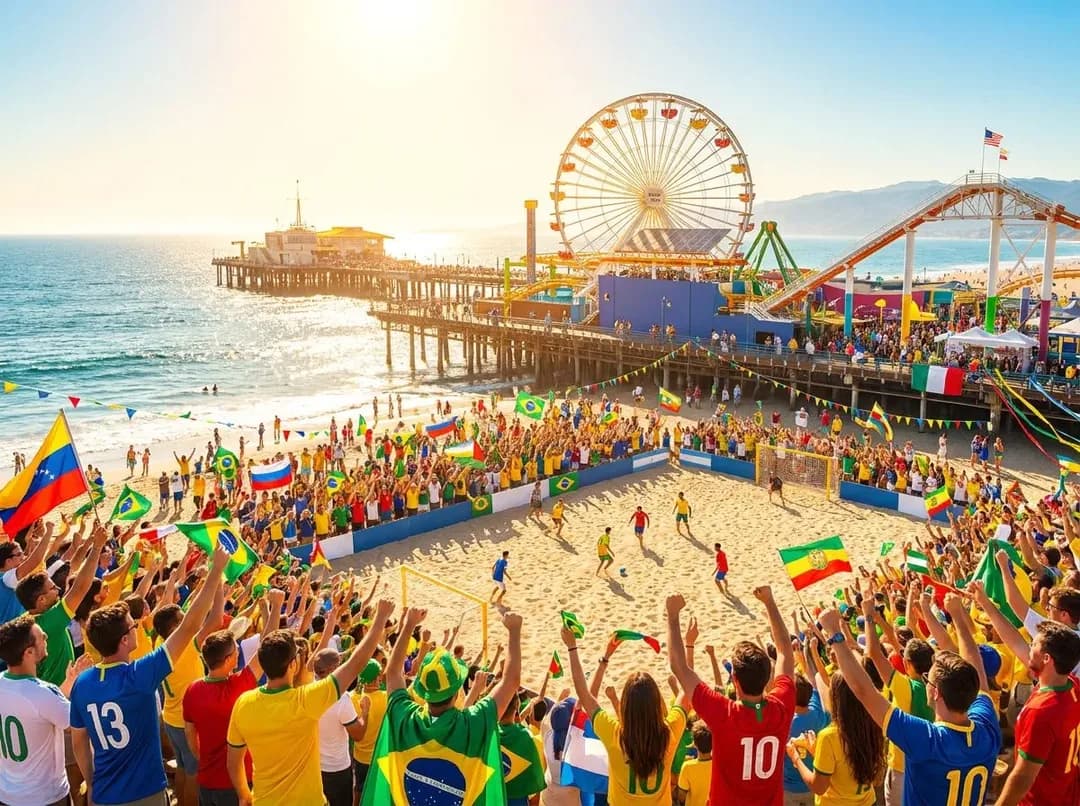
Koreatown After Dark
Koreatown doesn't wait for you to find it; it announces itself in neon and steam, a dense grid of karaoke bars, late-night tofu houses, and KBBQ joints that stay open until three. Start with dinner at one of the all-you-cook-it-yourself barbecue spots along Western or Vermont—beef short rib, pork belly, marinated chicken, all grilled over charcoal at your table while banchan (small vegetable dishes) multiply across the Formica. The ritual is social, hands-on, and designed for groups, though solo diners are welcomed with the same efficiency.
After dinner, the neighborhood splits into two paths: the karaoke route or the bar crawl. Karaoke rooms rent by the hour, come equipped with tambourines and songbooks thick as phone directories, and require no singing talent—only enthusiasm. If you'd rather drink than perform, Koreatown's cocktail bars have matured in recent years, offering soju-based riffs on classics, house-made infusions, and mezcal flights. The best spots are tucked on second floors or down unmarked alleys, their entrances easy to miss if you're not paying attention.
By midnight, the neighborhood hits its stride. Dessert cafés serve shaved ice towers topped with condensed milk and fruit, 24-hour bakeries sell red-bean pastries and egg tarts, and the sidewalks hum with groups spilling out of bars and into the next. It's a part of Los Angeles that feels least like the sprawling, car-dependent cliché and most like a real city—dense, walkable, alive at all hours. The Metro B Line runs until two, so you can ride it back to your hotel without the calculus of surge pricing.
Santa Monica's Coastal Reset
The beach is non-negotiable. Take the Metro E Line west to its terminus at Downtown Santa Monica, then walk four blocks to the pier, where the Pacific Wheel—the solar-powered Ferris wheel—spins against the sky. The pier itself is pure Americana: arcade games, funnel cake, street performers, and families posing for photos. It's touristy in the best sense, unapologetic and photogenic, and the view from the wheel at sunset is worth the wait in line.
South of the pier, the beach widens and the crowds thin. Rent a bike from one of the share stations and ride the Marvin Braude Trail toward Venice, where the boardwalk's mix of muscle gyms, drum circles, and murals feels like a living museum of California counterculture. Or head north toward Pacific Palisades, where the path hugs the bluffs and the mansions above grow larger and more discreet. Either direction, the ride is flat, the breeze constant, and the light—especially in late afternoon—soft and forgiving.
For lunch, the Third Street Promenade offers every chain and fast-casual option imaginable, but the real finds are a few blocks inland: Vietnamese sandwich shops, taco stands, and juice bars that cater to locals. If you're inclined toward something more deliberate, the farmers' market on Wednesday and Saturday mornings sprawls across several blocks, offering stone fruit, avocados, fresh-baked bread, and prepared foods from vendors who've been there for years. Grab a coffee, find a bench, and watch the city wake up slowly, the way it does when the ocean is close and the urgency of downtown feels very far away.
The Long Game: Pacing a Tournament Weekend
The 2026 World Cup runs from June 11 to July 19, with 48 teams and 104 matches spread across three countries. If you're in Los Angeles for more than one match, the city's sprawl becomes an asset—you can disappear into a different neighborhood each day and never retrace your steps. The key is to resist the urge to see everything. Pick a quadrant—beach, downtown, eastside, valley—and let it unfold at walking speed. Los Angeles rewards patience and punishes haste.
Between matches, consider the city's quieter cultural anchors: the Getty Center's travertine terraces and Impressionist galleries, LACMA's urban lights installation at dusk, the Huntington's gardens in Pasadena where desert plants and Japanese maples coexist in improbable harmony. These are not quick stops but afternoon commitments, places where you can sit, breathe, and let the tournament's intensity ebb for a few hours. The best World Cup trips are not the ones that cram in every sight but the ones that leave room for accident and digression.
And if you're planning to catch the final on July 19 at MetLife Stadium in New Jersey, remember: no on-site parking, no tailgating, and shuttles or NJ Transit are your only options. Pre-purchase your rail tickets, keep your return wristband, and plan for crowds. The halftime show—curated by Chris Martin with Madonna, Shakira, and BTS—will be the first in World Cup history, a spectacle designed for the biggest stage. But before you board that flight east, spend one more evening in Los Angeles, where the game is just one thread in a much larger, messier, more generous tapestry of life.
Practical notes
- Load a TAP card online before you arrive; weekend Metro passes cover unlimited rides and eliminate the mental math of surge pricing.
- Griffith Observatory parking is free before 9 a.m.; arrive at sunrise to beat crowds and claim the best views over the city.
- Grand Central Market peaks at lunch; go mid-morning or mid-afternoon to graze the stalls without fighting for a seat.
- Koreatown's Metro B Line runs until 2 a.m. on weekends, making late-night bar crawls and karaoke sessions transit-friendly.
- Rent a bike at Santa Monica Pier and ride the Marvin Braude Trail north or south—it's flat, scenic, and the fastest way to cover the coast.
Los Angeles between matches is a city that refuses to be rushed. It sprawls, it surprises, it asks you to trade efficiency for discovery. You'll eat better than you planned, walk farther than you intended, and probably miss something you meant to see—and that's exactly the point. The World Cup gives you the reason to come; the city gives you the reason to stay. Let the neighborhoods unspool at their own pace, and you'll leave with more than memories of goals and anthems. You'll leave with a feel for the place, the kind that only comes from slowing down and paying attention.
Tags: #WorldCup2026 #LosAngelesTravel #SoFiStadium #GriffithObservatory #GrandCentralMarket #SantaMonicaPier #KoreatownLA #LAMetro #CaliforniaWeekend #CityExploration #TravelItinerary #UrbanDiscovery #WestCoastVibes #NeighborhoodGuide #SlowTravel
Please drink responsibly. Must be of legal drinking age.
All trademarks are the property of their respective owners.
Ask Karpo first
Planning a World Cup weekend that balances match-day adrenaline with the kind of exploring that actually sticks? Ask Karpo first. We'll help you map the transit lines, book the neighborhoods that match your pace, and surface the cafés, viewpoints, and late-night spots that don't make the official guides. Whether you're chasing every kick or just using the tournament as an excuse to finally see Los Angeles properly, we'll make sure your itinerary has room for both the plan and the beautiful accident. Reach out, tell us what matters, and we'll build the weekend around it.
Ask Karpo for more information.
Keep reading
- Haaland Has Seven Goals and Norway Runs Entirely Through Him
 World Cup Trophy Ceremony Timing Medals and Postmatch Celebrations
 Olise and France's Attack: The Semifinal Tactical Question