 Zombie Escape Room Near Me: Komnata Quest Brooklyn After Dark
Weekend Plans
Zombie Escape Room Near Me: Tidal Force VR in Flatiron
A practical guide to Tidal Force VR at 166 Fifth Avenue, including its free-roam zombie scenarios, team roles, booking strategy, and a Flatiron night plan.
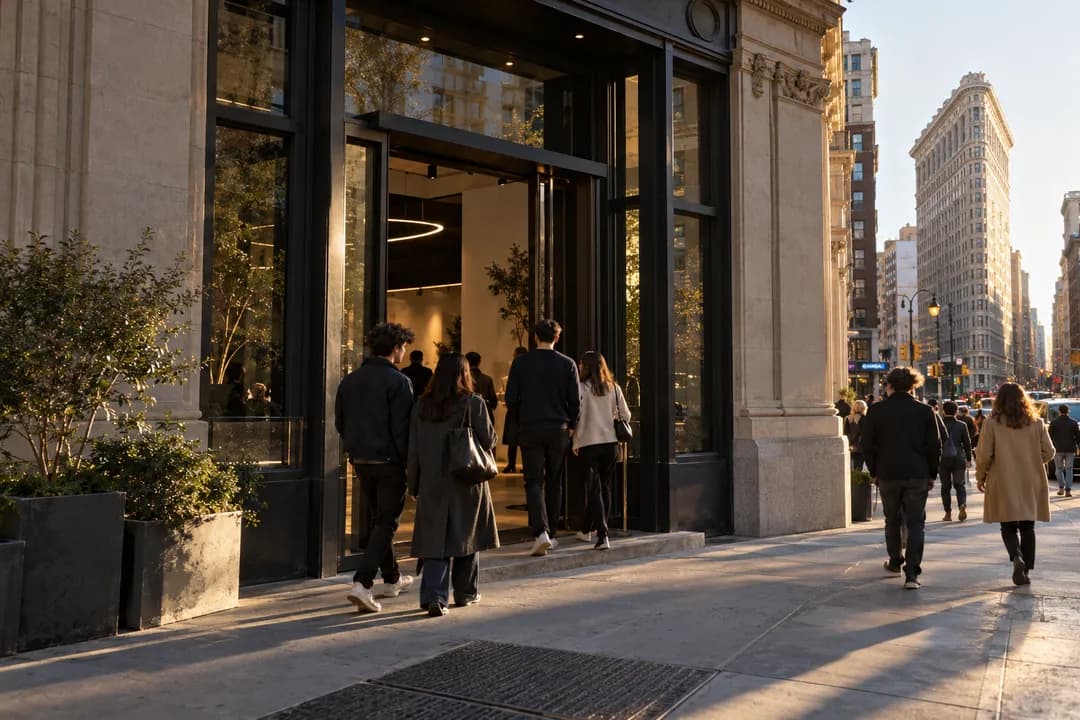
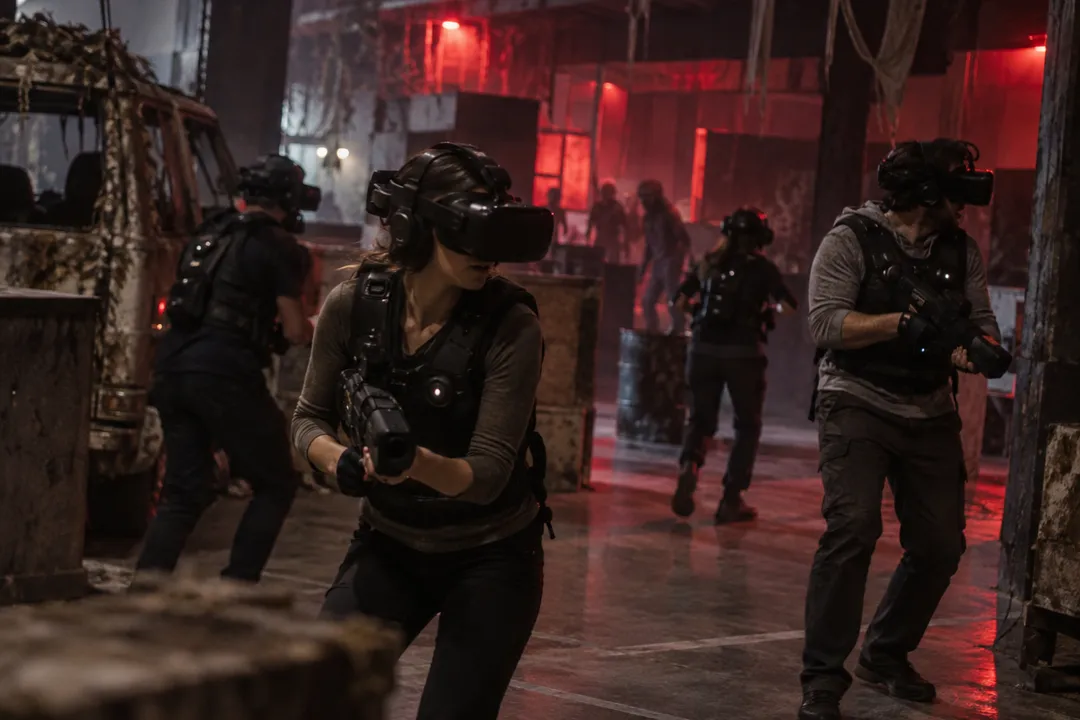
Tidal Force VR at 166 Fifth Avenue, New York, NY 10010 is the useful answer to a zombie escape room near me search when the group wants to move through a shared virtual world instead of staying inside one physical puzzle room. The format is free-roam virtual reality: players wear a headset and tracked equipment, then walk through a mapped arena while the scenario supplies the danger. The venue lists sessions from $35 per player, so the budget is easy to understand before the group starts arguing about dinner. The important distinction is that the zombie pressure comes from the simulation, not from an actor hiding behind a door.
This Is Free-Roam VR, Not a Lock-and-Key Room
The Flatiron address makes the night easy to stage. A group can meet near Madison Square Park, walk to the venue together, and still have several choices for food afterward. That matters because VR sessions run best when everyone arrives early enough to hear the equipment briefing. Treat the booking time as a hard arrival target rather than the moment you leave the subway. Late arrivals create a rushed fitting process, and one person who is still adjusting a headset can make the opening feel more chaotic than the game intended.
A free-roam scenario rewards a different kind of teamwork from a traditional escape room. One person should pay attention to the objective and repeat it in plain language. A second player can watch the edges of the virtual environment for objects or routes the group has ignored. A third should become the designated communicator, calling out where the team is moving so nobody collides in the physical arena. The friend who usually solves locks may not be the strongest player here; spatial awareness, calm movement, and clear speech matter more than knowing every escape-room trick.
The best group size is the smallest one that lets everyone contribute. Four players is a comfortable planning unit because one person can lead, two can investigate, and one can keep the group from drifting. Five or six can work when the scenario gives the team multiple objectives, but a crowded strategy meeting is still a crowded strategy meeting. Couples can enjoy the format, though they should be ready to share the space and split attention between the virtual mission and the real-world boundaries of the arena. A birthday group should choose a leader before the first countdown instead of letting the loudest player make every call.
Pick the Team Roles Before the Headsets Go On
Listen carefully to the safety briefing. The most useful rules are practical: keep the equipment secured, move at the pace the arena allows, and communicate before turning or backing up. Do not sprint because a virtual enemy appears. Do not swing at something that is only visible through the headset. The venue's appeal depends on the illusion that the room has disappeared, but the floor, walls, and other players are still real. Good play keeps the team immersed without making the guide stop the session to untangle avoidable mistakes.
The zombie theme works best as a pressure system rather than a promise of nonstop gore. A strong scenario gives the team a route, a limited set of tools, and a reason to keep moving when the virtual world becomes noisy. Expect objectives that combine searching, navigation, and timing. The group may need to protect a teammate, locate an item, or reach a safer zone while enemies turn a simple path into a decision. The satisfying moment is often not the scare itself; it is the instant everyone understands why the map, the warning, and the locked objective belonged together.
Give the quiet player a real job. Someone who dislikes shouting can handle the objective list, watch the virtual inventory, or call out environmental details. That player often notices a path the action-focused teammates miss. The person who panics at every approaching zombie can stay useful by repeating the next destination and checking whether the team is still moving together. This is not a spectator attraction. Every player affects the pace because the shared experience is built around coordinated movement.
What Makes the Zombie Scenario Work
My honest skip is trying to turn the session into a competition over who is bravest. VR fear becomes less fun when one player charges ahead and leaves the rest of the group confused. Slow down for ten seconds, name the next goal, and move as a unit. Also skip heavy bags and complicated layers. The venue needs the group focused on equipment and movement, not on where to put a coat or whether a loose strap is getting in the way.
Start at Madison Square Park if the weather is comfortable. The park gives a mixed group a simple landmark, and the Flatiron district supplies enough visual detail to make the walk feel like part of the evening rather than dead time before the game. Walk past the Flatiron Building area, then head toward Fifth Avenue with everyone already carrying water and knowing the arrival plan. This also gives a late friend a clear route from the subway instead of a vague instruction to meet somewhere in Chelsea.
After the session, keep dinner nearby rather than sending the group across town. The Flatiron and NoMad blocks are full of casual restaurants and bars, which is useful after a game where everyone wants to replay the same two-minute escape. A quiet table is better than a loud club for the first stop because people need to compare what they saw. If the group still wants activity, take a short walk toward Union Square rather than adding another timed attraction immediately.
Build a Flatiron Night Around the Session
Rain changes the plan more than it changes the venue. The VR session is indoors, so the practical move is to meet inside a nearby lobby or restaurant and arrive with coats already settled. Do not make the booking the last stop of a long outdoor itinerary. The game is more enjoyable when the team arrives dry, fed enough to concentrate, and not already tired from crossing Manhattan.
Use the address 166 Fifth Avenue, New York, NY 10010 as the shared address, and assign one person to hold the booking details. Arrive with enough time for check-in, fitting, and the briefing. The exact experience depends on the scenario selected, so describe the evening as a zombie-themed free-roam VR mission rather than promising a particular plot twist. That wording is both more accurate and more useful to friends who have different comfort levels with horror.
Tidal Force VR is strongest for groups that want action, novelty, and a shared story without committing to a full haunted-house production. It is weaker for players who mainly enjoy manipulating physical locks, reading long documents, or solving a room at a table. Those visitors should choose a conventional escape room instead. For everyone else, the venue's value is the clean handoff from real Manhattan to a cooperative virtual emergency: fit the gear, agree on roles, listen to the guide, and let the team discover the route together.
The final planning detail is transportation after the game. Keep the group together while leaving the venue, especially if the session ends late and some players are still talking about what they saw. Madison Square Park and Union Square are useful orientation points, while the 23rd Street subway area gives the group more options than splitting up at the curb. A simple exit plan prevents the most ordinary New York problem from becoming the night's real final boss.
Ask Karpo for more information.
Keep reading
- Zombie Escape Room Near Me: Komnata Quest Brooklyn After Dark
 Zombie Escape Room Near Me: Brooklyn Escape Room Survival Guide
 Zombie Escape Room Near Me: Shipwrecked Brooklyn Puzzle Night