 Ghost Walk Near Me in Greenwich Village: Edgar Allan Poe's Haunts
Weekend Plans
Woodworking Studio Near Me: Craftsman Ave Furniture Workshops in Industry City
Craftsman Ave brings DIY furniture making to 68 34th St in Industry City. Build solid oak side tables for $265 with professional tools, expert instructors, and same-day results.
Craftsman Ave welcomes creative makers into an expansive industrial fabrication studio at 68 34th St, Building 6, Suite B124, Brooklyn, NY 11232, nestled within the waterfront campus of Industry City in Sunset Park. Founded in 2017 by designer Taras Kravtchouk, this dynamic multi-disciplinary workshop bridges the gap between traditional trade craftsmanship and accessible modern design for locals seeking a hands-on woodworking studio near me in South Brooklyn. The studio hosts public build sessions and private cohorts Wednesday through Sunday from 10:00 am to 8:30 pm, keeping Monday and Tuesday reserved for private corporate builds and machinery servicing. Inquiries regarding class bookings, custom dates, or group reservations can be placed directly by calling (929) 266-3494.
Maker Culture in the Historic Industrial Complex
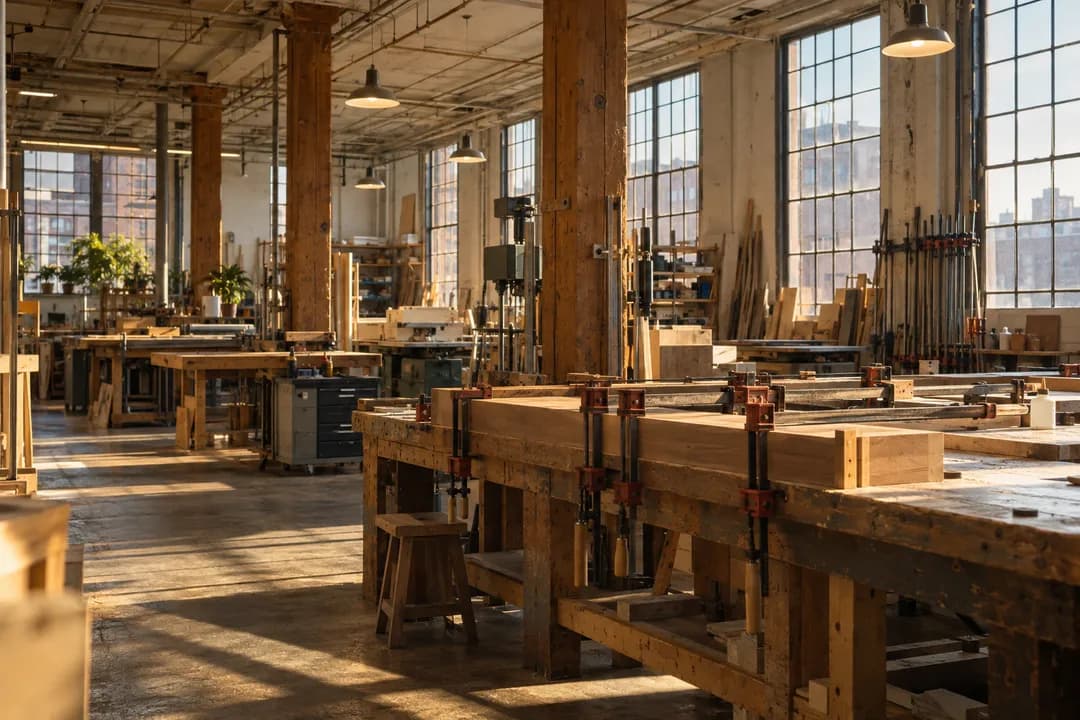
Craftsman Ave was conceived to demystify raw material fabrication, creating an approachable workshop space where people with zero trade background can confidently handle heavy tools. Operating out of Building 6 along the historic Bush Terminal rail yards, the atelier features soaring ceilings, polished concrete floors, and broad industrial factory sash windows that overlook the bustling courtyard corridors of 34th Street. The environment feels energetic and encouraging, blending the camaraderie of a creative arts collective with the disciplined safety protocols of an authentic commercial production shop. Participants gather around heavy birch workbenches equipped with personal tool trays, overhead drop cords, and safety goggles.
Unlike traditional vocational schools that spend weeks on abstract joinery theory before touching lumber, Craftsman Ave prioritizes project-based experiential learning where participants leave with a finished heirloom piece in a single afternoon. The studio layout groups tools into intuitive functional zones, separating noisy cutting stations and dust-generating sanders from comfortable assembly and oil-finishing benches. Vintage filament task lights, industrial steel shelving, and organized racks of native kiln-dried white oak create an inspiring visual backdrop. Instructors maintain an encouraging, observant presence, offering step-by-step guidance that builds mechanical confidence from the moment students pick up a tape measure.
Hands-On Tool Arrays and Beginner Woodworking Stations
The equipment inventory at Craftsman Ave is thoughtfully curated to provide accessible yet professional-grade performance across every phase of wood construction. Crosscutting and angle trimming take place at dual-bevel DeWalt 12-inch compound sliding miter saws equipped with laser alignment guides and zero-clearance wooden auxiliary fences. Edge profiling and decorative bevels rely on heavy Bosch router tables fitted with carbide flush-trimming and chamfer bits. For precision ripping, the studio maintains SawStop professional cabinet saws featuring patented electronic flesh-detection sensors that instantly drop the blade beneath the table upon accidental contact, providing unparalleled peace of mind.
Abrasive smoothing and surface preparation utilize high-torque Jet 12-inch disc sanders alongside Makita oscillating spindle sanders that contour interior curved profiles effortlessly. Mechanical fastening incorporates Kreg pocket-hole joinery jigs and impact drivers, enabling robust hidden mechanical connections without waiting hours for slow-setting wood glues to cure. Safety protocols require all students to wear ANSI Z87-compliant impact goggles, snug nitrile handling gloves during finishing, and noise-reducing ear protection throughout cutting phases. Instructors demonstrate every machine cut individually, standing beside students to oversee proper hand placement, stance balance, and workpiece control.
Single-Session Furniture Builds and Side Table Pricing
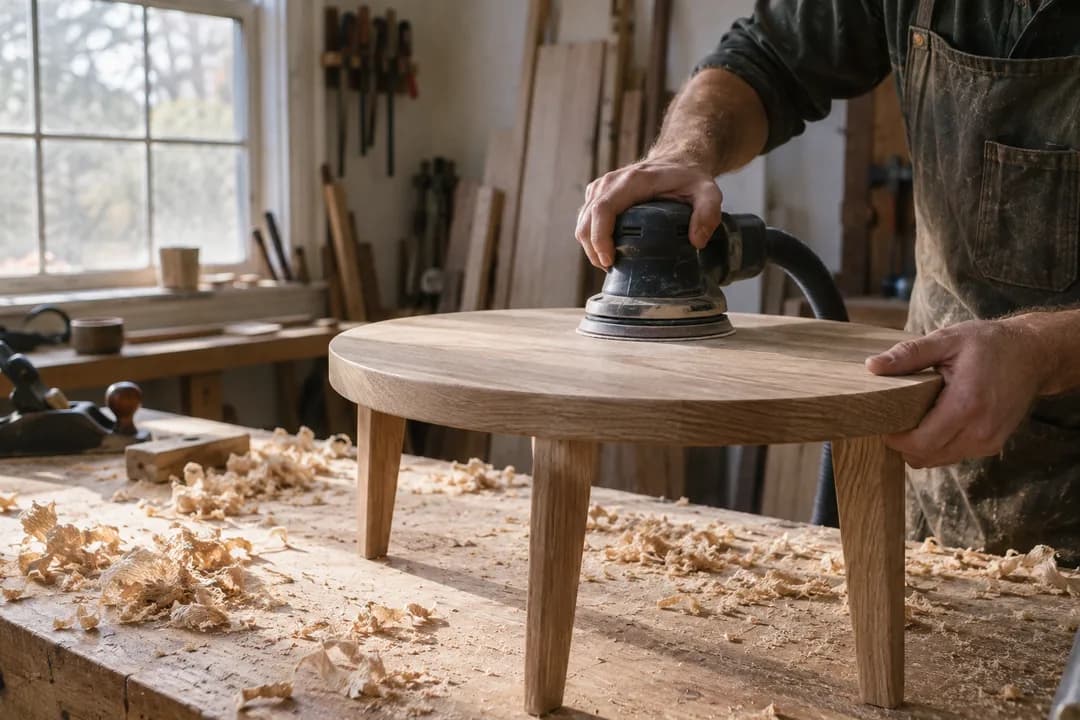
The premier offering at Craftsman Ave is the acclaimed Craft an Awesome Oak Side Table workshop, priced at $265 per person for an intensive three-and-a-half-hour build session. Designed specifically to fit compact Brooklyn apartment layouts, the finished piece features a solid white oak tabletop joined with hidden pocket screws and supported by mid-century modern steel hairpin legs. Students measure raw oak planks, execute square crosscuts on the compound miter saw, route sleek chamfered edges, sand through progressive abrasive grits, and rub the grain with natural Danish oil before packing their completed table home.
Makers looking for alternative woodworking projects can enroll in the Craft a Wooden Longboard workshop priced at $275, where participants shape multi-ply hardwood decks, route wheel wells, drill truck mounting holes, and apply custom grip tape graphics. For lovers of fine handcraft, the Hand-Carved Wooden Spoon and Bowl session costs $195 per person, teaching traditional gouge chiseling, rasps, and scraper techniques on native cherry and walnut stock. All workshop fees cover premium raw materials, expendable sandpaper, steel hardware, protective oils, and personalized guidance, ensuring completely transparent pricing with zero surprise studio add-ons.
Open Studio Access, Fabrication Bays and Project Scheduling
Beyond scheduled public group classes, Craftsman Ave coordinates private team-building fabrications, custom milestone events, and creative evening date night experiences. During evening sessions, the workshop dims overhead floodlights and illuminates industrial workbenches with warm vintage task lamps, creating an unforgettable atmosphere where partners collaborate to construct unified home furniture. The studio accommodates private group bookings ranging from six to twenty-four participants, with dedicated instructors tailoring build paces to ensure everyone completes their projects comfortably within the scheduled timeframe.
The studio operates on a structured reservation model where seats must be booked through their digital portal in advance, ensuring optimal student-to-instructor ratios of roughly six makers per teacher. While walk-in tool rentals are not offered, graduates of foundational workshops can book advanced project consultations to build custom dining tables, floating record credenzas, or tailored shelving systems. All finished furniture is wrapped in heavy protective furniture blankets and fitted with carrying handles, enabling students to transport their fresh hardwood creations easily on the subway or in the trunk of a rideshare.
Transit Routes to Thirty-Fourth Street and Industry City Courtyards
Located inside Industry City on 34th Street between Second and Third Avenues, Craftsman Ave offers seamless transit connections from both Brooklyn and Manhattan. The express D and N subway trains alongside the local R train stop at the 36th Street station, just two short blocks east of the Industry City complex. Travelers exiting the subway walk downhill toward Second Avenue, enter Building 6 through the central street courtyard, and proceed down the first-floor corridor directly to Suite B124. The B37 bus running along Third Avenue also provides a convenient surface transit option stopping right at 34th Street.
Drivers navigating to the studio can utilize convenient metered parking along 2nd Avenue and 3rd Avenue, as well as dedicated pay-to-park surface lots managed by Industry City on 39th Street. Loading bulky finished furniture pieces into personal vehicles is exceptionally easy thanks to Building 6 wide ground-level loading corridors and wide freight bay entrances. Drivers can pull directly up to the 34th Street curb loading zone for ten minutes to stow packaged tables, wooden boards, and welded frames without dragging pieces through elevated staircases or passenger elevators.
Food Hall Dining and Sunset Park Waterfront Strolls
Industry City sprawling six-million-square-foot footprint offers an unmatched array of culinary, design, and cultural attractions to enjoy before or after your workshop. Directly across from Building 6, the Japan Village food hall serves steaming bowls of tonkotsu ramen, fresh onigiri, and matcha soft serve from authentic Japanese food stalls. Coffee enthusiasts can fuel up at extraction roasteries like Extraction Lab or grab cold-brew lattes at Tadaima in Courtyard 5/6, accompanied by warm almond croissants. The open brick courtyards feature landscaped outdoor seating, ping pong tables, and rotating sculpture installations where students can relax between sanding passes.
For home decor inspiration, makers can browse curated furniture showrooms and design outlets throughout the complex, including West Elm Outlet, Design Within Reach, and independent makers selling bespoke ceramics and leather goods. Taking a post-class stroll toward the western waterfront provides striking panoramic vistas across Upper New York Bay toward the Statue of Liberty and the Lower Manhattan skyline. Spending an entire Saturday exploring Industry City artisans and manufacturing lofts complements the creative satisfaction of building solid furniture with your own hands.
Studio Etiquette, Finishing Oils and Sensible Recommendations
To maximize your comfort and safety at Craftsman Ave, wear fitted cotton denim jeans and a short-sleeved t-shirt that can handle stray splashes of walnut wood stain and airborne pine dust. Canvas work shoes or leather ankle boots are required; open-toed sandals, mesh athletic trainers, and high heels are strictly forbidden on the workshop floor. Consider bringing a sturdy canvas tote bag to transport small offcuts, leftover sanding blocks, and finishing oil bottles that instructors often let makers take home for future touch-ups.
Avoid rushing through the sanding sequence, as thorough progressive abrasives from 80-grit through 220-grit make the definitive difference between an amateur DIY build and a professional silk-smooth furniture surface. Take time to study how the grain direction changes across the oak board, and ask your instructor to demonstrate how hand-rubbed oil accentuates natural wood medullary rays. By approaching your build with patience, careful measuring, and steady tool control, you will leave Industry City with an enduring piece of custom furniture you will proudly cherish for decades.
Ask Karpo for more information.
Keep reading
- Ghost Walk Near Me in Greenwich Village: Edgar Allan Poe's Haunts
 Ghost Walk Near Me in Lower Manhattan: Phantoms of City Hall Park
 Ghost Walk Near Me in the West Village: Phantoms by Commerce Street