 Inwood Winter Greenmarket Picker for Hikers on Cold Mornings
Weekend Plans
Union Square Winter Greenmarket Picker for First-Time Hosts
A winter greenmarket picker for Union Square: how a first-time Friendsgiving host plans a cold-morning shop, picks produce that keeps and carries it all home.
A winter greenmarket picker starts with one honest question: what will still look good on the table four days from now? For anyone hosting a first Friendsgiving, Union Square Greenmarket is the obvious place to answer it. The stalls shift from summer tomatoes to roots, squash, apples and hardy greens as the cold comes in, and the produce that survives a New York winter tends to survive a crowded fridge too.
Why Union Square Becomes the Host's Pantry
Union Square has long been a gathering place, a park where New Yorkers rallied, protested, played chess and waited for friends under the trees. When the greenmarket arrived, it turned a tired plaza into the city's best-known farm market, with growers driving in from the Hudson Valley, New Jersey and Long Island. Chefs from nearby kitchens still walk the aisles with rolling carts.
In winter the crowd thins and the mood changes. The tourists move to the holiday stalls on the south side of the park, and the market itself feels more like a working pantry for people who cook at home. For a nervous host that is ideal: farmers have more time to talk, and you can ask how long a squash will keep without holding up a line.
Plan the Menu Around What Travels Well
Before you leave home, write the menu in pencil rather than ink. Choose one roasted vegetable, one salad that can stand up to a cold walk and one dessert built on apples or pears. Then let the stalls fill in the blanks. If the kale looks tired but the Brussels sprouts on the stalk look superb, swap without guilt.
Hosts who cook for a crowd usually overbuy delicate things. Winter greens like lacinato kale, chicory and escarole hold up better than tender lettuce, and roots like carrots, beets and celery root keep for a week in a cool drawer. Buy the sturdy items first and treat herbs, eggs and anything soft as the final stop of the morning.
Reading the Winter Stalls
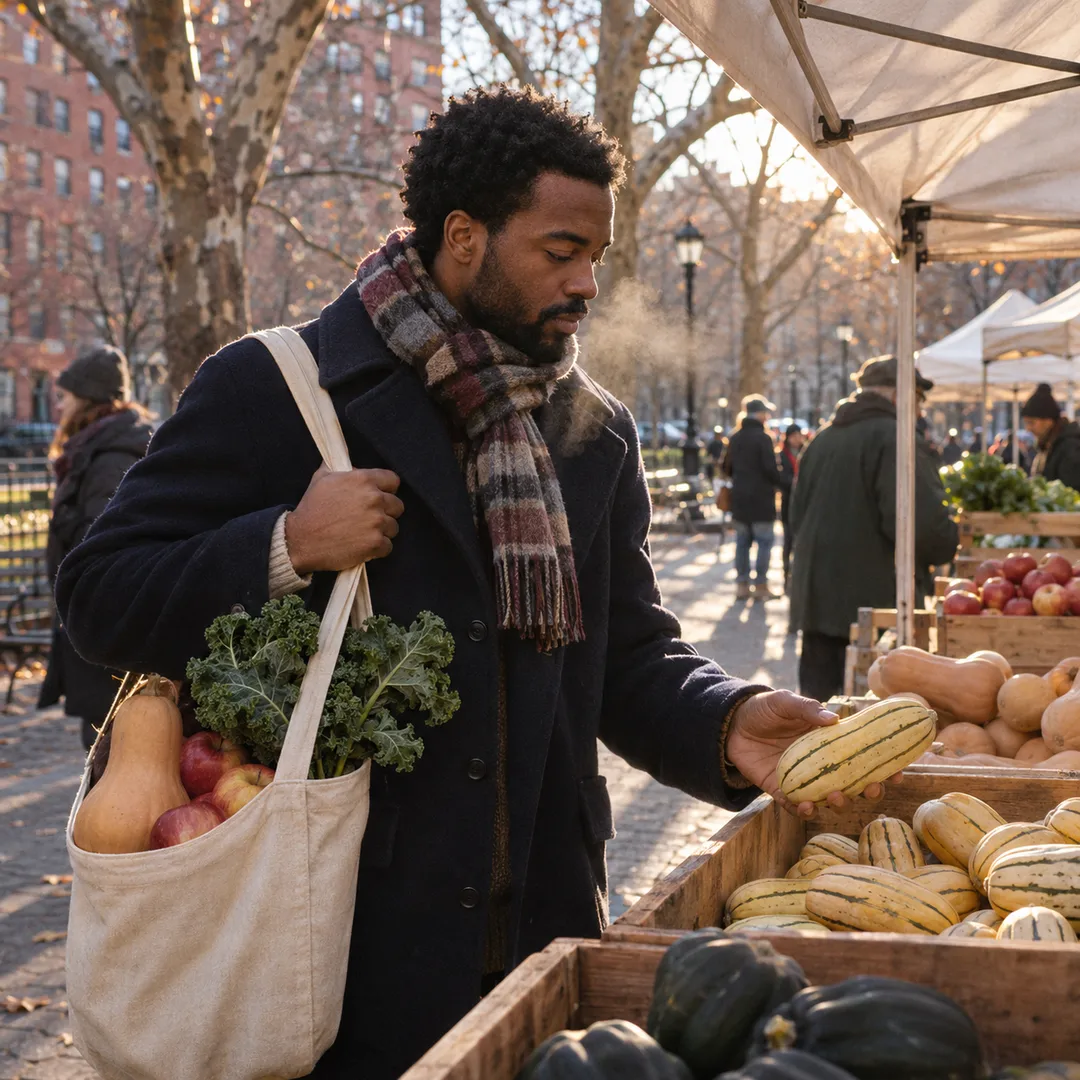
Squash is the backbone of a cold-season table, and the variety can feel overwhelming. Delicata has a thin, edible skin and roasts quickly, which helps when oven space is tight. Butternut is easy to peel and good for soup. Kabocha is dense and sweet. Ask the farmer which one they would cook for their own family that week.
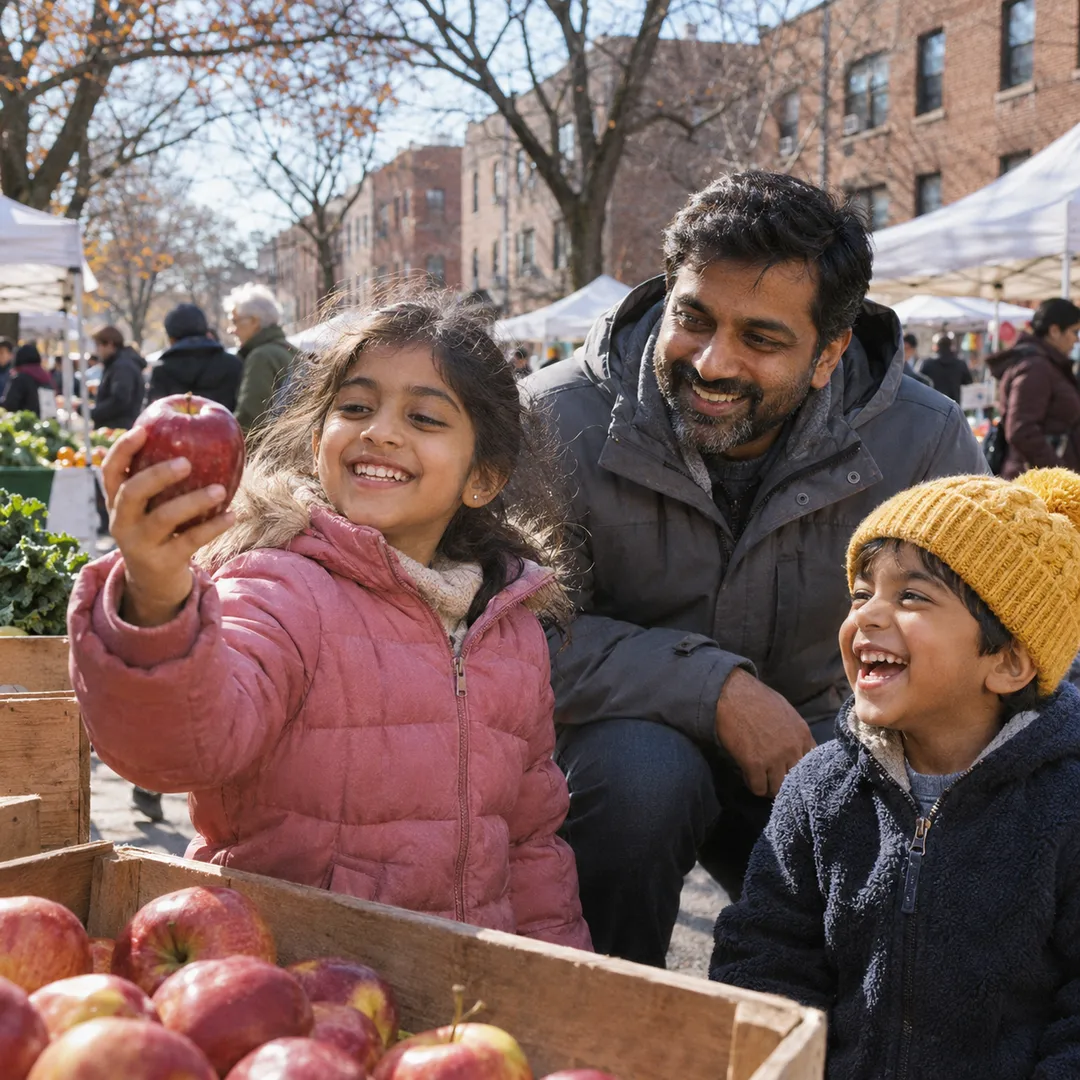
Apples are where the market really shines in late autumn. Many orchards bring varieties you will never see in a supermarket, from sharp russets to crisp late keepers. Ask for a slice before buying a bag, and tell the grower whether you want something for eating, baking or both. Cider is usually close by, and a jug makes a friendly welcome drink.
Timing a Cold Morning Visit
Arrive early if you want the widest choice of squash and apples, or come later if you prefer a calmer walk and do not mind a few gaps on the tables. On very cold days some growers bring less, so it helps to have a second idea for each dish. A mid-morning visit usually balances choice and comfort well.
Dress for standing still rather than for walking. The wind runs straight across the open plaza, and gloves that let you handle coins and bags are worth more than a heavy pair you keep taking off. Bring two sturdy totes and a smaller bag for eggs or anything that bruises, and keep one hand free for tasting. A thermos of tea in your coat pocket makes the slow second loop far more pleasant.
Carrying the Haul Without Bruising It
A Friendsgiving shop can be heavy. Pack squash and roots at the bottom, apples in the middle and greens on top, loosely wrapped so they do not crush. If you are taking the subway home, a backpack for the heavy items and a tote for the light ones is easier than two overflowing bags on one arm.
If you live within walking distance, the route matters. Heading east through Gramercy keeps you on quieter streets lined with brownstones and old iron railings, and you pass the locked garden of Gramercy Park, one of the last private squares in the city. It is a pleasant reminder that some of New York still moves at a slower pace.
Turning the Market Into a Host's Morning
Make the shopping trip part of the celebration. Invite one friend to come along, split the list and meet back by the statue of George Washington on horseback at the south end of the park. A cup of hot cider from a stall and a short sit on a bench is a good moment to agree on what still needs buying.
If you are hosting for the first time, this also takes pressure off the kitchen later. Talking to the people who grew the food gives you something to say at the table, and guests love hearing that the squash came from a family farm upstate. Write the farm names on little cards beside each dish if you like, so the conversation starts on its own. It turns a tray of roasted vegetables into a small story.
Small Habits Regulars Swear By
Regulars often walk the full loop once before buying anything, then return to the stalls that caught their eye. They carry small bills, ask growers for storage tips and keep a running list on paper instead of scrolling a screen with cold fingers. Many bring their own egg cartons and jars back to return to the farmers.
They also respect the space. Stalls are tight, so step aside to look at your list, and avoid squeezing fruit you are not going to buy. A quick thank you and a question about the farm go a long way. Growers remember friendly faces, and that often means a heads-up about which apples will be gone soon.
After the Market and Planning Your Next Visit
Once the bags are packed, the area around the park offers plenty of ways to warm up before heading home. Cafes, bakeries and small shops line the nearby streets, and a slow walk through the Flatiron District gets you a glimpse of the famous wedge-shaped building in the low winter light. Just remember the greens before you linger too long.
For your next shop, the Karpo APP can help you compare other winter greenmarkets around Manhattan and Brooklyn, save the ones close to home and plan a calmer weekday visit before the next dinner. Once the first Friendsgiving is behind you, the market becomes less of a project and more of a habit.
Ask Karpo for more information.
Keep reading
- Inwood Winter Greenmarket Picker for Hikers on Cold Mornings
 Carroll Gardens Winter Greenmarket Picker for Holiday Bakers
 Jackson Heights Winter Greenmarket Picker for a Family Day